
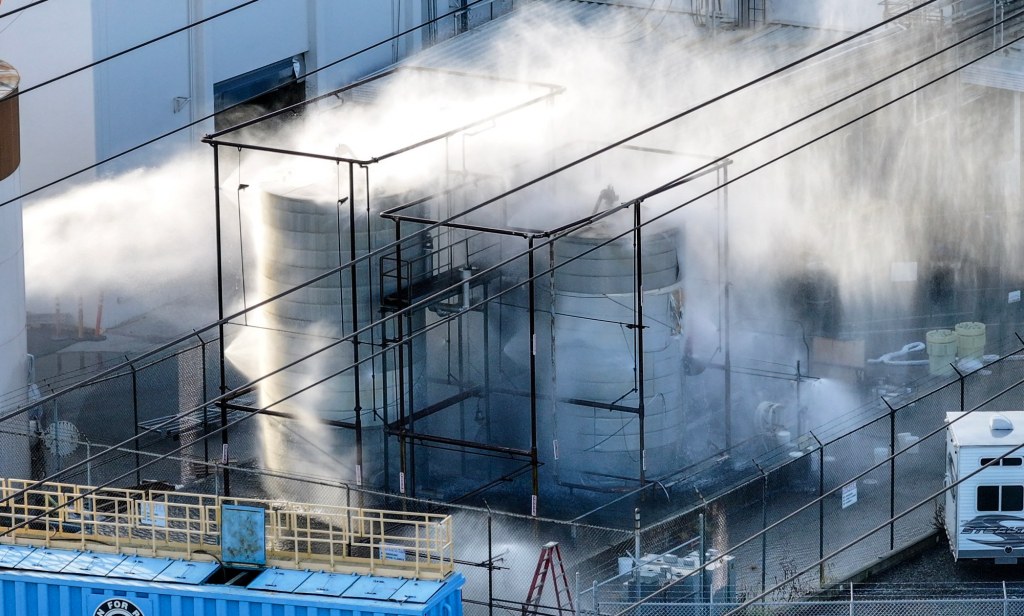
The failure of a cooling system designed to regulate the temperature of chemical tanks at a Garden Grove aerospace plant – one of which dangerously overheated – is what prompted a hazmat response and led to the evacuation of 50,000 people over the weekend, authorities said on Tuesday, May 26.
“The Hazmat teams were called out (Thursday) because the staff of the facility noticed that the cooling system was no longer working,” Orange County Fire Authority Fire Capt. Brian Yau said. “There was a failure in that system, which is what caused the team at the facility to make the 911 call.”
Staff at GKN Aerospace, 12122 Western Ave., also turned on the water system in an attempt to cool down the tanks, Yau said.
Officials do not know why the cooling system stopped working.
Fire officials said Tuesday morning that the temperature of an overheated tank remained stable overnight, at 92 degrees as firefighters removed a ground hose that had been spraying water over the tank since Friday, authorities said.
“The goal is to see that temperature go down on the tank,” Yau said. “We removed one of the cooling measures. We want to see the temperatures without that water application.”
See also: 70 people suing Garden Grove chemical tank owner over crisis as of Tuesday
The tank, at GKN Aerospace in the 12100 block of Western Avenue, was still being hit with water from a facility system, he said.
So far, millions of gallons of water have been used on the tank to try to avert an explosion or chemical leak, Incident Commander Craig Covey said.
Roughly 16,000 residents remain evacuated after the Orange County Fire Authority reduced the evacuation zone Monday, citing that the risk of a BLEVE – boiling liquid expanding vapor explosion – had been averted, officials said. Officials said a crack on the tank, discovered Sunday, was releasing pressure.
Evacuation orders remain in place for residents with a zone bordered by Orangewood Avenue to the north, Dale Street to the east, Knott Street to the west and Garden Grove Boulevard to the south, officials said. A timeline for when residents could re-enter their homes in that area was not known.
Residents outside of that zone were able to return to their homes and schools in the area were reopened Tuesday, officials said.
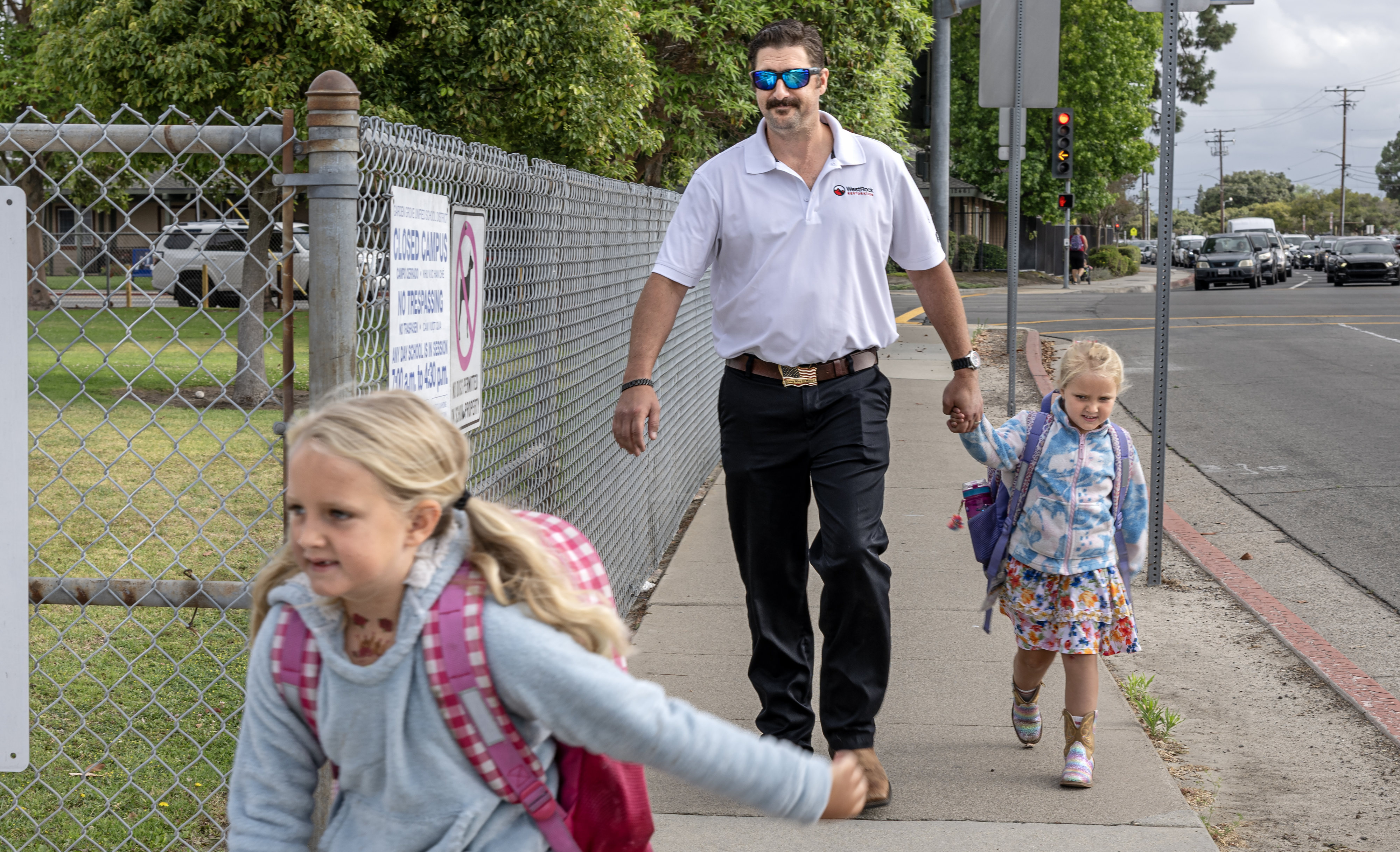
Jonathan Wighton walks his daughters, Alice, 7, left, and Kelly, 4, to elementary school in Garden Grove on Tuesday, May 26, 2026. As Alice raced into the schoolyard, Wighton said, the girls were excited to get back after an evacuation order from a potential chemical explosion. “They missed all the fun stuff they were supposed to do.” The family stayed with relatives several days and returned home late Monday. “Everything seems back to normal,” Wighton said. “Neighbors were active and lively, walking dogs and watering lawns.” (Photo by Mindy Schauer, Orange County Register/SCNG)
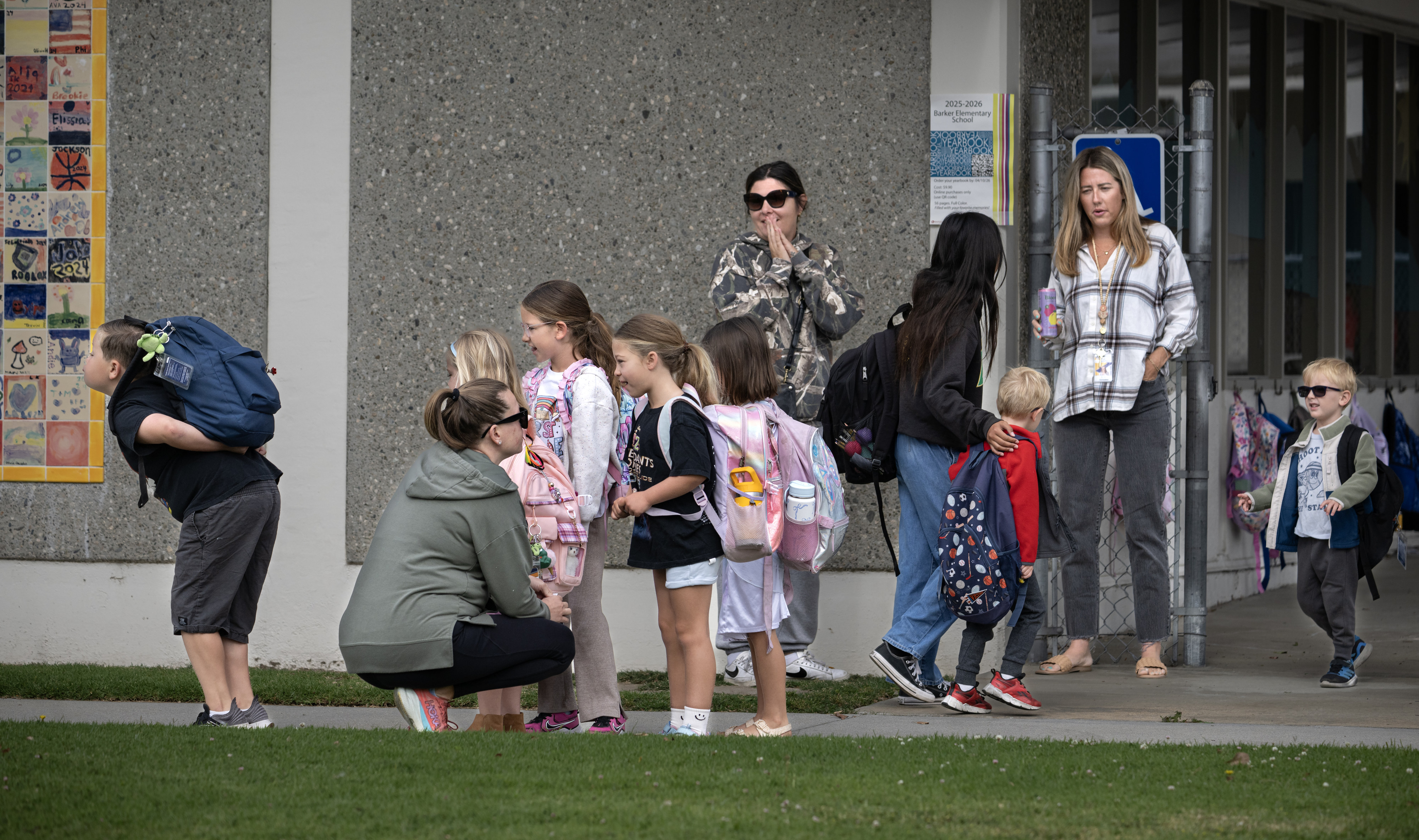
Barker Elementary school opened back up in Garden Grove on Tuesday, May 26, 2026, after an evacuation order shut it down for a few days because of the threat of a chemical explosion at a nearby aerospace company. (Photo by Mindy Schauer, Orange County Register/SCNG)

Helen Dam’walks he 6-year-old daughter, Taylor, left,back to school in Garden Grove on Tuesday, May 26, 2026, after an evacuation order forced school closures. The family, including younger daughter, Tegan, right, stayed with relatives in Huntington Beach. “It was very stressful, Helen Dam said. “I’m a working mom and I had to adjust quickly,” as she continued to juggle work and family.(Photo by Mindy Schauer, Orange County Register/SCNG)
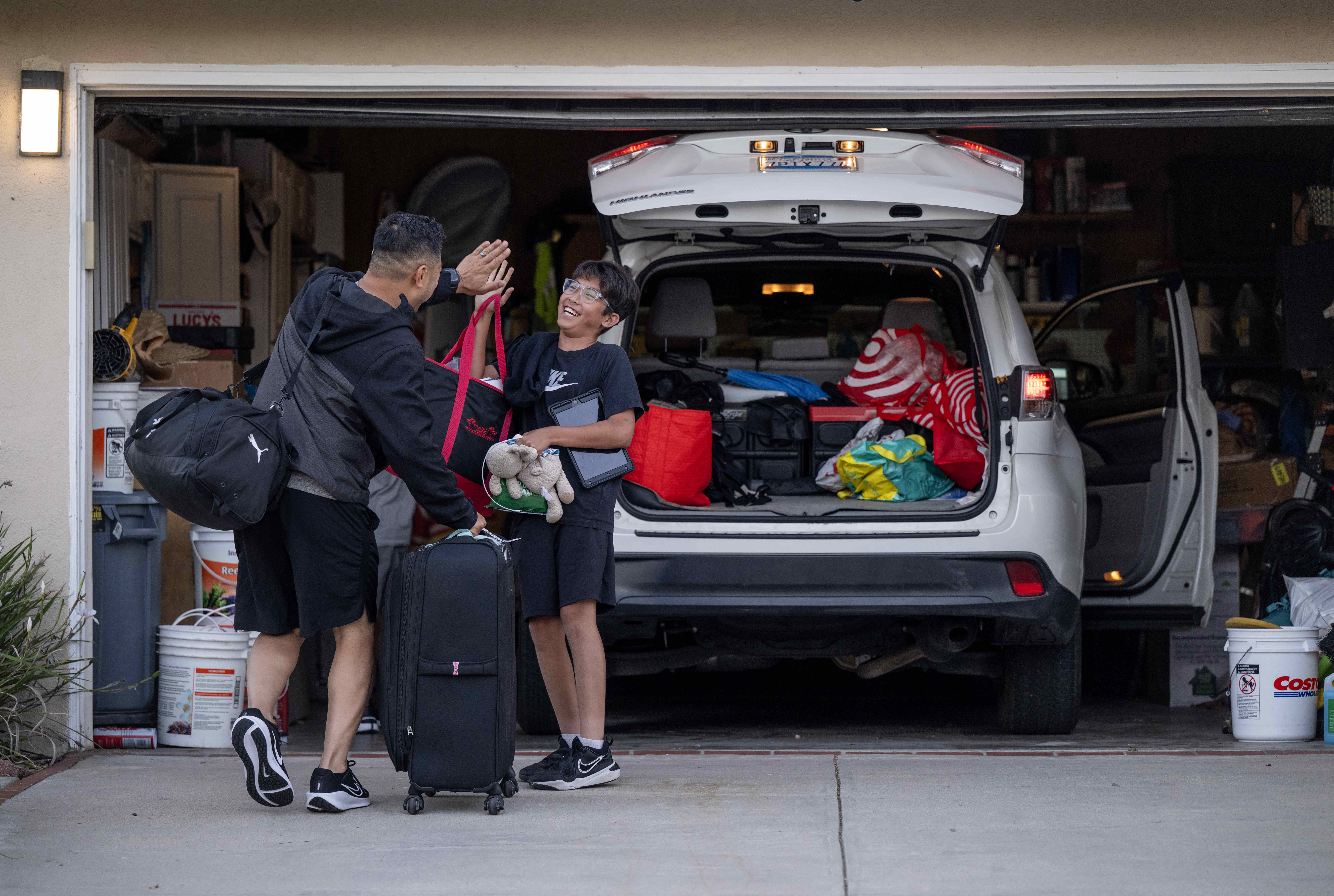
Ton Tran gives a high five to one of his two sons as they carry bags into their home after days of being evacuated from their neighborhood in Cypress due to a hazmat incident in nearby Garden Grove on Monday evening, May 25, 2026. The Trans were able to stay with family in Huntington Beach as they, and tens of thousands of residents in several nearby cities, awaited the chance to return home. (Photo by Jeff Antenore, Orange County Register/SCNG)
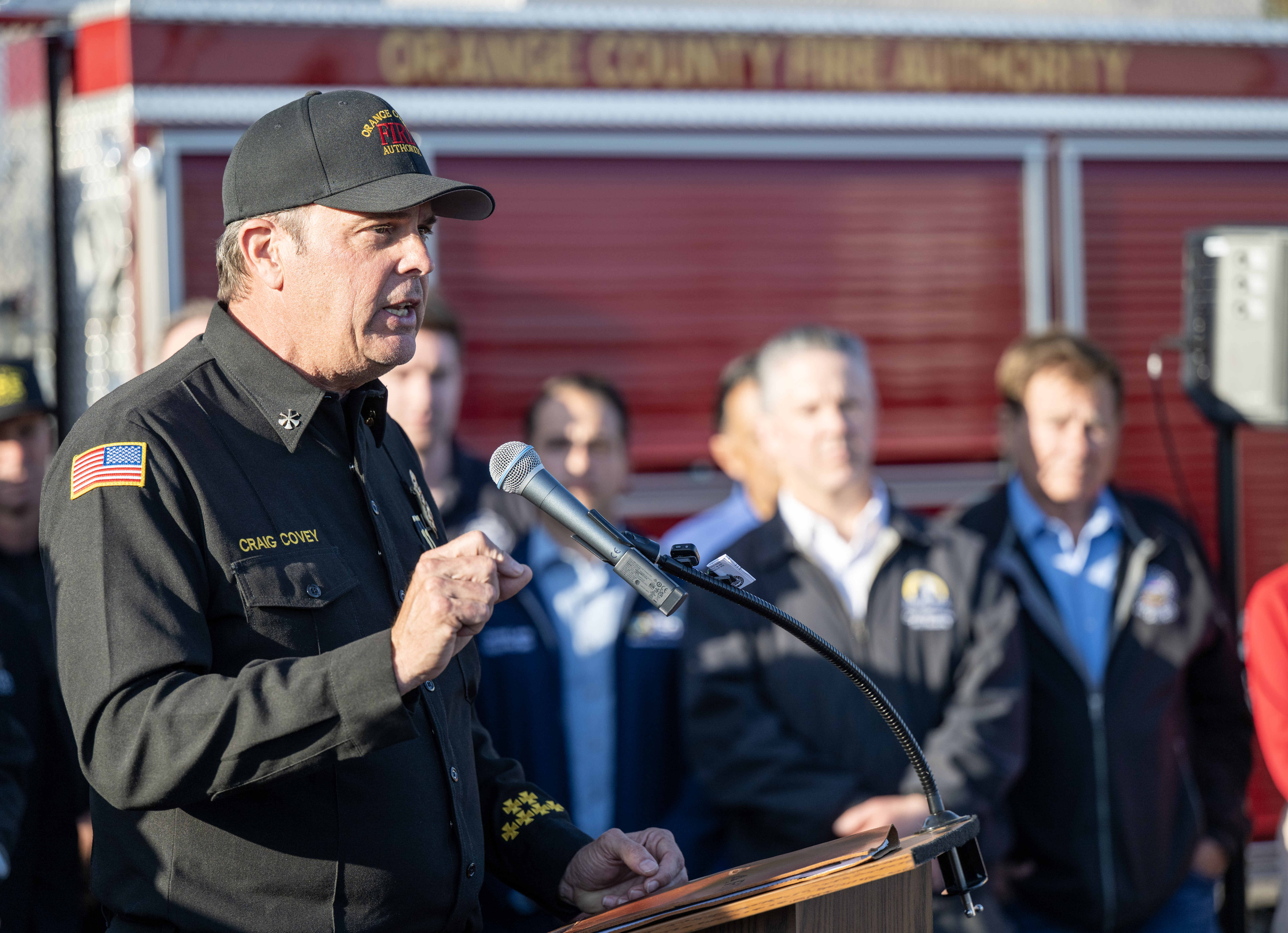
Orange County Fire Authority Chief Craig Covey updates the media and members of the public about an ongoing hazmat incident in Garden Grove that had forced some 50,000 residents in several cities to evacuate their homes, reporting that about 65% of those residents would be able to return home this evening, during a press conference at the Incident Command Post at the Los Alamitos Race Track on Monday evening, May 25, 2026. (Photo by Jeff Antenore, Orange County Register/SCNG)
Show Caption
1 of 5
Jonathan Wighton walks his daughters, Alice, 7, left, and Kelly, 4, to elementary school in Garden Grove on Tuesday, May 26, 2026. As Alice raced into the schoolyard, Wighton said, the girls were excited to get back after an evacuation order from a potential chemical explosion. “They missed all the fun stuff they were supposed to do.” The family stayed with relatives several days and returned home late Monday. “Everything seems back to normal,” Wighton said. “Neighbors were active and lively, walking dogs and watering lawns.” (Photo by Mindy Schauer, Orange County Register/SCNG)
Parents returning with their children to local elementary schools said the days of being evacuated had been stressful and confusing, but the students were excited to get back to their campuses in the last few days of class.
Some parents said the sudden shift back to normalcy was difficult to adjust to after the days of evacuations, especially for families staying as far away as Palm Springs. Still, many said they did not want their children to miss end-of-year activities.
Helen Dam and her family, including two young daughters, had stayed with relatives in Huntington Beach.
“It was very stressful,” Dam said, but she made it work. “I’m a working mom, and I had to adjust quickly.”
The business districts in the areas where evacuations lifted were still returning to normal on Tuesday. A couple of owners said employees had been concerned about returning and they were still getting a handle on how to recoup from the days of lost business.
Over the weekend, OCFA officials said first responders had been told by the GKN facility’s staff that there was nothing they could do, and that the tank filled with 7,000 gallons of methyl methacrylate likely would fail.
OCFA interim fire chief TJ McGovern said that was “unacceptable” and that the authority “had to come up with options, solutions. That’s what we do.”
Yau on Tuesday said the water being used to cool the tank down goes into a storm drain and to the ocean, with authorities doing testing on the water after it hits the tank to make sure it is not contaminated.
“If there is material in the water, we have equipment in place to capture that material” with underflow dams – a specialized spill-containment barrier used in shallow bodies of water to trap floating pollutants, Yau said.
GKN Aerospace, based in the United Kingdom, has 32 manufacturing sites in 12 countries and 16,000 employees, according to its website. The company supplies airframe and engine structures and landing gear, among other aerospace products.
The company, in a statement on Tuesday, May 26, said the evacuation zone was reduced “based on data and consultation with experts” and that to date “there have been no leaks or contamination.”
“We are continuing to work around the clock with the OCFA, the (Environmental Protection Agency) and all relevant federal, state and local agencies,” the statement read.
“We apologize for the ongoing disruption this incident is causing, and our priority remains the safety of our neighbors and our community,” the statement continued. “We request that all those affected follow instructions issued by local authorities and emergency personnel at this time.”
Methyl methacrylate – also known as MMA — is a highly toxic substance that can “impact the respiratory system, cause skin irritation and eye irritation,” Covey said.
It is used as an ingredient in heat-resistant coatings in the aerospace industry and had a long history as an ingredient in products used in nail salons, but it was banned at salons in California since at least 2015.