
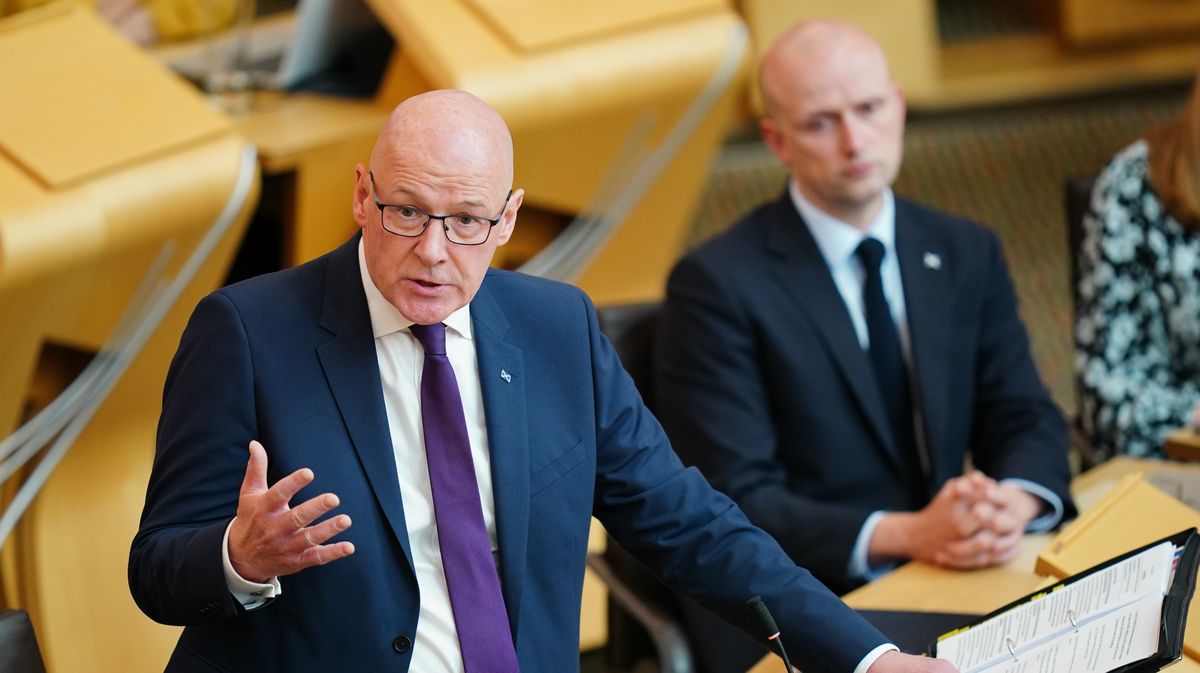
SNP and Green MSPs teamed up to pass a symbolic motion at the Scottish Parliament tonight to demand an IndyRef2 – but Downing Street will take no notice.
17:49, 26 May 2026Updated 17:54, 26 May 2026
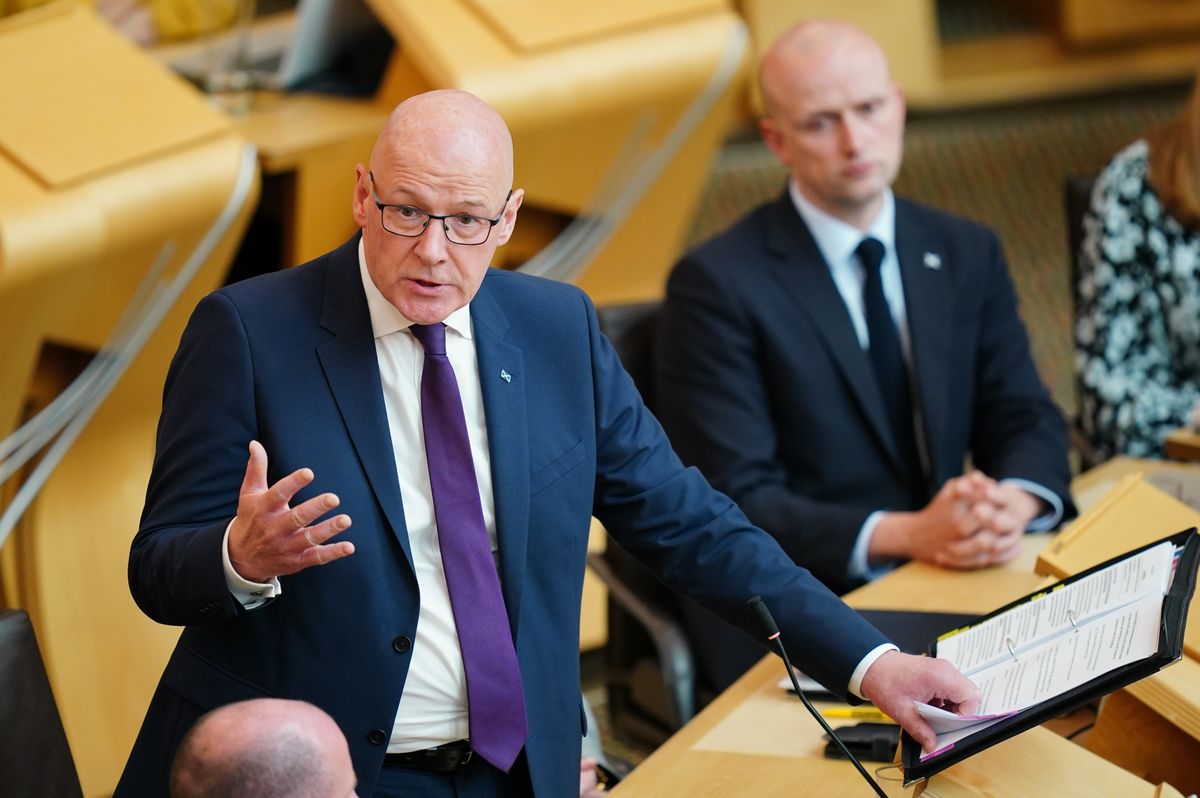
John Swinney made a demand for an IndyRef2 a central part of his reelection campaign
John Swinney has claimed Scots will “resoundingly” vote for independence if a second referendum takes place in the future.
But the First Minister’s latest demand for the UK Government to sanction an IndyRef2 was rejected just minutes after SNP and Green MSPs teamed up to pass a symbolic motion on the subject.
A Downing Street spokesman said tonight: “People need and want their governments focused on the issues that really matter — economic growth, the cost of living, and public services. Our focus must be on delivery, not division.”
The First Minister had spoken out ahead of a symbolic vote at Holyrood today which saw the SNP and Greens team-up to demand Westminster agree to the staging of an IndyRef2.
Swinney made independence a central part of his reelection campaign in the run-up to the poll on May 7, which saw the SNP fall short of a majority and its vote share drop.
The SNP leader used the first full day of the new Scottish Parliamentary term to claim the UK will give Scotland “greater prosperity”, as a result of the country having control over its energy and being able to rejoin the European Union.
The First Minister declared: “Together, these offer Scotland a golden opportunity, and it is one that I believe people will vote for resoundingly when our nation has, once again, the ability to decide our own future in an independence referendum.”
READ MORE: Peter Murrell may have paid for Nicola Sturgeon’s lavish bookshelves with stolen SNP fundsREAD MORE: Peter Murrell ‘stole money’ from Alex Salmond over thirty years ago
The Scottish Greens backed the FM. Co-leader Ross Greer said: “The Scottish Greens have always believed that independence is the best choice for Scotland, not as an end, but as a means to a greater end.”
But Scottish Labour leader Anas Sarwar said the debate was a “missed opportunity” to discuss other issues in Scotland as the first debate of the new Scottish Parliament.
He said: “If you look at the balance of the motion we’re being asked to vote on today, it’s overwhelmingly about one issue and one issue alone, and that is the SNP First Minister’s only ambition and all the obsession, and that is the issue of independence, and I think that is a missed opportunity in this first debate of this new Parliament.”
Scottish Conservative leader Russell Findlay slammed Swinney for choosing to debate independence a day after former first minister Nicola Sturgeon’s estranged husband Peter Murrell was jailed for embezzling SNP funds.
Findlay declared: “The timing of today’s debate is comical. Today of all days John Swinney is banging the independence drum when the news agenda is dominated by his party stealing money from their own members and supporters, money the SNP promised to ring-fence for independence.”
Scottish Lib Dems leader Alex Cole-Hamilton said the SNP Government’s motion was part of the reason constituents do not have “attention or trust” in the Scottish Parliament.
He said: “This is a microcosm of the inadequacies of this SNP Government, taking time for parliamentary debates like this does nothing to save our constituents.
“No wonder they do not have the attention or the trust in this parliament that they used to.”
A Downing Street spokesman said: “The UK Government does not support independence or another referendum.
“People need and want their governments focused on the issues that really matter — economic growth, the cost of living, and public services. Our focus must be on delivery, not division.
“The Scottish Government has work to do using the powers that it has to get the basics right from the ferry network to our NHS and helping people with the cost of living.
“Ahead of 2014 there was agreement across all parties, across civic society in Scotland and across the Scottish and UK parliaments that there should be a referendum. There is no such consensus now.”