

As a Tottenham fan, I have spent most of this season describing it as disastrous.
And objectively, that makes sense.
Spurs finished 17th in the Premier League – the lowest possible position without being relegated. Safety was only mathematically secured on the final day of the season. For long stretches of the year, performances were poor, confidence was low, and the entire campaign felt like it was drifting towards catastrophe.
By almost every emotional measure, this was the worst Tottenham season of my lifetime.
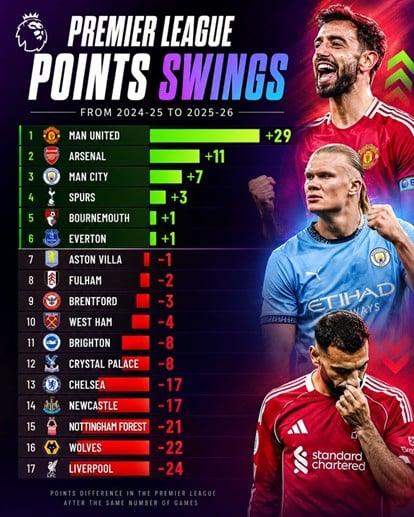
Source: @MarkBrusCOS on X
And yet, today I came across a statistic that completely disrupted that narrative.
Compared to last season, Spurs actually improved their points tally.
Not by much – just three points – but still an improvement. In fact, only six Premier League teams improved their points total this season, and Spurs ranked fourth in the league for year-on-year improvement.
At first glance, it makes absolutely no sense.
Everyone knows this season was worse. We all experienced it as worse. And yet, one formal measurement says the opposite.
That contradiction has stayed with me because, in a completely different context, it feels very similar to the situation I am currently navigating with FZY Israel Tour.
Right now, our Israel Tour program is balancing on a cliff edge.
Three of the four key indicators we use when assessing whether a program can go ahead are, and have been for almost seven weeks, pointing in the same positive direction.
Flights are operating.
Insurance is available.
And the security assessments we follow closely – including Home Front Command and Cheder Matzav – indicate that it is possible to run educational programs safely throughout the vast majority of Israel.
Living in Israel myself, I can also see the reality on the ground. Life is not normal, but nor is the image many people outside Israel understandably imagine when they hear the word “war”.
Shops are open. Restaurants are full. Young people are traveling around the country. Schools, camps, youth movements, and educational programs are continuing in most areas. Most of the country is functioning.
And yet, despite all of this, one indicator overrides everything else.
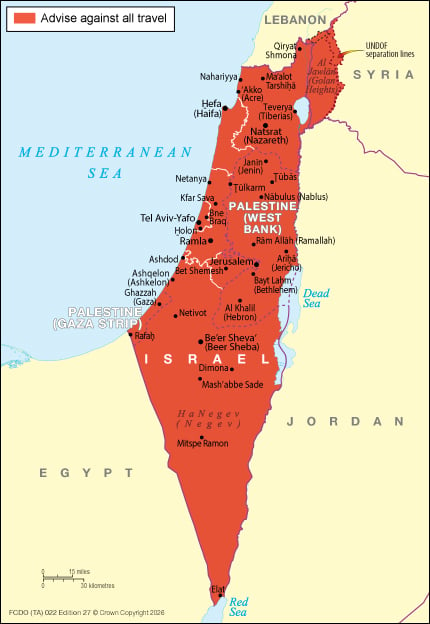
Source: FCDO Website as of 21:00 on 27th May 2026 (https://www.gov.uk/foreign-travel-advice/israel)
The Foreign, Commonwealth & Development Office (FCDO) travel advice to Israel remains at the highest level: red – advising against all travel to Israel.
Formally, that changes everything.
And so we are left holding two realities at once.
The lived reality many of us are experiencing.
And the formal framework that defines something very different.
To be clear, I understand why governments issue cautious travel advice. Their responsibility is enormous. They are not assessing whether daily life is functioning; they are assessing risk at a national level and understandably taking the most risk-averse position possible.
But it is difficult not to notice the inconsistencies.
Other countries in the region that have experienced missile and drone threats connected to the same conflict remain under lower levels of travel advisory. Even Lebanon – despite the ongoing conflict in its south – is not entirely under red warning, with distinctions made between different regions of the country.
And that naturally raises questions.
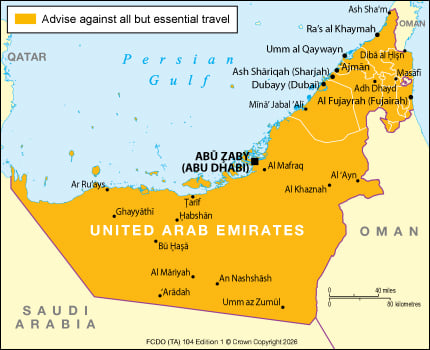
Source: FCDO Website as of 21:00 on 27th May 2026 (https://www.gov.uk/foreign-travel-advice/united-arab-emirates)
If northern Israel presents a different level of risk, why is there no regional differentiation in the guidance? Why is the entire country treated uniformly when the lived realities across different areas are so varied? Why is the level of risk different in Israel to that of UAE or a handful of other counties in the Middle East which came under attack from Iran and in some cases are still receiving missile and drone attacks where Israel is not?
These are not accusations. They are genuine questions that become difficult to ignore when you are responsible for making decisions that affect hundreds of young people, staff, and families.
Leadership often means living with these tensions.
Sometimes the data says one thing while human experience says another.
Sometimes formal systems and lived reality fail to align.
And sometimes both are true at the same time.
Spurs really did have a terrible season.
And yet, somehow, they also improved.
Israel is living through an incredibly difficult period.
And yet, at the same time, much of the country is functioning in ways that many outside observers would find surprising.
Holding those contradictions is uncomfortable. But leadership rarely exists in places of simplicity.
As for Tottenham, I hope next season is better – both in terms of points and in how it actually feels to live through it.
And as for FZY, our hope remains that circumstances will shift in a way that allows Israel Tour to happen this summer.
But whatever happens, we will continue building meaningful, inspiring Jewish and Zionist experiences for the hundreds of young people who are part of our movement.
Because ultimately, leadership is not just about navigating the reality you hoped for.
It is about responding responsibly to the reality you actually have.
Joel grew up in Redbridge, UK before moving to Modi’in, Israel whilst in his twenties. For the past two decades plus, Joel has been a Jewish communal professional. Currently working as the Executive Director of FZY, the largest and oldest Zionist youth movement in the UK, Joel spends his days supporting the building of connections between British Jewish youth to Israel. Joel is married and has two daughters.