
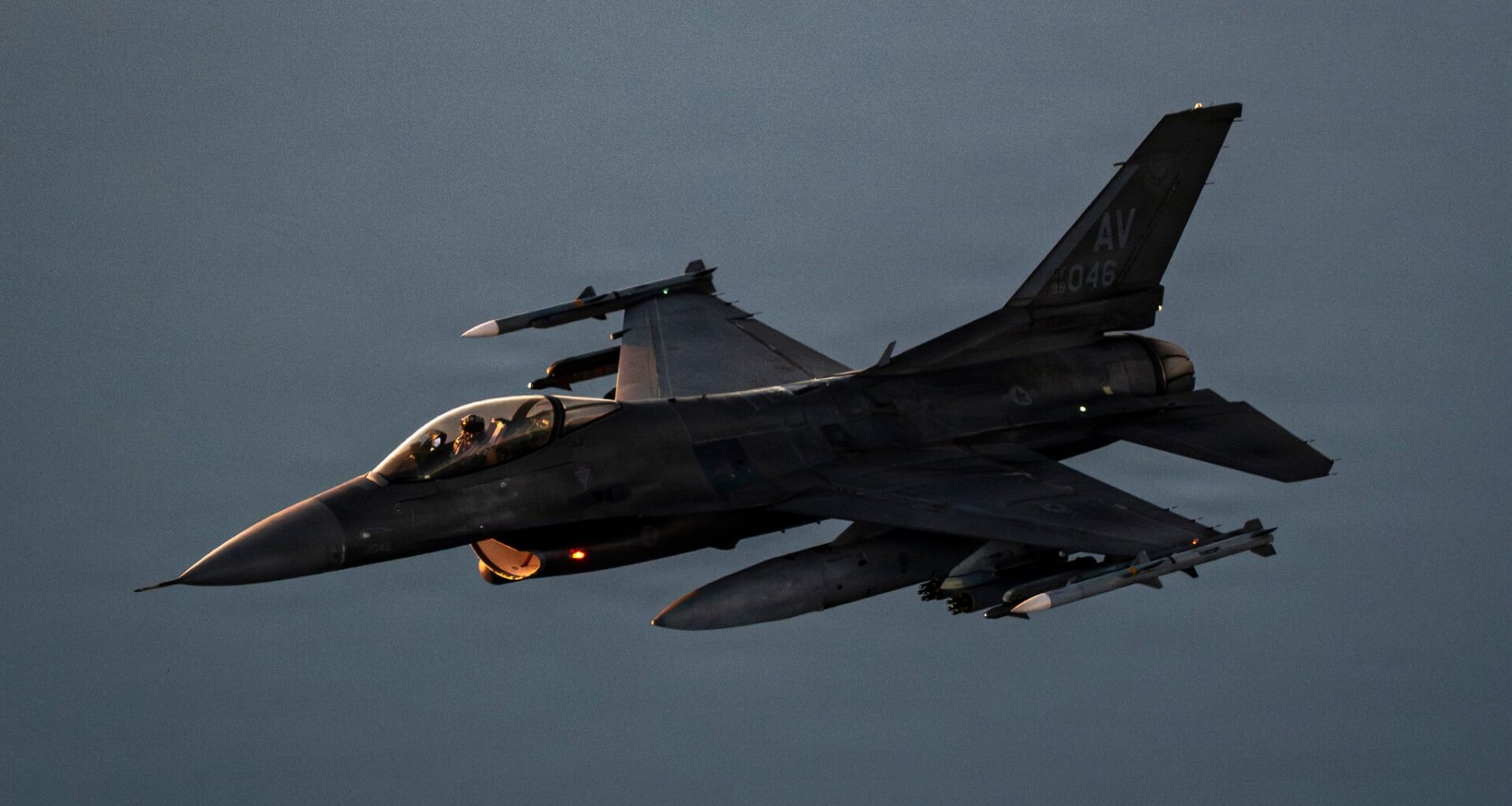
The United States struck southern Iran on Thursday, after Iran fired drones at ships trying to cross the Strait of Hormuz, drawing retaliation from Tehran against a US military base, in the most serious clashes since an April ceasefire began.
The fighting, which drew in US ally Kuwait, threatened to jettison a fragile diplomatic push to forge a peace agreement and reopen the Strait of Hormuz, which has become a key point of contention in efforts to formally end the war.
The fresh fighting appeared to begin when Iranian forces fired at four ships attempting to cross the strait, state broadcaster IRIB reported on Thursday.
“Four vessels attempted to cross the Strait of Hormuz and enter the Persian Gulf without coordination with the security forces,” IRIB posted on Telegram, saying the incident took place at around 12:35 a.m. local time. It did not provide details on the ships.
“They were warned, but after they ignored the warning, warning shots were fired at them, forcing them to return,” the broadcaster added.
Get The Times of Israel’s Daily Edition
by email and never miss our top stories
By signing up, you agree to the terms
US forces launched strikes that hit a ground control station in the southern port area of Bandar Abbas, a US official, speaking on condition of anonymity, told AFP.
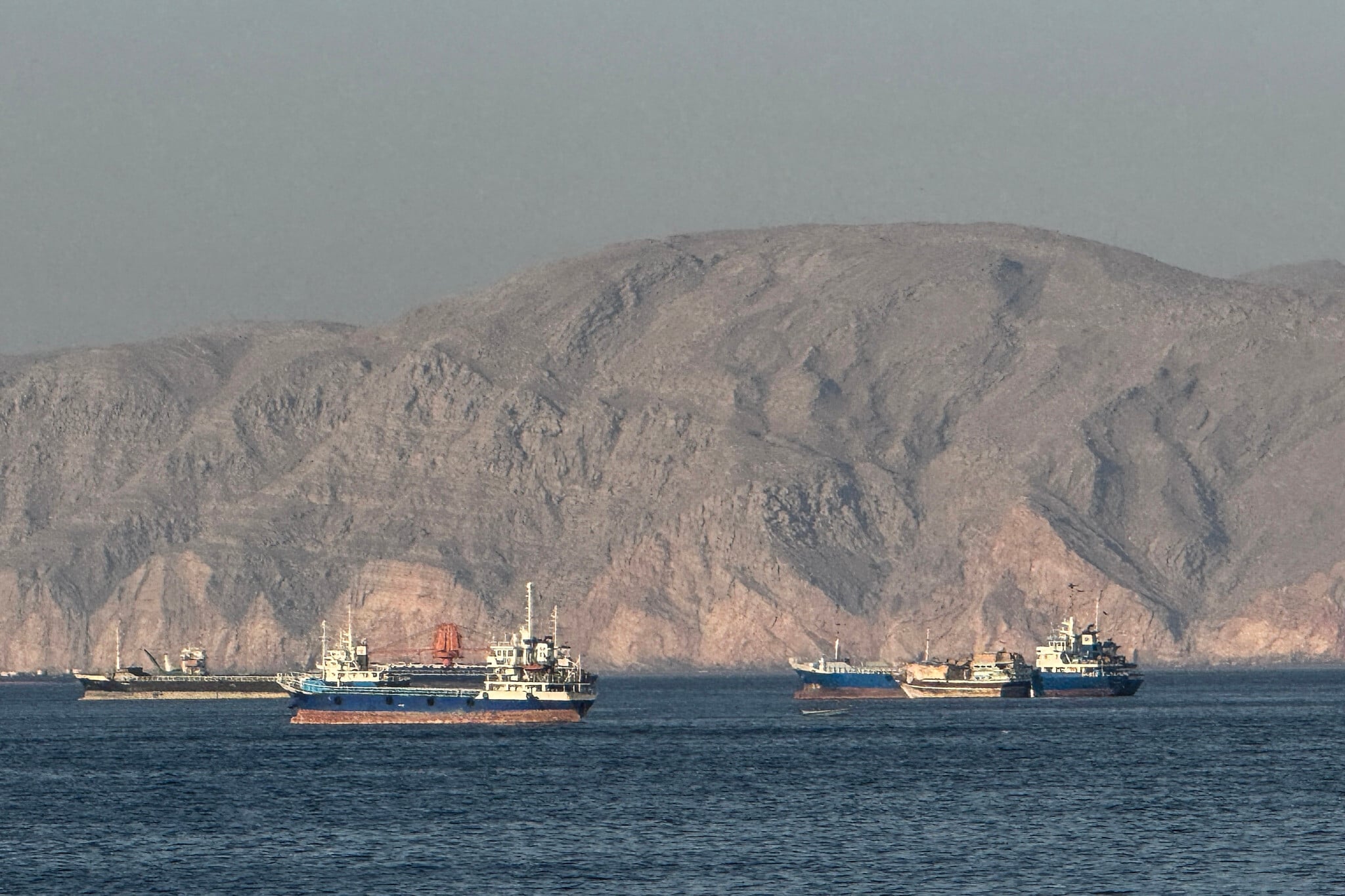
Vessels are seen anchored in the Strait of Hormuz, off the port city of Khasab on Oman’s northern Musandam Peninsula on May 17, 2026. (AFP)
According to Reuters, also citing a US official, the military also shot down four Iranian attack drones and hit the station before a fifth could launch.
“These actions were measured, purely defensive and intended to maintain the ceasefire,” the official said.
Three explosions were heard east of Bandar Abbas at around 1:30 a.m. local time, Iranian media reported early on Thursday, adding that air defenses were activated for several minutes and that authorities were following up to determine the origin of the sounds.
The attack prompted a swift response by Iran. A Guards spokesperson, quoted by IRIB, said it “targeted” the American base that the attack on Bandar Abbas was launched from at 4:50 a.m.
The Guards did not provide details on the location of the base, though Kuwait’s military said its air defenses responded to an “enemy” attack on Thursday.
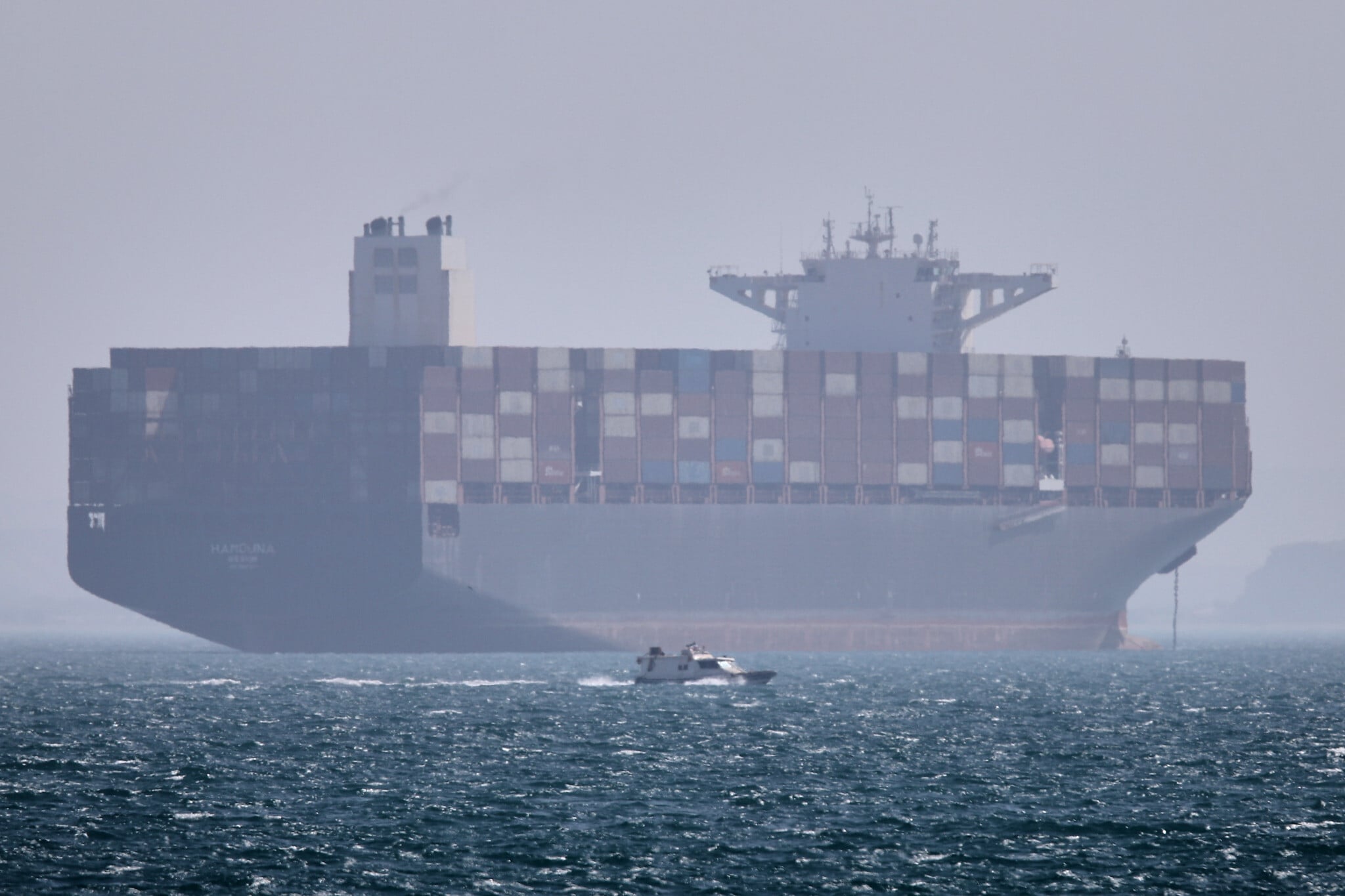
A container ship sits at anchor as a small motorboat passes in the foreground in the Strait of Hormuz off Bandar Abbas, Iran, May 2, 2026. (Amirhosein Khorgooi/ISNA via AP)
Kuwait’s army said air defenses were deployed against missile and drone threats, without specifying their origin. It said explosions heard in the country were from interceptions.
Kuwait repeatedly came under fire from Iran and Iranian-backed Shiite militias in Iraq during the war.
The exchange of fire was the second flare-up in fighting this week. US forces on Monday attacked missile sites in southern Iran and boats trying to lay mines, describing the moves as defensive.
The strikes drew a thinly veiled threat from Iranian Supreme Leader Ayatollah Mojtaba Khamenei, but Thursday marked the first time since fighting halted that Iran retaliated against the US, potentially ratcheting up tensions even as the sides attempt to hash out a deal suspending the conflict.
US President Donald Trump has repeatedly said the end of the war is close, but told the media at a cabinet meeting on Wednesday he was not yet satisfied on a deal with Iran and the US was not discussing easing sanctions on it.
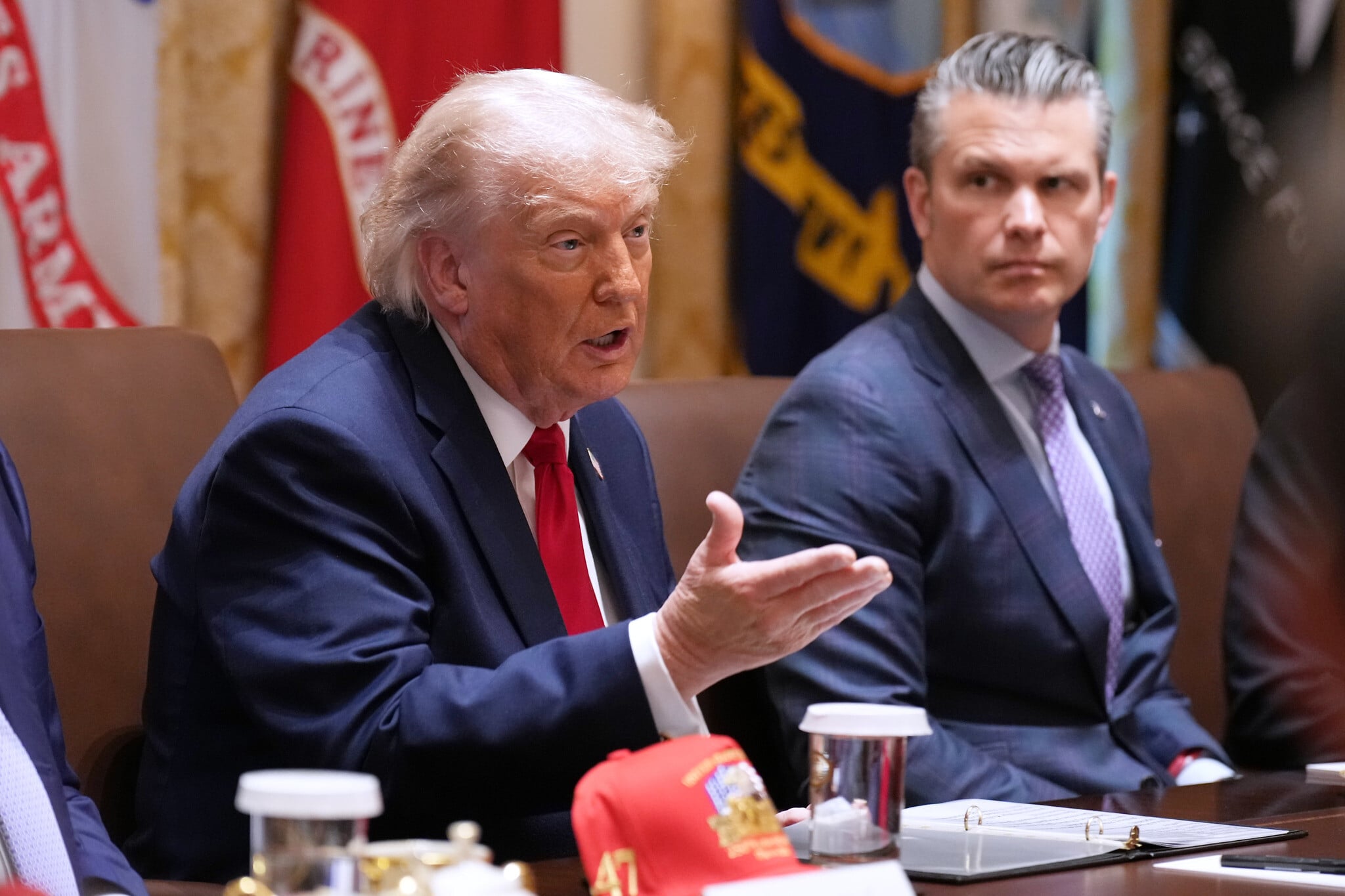
US President Donald Trump speaks during a Cabinet meeting at the White House, May 27, 2026, in Washington, as Secretary of Defense Pete Hegseth looks on. (AP Photo/Jacquelyn Martin)
The US is seeking a deal with Iran that will keep it from nuclear enrichment activities, and wants to extract a stockpile of already near-bomb grade uranium.
Aside from seeking sanctions relief, Iran is insisting that the US unfreeze Iranian funds, the deputy secretary of its National Security Council said, according to a report by Iran’s semi-official Tasnim news outlet.
“We are seeking the release of all Iranian assets blocked by the United States, and this is the legal right of the Iranian nation,” Ali Bagheri Kani said. “Iran’s assets must be fully and unconditionally returned to Iran.”
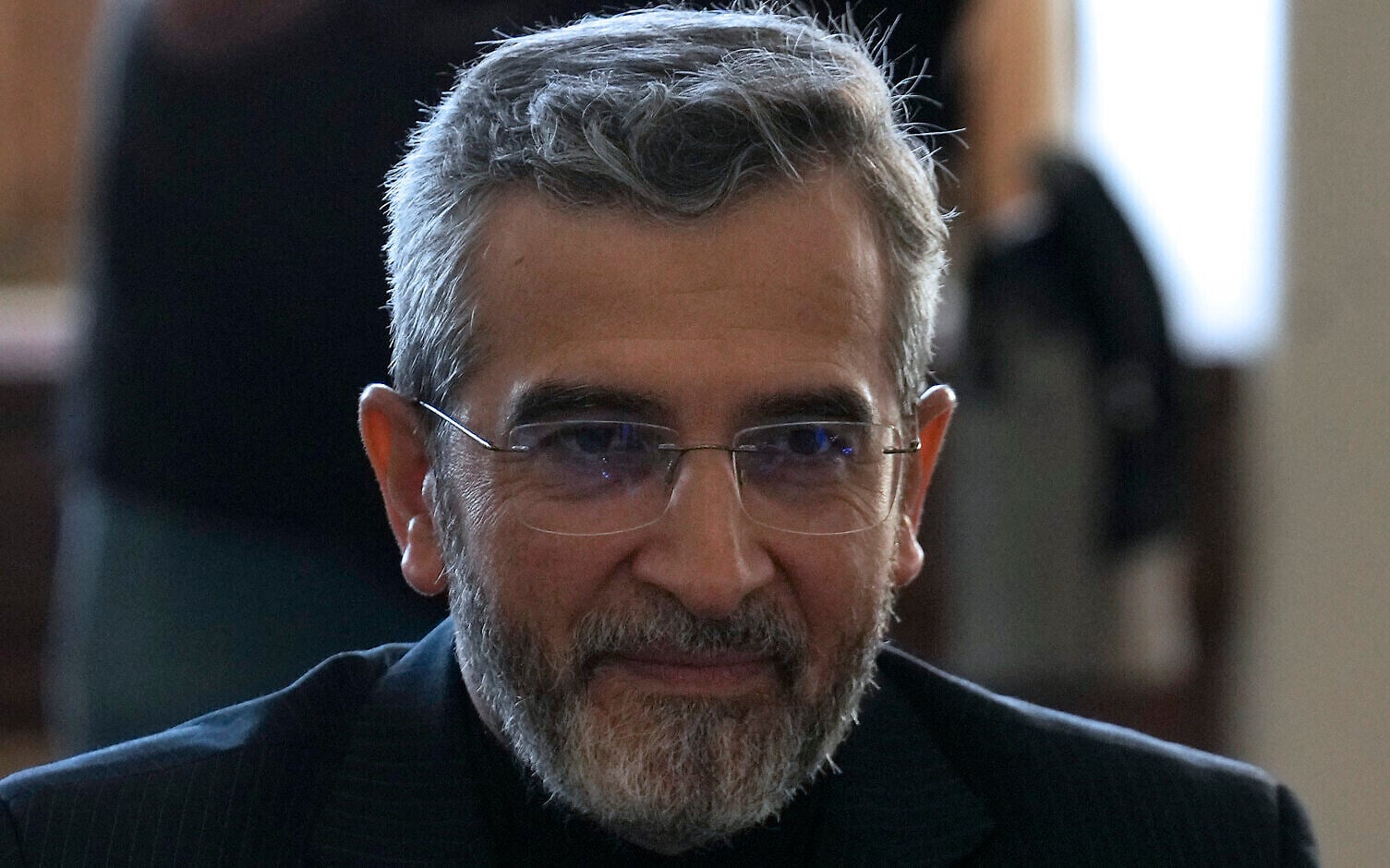
Iran’s then-acting Foreign Minister Ali Bagheri Kani sits in a meeting with Jordan’s Foreign Minister Ayman Safadi, in Tehran, Iran, August. 4, 2024. (AP Photo/Vahid Salemi)
According to officials, the sides have been nearing an agreement that defers the nuclear issue but restores full traffic to the Strait of Hormuz, which Tehran has effectively closed since shortly after the US and Israel began attacking Iran on February 28.
The blockage has left global energy markets grappling with curbed supplies of the huge amounts of oil and gas that normally pass through it.
Oil prices bounced higher on Thursday after reports of the strikes, reversing much of Wednesday’s fall on the hopes of a possible imminent deal.
The waterway is covered by international law that guarantees foreign vessels the right to pass through.
However, Iran recently announced the formation of a state agency tasked with overseeing the waterway, seen by many as a mechanism that will be used to collect tolls from ships plying the vital waterway.
On Wednesday, the US Treasury Department said it had slapped sanctions on the Persian Gulf Strait Authority, saying anyone cooperating with the authority may be providing support to and receiving services from Iran’s Islamic Revolutionary Guard Corps and could be sanctioned as well.
“The Iranian military’s latest attempt to extort global maritime trade is proof that Economic Fury has left the regime desperate for cash,” Treasury Secretary Scott Bessent said, referring to a US blockade on Iranian maritime shipping.
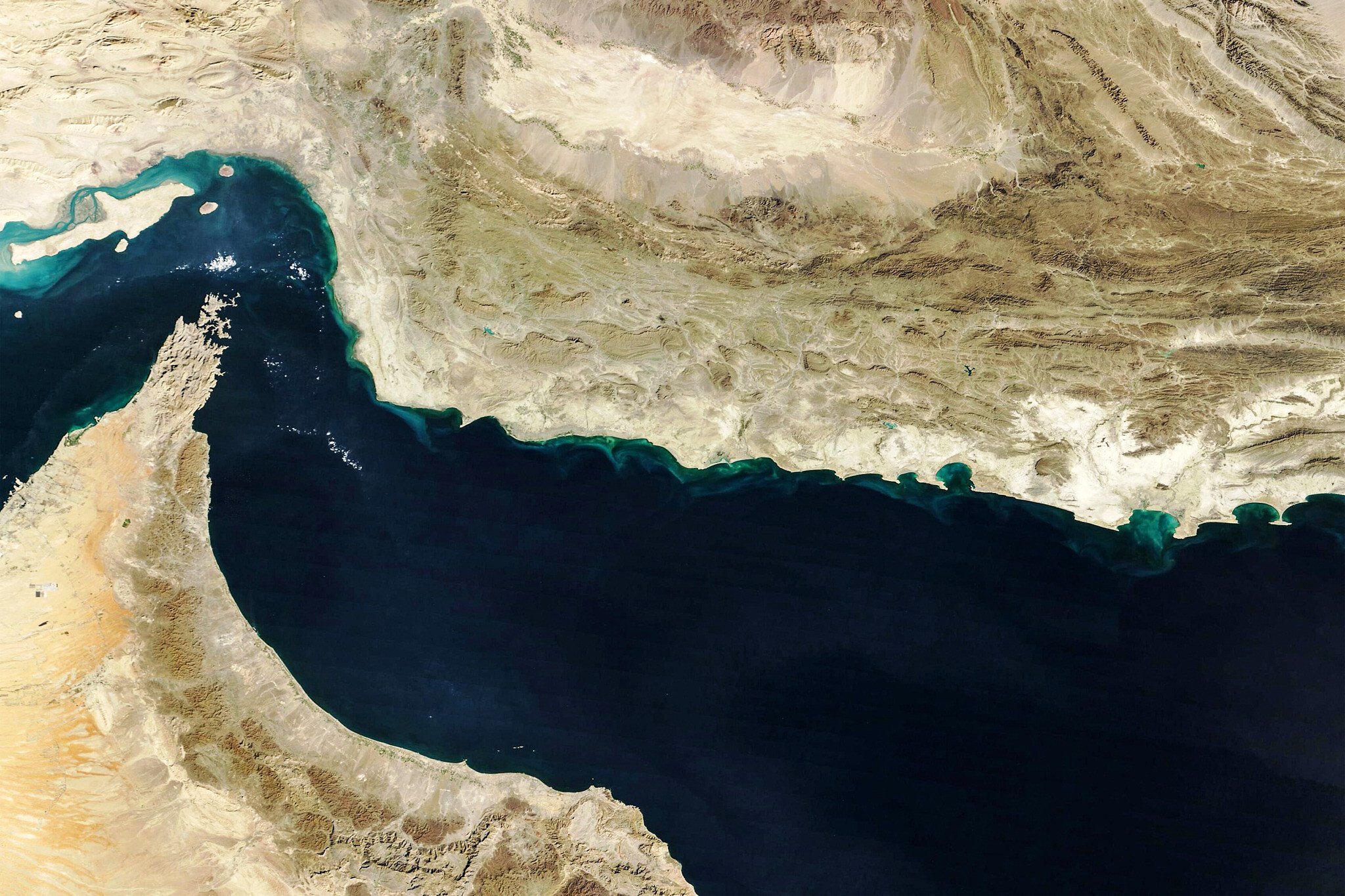
This handout natural-color image acquired with MODIS on NASA’s Terra satellite taken on February 5, 2025, shows the Gulf of Oman and the Strait of Hormuz (upper left). (NASA Earth Observatory / AFP)
The Persian Gulf Strait Authority published a map last week representing Tehran’s claims to a wide stretch of water on either side of the choke point, which is also bound by the United Arab Emirates and Oman.
Iran and the United States have traded threats for weeks while negotiating through Pakistani mediation.
On Wednesday, the Guards’ navy said only ships “willing to abide by Iranian order” could pass through Hormuz.
Iran has also insisted any peace accord must apply to Lebanon, where an April 17 ceasefire has done little to halt fighting between Israel and Hezbollah. The Iranian proxy terror group began attacking Israel in early March in response to the US-Israeli military campaign against the Islamic Republic.
You’re a dedicated reader

That’s why we started the Times of Israel – to provide discerning readers like you with must-read coverage of Israel and the Jewish world.
So now we have a request. Unlike other news outlets, we haven’t put up a paywall. But as the journalism we do is costly, we invite readers for whom The Times of Israel has become important to help support our work by joining The Times of Israel Community.
For as little as $6 a month you can help support our quality journalism while enjoying The Times of Israel AD-FREE, as well as accessing exclusive content available only to Times of Israel Community members.
Thank you,
David Horovitz, Founding Editor of The Times of Israel