
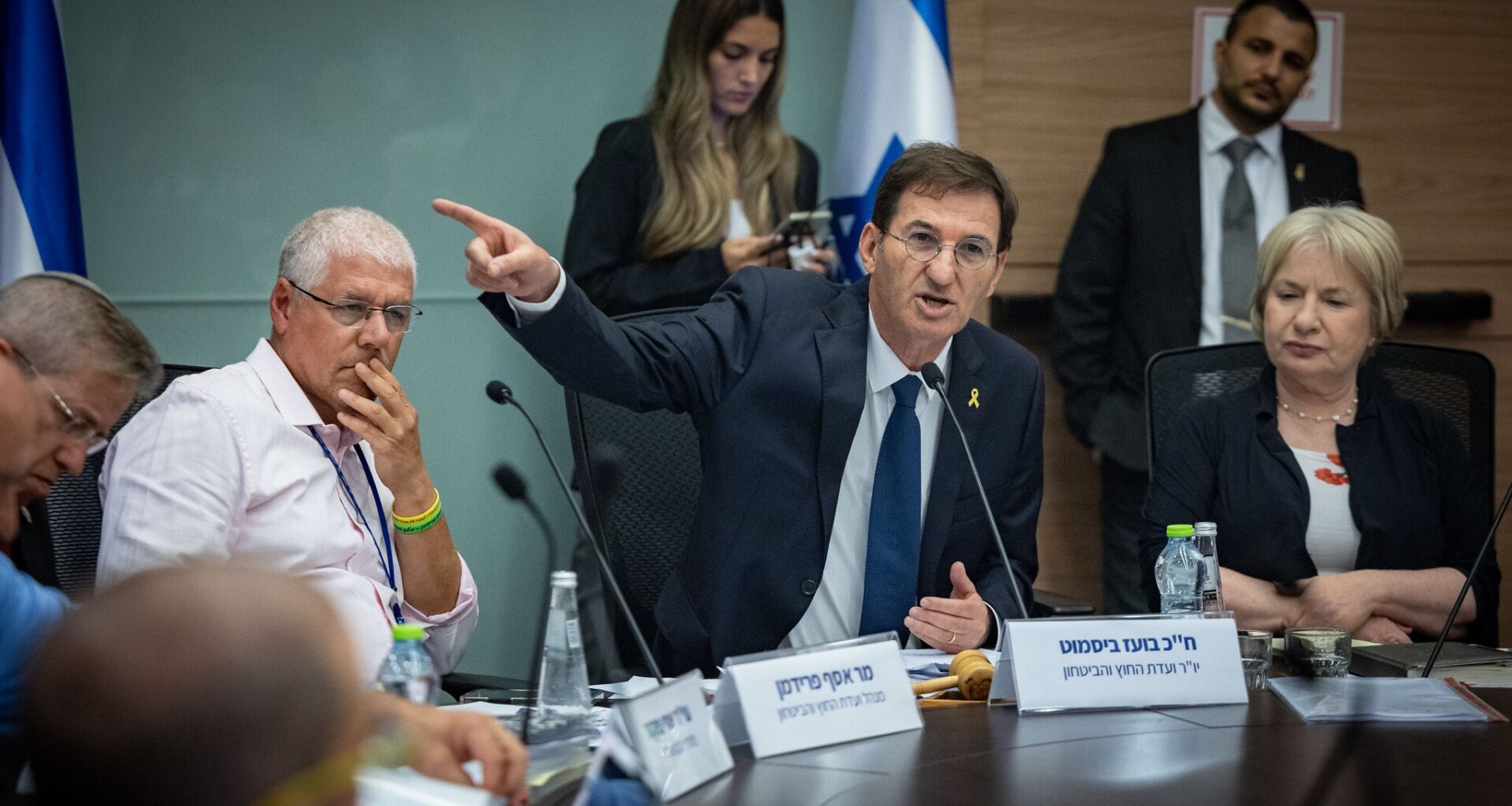
The Foreign Affairs and Defense Committee resumed discussing the coalition’s proposed Haredi conscription bill on Tuesday, just under a month after the Knesset’s two ultra-Orthodox factions quit the government after being presented with a draft containing harsh sanctions against draft evaders.
It was the first hearing on the matter since lawmakers voted to replace former chairman Yuli Edelstein with fellow Likud MK Boaz Bismuth to advance the controversial legislation, which critics have dubbed the “evasion bill.”
Addressing the committee on Tuesday afternoon, Bismuth told lawmakers that he had held “dozens of meetings” since being appointed to head the committee last week in “an effort to hear all the voices in Israeli society and to conduct the discussions here in cooperation, together.”
Until now, the discussion has focused on disagreements and it is now time to focus on what the two sides can agree on because “we are all in favor of a draft law because the army needs soldiers,” he said, adding that “even as a committee member I said that I wish that both sides would say out loud what they are telling me quietly. We will look for what unites us.”
“This is a democracy, and everyone can say whatever they want, up to a certain limit — when it harms the army or my ultra-Orthodox brothers,” Bismuth declared.
Get The Times of Israel’s Daily Edition
by email and never miss our top stories
By signing up, you agree to the terms
Bismuth has previously insisted that Israelis must “find the balance” between tradition and Torah study, on the one hand, and military service, on the other, “to reach a historic solution.” He was reportedly presented with a list of Haredi demands, the cancellation of tens of thousands of conscription orders sent to ultra-Orthodox men over the past year, ahead of Tuesday’s meeting.
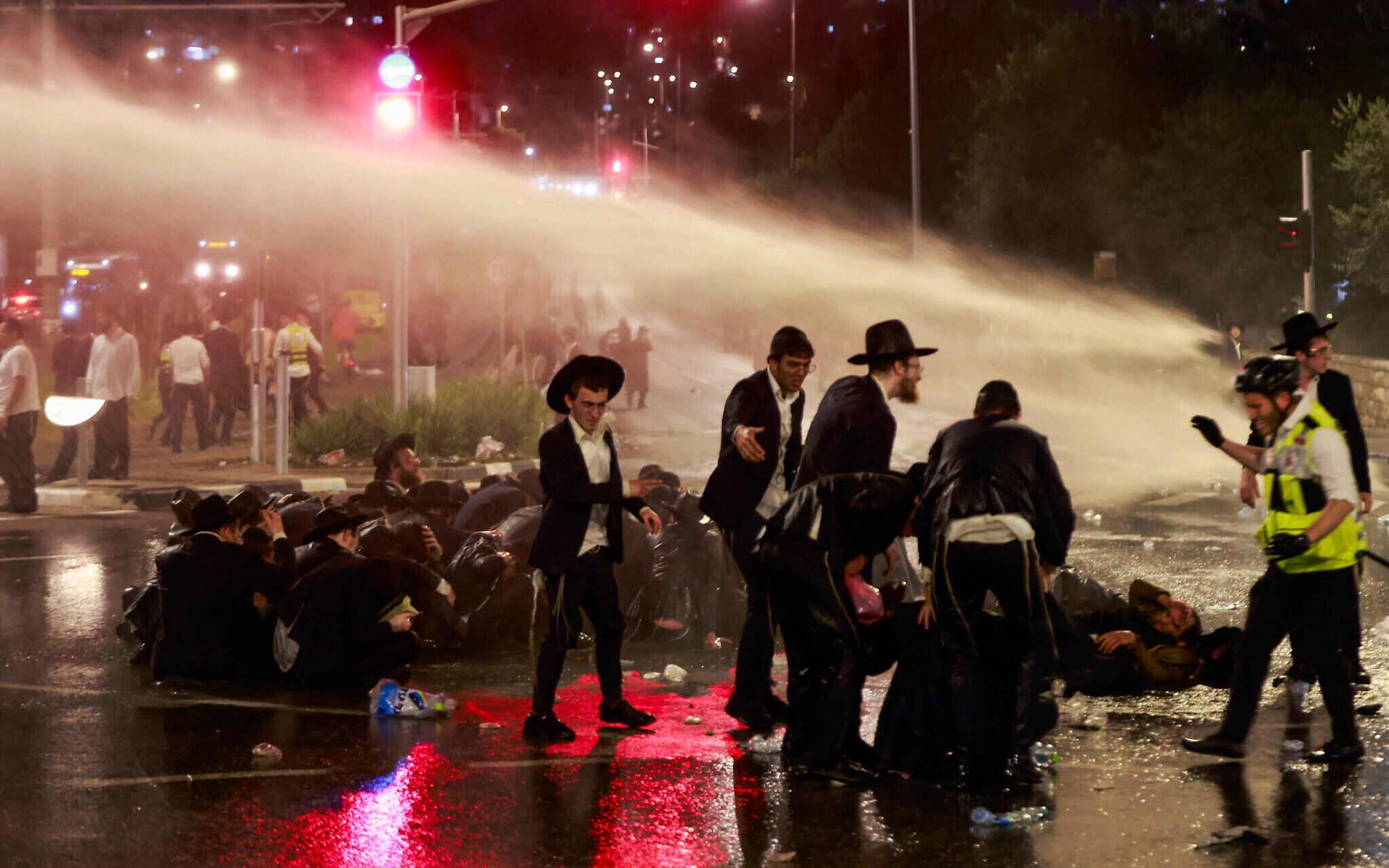
Police use a water cannon to disperse ultra-Orthodox demonstrators as they protest military enlistment orders and the arrest of yeshiva students who avoided the orders, during a rally in Jerusalem on August 7, 2025. (Menahem KAHANA / AFP)
Almost immediately after Bismuth finished his remarks, the meeting turned acrimonious, with lawmakers trading barbs and yelling at each other.
‘Shut up, draft-dodger!’
Likud MK Tally Gotliv railed against the “horrific sanctions” against draft evaders that Edelstein had advocated for as chairman of the committee, while Yesh Atid Elazar Stern launched a heated attack on Bismuth, accusing him of failing to attend the majority of committee meetings on ultra-Orthodox enlistment held before becoming chair.
In response, Shas MK Yinon Azoulay blasted Stern for arrogance, prompting the former head of the IDF’s manpower directorate to yell, “Shut up, draft-dodger!” at the ultra-Orthodox lawmaker.
Stern’s party had previously pledged to withdraw from the committee should Edelstein be replaced, but did not follow through. When asked for comment, MK Moshe Tur-Paz, a fellow Yesh Atid representative on the committee, replied that “the reserve organizations approached us and asked us not to leave but to fight for a proper law.”
Pushing back against the combative discourse, Likud MK Dan Illouz called on members of the committee to hold a discussion focused on the subject matter, rather than scoring points.
“People are just speaking in slogans,” he declared, calling on the opposition and Haredi parties “to say what they want” to come out of a conscription bill rather than to engage in rhetoric aimed at garnering views on social media.
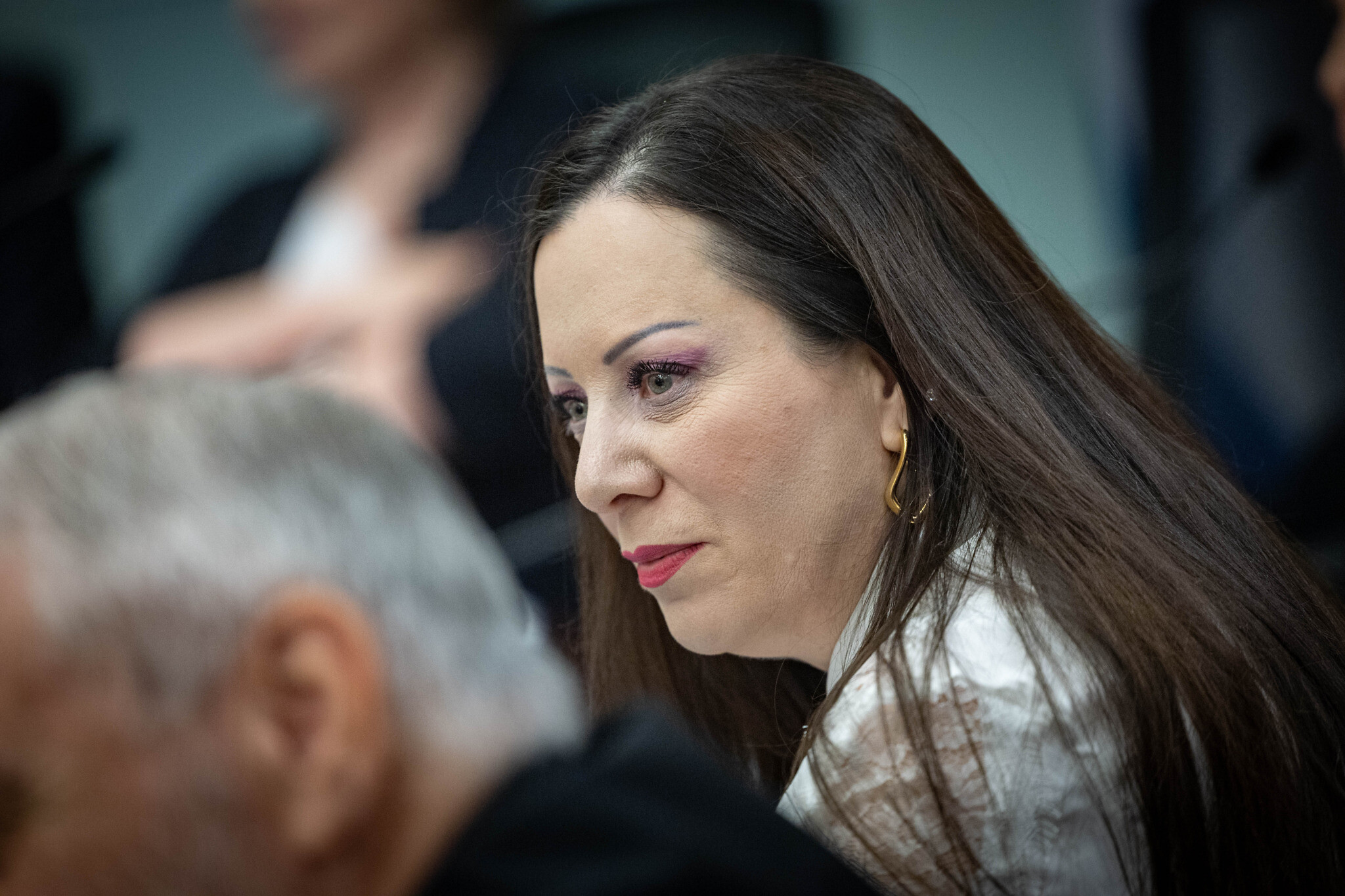
Likud MK Tally Gotliv attends a Knesset Foreign Affairs and Defense Committee meeting, August 12, 2025. (Yonatan Sindel/Flash90)
As the MKs argued, United Torah Judaism MK Uri Maklev, the Degel HaTorah faction’s point man on enlistment issues, roamed around the room, speaking with lawmakers as well as Cabinet Secretary Yossi Fuchs.
A manpower shortage
Testifying before the committee on Tuesday, Brig. Gen. Shay Tayeb, head of the IDF Personnel Directorate’s Planning and Personnel Management Division, said that only 2,940 ultra-Orthodox men were drafted to the military in 2024, far off from the IDF’s goal of 4,800.
While the number “is much higher” than the previous annual average of 1,800 Haredi soldiers, it is still “far from our target of 4,800, and even farther from the army’s needs,” he said, adding that most of the ultra-Orthodox men who enlisted last year did not enlist in special tracks for Haredi soldiers.
According to Tayeb, some 1,300 of the soldiers joined units specifically for Haredi men, while the other 1,600 enlisted to “general” service tracks.
Of the nearly 3,000 Haredi soldiers, just over 1,000 are combat troops, including 400 in the ultra-Orthodox units — including the new Hasmonean Brigade — and 650 in general combat units, he said.
Tayeb also told lawmakers that all Haredi men eligible for conscription were in the process of being called up. “Unfortunately, the rate of non-cooperation among the [Haredi] population is very high, and we have built a process that allows the [conscription] process to be carried out at a faster pace,” he stated.
Some 80,000 ultra-Orthodox men aged between 18 and 24 are currently believed to be eligible for military service, but have not enlisted. The Israel Defense Forces has said it urgently needs 12,000 recruits, due to the strain on standing and reserve forces amid the ongoing war against Hamas in Gaza and other military challenges.
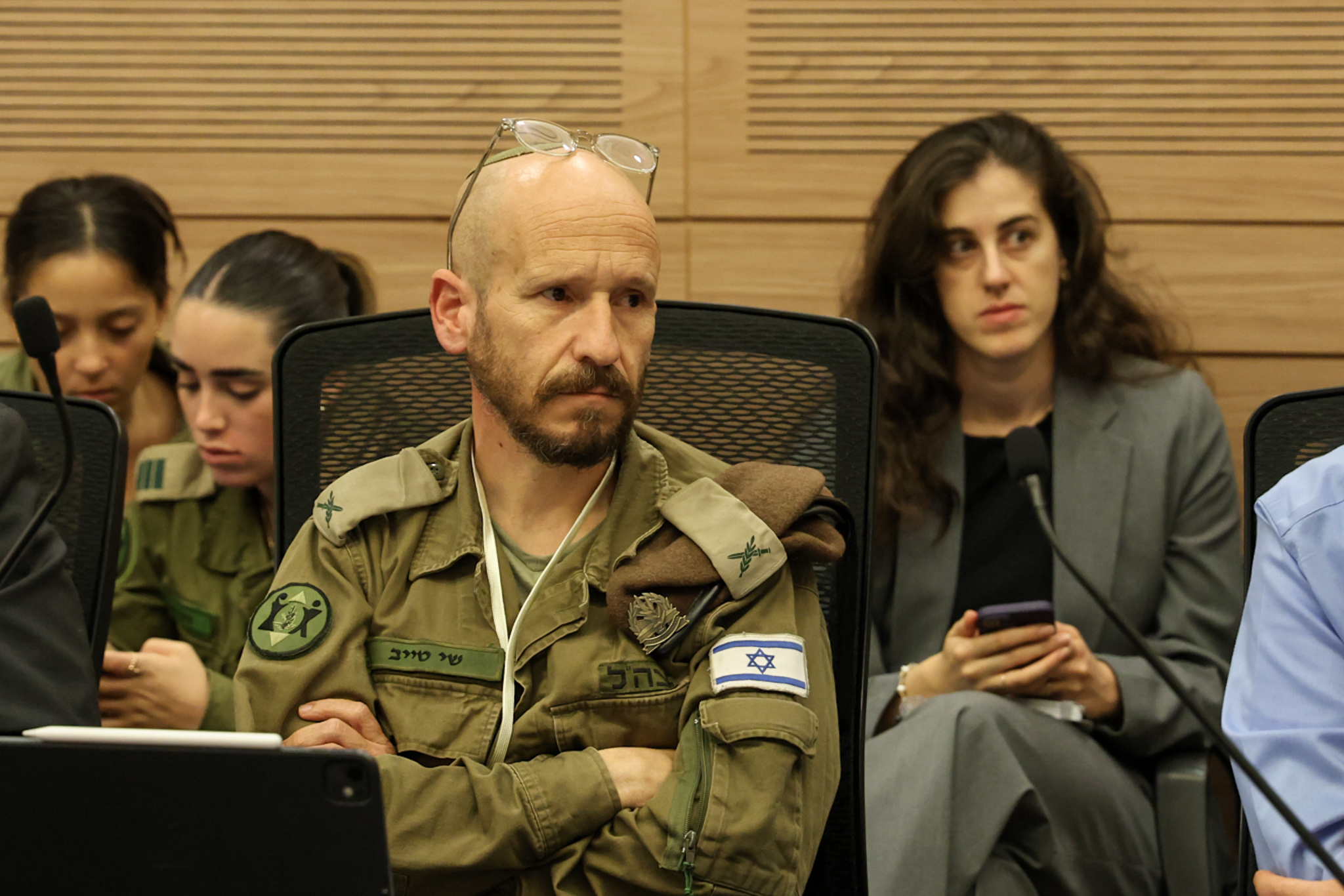
Brig. Gen. Shay Tayeb, head of the IDF Personnel Directorate’s Planning and Personnel Management Division, attends a meeting of the Knesset Foreign Affairs and Defense Committee, August 12, 2025. (Dani Shem-Tov/ Office of the Knesset Spokesperson)
The IDF has significantly stepped up its efforts to recruit the eligible Haredi men, sending out 54,000 conscription orders in July alone, although the Attorney General’s Office told the High Court of Justice last week that the government’s efforts were insufficient.
Declaring war on enlistment
In response to these efforts, the Haredi community has declared “war,” with senior rabbis forbidding participation in “any military framework” and launching protests against the arrest of draft dodgers.
For the past year, the Haredi leadership has largely rejected any attempt to find a compromise that would draft at least some of the ultra-Orthodox youth to the military, after the High Court ruled that the decades-long blanket exemptions from army duty traditionally afforded to the Haredi community were illegal.
Both of the Knesset’s Haredi parties, Shas and UTJ, have been pushing for the passage of a bill to enable most ultra-Orthodox males to continue avoiding military conscription or any form of national service.
Last month, the UTJ party left the coalition after being presented with a copy of a proposed enlistment bill prepared by then-Knesset Foreign Affairs and Defense Committee chairman, Yuli Edelstein, which it argued had violated the terms of a supposed compromise reached in June. They were quickly followed by Shas, which, while quitting the government, has remained part of the coalition.
According to reports, the compromise delayed the application of some sanctions and stipulated that the status of all yeshiva students would be reset and need to be regulated from scratch, meaning that many of those who have received multiple draft orders and been declared evaders will no longer be subject to arrest.

Likud’s Yuli Edelstein leads a Foreign Affairs and Defense Committee meeting at the Knesset in Jerusalem, July 21, 2025. (Yonatan Sindel/Flash90)
However, the bill ultimately presented by Edelstein was significantly harsher, calling for the immediate application of sanctions on draft dodgers, including the revocation of drivers’ licenses and a ban on international travel.
A potential compromise?
Despite the tensions with the Haredi parties over the issue, a senior government source expressed optimism regarding the possibility of passing a conscription law.
Speaking with The Times of Israel, the source suggested that the compromise agreed to by the Haredim and Edelstein in June could serve as the basis for legislation acceptable to all involved.
Even UTJ’s Agudat Yisrael faction, which has expressed extreme skepticism regarding the possibility of passing a bill both sides can support, will fall in line, the source asserted, arguing that the Haredi parties will come back to the table as the Foreign Affairs and Defense Committee formulates a new draft of the legislation based on Edelstein’s compromise.
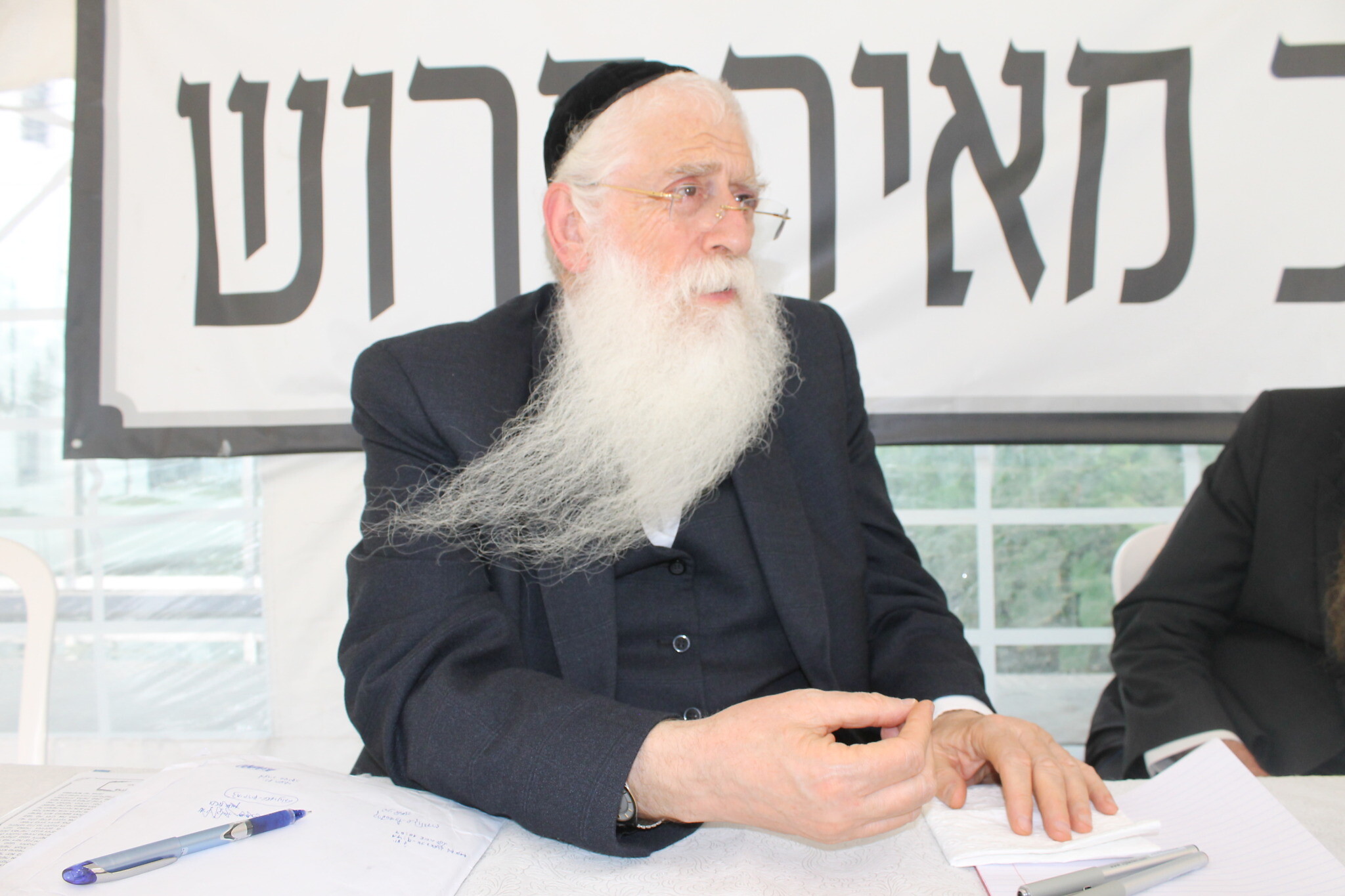
MK Meir Porush sits in a protest tent outside the Justice Ministry in Jerusalem, August 12, 2025. (Sam Sokol/The Times of Israel)
According to the source, the Haredim will eventually acquiesce to a bill containing strong sanctions, although possibly not as strong as those advanced by Edelstein, whom he accused of having gone back on his word because he feared that adhering to his compromise would make him look like he folded on the issue.
However, Agudat Yisrael appears to be intent on a return to the pre-2024 status quo, with MK Meir Porush telling The Times of Israel that his demand is simple: “Anyone who sits and studies should get a deferment from the army.”
Emanuel Fabian contributed to this report.