
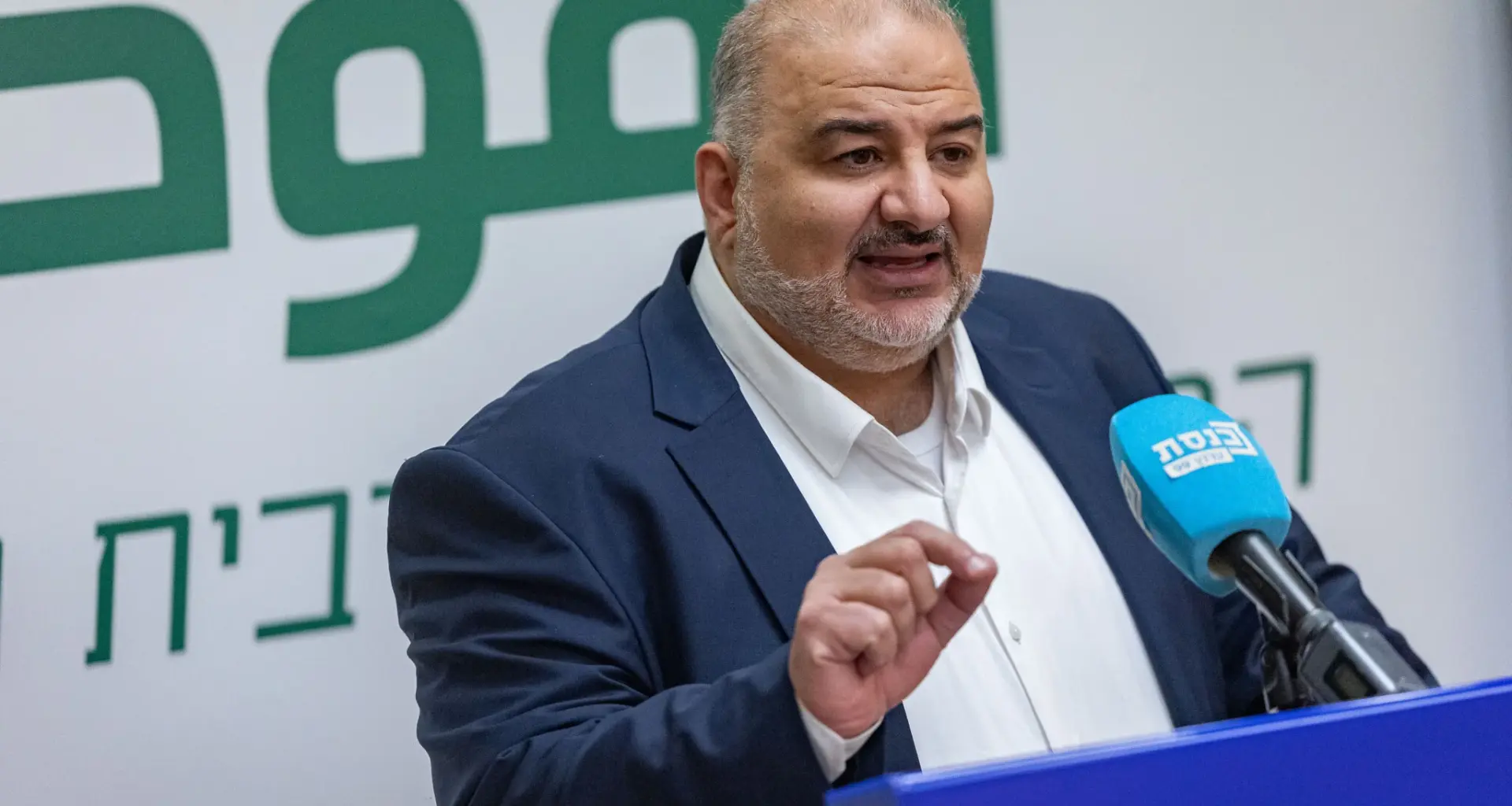
The stakes of Israel’s current political moment have hardened in alarming ways. Recent reports say elements within Likud are exploring legal measures to ban Mansour Abbas’s Ra’am party and bar it from running in the next Knesset.
At a time when the country most needs the incentives for compromise and cross-communal cooperation, institutionalizing exclusion would substitute legal force for electoral competition, deepen polarization, and erode public trust in democratic processes.
Equally worrying is the retreat of centrist leaders from the posture of pragmatic engagement. Naftali Bennett and Yair Lapid have both hesitated publicly to recommit to working with Abbas, mindful of how fraught such an embrace would be post-October 7.
No purity tests
That caution is politically costly: rejecting proven partners on the basis of identity hands ground to extremists who profit from division. A measured willingness to work with Abbas’s model of results-oriented politics would instead signal that Israel’s mainstream prioritizes governance and security over purity tests.
Israel’s democracy is frayed. Its politics teeter on the edge. The nation desperately needs genuine governance; instead, it is led by sloganeers. Abbas is modeling a powerful alternative. If Jewish leaders and voters heed his example and incorporate its core instincts into the Jewish electoral system, Israel may yet avert a deeper democratic crisis.
The key: Choosing compromise and practical improvements over triumphalism.
The urgency of this argument is heightened by the government’s decision to dissolve the Knesset and call early elections. The first election since October 7 is poised to be an especially volatile and venomous one, with campaigns for political parties’ survival waging rhetorical war against their rivals.
That is why highlighting Mansour Abbas’s model – pragmatic, coalition-minded, and focused on delivering tangible improvements – is particularly timely now: if Jewish leaders and electorates adopt these instincts in the coming campaign, the election could steer Israeli politics toward governance and stability rather than deeper polarization.

Prime Minister Naftali Bennett (L) talks with Mansour Abbas, head of the Islamic Ra’am party, during a special session to vote on the new government at the Knesset in Jerusalem, on June 13, 2021. (Emmanuel Dunand/AFP)
The Hamas massacre of October 7, 2023, exposed how vulnerable Israel had become after five elections in two years. Amid a widening religious and class divide and an existential clash over the balance of power between the executive and the judiciary, Israeli society was fractured by polarization, paralyzed by political stalemate, and reeling from institutional strain, making it uniquely vulnerable to attack.
These problems have only gotten worse since, amid tensions over the lengthy war in Gaza, Prime Minister Benjamin Netanyahu’s evasion of blame, and the Haredi refusal to participate in the military. With elections this year, a path away from ever-worsening ruptures and recriminations is necessary.
Abbas’s politics are not a cure-all for every political problem, nor should they be uncritically embraced. But they encapsulate three lessons that Israeli Jewish parties and voters must learn quickly if democracy is to be preserved: Prioritize governance over symbolic victories; practice political forgiveness and compromise for the sake of stability; and address tangible inequities that erode civic trust.
If Israeli electoral behavior can shift to reward coalition-building, pragmatism, and investments in shared civic goods, the incentives that now feed polarization will begin to change.
Achievements over identity
Abbas is not a sentimental figure. He rose as leader of the Ra’am party by refusing to reduce Arab Israeli politics to a single axis of Palestinian nationalism. Instead, he made a hard, deliberate choice: to pursue tangible gains for his constituents through engagement with the institutions of state.
That choice – choose real achievements over identitarianism – is the heart of his political prescription for Israel’s democratic survival. By focusing on jobs, housing, municipal budgets, and public safety, Abbas has demonstrated that politics can be a tool to improve everyday life rather than merely a platform to assert identity.
The practical results matter. Abbas’s participation in the Bennett-Lapid coalition in 2021 delivered tangible benefits for Arab communities: securing critical funding and municipal reforms that expanded resources and local governance capacity – proof that engagement can produce concrete outcomes. (I served as a policy adviser to Bennett during his time as prime minister.)
Abbas’s move to assert Ra’am’s political independence – distancing the party from extra-parliamentary clerical control – further showed a willingness to prioritize pragmatic results over ideological purity, weakening outside influence and strengthening democratic accountability.
In the wake of Bennett’s public refusals and especially after the outrageous remark by Minister Smotrich likening a coalition with Abbas under the then Bennett-Lapid government to something “worse than October 7,” the urgency of this debate has only intensified. Such statements do more than signal tactical refusals; they harden taboos around cross-communal cooperation and legitimize a politics of exclusion at a pivotal moment.
Rejecting a proven partner like Abbas on the basis of inflammatory rhetoric risks ceding moderate ground to extremists on both sides, undermining the very governance, security, and social cohesion that proponents of exclusion claim to protect.
The stakes for Israeli democracy are not merely bureaucratic. They are existential.
The bonds that hold Israel’s pluralistic society together have weakened. A political system that rewards zero-sum identity contests will continue to produce paralysis, institutional erosion, and social fragmentation. Conversely, one that rewards compromise, coalition-building, and problem-solving can repair frayed civic ties and make the state more resilient to external shocks. Abbas’s record shows that even in fraught circumstances, politics can be reframed as a tool for improvement rather than an arena of permanent grievance.
This is not a call for uncritical alliance. It is a plea for strategic realism.
Israel’s political system has a 3.25% threshold for a party to enter the 120-seat parliament after elections. Out of fear of not crossing this threshold, parties tend to join other parties to avoid falling short of the mark. Often this brings unlikely partners together. Abbas recently decided to run on a joint Arab list, tying him to parties that continue to foreground Palestinian nationalist positions that often clash with most Jewish parties and complicate Jewish leaders’ willingness to embrace him.
A realistic pathway forward requires recognizing both the civic opportunities Abbas represents and the political constraints he faces. In this case, Abbas’ decision is purely practical for the sake of passing the threshold and creating a “technical block,” and not ideological in the least.
Governing for all citizens
Still, Jewish voters and leaders must absorb the lessons Abbas offers, especially that delivering for citizens of all backgrounds is the best antidote to polarization. A healthy Israeli democracy must both tackle problems within Jewish and Arab communities and – crucially – draw those communities closer together.
Abbas’s municipal-first agenda targets one of the fiercest drivers of alienation: the rise of violent crime in many Arab towns. When Jews and Arabs march side by side demanding safety, it proves public security is a common civic priority and that coexistence is not a theoretical ideal but a practical necessity. It may not resolve the deeper national rifts overnight, but people who share the same land must find ways to live together with dignity and security.
Abbas’ experiment in pragmatic politics is not merely an interesting footnote in Israeli political life; it is a potential lifeline for a democracy in distress. If Jewish political actors permit their electorates to be guided by the same practical, results-oriented instincts that he embodies – prioritizing governance, coalition-building, and equitable policy – the country can begin to close the gap between rhetoric and results. That, more than any speech or law, will rebuild trust, strengthen institutions, and make Israel more resilient to the shocks of violence and division.