
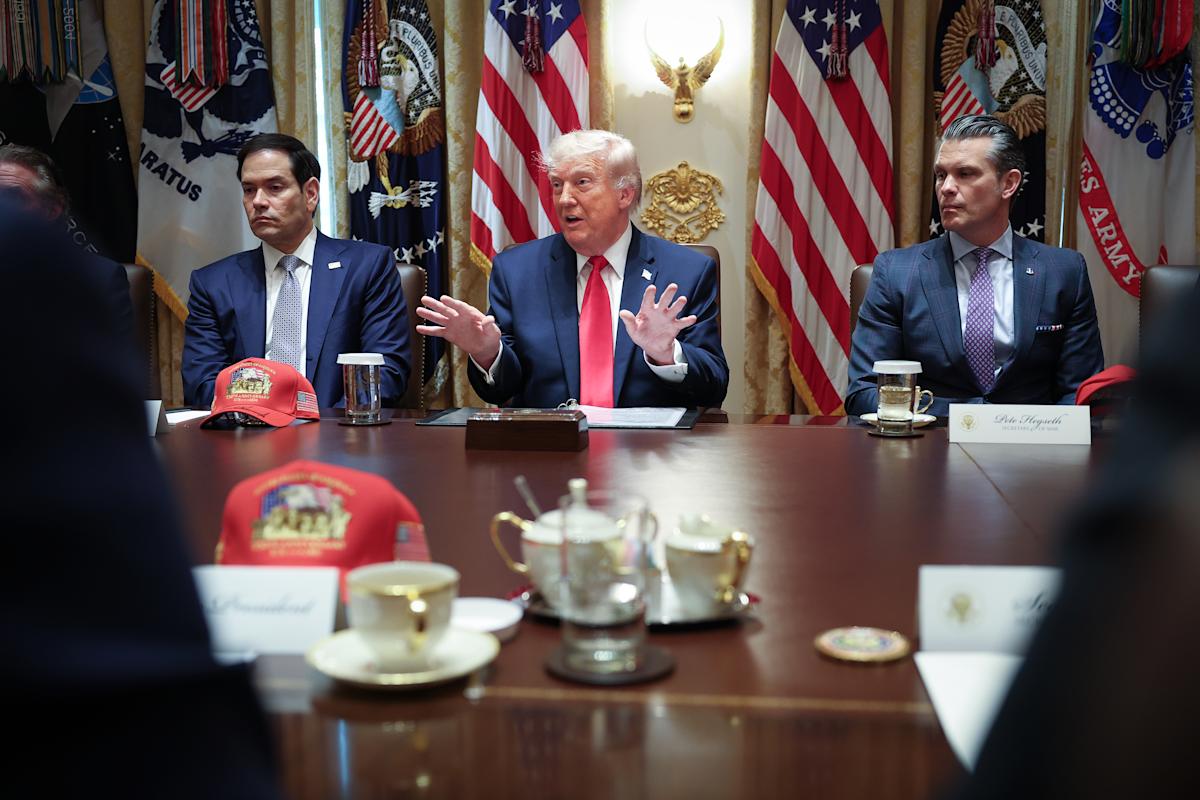
President Trump stoked anticipation Friday about a possible deal with Iran to extend the ceasefire, posting on Truth Social that he is set to make a final determination soon while also reiterating his red lines — including one around the Strait of Hormuz.
The crucial waterway “must be immediately open, no tolls, for unrestricted shipping traffic, in both directions,” he wrote, adding that mines will be removed and stranded ships will be able to head home.
But that demand comes in the face of signals from Iran that it’s not keen to give up its long-term ambition to control shipping traffic through the waterway, where 20% of the world’s oil passed before the war.
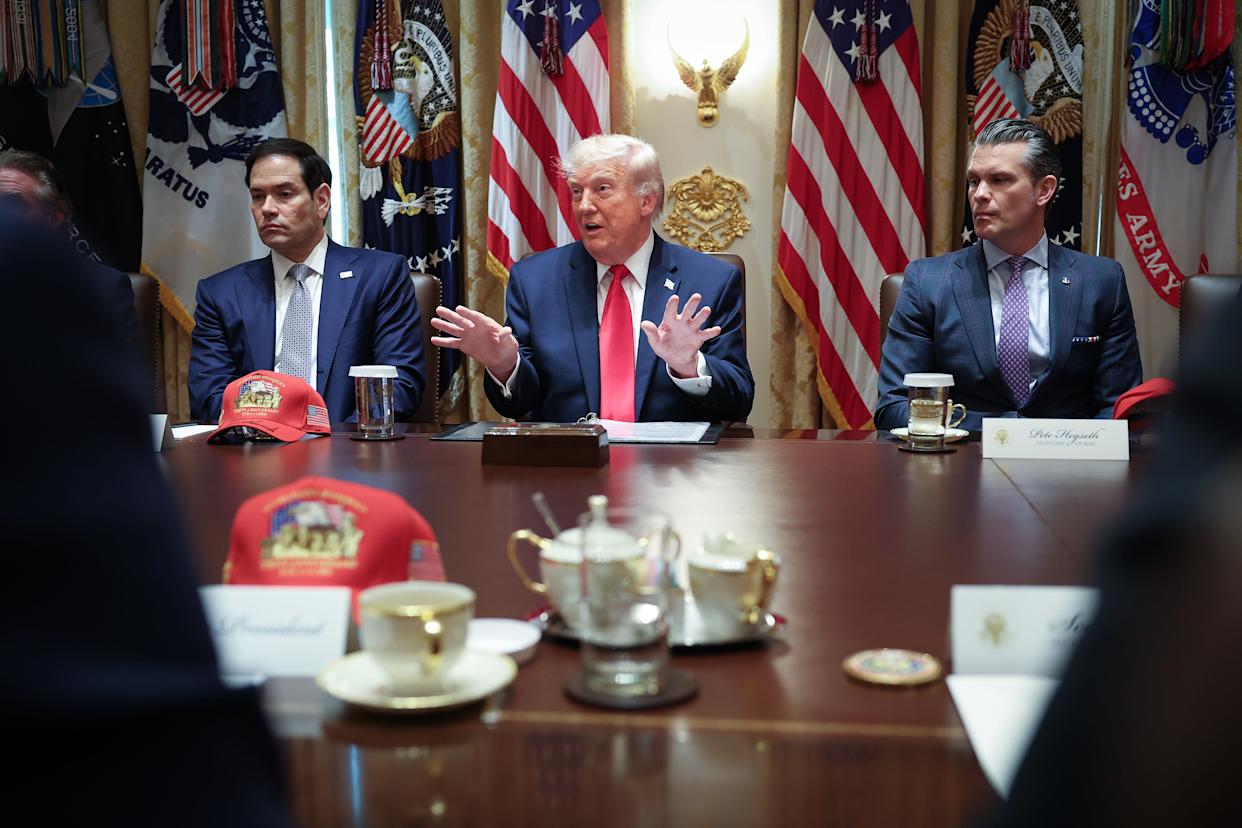 President Trump is seen on Wednesday during a Cabinet meeting at the White House. (Win McNamee/Getty Images)
Iranian Foreign Minister Seyed Abbas Araghchi posted on Friday morning — almost exactly one hour before Trump’s post — about a call with his Omani counterpart.
Araghchi said the two countries on either side of the strait “discussed Hormuz and its future administration in line with our sovereign responsibilities and international law.”
Read more: $100 oil could send airfare soaring this summer. These tips could save you.
It was an apparent step forward after reports last week revealed that Iran and Oman had discussed setting up a long-term tolling system for transiting ships.
Araghchi also emphasized “Iran’s solidarity with Oman in face of any threat,” an apparent reference to Trump’s comment during his Cabinet meeting this week that “Oman will behave just like everyone else, or we’ll have to blow them up.”
Treasury Secretary Scott Bessent added on Thursday that the US wouldn’t hesitate to “aggressively” impose sanctions on Oman if it were to get involved in tolling.
The threats were a remarkable turnabout on Oman, which has been a longtime US ally and important mediator between the US and others in the region.
 Iranian Foreign Minister Seyed Abbas Araghchi during a press conference at the Iranian Embassy in New Delhi, India, earlier this month. (Arun Kumar/The India Today Group via Getty Images)
The developments with Oman are just one piece of a complex deal between the US and Iran that still needs Trump’s backing.
The deal, as reported by multiple outlets, would extend the ongoing ceasefire for 60 days and lift restrictions on shipping through the Strait of Hormuz during that period.
The idea is that it would give time for US and Iranian negotiators to tackle more difficult issues, such as Iran’s nuclear program.
But days of uncertainty have left many market observers wary that even this initial deal can be struck or maintained, especially if relations with nations in the region fray.
The success of any deal depends on multiple players beyond Trump, Terry Haines of Pangaea Policy said in a Friday note to clients. That includes Gulf states — such as Oman — which he described as one of the “most important entities around the table.”