
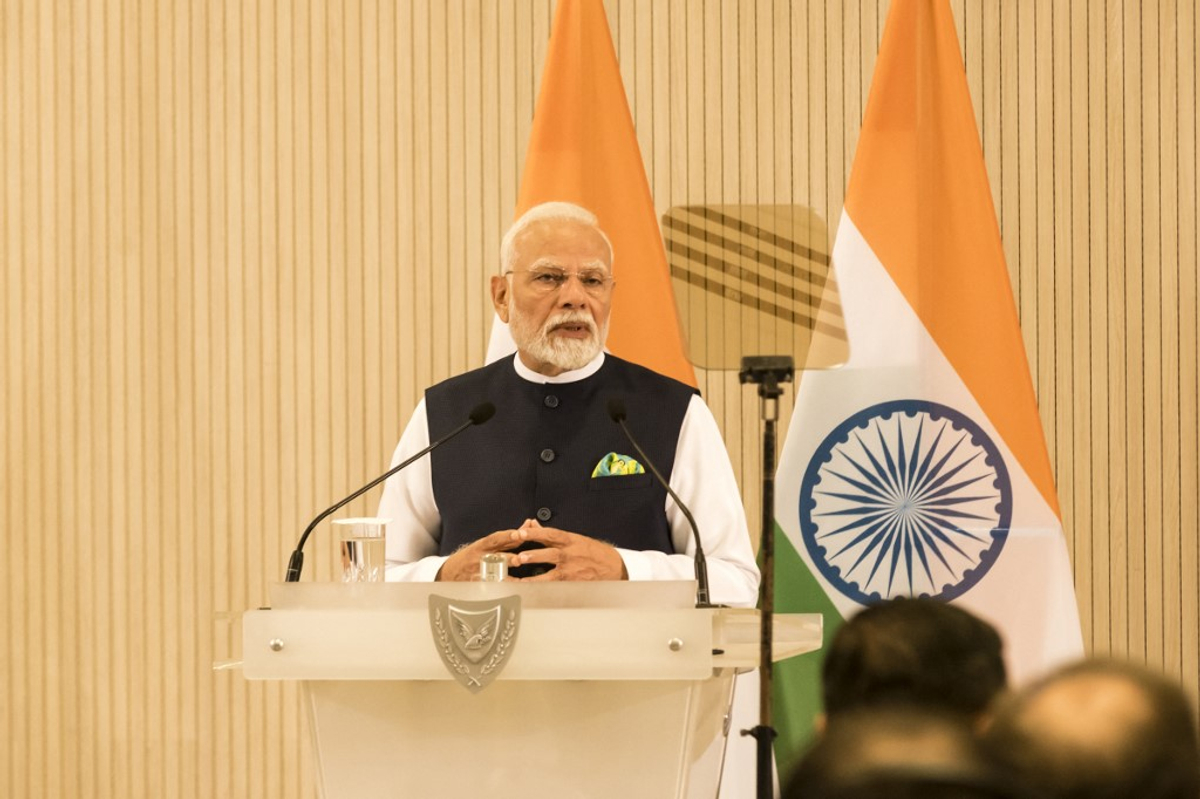
India may soon feel the pressure of economic sanctions and tariffs if it breaks its recent dependence on cheap Russian oil imports.
This comes as US President Donald Trump threatened secondary sanctions and tariffs on any countries doing business with Russia if Moscow fails to agree to a ceasefire by September 2 (50 days from Trump’s announcement on Monday).
JOIN US ON TELEGRAM
Follow our coverage of the war on the @Kyivpost_official.
Meanwhile, EU diplomats in Brussels have announced a new 18th package of Russian sanctions after Slovakia finally dropped its opposition on Friday.
The new EU sanctions set a lowered price cap on Russian oil price cap of $47 per barrel and sanctions that have targeted Russia’s “shadow fleet” of oil tankers and the Rosneft’s Vadinar oil refinery in India.
After Russia’s full-scale invasion of Ukraine in February 2022, traditional European markets for Russian oil were closed as the EU worked to break its dependence on Russian oil.
The West introduced a $60 price cap on Russian oil, attempting to starve the Kremlin of profits from fossil fuels that would be needed to finance its war or aggression in Ukraine.
But Moscow reoriented towards Chinese and Indian buyers, who were willing to evade sanctions to buy discounted Russian oil, despite sustaining Russia’s war machine.
Since 2022, India has imported record numbers of Russian crude oil and then refined it, creating a loophole where it is then resold legally in European and other markets.
Other Topics of Interest
EU Cracks Down on Russia With 18th Sanctions Package, Oil Cap Cut to $45
The latest measures were delayed for weeks due to objections from Slovakia and Hungary, both of which are heavily reliant on Russian energy.
Bloomberg reports that Rosneft has been attempting to sell its 49% stake in the Vadinar oil refinery as it is unable to repatriate its profits, and the new sanctions banning Russian oil imports to Europe will complicate any deal for a new buyer.
India buys 37% of Russia’s crude oil, and 18% of its coal, and is among the top three importers of Russian hydrocarbons alongside China and Turkey, according to a February report from the Center for Research Energy and Clean Air.
Before Russia’s full-scale invasion of Ukraine in 2022, India imported only 2% of its oil from Russia. Today, Russia is India’s top oil supplier, accounting for nearly 35% of India’s oil imports, or 1.75 million barrels of oil per day from Russia in 2025, according to Reuters.
“I’m not worried at all. If something happens, we’ll deal with it,” India’s Oil Minister Hardeep Singhi Puri said at an industry event in New Delhi, according to Reuters. “India has diversified the sources of supply, and we have gone, I think, from about 27 countries that we used to buy from to about 40 countries now.”
Puri suggested that India could expand its imports from Brazil, Canada, or Guyana if it is forced to wean from Russian oil.
Still, the threat of secondary sanctions or tariffs, if implemented effectively, could starve the Russian economy of badly needed cash.
The Russian economy is already nearing recession, and any reduction in energy prices would compound Moscow’s economic headaches.