
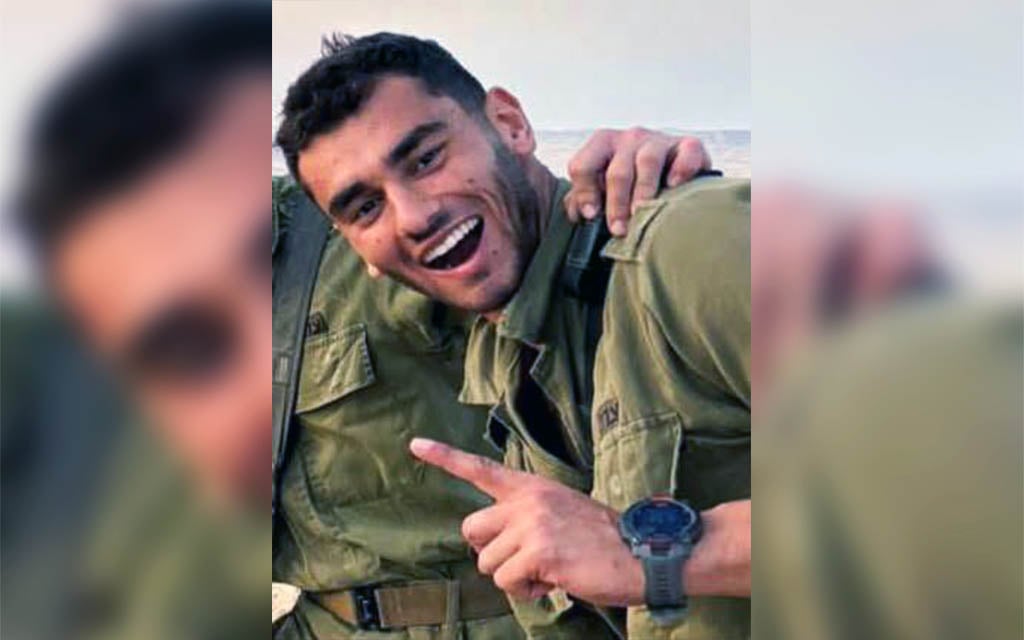
An Israel Defense Forces soldier was killed and three others were wounded in a Hezbollah drone attack in southern Lebanon early Monday morning, the military said, a day after it took control of the historic Beaufort Castle and the surrounding strategic ridge.
It was the second fatality in as many days, as Israel also announced Monday morning that it would renew its large-scale airstrikes on Beirut’s southern suburbs, a stronghold of the Iran-backed terror group, after limiting them for weeks at the request of the United States.
The slain soldier was named as Staff Sgt. Adam Tzarfati, 20, of the Commando Brigade’s Maglan Unit, from Rosh Ha’ayin.
At around 1 a.m., an explosive-laden first-person-view drone launched by Hezbollah struck a site in the southern Lebanon town of Yohmor, near the Beaufort Castle, where Israeli troops were operating.
The blast killed Tzarfati and seriously wounded another soldier. Two other troops were lightly hurt in the attack, the army said.
Get The Times of Israel’s Daily Edition
by email and never miss our top stories
By signing up, you agree to the terms
The wounded soldiers were airlifted to a hospital and their families were notified, the IDF added.
Israel has struggled to fend off growing attacks on troops in southern Lebanon and northern Israel by Hezbollah’s first-person view drones, which are largely impervious to jamming technology. The terror group has also fired rockets and other types of UAVs, hitting both military and civilian targets.
Thirteen IDF soldiers and one Defense Ministry civilian contractor have been killed by Hezbollah attacks in southern Lebanon during the porous ceasefire that began on April 16. The IDF has said it has killed over 900 Hezbollah operatives in that time.
Hezbollah has kept up its regular rocket and drone attacks on northern Israel and on troops in Lebanon, repeatedly targeting Kiryat Shmona and other border communities, and attacking cities that haven’t been targeted for over a month such as Safed and Karmiel.
Rocket sirens sounded in Tiberias shortly after midnight Sunday-Monday for the first time in nearly two months.
The IDF said in the morning that it had struck a Hezbollah launcher used to fire the rockets at Tiberias.
תוך דקות: צה”ל השמיד את המשגר ממנו חיזבאללה שיגר רקטות לעבר טבריה הלילה pic.twitter.com/xzEs0FtWhO
— צבא ההגנה לישראל (@idfonline) June 1, 2026
In light of the ongoing attacks from Lebanon, schools have been shut in many border communities and the Nature and Parks Authority has closed a series of sites in the north in accordance with Home Front Command instructions.
The IDF, in addition to expanding its ground offensive in southern Lebanon, has been carrying out widespread airstrikes on Hezbollah targets, including in the city of Tyre.
On Sunday, the IDF reissued a wide-scale evacuation warning for all of southern Lebanon.
“Anyone who is near Hezbollah operatives, its facilities, or its weapons is putting their life at risk. Any building used by Hezbollah for military purposes may become a target,” army spokesman Col. Avichay Adraee said on X.
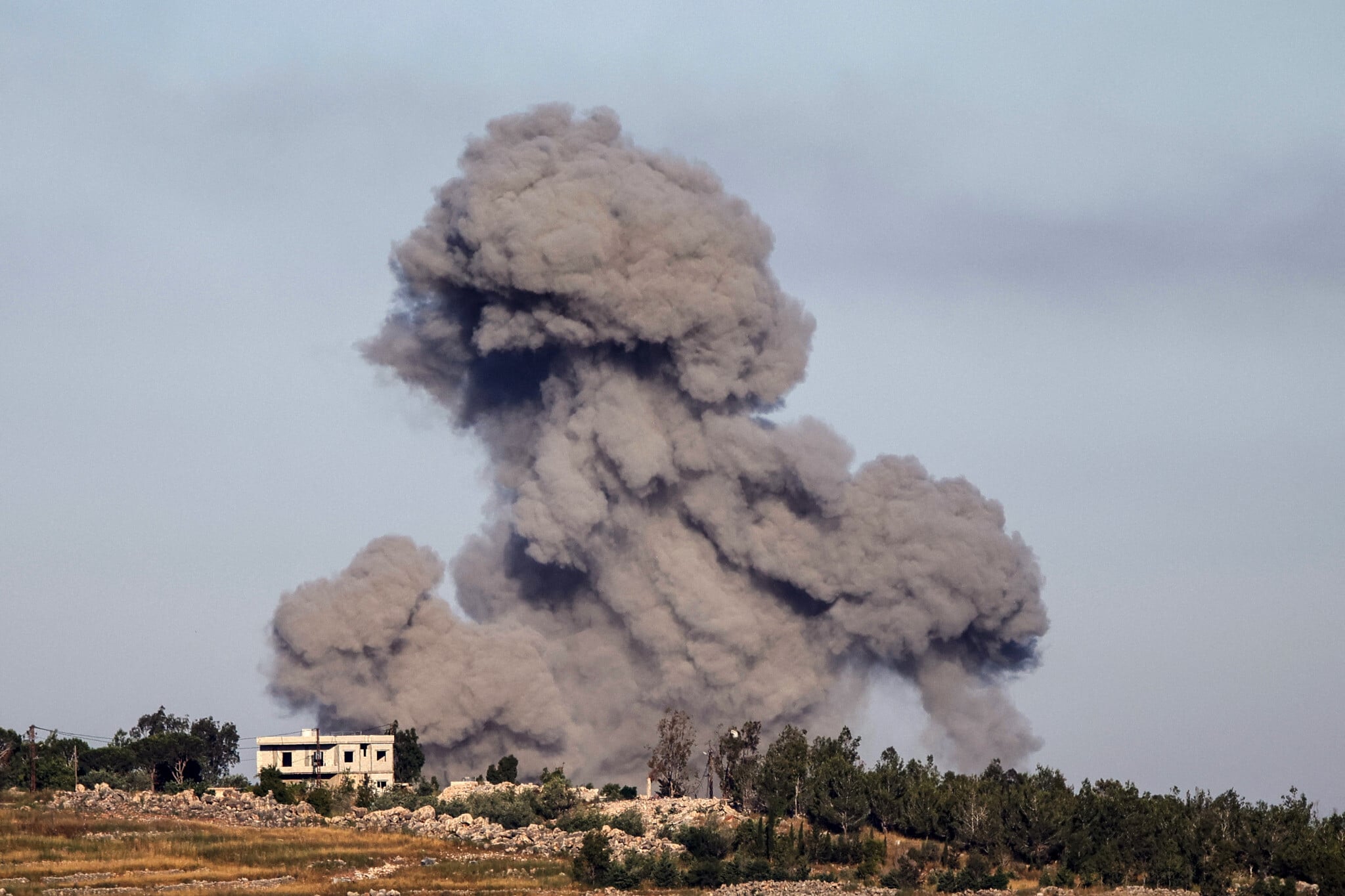
Smoke rising after an Israeli airstrike on the village of Arnoun from the Marjayoun area in southern Lebanon on May 31, 2026. (AFP)
The latest Israel-Hezbollah war began on March 2, when Hezbollah fired rockets into northern Israel two days after the US and Israel attacked its main backer, Iran. Since then, 26 IDF soldiers and one Defense Ministry civilian contractor have been killed in southern Lebanon. Two civilians were also killed by Hezbollah rockets, and an Israeli civilian was mistakenly killed in the north by Israeli artillery shelling.
In Lebanon, the Israeli military has said that it has killed over 2,500 Hezbollah operatives, including hundreds of members of the terror group’s elite Radwan Force, since early March.
Since March 2, Hezbollah has fired some 5,500 rockets at IDF troops operating in the south of the country, as well as around 2,500 at Israel, according to the military. There were at least 75 rocket impact sites in Israel.
In addition, Hezbollah launched around 300 drones, of which 25 struck Israel, according to the IDF.
The IDF believes Hezbollah still possesses thousands of short-range rockets, along with hundreds of longer-range projectiles. The IDF has said that Hezbollah is launching most of its attacks from deeper within southern Lebanon, north of the Litani River, and not from areas close to the border.
The ceasefire has now significantly eroded, though fighting remains at a lower level than before the truce was announced in mid-April, and the IDF has continued to limit the areas in which it carries out strikes. While the US has okayed Israeli strikes in Lebanon against targets that Jerusalem deems a threat, it has reportedly drawn a line on strikes in Beirut.
Ongoing talks with the Lebanese government have so far yielded few results.
Discover Israel’s most beloved poet

She died more than four decades ago, but Leah Goldberg remains a magnetic and enigmatic figure: Israel’s most beloved poet, a powerful woman who lived with her mother and never married, who reinvented herself from the ashes of World War I through her magical writing.
You can screen ‘The Five Houses of Leah Goldberg’ June 4-11. Join The Times of Israel Community today to support our work and watch this and other outstanding documentary films in our DocuNation series.
Already a member? Sign in to stop seeing this
You’re a dedicated reader

That’s why we started the Times of Israel – to provide discerning readers like you with must-read coverage of Israel and the Jewish world.
So now we have a request. Unlike other news outlets, we haven’t put up a paywall. But as the journalism we do is costly, we invite readers for whom The Times of Israel has become important to help support our work by joining The Times of Israel Community.
For as little as $6 a month you can help support our quality journalism while enjoying The Times of Israel AD-FREE, as well as accessing exclusive content available only to Times of Israel Community members.
Thank you,
David Horovitz, Founding Editor of The Times of Israel