
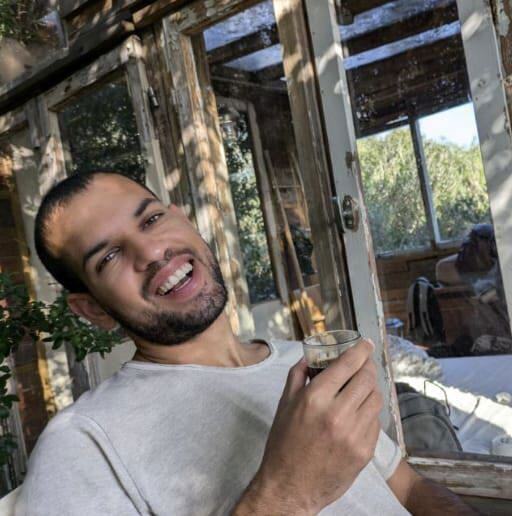
A medical officer was killed and seven others were wounded in a Hezbollah explosive drone attack in southern Lebanon on Monday, as the Iran-backed terror group kept up its relentless rocket and drone attacks, and the IDF pushed ahead with its renewed offensive.
The slain officer was named as Cpt. Dr. Ori Yosef Silvester, 30, the doctor for the Givati Brigade’s Shaked Battalion, from Tel Aviv.
The news came as US President Donald Trump announced that the two sides had agreed on a fresh truce in Lebanon, though it was not immediately confirmed by Israel.
During the attack, shortly after noon, two explosive-laden first-person view (FPV) drones launched by Hezbollah struck an armored vehicle in the town of Zawtar al-Sharqiyah, according to an IDF probe.
The explosion from the drones killed Silvester and wounded the seven other soldiers.
Get The Times of Israel’s Daily Edition
by email and never miss our top stories
By signing up, you agree to the terms
Two officers and a soldier were seriously wounded in the same attack, another soldier was moderately hurt, and two officers and a soldier were lightly injured.
Among those lightly hurt was the commander of the Shaked Battalion, a lieutenant colonel. The IDF said the battalion commander is due to return to command the unit in the coming days.
Silvester was the 14th IDF soldier to be killed in the fighting against Hezbollah since a US-imposed ceasefire ostensibly took effect in April. His death was also the second announced by the IDF in less than a day, after Staff Sgt. Adam Tzarfati was killed in a Hezbollah drone attack in southern Lebanon in the early hours of Monday.
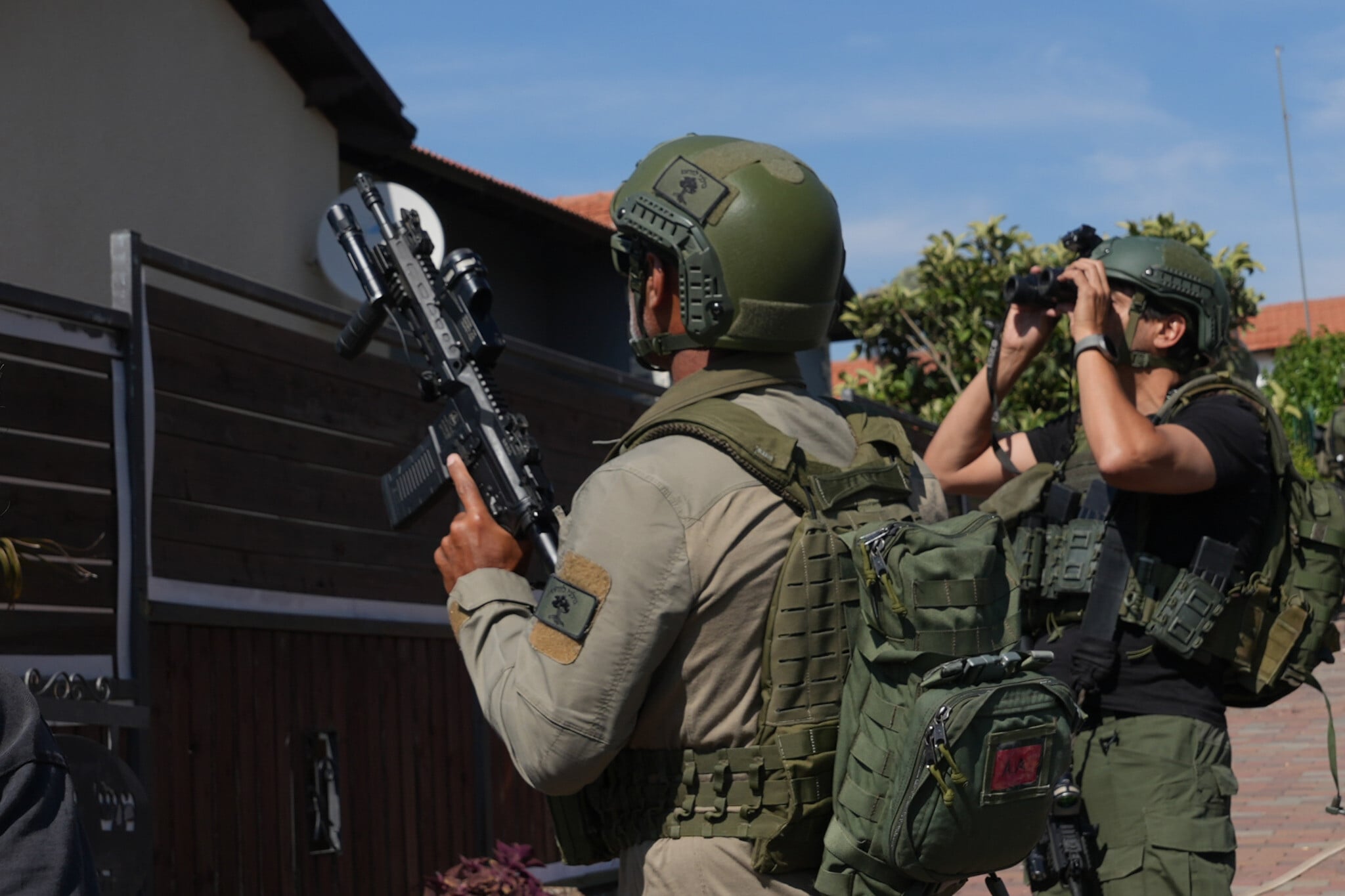
Members of the Metula civilian security squad search the area following the fall of an Iron Dome interceptor missile and reports of a drone infiltration near the Israel-Lebanon border, June 1, 2026. (Ayal Margolin/Flash90)
Israel has struggled to fend off growing attacks on troops in southern Lebanon and northern Israel by Hezbollah’s FPV drones, which are largely impervious to jamming technology. The terror group has also fired rockets and other types of UAVs, hitting both military and civilian targets.
The remnants of the ceasefire have largely evaporated in recent days, and Hezbollah kept up its regular rocket and drone attacks on northern Israel and troops in Lebanon on Monday, repeatedly targeting Kiryat Shmona and other border communities.
In one incident on Monday evening, an explosive-laden FPV drone launched by Hezbollah struck an Israeli military position near the border community of Rosh Hanikra, according to the IDF.
Earlier in the day, a rocket launched at the Kiryat Shmona area was intercepted, and two others struck near Israeli forces in southern Lebanon.
There were no injuries in either incident.
In Lebanon, the IDF has been carrying out widespread airstrikes against Hezbollah targets in addition to its expanding ground offensive.
On Monday evening, the military said that a Hezbollah missile commander was killed in an Israeli strike in southern Lebanon the previous day.
The strike carried out by the Israeli Air Force in the Nabatieh area killed Mohammed Mousa Mteirek, a unit commander in Hezbollah’s missile array, according to the IDF.
The military said Mteirek was responsible for the launches of hundreds of rockets and drones targeting Israeli civilians and IDF troops, including soldiers of the Golani Brigade operating at the Beaufort Castle.
The Golani soldiers directed the IAF strike, the military added.
Separately, Lebanon said an Israeli strike hit near a hospital in the southern city of Tyre on Monday, as the health ministry shared footage showing heavy damage to the facility.
The state-run National News Agency said a strike targeting an intersection near the Jabal Amel hospital “hit a building and the parking lot, resulting in several wounded.”
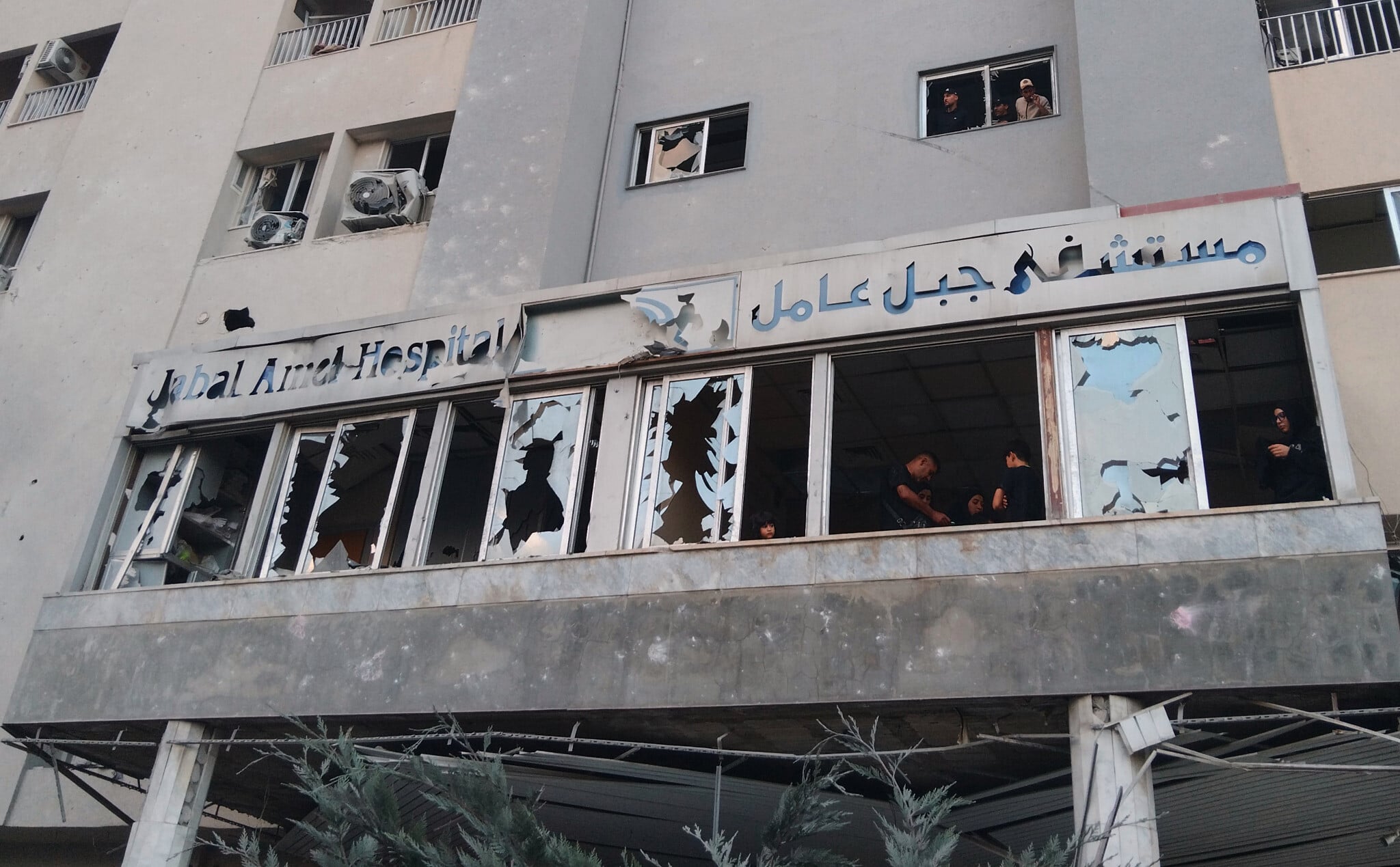
People look through the shattered windows of the Jabal Amel Hospital, damaged in an Israeli airstrike that hit a nearby building, in the southern port city of Tyre, Lebanon, June 1, 2026. (AP Photo)
The health ministry shared two videos showing damage inside a hospital ward, with rubble and debris on the ground, blown-out ceilings, blood on the floor and shattered glass, while smoke could be seen billowing from a fire at what appeared to be a heavily damaged adjacent car park.
The IDF told The Times of Israel that it had targeted Hezbollah infrastructure in the Tyre area, and the reports of a hospital being hit were under review.
At least 6 killed till the moment and more than 20 injuries amid an Israeli strike on the parking of Jabal Amel hospital in Tyre. Video from the hospital’s ICU. pic.twitter.com/WgmpQ1Hdat
— Ali Hashem علي هاشم (@Alihashem) June 1, 2026
The latest round of fighting between Israel and Hezbollah began on March 2, when Hezbollah fired rockets into northern Israel two days after the US and Israel attacked its main backer, Iran. Since then, 26 IDF soldiers and one Defense Ministry civilian contractor have been killed in southern Lebanon. Two civilians were also killed by Hezbollah rockets, and an Israeli civilian was mistakenly killed in the north by Israeli artillery shelling.
In Lebanon, the Israeli military has said that it has killed over 2,500 Hezbollah operatives, including hundreds of members of the terror group’s elite Radwan Force, since early March.
Since March 2, Hezbollah has fired some 5,500 rockets at IDF troops operating in the south of the country, as well as around 2,500 at Israel, according to the military. There were at least 75 rocket impact sites in Israel.
In addition, Hezbollah launched around 300 drones, of which 25 struck Israel, according to the IDF.
The IDF believes Hezbollah still possesses thousands of short-range rockets, along with hundreds of longer-range projectiles. The IDF has said that Hezbollah is launching most of its attacks from deeper within southern Lebanon, north of the Litani River, and not from areas close to the border.
While the ceasefire has now significantly eroded, fighting remains at a lower level than before the truce was announced in mid-April.
Agencies contributed to this report.
You’re a dedicated reader

That’s why we started the Times of Israel – to provide discerning readers like you with must-read coverage of Israel and the Jewish world.
So now we have a request. Unlike other news outlets, we haven’t put up a paywall. But as the journalism we do is costly, we invite readers for whom The Times of Israel has become important to help support our work by joining The Times of Israel Community.
For as little as $6 a month you can help support our quality journalism while enjoying The Times of Israel AD-FREE, as well as accessing exclusive content available only to Times of Israel Community members.
Thank you,
David Horovitz, Founding Editor of The Times of Israel