
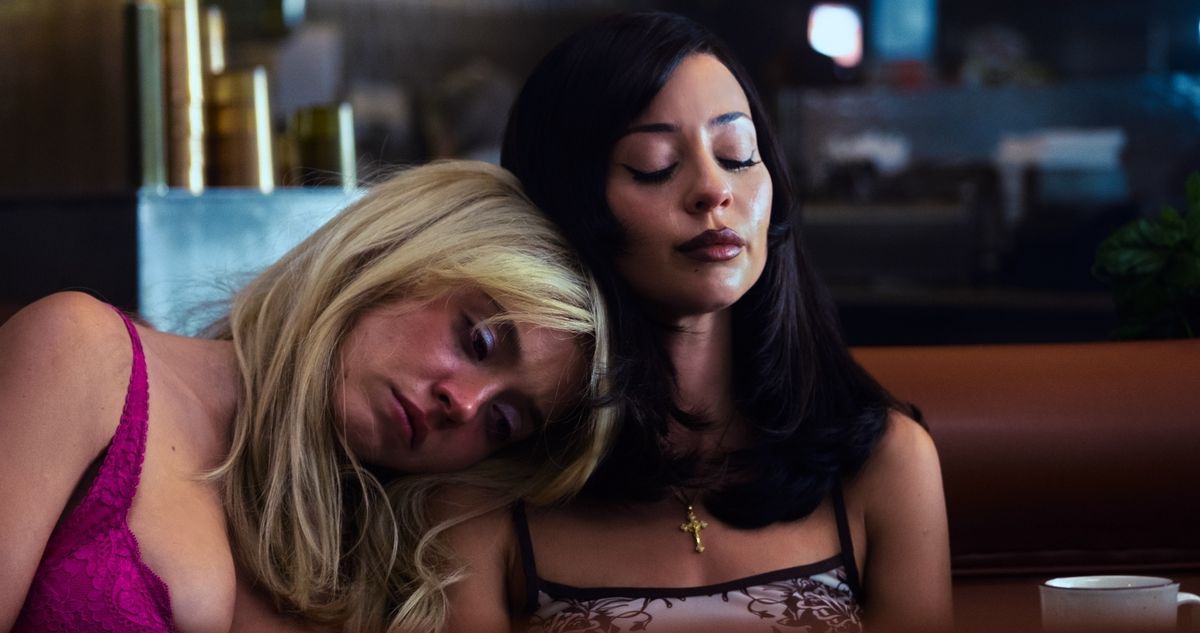
Euphoria’s final season was so diligent in degrading its characters on the way to ever more intricate heists and harrowing shoot-outs that it was best to divest from an emotional attachment to these people.
Photo: Eddy Chen/HBO
Spoilers follow for the series finale of Euphoria.
It was a wild goose chase trying to make sense of the final season of Euphoria, a show where former NFL running back Marshawn Lynch played a strip-club bouncer and incredible sniper who dies by getting shot in the dick. These eight episodes presented from moment to moment as a war between contraband traffickers, a sex comedy, a mob story, a soap opera within a soap opera, a kaiju flick, and a Sunday church play. The show set up a diorama of stories about Los Angelenos who’ll stop at nothing to get ahead, and it played at a widescreen socioeconomic consciousness as it ushered Zendaya’s Rue Bennett, Sydney Sweeney’s Cassie Jacobs, and Hunter Schafer’s Jules into differing forms of leveraging their bodies for their work. Then, any feeling of empowerment Rue got from her underworld dealings and religious inklings was squished by a Wire-ish cat-and-mouse game between her suppliers and their federal law-enforcement foils, leading to her death in the finale. Cassie and Jules grew into creativity, one as a newly minted OnlyFans model working off her husband’s debt and the other as a painter subsidized by a sugar daddy with a plastic-wrap fetish, forever subject to the whims of a man.
The battle to take anyone seriously started the moment we saw Cassie on all fours filming failing fetish content in the first episode; this, after we already watched the supposedly skilled drug runner Rue bail a jeep on top of the U.S. border wall as an eagle howls to Christopher Cross’s “Ride Like the Wind.” Absurdity and larger-than-life Americana undermined a multifaceted narrative about how to make a name for yourself in the valley in the 2020s; silliness jibed with a detailed crime drama, drowning out realism in blood and intended/unintended comedy. The final season was so diligent in degrading its characters on the way to ever more intricate heists and harrowing shoot-outs that it was best to divest from an emotional attachment to these people; stop looking for hope in a show that methodically cut former big, bad Nate Jacobs’s fingers and toes off; and gather together to spectate a high-flying misadventure in landing the proverbial plane.
We watched Rue precariously pit two killers against each other while working as a Drug Enforcement Administration informant who wants out of the game (and into a church). And in doing so, she traced out the arc of a Grand Theft Auto character or an action-movie anti-hero whose luck defied logic until catastrophically giving out. Series creator/writer/director Sam Levinson says he felt a responsibility after the death of cast member Angus Cloud in 2023 to be honest about the dangers of substance abuse and addiction: “If you are experimenting or taking drugs today,” he told the New York Times’ Popcast of the overdose death that undercuts Rue’s journey into the Christian tenets of the Alcoholics Anonymous 12 Steps, “it’s very possible it’ll kill you.” But that’s not what happened in his story, where Rue was killed when her cover was blown, and her boss Alamo Brown (Adewale Akinnuoye-Agbaje) gave her painkillers laced with fentanyl. This is more of a crime-thriller conceit than a representation of what actually happens when someone is served a lethal dose of a drug they weren’t intending to take, which is particularly rough because there is never a way to understand how and when the most toxic ingredient entered the concoction and therefore whether or not to view a death as an act of malpractice or malice.
There’s no such illusion about Rue. It’s not her fault; she was guided into a trap by necessity of plot, wounded in a robbery she was forced to commit, and presented with the false comfort of the poison pill that took her out. The major characters offed in the last season, like Nate “Snake Food” Jacobs, paid in pain for trying to outfox a sneakier player. These deaths didn’t deliver grand messages about humanity, they just swiftly and messily threaded loose ends in the drug-trafficker story line that ate the show. When that happened, it was more fun to watch as a catalogue of Alamo’s wild schemes than a resolution to the unrequited love story of Jules and Rue or anything else we might’ve guessed the show was about in 2019. Packed with clashing Nazi goons and ice-cold blaxploitation paragons of extralegal justice, this season went inexplicably Tarantino, opening up arteries but also opportunities for a great actor to shine.
The third season spoke frequently in nods to film, like Cassie going Attack of the 50 Foot Woman in a sex show for a guy with macrophilia as her fame ballooned. Alamo was a big-screen terror, a narco-cowboy strip-club owner whose nightlife scenes were soundtracked by Hans Zimmer western themes that hinted at a Wild West duel to unfold there in the finale. None of this felt realistic, especially not Colman Domingo’s sawed-off-shotgun-wielding Ali shooting up Alamo’s club in his mentee Rue’s honor, shattering a mask of poise that had defined his character (like the whiplash of Khaleesi’s end of Game of Thrones rogue era). You didn’t need to believe this stuff could plausibly happen to enjoy the show. Watching Nate slowly meet consequences in beatings from mobsters, while Cassie could barely muster concern, was Levinson succeeding at gallows humor. Ali’s spree and apparent getaway, revealed in a Texas epilogue that leaves us with the textbook cowboy-movie closing shot of grassy fields and the American flag, were baffling, but the speeches he delivered in grief were deeply affecting (until you realize he is about to go full end of Taxi Driver). Domingo could handle the sudden slide into horror, having also played Joe Jackson this year, but the gory resolution seemed unnecessary. The DEA was already up Alamo’s ass. Euphoria spent two seasons as a Romeo and Juliet saga before swapping scripts with Titus Andronicus: It seemed like it was about love until everything got sucked up into the same grueling pot of revenge. But if you didn’t think too hard about the ingredients, the pie wasn’t half bad.
Sign up for the Vulture Daily
An entertainment newsletter for the pop-culture obsessed.
Vox Media, LLC Terms and Privacy Notice
Related