
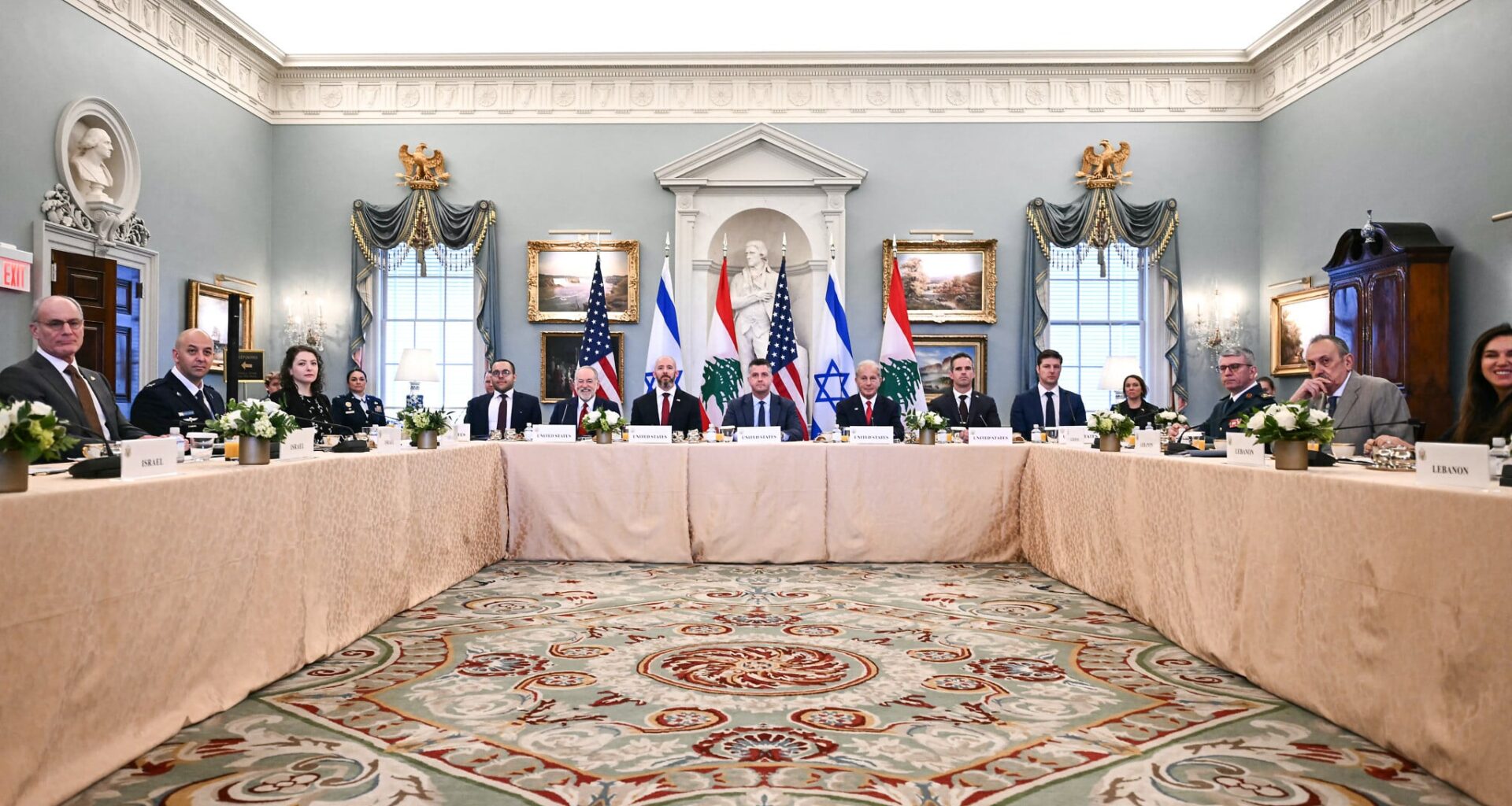
A new round of talks between the Israeli and Lebanese ambassadors was held in Washington on Tuesday, a day after US President Donald Trump said he had received commitments of de-escalation from both Jerusalem and Hezbollah, and as both sides continued to trade blows, albeit at a reduced scale, despite this assertion.
Tuesday’s talks, the fourth round to be held by diplomatic representatives of the two countries, which do not have ties and have been in a state of war since 1948, were being held at the State Department and are scheduled to last for two days.
A senior Lebanese official told Reuters that the Washington talks would explore ways to reinforce the fragile ceasefire, possibly through phased approaches.
The official said that could mean establishing “pilot zones” — specific geographic areas where hostilities would stop, Israeli troops would withdraw and Lebanese soldiers would deploy, gradually building up to a ceasefire across Lebanon.
And as the latest US-brokered truce appeared to be at least partially holding, the IDF Home Front Command announced on Tuesday evening that it would ease restrictions in communities along the northern border.
Get The Times of Israel’s Daily Edition
by email and never miss our top stories
By signing up, you agree to the terms
Israel and the US want to see Hezbollah disarmed, an objective shared by the Lebanese government but rejected by the Iran-backed terror group.
Youssef al-Zein, the head of Hezbollah’s press office, said the group would not take a public stance on any ceasefire proposal without a formal declaration compelling Israel to fully halt hostilities across Lebanon.
“Hezbollah will monitor developments both on the battlefield and in diplomatic channels in the coming days,” Zein said.
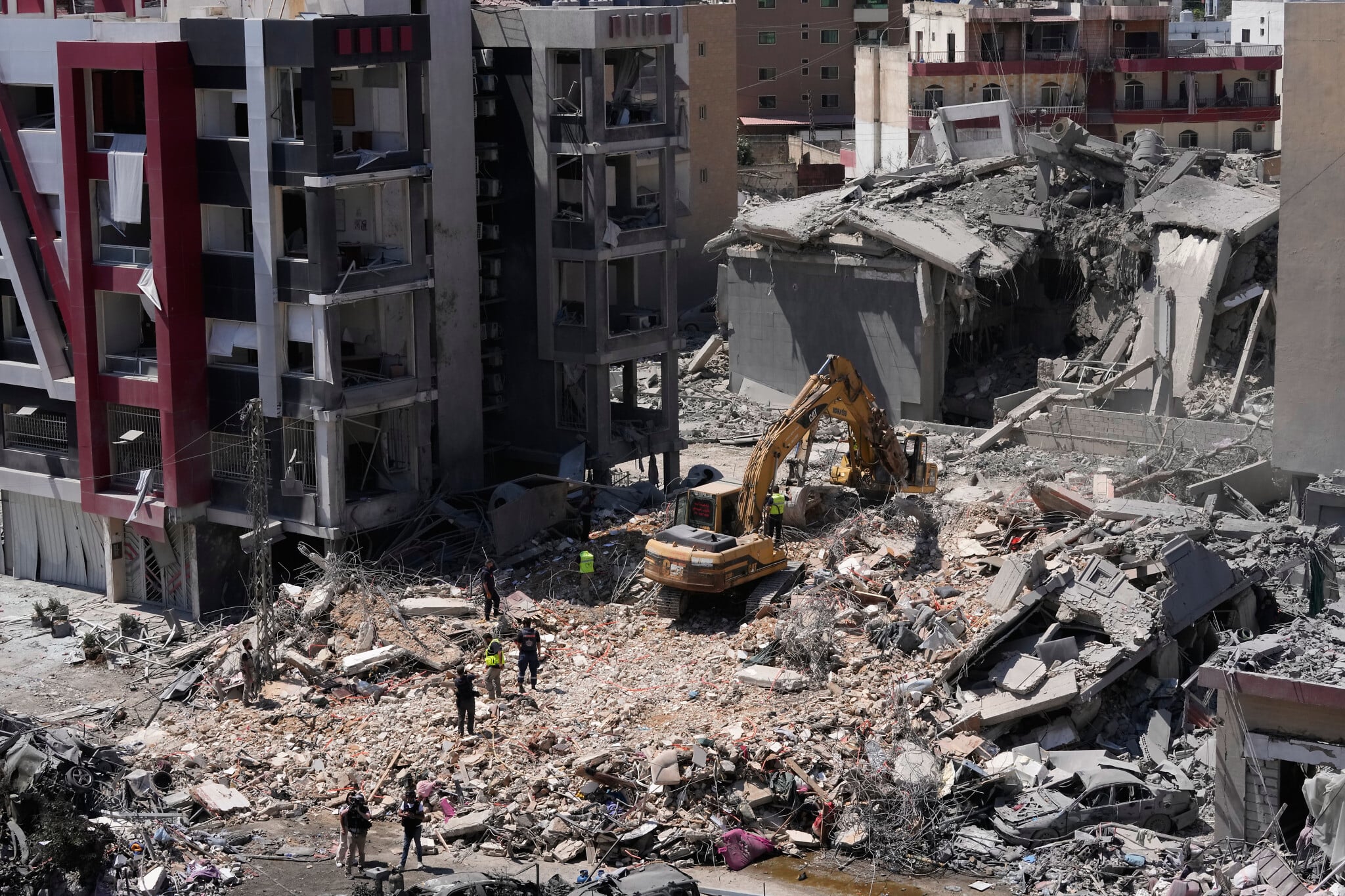
Rescue workers use an excavator to search under the rubble of a building that was hit a day earlier in an Israeli airstrike in the southern port city of Tyre, Lebanon, June 2, 2026. (AP Photo/Mohammed Zaatari)
Lebanese officials have said that Trump’s latest ceasefire deal involves Israel refraining from attacking Beirut’s southern suburbs in return for Hezbollah not attacking Israeli territory.
The ceasefire announced by Trump on Monday was intended to replace the previous US-brokered truce from April 16, which disintegrated in recent days amid increased Hezbollah rocket and drone attacks on Israeli troops in southern Lebanon and communities in northern Israel, and escalating threats of Israeli strikes on Beirut.
Although Hezbollah scaled down its attacks on Tuesday, it did not stop entirely, and a senior official from the Iran-backed group said it would not accept a “partial ceasefire” with Israel.
“We will not accept a partial ceasefire,” Mahmoud Qomati told AFP in a written statement, adding that “the Zionist enemy should know that any aggression against the suburbs could lead to a deeper and stronger response” from the group. The suburbs refers the Dahiyeh, Hezbollah’s stronghold in Beirut’s southern suburbs.
Israel’s Channel 12 said in an unsourced report that Hezbollah was threatening to strike Tel Aviv and Haifa if Beirut was bombed.
On Tuesday night, the IDF said one reservist was moderately injured and three more soldiers were lightly hurt by a Hezbollah explosive drone in southern Lebanon earlier in the day.
The troops were taken to a hospital and their families notified, the army added.
Israel, for its part, backed down from the threat of striking Beirut’s southern suburbs for the time being, following a phone call between Trump and Prime Minister Benjamin Netanyahu on Monday.
It kept up its strikes on southern Lebanon, however, with Lebanese state media reporting at least four dead from airstrikes and artillery fire in two towns on Tuesday.
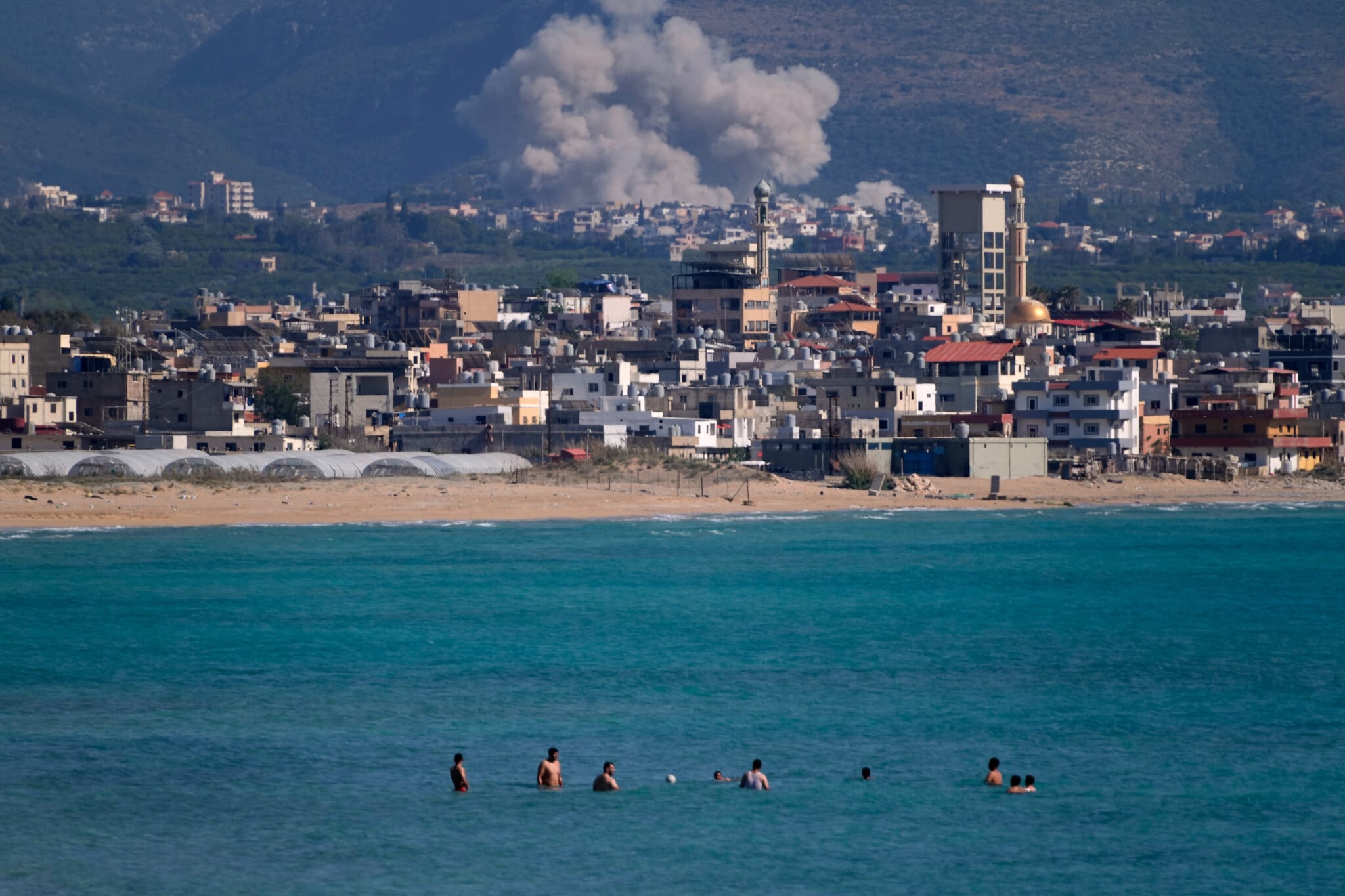
People swim on a public beach as smoke rises from an Israeli airstrike that hit a village near the southern port city of Tyre, Lebanon, June 2, 2026. (AP Photo/Mohammed Zaatari)
The IDF ordered residents of the city of Nabatieh, a major Hezbollah stronghold, to leave ahead of strikes.
The military said in a statement Tuesday evening that troops of the Givati Brigade captured hundreds of weapons and directed strikes that killed some 20 Hezbollah operatives during operations north of the Litani River in recent days.
The brigade has been operating in the towns of Zawtar al-Sharqiyah and Zawtar al-Gharbiya, west of the Beaufort Castle, as part of efforts to “strengthen operational control in southern Lebanon, and to remove the direct threat to the Galilee Panhandle and Metula,” the IDF said.
So far during the raids in the area, the military said, the brigade has directed over 100 airstrikes, killing some 20 Hezbollah operatives, alongside locating “hundreds of weapons in civilian homes in the area.”
The IDF said the troops were taken to a hospital and their families were notified.
Restrictions eased on northern border
In light of the somewhat reduced tensions on the northern border, the IDF Home Front Command said on Tuesday evening that it was easing its guidelines, allowing schools in the area to reopen.
Educational activities will now be permitted inside a building, or in an area where a shelter can be reached in time, in all communities along the Lebanon border, as well as in Meron, Bar Yohai, Or HaGanuz, Safsufa, Yesud HaMa’ala, Kisra-Sumei, Beit Jann and Sde Eliezer. Previously, educational activities were prohibited in those areas.
Workplaces can also operate in all of those areas, either inside a building or in an area from which adequate shelter can be reached in time.
According to the latest guidelines, gatherings are now restricted to 100 people outdoors and 400 indoors, after previously being restricted to 50 and 200, respectively, and beaches are being reopened.
In the Upper Galilee and northern Golan, along with Katzrin and Kidmat Tzvi, all restrictions imposed earlier this week have been lifted. These guidelines remain in effect until Sunday at 7 p.m. By then, the Home Front Command will conduct another assessment.
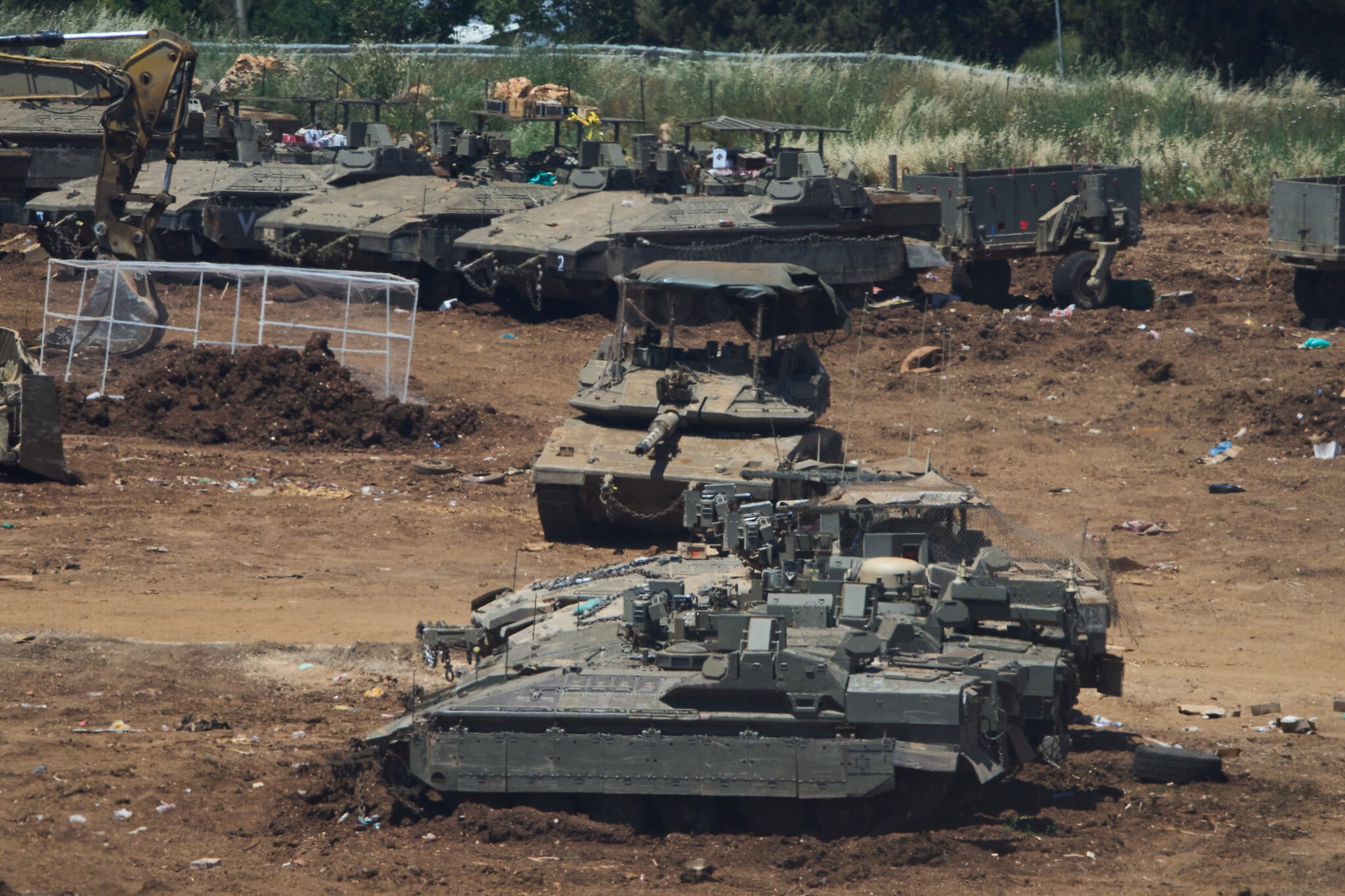
Israeli troops gather on the border with Lebanon in northern Israel, June 2, 2026. (AP Photo/Ariel Schalit)
Coinciding with the Home Front Command’s decision to ease restrictions, the government held a pre-scheduled “special meeting” on efforts to rehabilitate the war-battered front.
The meeting was attended, however, by just three ministers.
After the issue was removed from this week’s cabinet meeting and Tuesday’s meeting scheduled instead, the Ynet news site said only Avi Dichter (Likud), Ze’ev Elkin (New Hope), and Amichay Eliyahu (Otzma Yehudit) showed up.
Following intense public criticism, Netanyahu also arrived at the meeting.
Furthermore, Hebrew media reported that the meeting was not held in northern Israel, and no northern mayors or residents were invited to attend, despite having long criticized the government for what they view as insufficient attention and help for the communities that have been battered by years of Hezbollah attacks that have forced many residents to leave and businesses to close.
Israel reportedly wary of further US intervention
While Washington’s ceasefire efforts have so far only required Israel to hold off on striking Beirut, Channel 12 reported on Tuesday evening that Netanyahu was concerned that this could ultimately pave the way for additional US restrictions on the IDF’s freedom of action in Lebanon.
According to the report, Israeli officials fear that the Trump administration could expand on its demand that Israel refrain from striking Beirut and begin limiting IDF operations in Lebanon more broadly. One Israeli source familiar with the matter told the network that Netanyahu is particularly concerned Washington could insist that the IDF operate only in cases of an immediate threat to troops, a shift from current policy.
The network reported that Trump was angered by a joint statement issued on Monday by Netanyahu and Defense Minister Israel Katz, as well as a video published by Netanyahu threatening strikes in Beirut. According to a senior US official cited by the network, Trump felt Netanyahu was “out of control” and at risk of undermining ongoing US-Iran negotiations.
Reports later Monday said that Trump did not hold back during a phone call with Netanyahu on Monday night, allegedly calling the Israeli premier “fucking crazy” and telling him that “everybody hates you now.”
Related: Trump said to yell at Netanyahu: ‘You’re f**king crazy. You’d be in prison if not for me’
An Israeli source briefed on the call similarly described it to Channel 12 on Tuesday as a “terrible conversation” in which Trump “really went at Bibi” and demanded he immediately abandon plans to strike Beirut and avoid jeopardizing talks with Iran.
A separate Channel 12 report alleged, however, that not only had Trump known that Israel was going to threaten to strike Beirut, but had agreed to it in advance, in an undisclosed phone call with Netanyahu several days earlier.
According to this report, the two men agreed that Israel would issue an evacuation warning for Beirut’s Dahiyeh district solely as a threat, without any intention of carrying out a strike. The move was reportedly meant to pressure Hezbollah and support negotiations with the Lebanese government.
However, it alleged, officials in the Trump administration later became concerned that Netanyahu might use that understanding as a basis for carrying out an actual strike, prompting Trump to intervene and halt the planned operation.
The report added that Israel had, as feared by Washington, already prepared for the strike and was awaiting only final US approval before Trump intervened to call it off.
The network further reported that the statement issued by Netanyahu after his call with Trump on Monday — warning that Israel would proceed with striking Beirut if Hezbollah continued to fire on Israeli cities — further irritated the administration and led to another, even harsher conversation between the two leaders.
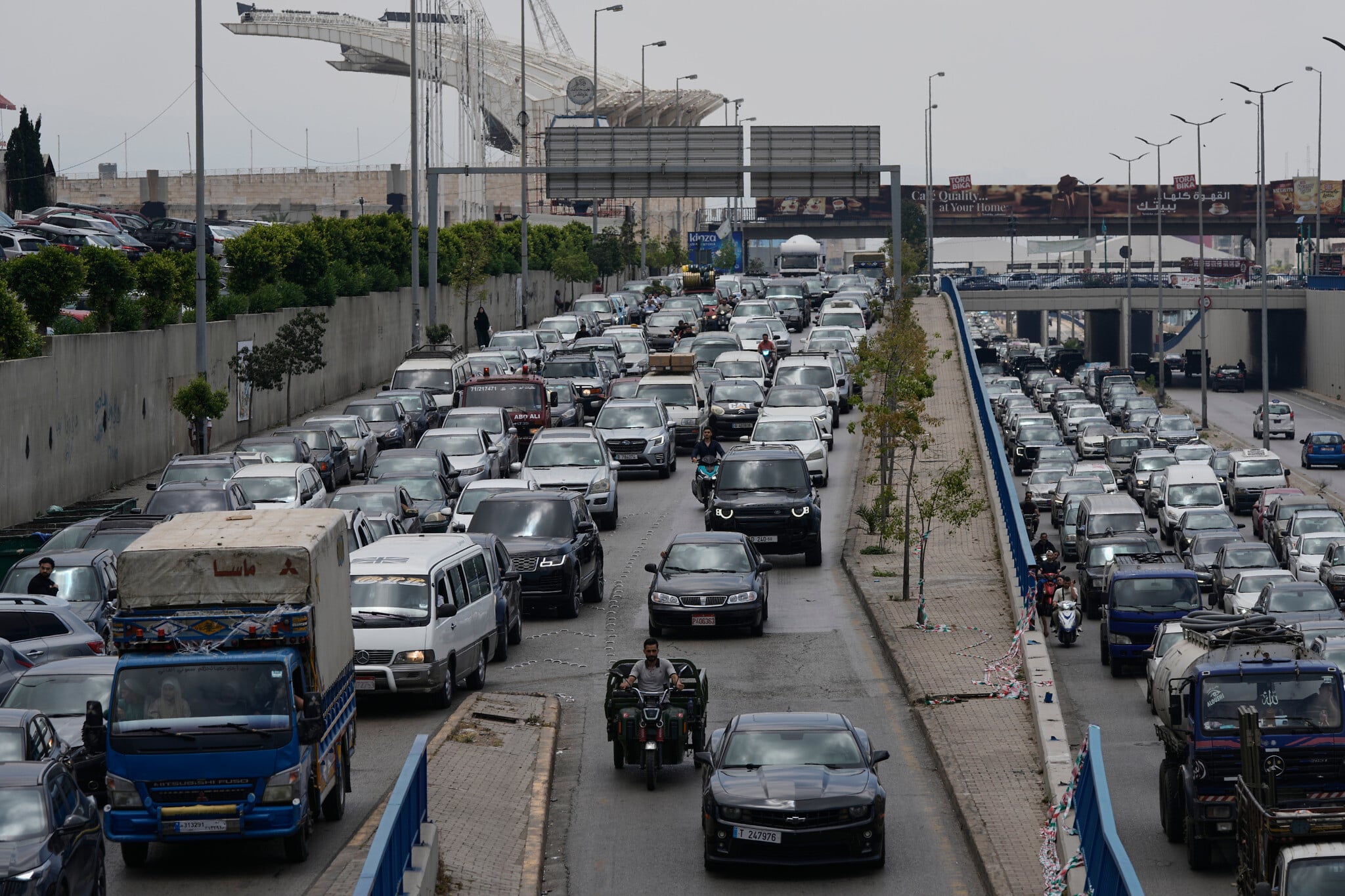
Cars sit in traffic on a highway as residents flee following an Israeli threat to strike Dahiyeh, Beirut’s southern suburbs, Lebanon, June 1, 2026. (AP Photo/Bilal Hussein)
x
Defense Minister Katz said on Tuesday afternoon that Hezbollah would be targeted in Beirut if the terror group carried out further attacks on Israel, while also confirming that the United States had prevented the military from carrying out strikes on the Lebanese capital.
Overnight, Hezbollah launched two rockets at the Safed area in northern Israel, which were intercepted. Israel did not respond with strikes in Beirut, despite Israeli leaders vowing to do so.
“Following a request by the US, until yesterday, the IDF refrained from carrying out powerful strikes in Beirut, apart from targeted eliminations, due to US efforts to reach an agreement with Iran,” Katz said at a conference Tuesday morning.
“Yesterday, the prime minister and I led a move together with the IDF whose purpose was to create an equation stating that the status of Dahiyeh in Beirut is the same as that of the northern communities in Israel, and if Israeli communities continue to be attacked, we will strike the Shiite Dahiyeh district in Beirut, which is Hezbollah’s stronghold,” he said.
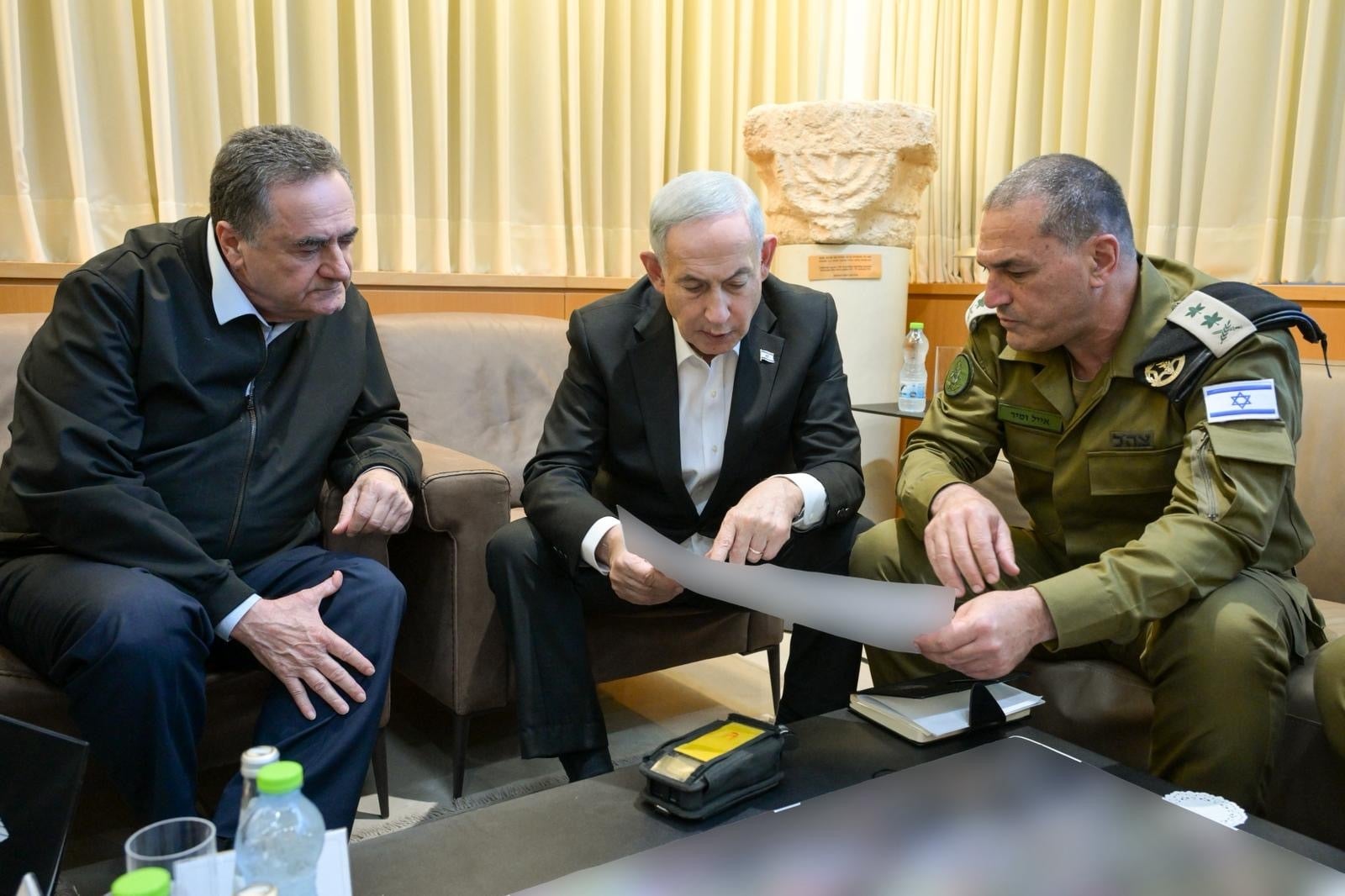
Prime Minister Benjamin Netanyahu (C) meets with Defense Minister Israel Katz (L) and IDF chief of staff Eyal Zamir at the Kiriya in Tel Aviv on May 26, 2026 (Maayan Toaf/GPO)
Katz said that the US “endorsed the principle and conveyed it to the Lebanese government and all relevant parties.”
“The test of the policy for protecting the communities will be simple and will become clear in the coming days: If the fire on the communities stops, or if there is fire on the communities and we strike in the Dahiyeh in Beirut, this equation will be realized,” he continued.
“From our perspective, there will not be a situation in which our communities are fired upon without a powerful response against the Dahiyeh district in Beirut, after evacuating its residents, as we have done in the past,” Katz added.
Three months of ostensible ceasefire
The latest round of fighting between Israel and Hezbollah began on March 2, when Hezbollah fired rockets into northern Israel two days after the US and Israel attacked its main backer, Iran. Since then, 26 IDF soldiers and one Defense Ministry civilian contractor have been killed in southern Lebanon, 14 of them since a ceasefire was introduced on April 16. Two civilians were also killed by Hezbollah rockets, and an Israeli civilian was mistakenly killed in the north by Israeli artillery shelling.
In Lebanon, the Israeli military has said that it has killed over 2,500 Hezbollah operatives, including hundreds of members of the terror group’s elite Radwan Force, since early March.
Since March 2, Hezbollah has fired some 5,500 rockets at IDF troops operating in the south of the country, as well as around 2,500 at Israel, according to the military. There were at least 75 rocket impact sites in Israel.
In addition, Hezbollah launched around 300 drones, of which 25 struck Israel, according to the IDF.
The IDF believes Hezbollah still possesses thousands of short-range rockets, along with hundreds of longer-range projectiles. The IDF has said that Hezbollah is launching most of its attacks from deeper within southern Lebanon.