
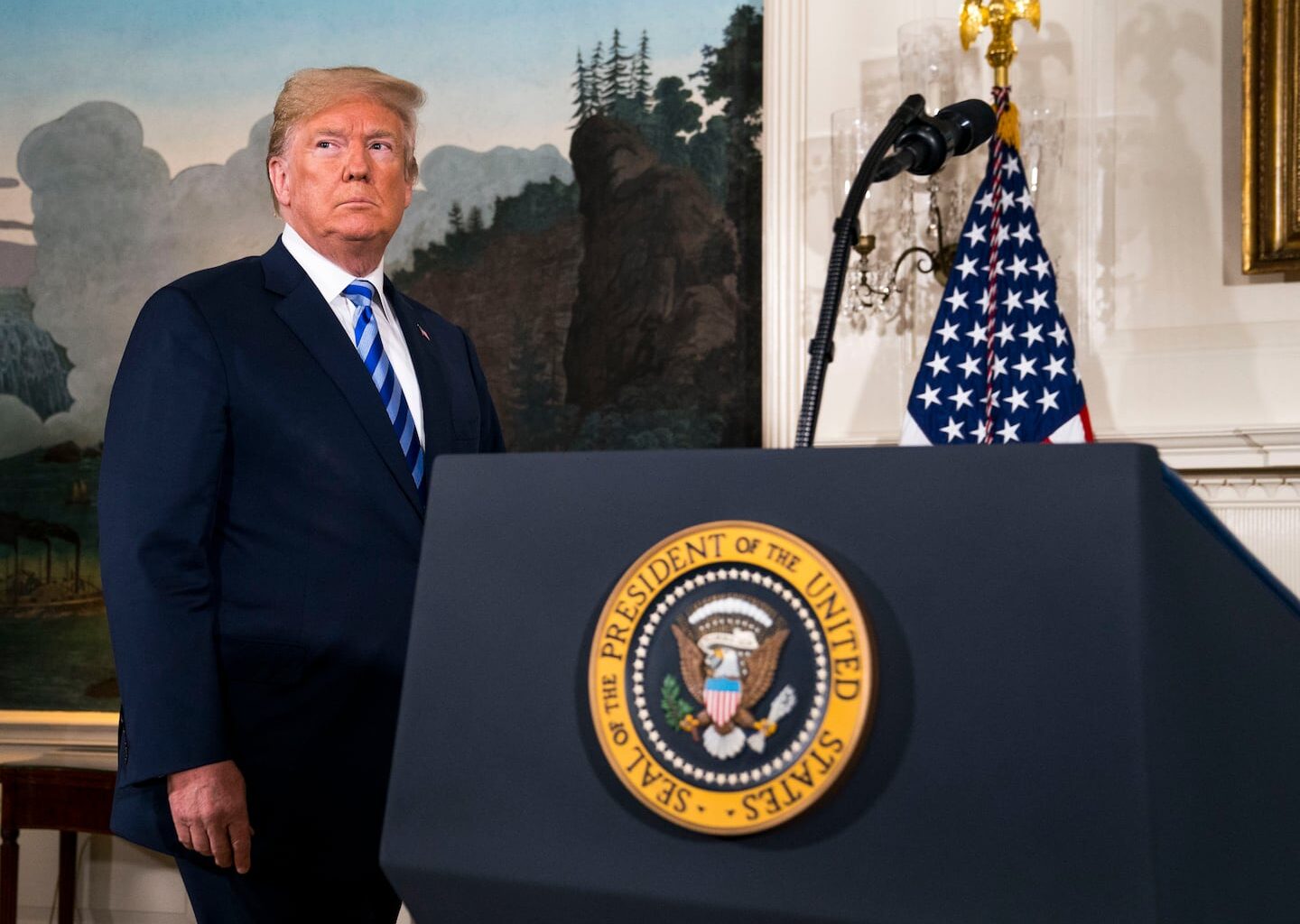
No modern diplomatic achievement has been more persistently caricatured, more thoroughly misunderstood, or more relentlessly attacked by people who ignore what it actually accomplished. The mythology became so pervasive that it helped justify President Trump’s decision to withdraw from it in 2018 — a decision that has left the United States and its allies confronting a nuclear crisis today that looks remarkably like the one the JCPOA was successfully preventing. Much of what the United States seeks through pressure, threats, and bombing in Iran closely resembles what the agreement once achieved without the risk of disrupting the Strait of Hormuz.
The tragedy is not merely that America abandoned a working agreement. It is that years of misinformation have become both a cause and a symptom of a broader dysfunction in American foreign policy: the inability to distinguish between political narratives and policy realities.
The mythology extends to both process and substance. Last week, Republican Senator Thom Tillis of North Carolina argued that any new US agreement with Iran not ratified by Congress would be “doomed to fail” like the Obama-era deal. This ignores the extensive congressional engagement that surrounded the JCPOA. Congress held numerous hearings, received repeated classified and public briefings from senior administration officials, and passed the Iran Nuclear Agreement Review Act, which established a formal review process and votes in both chambers before the agreement could take effect.
The broadsides do not end there. It is often claimed that the JCPOA allowed Iran to continue pursuing a nuclear weapon. In reality, it blocked every known pathway to producing enough fissile material for a bomb. Before the deal, Iran possessed roughly 20,000 centrifuges and a growing stockpile of enriched uranium. Afterward, it dismantled two-thirds of its centrifuges, shipped out 97 percent of its enriched uranium, and capped enrichment far below weapons-grade levels. Iran’s breakout time — the period required to produce enough material for a weapon — expanded from a matter of months to roughly a year.
Nor was the deal built on trust. It rested on verification: the most intrusive inspection regime ever negotiated, giving international inspectors access to permanent monitoring of nuclear facilities, surveillance of uranium production and centrifuge manufacturing, and unprecedented visibility into Iran’s nuclear activities. Ronald Reagan famously said, “Trust, but verify.” The JCPOA effectively deleted the first part.
The most persistent myth is that walking away produced a better outcome. It produced the opposite. Iran expanded its nuclear activities. Enrichment levels increased. Uranium stockpiles grew. Monitoring and transparency declined. International consensus fractured. The breakout timeline shrank dramatically. Iran was farther from a nuclear weapon when the JCPOA was being implemented than it is today.
The United States remains paralyzed by social media-fueled foreign policy diatribes that proceed as though ideal solutions are waiting just around the corner. They rarely are.
The nuclear negotiators were not choosing between the agreement and some hypothetical arrangement in which Iran transformed into a Jeffersonian democracy and permanently abandoned even peaceful nuclear energy. They were negotiating with the Iran that actually existed under the geopolitical conditions that actually existed. The agreement succeeded in its central objective: preventing Iran from developing a nuclear weapon while creating space for diplomacy and reducing the risk of war.
Today, many voices that denounced the JCPOA now advocate policies that could ultimately produce a negotiated outcome bearing substantial resemblance to the original deal — or, failing that, military action designed simply to recreate constraints that diplomacy had already secured.
The result is a foreign policy debate trapped in a loop. Armchair quarterbacks, ideologues, and hardliners reject diplomacy because it is imperfect. The United States pursues coercion instead. Coercion fails to produce a better outcome. Then the United States returns to diplomacy seeking many of the same restrictions it once discarded. Along the way, it squandered several years during which a united international coalition could have focused greater pressure on Tehran’s non-nuclear threats to regional stability.
That is not strategic clarity. It is self-induced amnesia. American leadership depends on credibility. Adversaries must believe negotiated agreements can survive changes in political leadership. Diplomacy cannot function if every agreement is a temporary arrangement awaiting the next election.
The Iran nuclear agreement’s demise was not preordained at the negotiating table. It was doomed in Washington, where political warfare overwhelmed policy reality.
As policy makers once again search for a pathway that prevents a nuclear-armed Iran while avoiding another long war in the Middle East, they would do well to start with an honest assessment of what actually worked.
After years of getting no respect, the Iran agreement deserves an honest reassessment, which might yet help return American foreign policy to a firmer foundation of facts.