
Unlock the White House Watch newsletter for free
Your guide to what Trump’s second term means for Washington, business and the world
US Treasury secretary Scott Bessent has raised the prospect of the White House rolling out the unprecedented revenue-sharing agreement it struck with chipmakers Nvidia and AMD to other industries.
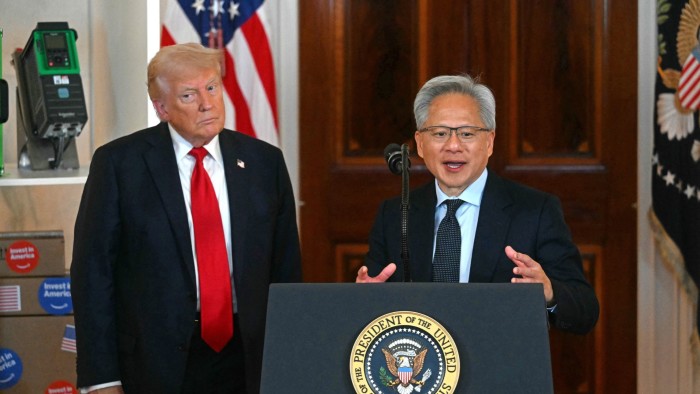
President Donald Trump upended corporate norms this week after Nvidia and AMD agreed to give the US government 15 per cent of their Chinese chip sales in exchange for being awarded export licences.
“I think we could see it in other industries over time,” Bessent told Bloomberg TV on Wednesday. “I think right now this is unique, but now that we have the model and the beta test why not expand it?”
Bessent made the comments after Trump confirmed on Monday that he had “negotiated a little deal”, which was first reported by the Financial Times, to hand the US a cut of the chipmakers’ Chinese revenues.
Under the agreement, Nvidia will share revenues from Chinese sales of its H20 chips and AMD will do the same for its MI308 semiconductors.
Bessent downplayed fears that the arrangement would undermine US security by giving Beijing access to American technology, arguing the semiconductors in question were “levels down the chip stack”.
“There are no national security concerns here,” he said. “We would not sell any of the advanced chips.”
Trump said on Monday that he would consider allowing the expansion of the arrangement to allow Nvidia to export its advanced Blackwell chips to China, where they are currently not legally available.
These would be “enhanced in a negative way” for sale in the country, he said, similar to how the US sells downgraded versions of its most advanced fighter jets.
The comments indicated a potential reversal from the controls imposed by the Biden administration that made it harder for China to access advanced chips used for everything from modelling nuclear weapons to developing hypersonic weapons.
Any such approval would unlock billions of dollars in sales for Nvidia after chief executive Jensen Huang’s lobbying for access to the Chinese market.
Bessent said that allowing Nvidia to sell H20 chips in China would make them “the bellwether for Chinese technology” while also swelling the US government’s coffers and allowing it to pay down debt.
“What we do not want here is for Huawei to have a digital Belt and Road,” said Bessent, referring to China’s global infrastructure initiative. “We do not want the standard to become Chinese across the world or even in China.”