
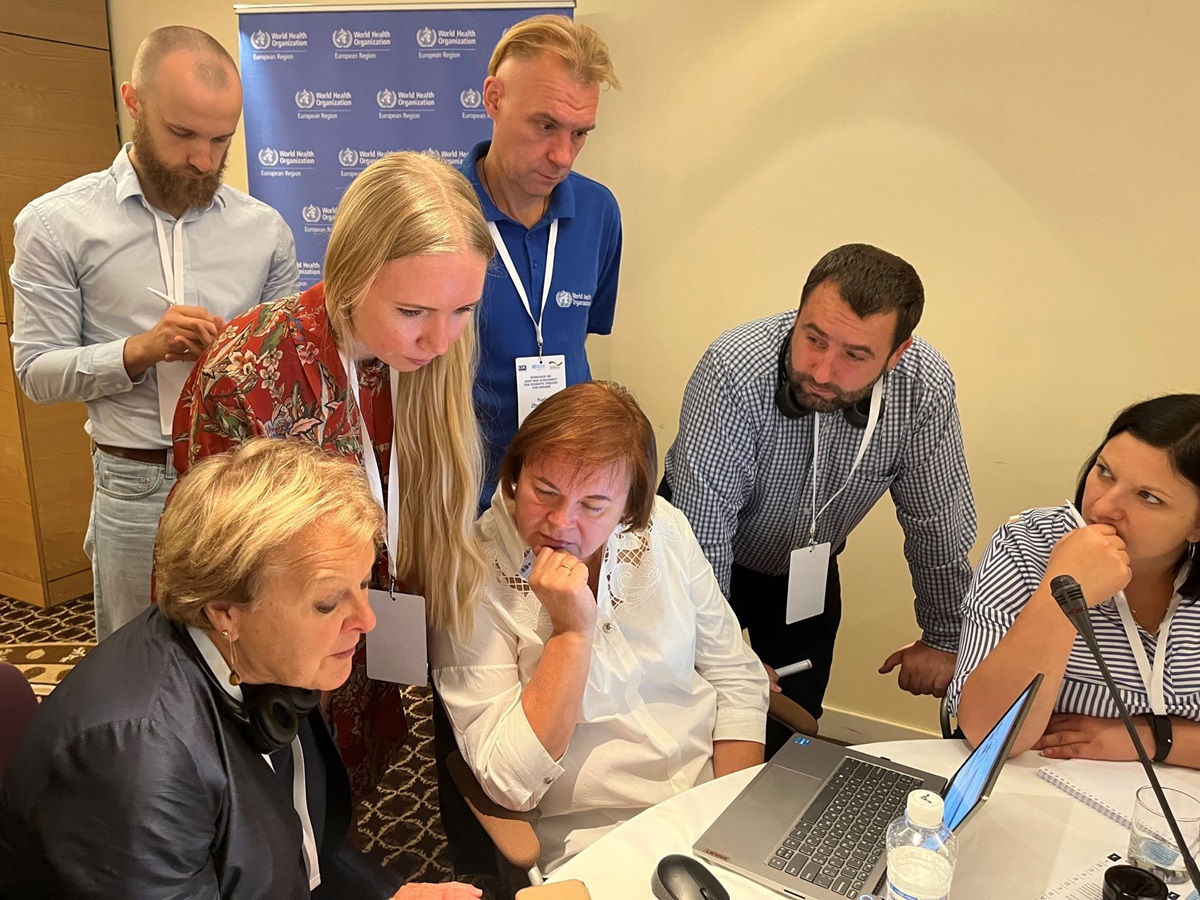
The Joint Risk Assessment Operational Tool (JRA OT) was developed by the Tripartite (the Food and Agriculture Organization of the United Nations, World Health Organization, and the World Organisation for Animal Health). The tool proposes a facilitated approach guiding the various actors toward a comprehensive and consensual risk assessment for zoonotic diseases and other threats at the human-animal-environment interface. Since 2018, sixty-six Joint Risk Assessment Operational Tool (JRA OT) workshops have been conducted and further implemented across various countries. Different regions have adopted diverse models for training, application, and institutionalization of the tool.
Objectives
In this webinar, we aim to showcase how select countries have successfully adapted and embedded the JRA framework into their national processes, highlighting the scenarios in which it has been effectively utilized.
Speakers
Welcome remarks: Stéphane de la Roque, Unit Head, Health Emergency Preparedness, WHO
Introduction to the Joint Risk Assessment Operational Tool (JRA OT): Ong-om Prasarnphanich, Technical Officer, Health Emergency Preparedness, WHO
Institutionalization in Canada: Jan Trumble Waddell
Institutionalization in WPRO: Jessica Kayamori Lopes, Technical Officer One Health
JRA rolling out in African region: Nasir Ahmed, One Health Lead, NCDC Nigeria, and Raymond Hamoonga, National One Health Collaborator in Zambia National Public Health Institute (TBC)
Application in Eastern Mediterranean region: Heba Mahrous, Technical officer One Health, and Lora Alsawalha, Public Health Officer (disease control)
Application in European region: Peter Hoesjkov, Technical officer food safety and Zoonotic Diseases, and Prof Dr Golubinka Boshevska, MD, PhD, Head of the Laboratory for Virology, Institute of Public Health, Faculty of Medical Sciences, University Goce Delchev Shtip, North Macedonia
Application in SEARO: Gyanendra Gongal, Senior Public Health Officer