

Much of the local anger at the removal of the car parks in 2020 stemmed from disruption to parking around a Vietnamese Buddhist temple on the street.
Thanh Ha, the vice president of the temple, said the removal of car parks outside the temple had badly affected access for elderly Vietnamese-Australians who frequent the temple from nearby nursing homes and who can’t walk or take public transport.
“We feel we are excluding those people – we have to tell them they can no longer come if they use a wheelchair or need to be moved into the temple because there is nowhere to park,” she told the April meeting.
Following this, Jolly labelled complaints from cyclists as “white privilege”.
“For those people, those professional managerial class people, who have sent us emails saying ‘protect our safety’, talking to people who live in the most dangerous part of … of Melbourne, in North Richmond, that is a sense of white entitlement, of white privilege,” Jolly said at the time.
Jolly claims the narrowed widths will still be wider than the Albert Street bike lanes in East Melbourne, which are overseen by the City of Melbourne.
An independent road safety audit commissioned by the council warned that reinstalling car park spaces posed a significant risk, citing dangerously reduced sight lines for drivers.
Councillors on Tuesday accepted recommendations on how to mitigate these risks, such as by removing a number of risky car parks from their design.
During the debate, McKenzie said she was recently hit by a car while riding her bike on Hoddle Street and would therefore not vote for narrowing the bike lanes.
She also said she wasn’t convinced the state government would approve the redesign.
“I think that we’ll be left with those orange bollards and confusion about the state of the street moving forward, probably until the end of this term,” she said.
The Department of Transport and Planning, the ultimate authority for approval, has expressed its lack of support for the narrowed lanes and could block any changes if the council proceeds with a non-compliant design.
The department was contacted but did not respond before the vote. The Age has again approached the department for a response after the vote.
Wade also raised safety concerns and said that a key indicator of a good bike lane is that “women feel safe to cycle.”
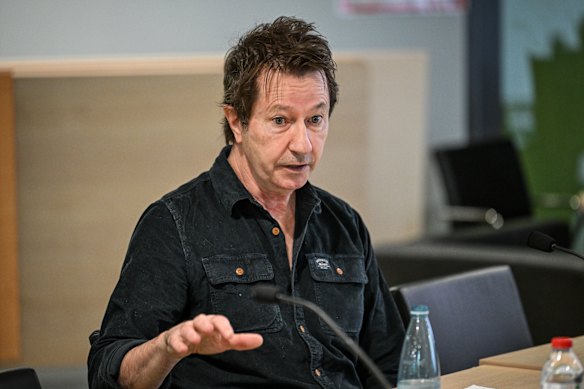
City of Yarra Mayor Stephen Jolly.Credit: Justin McManus
Despite these concerns, the motion was carried, with Aston describing the result as the “best possible job of coming to a compromise”.
Before the vote, the country’s largest bike rider organisation urged councillors to abandon the new design, saying 1.5 metres was “far too narrow to be properly functional on this busy bike route”.
“The City of Yarra once regarded itself as a leader in the design and delivery of bike lanes, but sadly, it has lost its way,” said Alison McCormack, chief executive of the Bicycle Network.
“The unorthodox design for permanent bike lanes in Elizabeth Street originated by Mayor Stephen Jolly and now, before the council, is one of the worst we have encountered in our 50-year history.
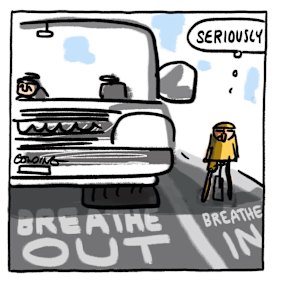
Credit: Matt Golding
In response, Jolly told this masthead the original bike lane was “way too wide for purpose”.
“It was a bike superhighway that badly disrupted the lives of Vietnamese locals and their temple,” he said.
“Contrary to the conspiracy theories of some, the new design will keep dedicated bike lanes and actually extend them, while returning much-needed parking and adding in heaps of new trees.”
Start the day with a summary of the day’s most important and interesting stories, analysis and insights. Sign up for our Morning Edition newsletter.