
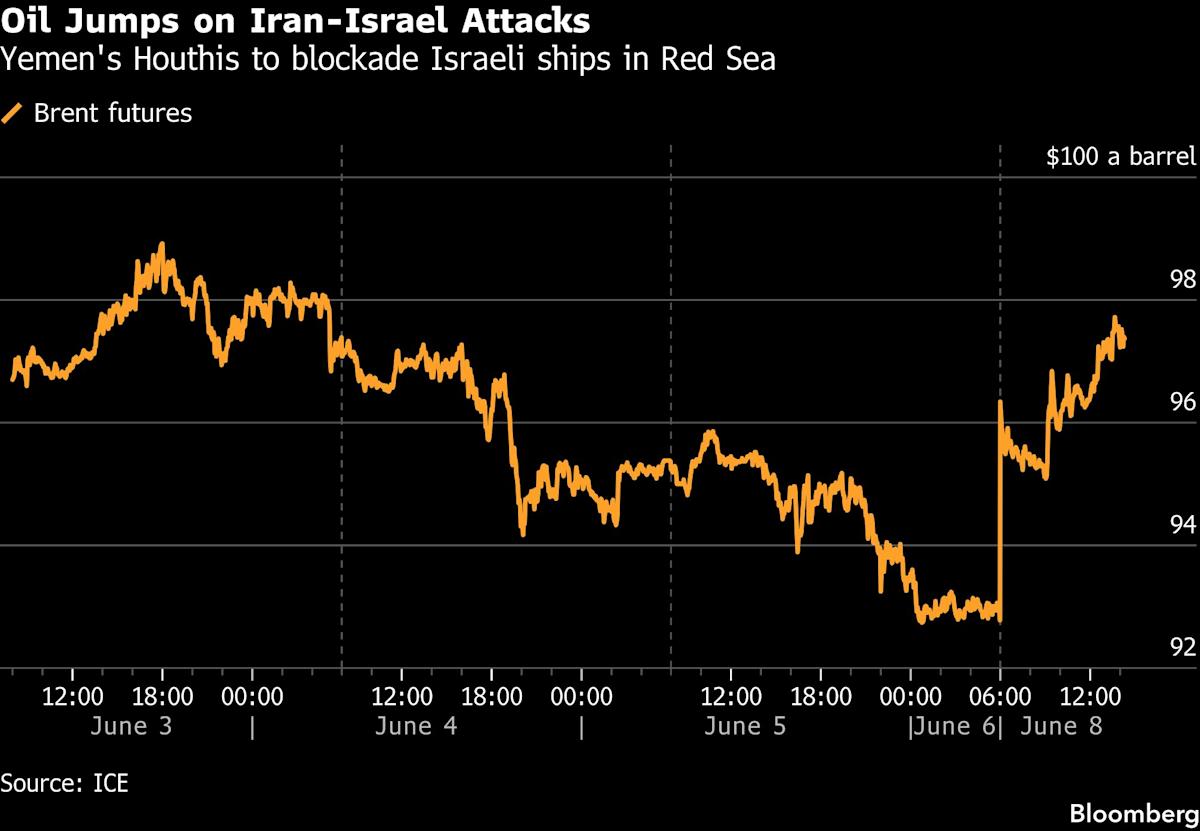
(Bloomberg) — Oil pared an earlier advance after Iranian media said the country’s armed forces had declared an end to the military operation against Israel after a day of hostilities between the two sides.
Most Read from Bloomberg
Global benchmark Brent was trading about 1.4% higher, having earlier climbed as much as 5.4%. Iran’s central military command said the operation against Israel had ended, according to the semi-official Fars news agency. It said that if Israel continued to attack, including in southern Lebanon, “much harsher and more crushing actions than before will be on the way.”
US President Donald Trump earlier said in a post on his Truth Social platform that both countries are looking to agree to an immediate ceasefire after the two sides exchanged strikes. He added that a peace deal was “subject to ignorance or stupidity getting in its way.”
Israel had said it struck military targets in Iran, retaliating against earlier missile attacks by Tehran despite President Trump urging Prime Minister Benjamin Netanyahu to refrain from hitting back.
Even at the peak of the day, oil prices remained below $100, a sign of how the market has managed to avert the worst impacts of what the International Energy Agency describes as the biggest ever supply disruption. At its highest level during the conflict, the global benchmark neared $130 a barrel.
Yemen’s Houthi rebels also said prior to the Iranian halt of attacks that they would impose a complete ban on Israeli vessels in the Red Sea, though a key industry group saw little significant impact on shipping given that many vessels are currently avoiding the waterway anyway.
“Despite repeated optimism from the US administration, a lasting peace agreement appears increasingly elusive,” said Ole Hansen, head of commodities strategy at Saxo Bank A/S. “The continued lack of progress toward restoring normal energy flows from the Middle East is reinforcing expectations of a prolonged period of elevated oil prices.”
There’s been a flare-up in hostilities over the past week across the Middle East that’s threatening to derail a truce and complicate negotiations to end the war. The conflict has led to the near-closure of the crucial Strait of Hormuz, choking off most supplies of crude, fuels and natural gas to global customers.