
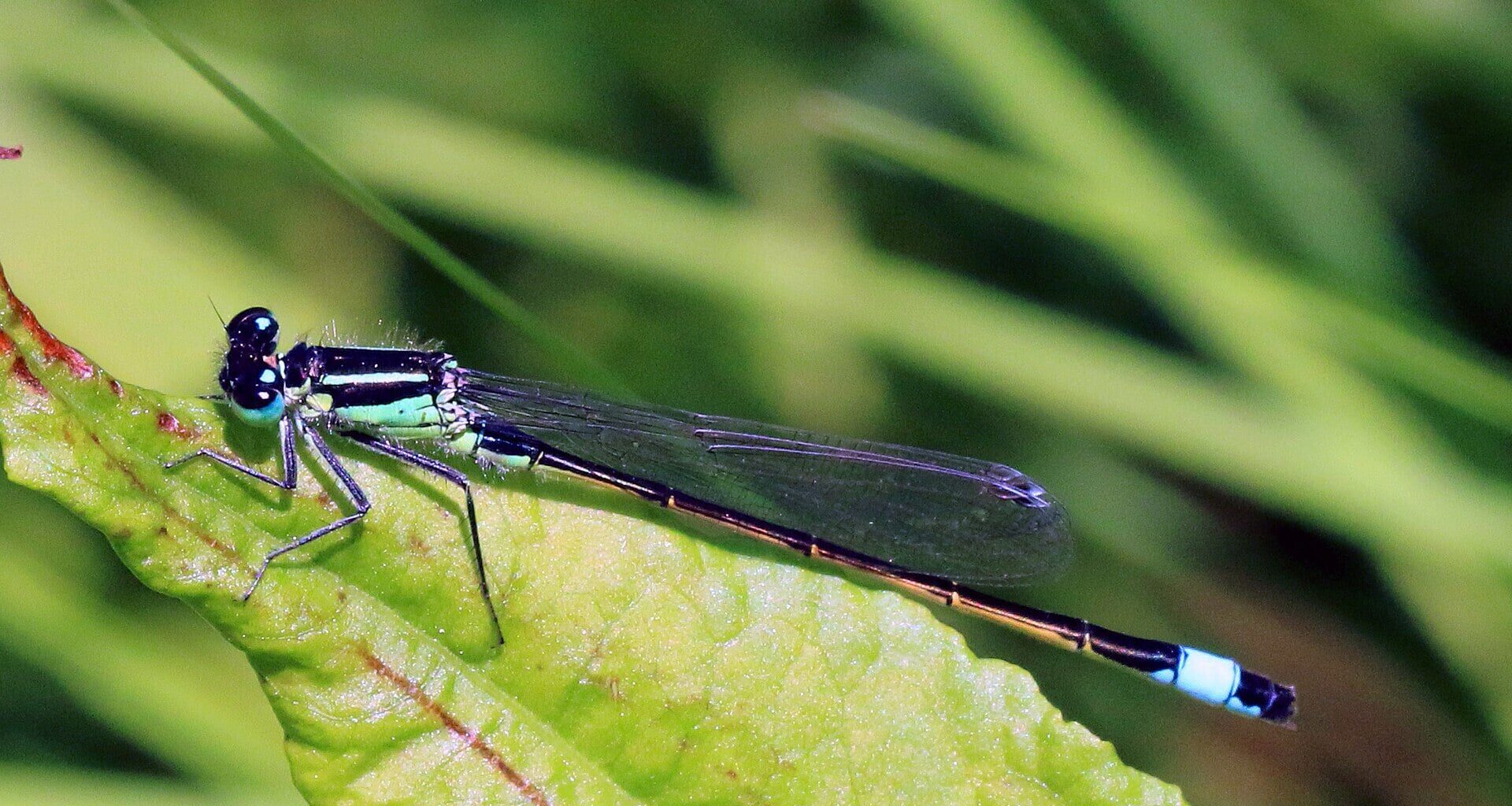
Scientists at Ben-Gurion University of the Negev in southern Israel have cracked the code of how damselflies produce their striking colors, in a discovery that could help accelerate the replacement of toxic synthetic pigments across industries ranging from cosmetics to textiles.
Damselflies, often colored in metallic turquoise, blue, green, or red, resemble miniature helicopters that whizz over bodies of water during the warmer months.
Their colors are achieved through photonic glasses — tiny spheres packed together randomly to scatter light.
To counter the washed-out effect that can result from slight variations in sphere size, the damselfly has evolved two corrective mechanisms, according to an article published at the end of last month in the Proceedings of the National Academy of Sciences (PNAS).
In the first, the density of the spheres drops as they get larger, ensuring that each sphere reflects the exact same shade of color.
Get The Times of Israel’s Daily Edition
by email and never miss our top stories
By signing up, you agree to the terms
In the second, the spheres are loaded with a yellow pigment. This acts like a filter, absorbing unwanted light while making the main color appear much deeper and more saturated.
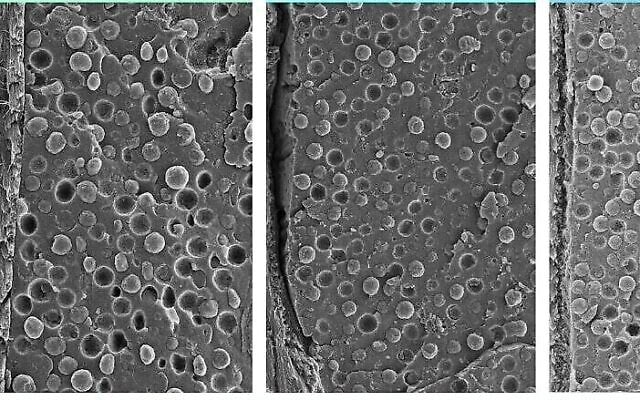
A magnified image of some of the photonic spheres in a male blue-tailed damselfly, reproduced with permission from the Proceedings of the National Academy of Sciences (PNAS)
“Nature has found an elegant way to produce perfect colors using imperfect parts,” said PhD student Tali Lemcoff, who studied the blue-tailed damselfly (Ischnura elegans).
She added, “These strategies could show us how to build high-quality optical materials using sustainable, organic ingredients instead of the synthetic chemicals we rely on today.”
Lemcoff told The Times of Israel that it was reasonable to assume the findings applied to other damselfly species as well, given that they also have similar light-reflecting structures.
The interdisciplinary team, led by BGU’s Professor Benjamin Palmer and Lemcoff, included researchers from the Weizmann Institute of Science in central Israel, Lund University in Sweden, Aalto University in Finland and the UK’s Bristol University.
We can’t do this work alone.

The war with Iran has been draining for all of us in Israel. But when I heard about a high casualty incident – ballistic missile impacts in Arad and Dimona that left nearly 200 people wounded – I drank a cup of coffee, packed a bag, and headed south.
There, I spoke with Shilgit, the head of an after-school program for underprivileged youth. Standing outside her destroyed center, Shilgit said it was a miracle that no children were hurt and spoke about the community coming together in the hours since.
As a Times of Israel reporter, I’m committed to telling stories of resilience like Shilgit’s. But my colleagues and I can’t do this alone. If you value work like this, please consider joining our reader support group, The Times of Israel Community. Your financial support is essential to keep real human reporting like this going.
— Stav Levaton, military reporter
Already a member? Sign in to stop seeing this
You’re a dedicated reader

That’s why we started the Times of Israel – to provide discerning readers like you with must-read coverage of Israel and the Jewish world.
So now we have a request. Unlike other news outlets, we haven’t put up a paywall. But as the journalism we do is costly, we invite readers for whom The Times of Israel has become important to help support our work by joining The Times of Israel Community.
For as little as $6 a month you can help support our quality journalism while enjoying The Times of Israel AD-FREE, as well as accessing exclusive content available only to Times of Israel Community members.
Thank you,
David Horovitz, Founding Editor of The Times of Israel