
When Russian tanks rolled across the Ukrainian border on Feb 24, 2022, Western intelligence gave Kyiv 72 hours.
Some were more generous – a week, perhaps two. Nobody said four years.
Now, the war has quietly passed a threshold that would have been unthinkable in those first frantic hours: 1,569 days – longer than the First World War.
Military experts see clear parallels between the two conflicts.
“The principles of war are the same in Ukraine as they were in the First World War,” Hamish de Bretton-Gordon, a former tank commander and military analyst, told The Telegraph.
“It’s just how we fight it, and some of the military capabilities that have changed. It’s still about dominating the enemy.”
The best estimates suggest the Russian Empire lost around 1.8 million soldiers in the conflict between 1914 and 1918.
Some 500,000 troops have died in Ukraine, with another 700,000 injured or missing.
The two wars are separated by more than 100 years, fought with weapons that would be unrecognisable to each other’s soldiers, but have produced the same result: a battlefield so dominated by rapid weapons development that it became a stalemate.
In four years, the First World War transformed fighting beyond recognition: armies that rode horses into battle in 1914 were deploying tanks, co-ordinating strategic bombing campaigns, and fighting beneath clouds of poison gas by 1918.
In little more than four years, Ukraine has undergone an equally dramatic transformation.
The Turkish-made Bayraktar drones that made headlines in 2022 have given way to domestically produced autonomous swarms, sea drones that have neutered a nuclear power’s navy, and a new military branch that did not exist before the war began.
“Today, virtually every combat unit has its own laboratory; a front-line workshop where ideas are tested and modified to meet specific operational requirements,” said Oksana Kuzan, head of the analytical department of the Ukrainian Security and Cooperation Centre.
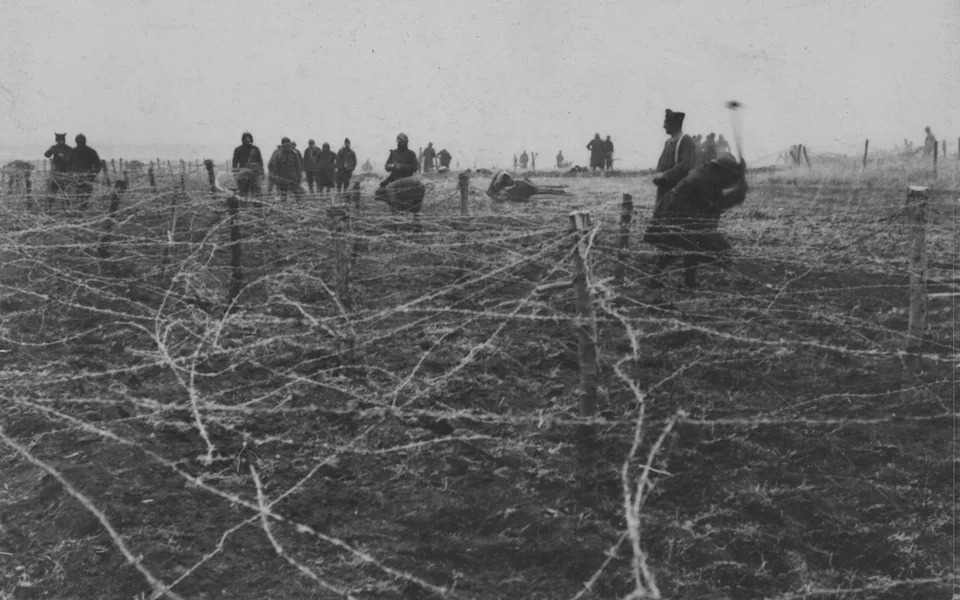
From barbed wire defences along the Western Front during the First World War… – Herbert/Archive Photos/Getty Images
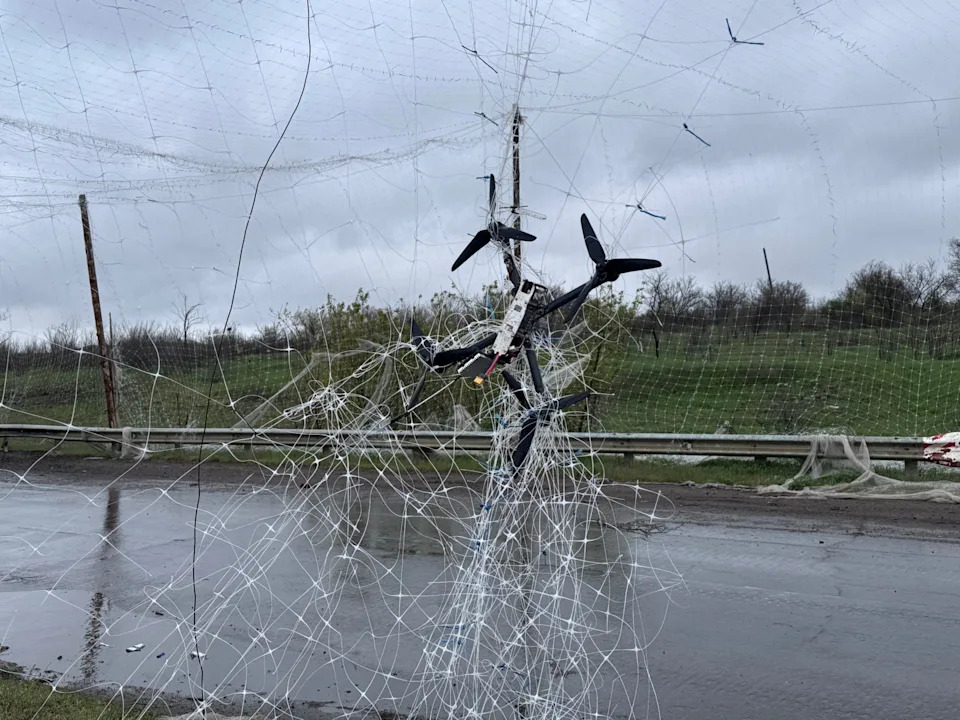
… to the remains of a drone on an anti-drone net in Donetsk – Alex Nikitenko/via Getty Images
According to Mr de Bretton-Gordon, the weapon that froze the Western Front was the machine gun, while the weapon that has frozen eastern Ukraine is the drone.
Both produced the same cruel paradox: an instrument of war so effective at killing in the open that it drove both sides to a standstill.
Between 1914 and 1918, the Western Front moved no more than 31 miles in either direction, while Ukraine’s front line has moved less than 19 miles in either direction since mid-2022.
But as the First World War ultimately proved, no stalemate lasts forever.
The deadlock was eventually broken by combined arms warfare, with tanks, artillery, infantry, and air power operating in tandem. It is a playbook that Ukraine has begun to replicate.
Meanwhile, just as late-war Germany collapsed under the weight of its own casualties, unable to train replacements fast enough, feeding raw conscripts into trenches they barely knew how to hold, Russia is repeating the same fatal pattern.
“The reason they’re still taking 1,000 casualties a day is that most of their forces are very poorly trained conscripts,” Mr de Bretton-Gordon said.
The question now hanging over Ukraine is what it will take to break the deadlock.
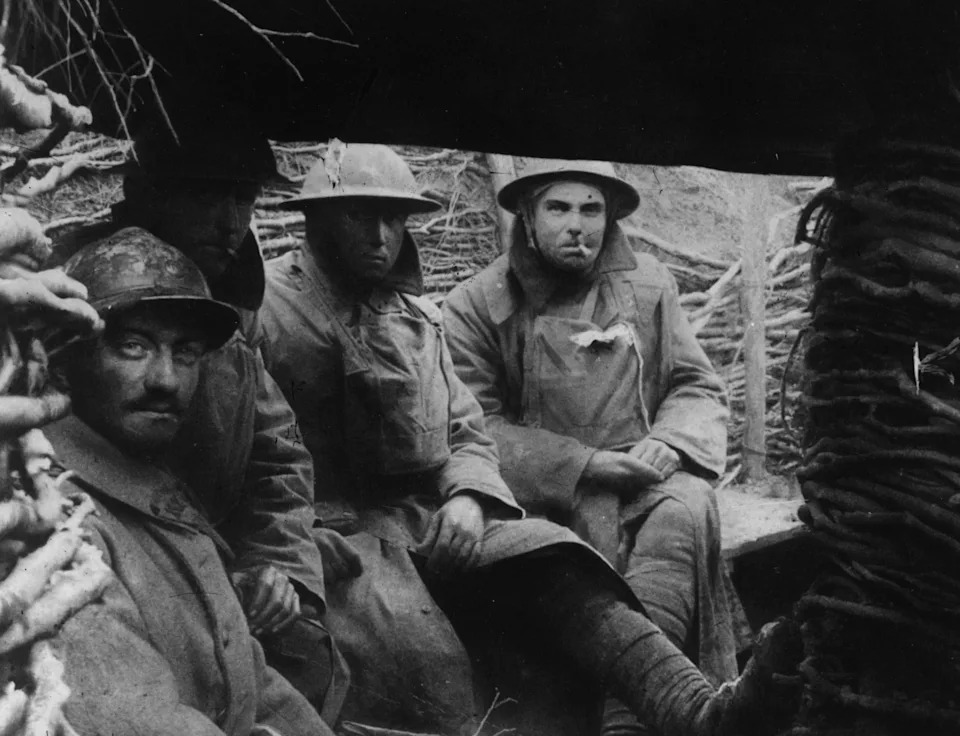
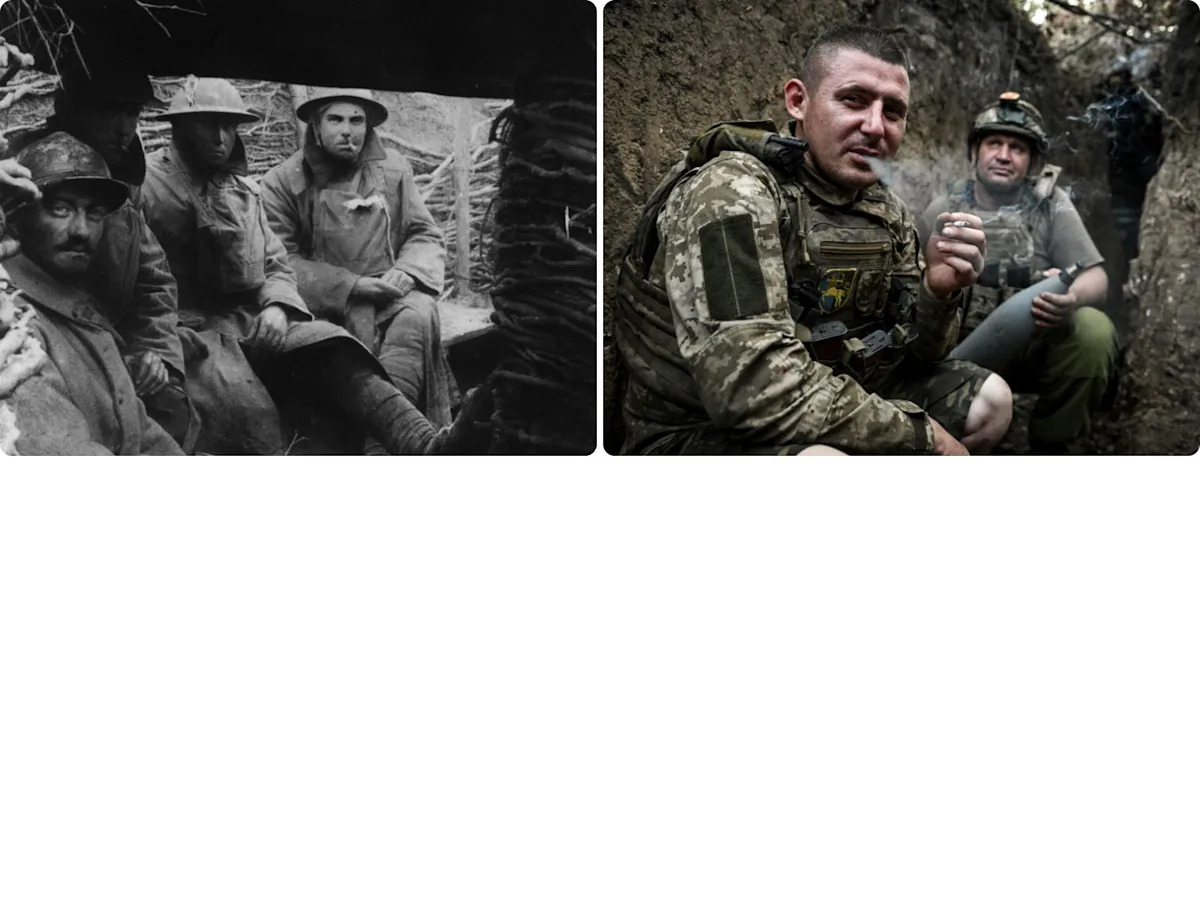
Trench warfare: French and British troops on the Western Front – Getty Images
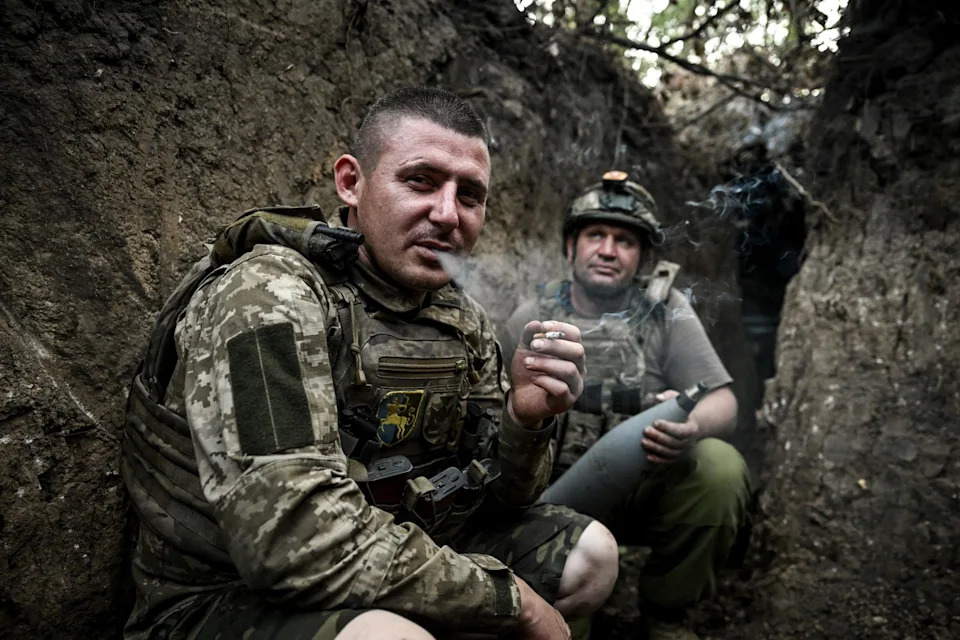
Ukrainian artillerymen await orders in a trench in Donetsk – Ukrinform/NurPhoto via Getty Images
Experts point to fleets of autonomous tanks roaming the battlefield, directed by a single crewed command vehicle at a safe distance; AI-guided drone swarms that no longer need a human hand on the controls; and air defence elevated from a secondary concern to the most coveted posting in any modern military.
“That’s where you want your very best people,” Mr de Bretton-Gordon said. “If your air defences can suppress the enemy, you can start manoeuvring again.
“In the future, we’re likely to have very few manned tanks, but large numbers of autonomous tanks and vehicles all operating together.”
Perhaps the war’s most radical single innovation has nothing to do with the land at all: Ukraine has effectively destroyed Russia’s Black Sea Fleet using sea drones, without ever having a navy of its own.
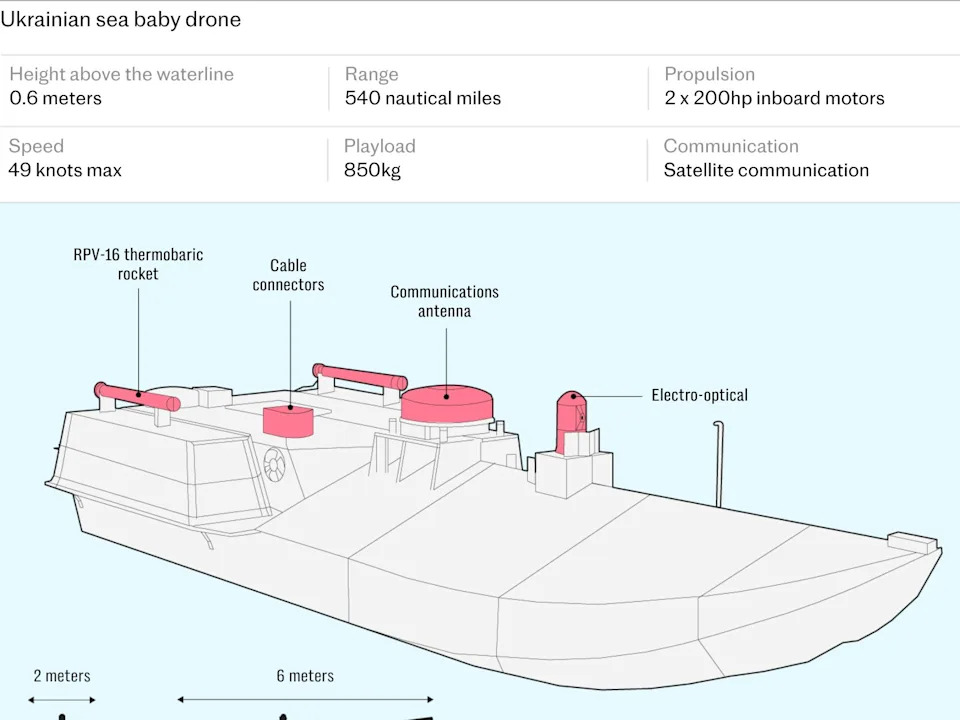
1212 Sea baby drone
Meanwhile, the electromagnetic spectrum, once an afterthought, has become the new contested ground.
It is as decisive, Mr de Bretton-Gordon argued, as the trenches were in 1916 or the skies over Britain in 1940.
The side that can dominate the electromagnetic spectrum, jamming enemy drones while keeping its own flying, will hold the advantage that the machine gun once gave to defence and the tank once gave to attack.
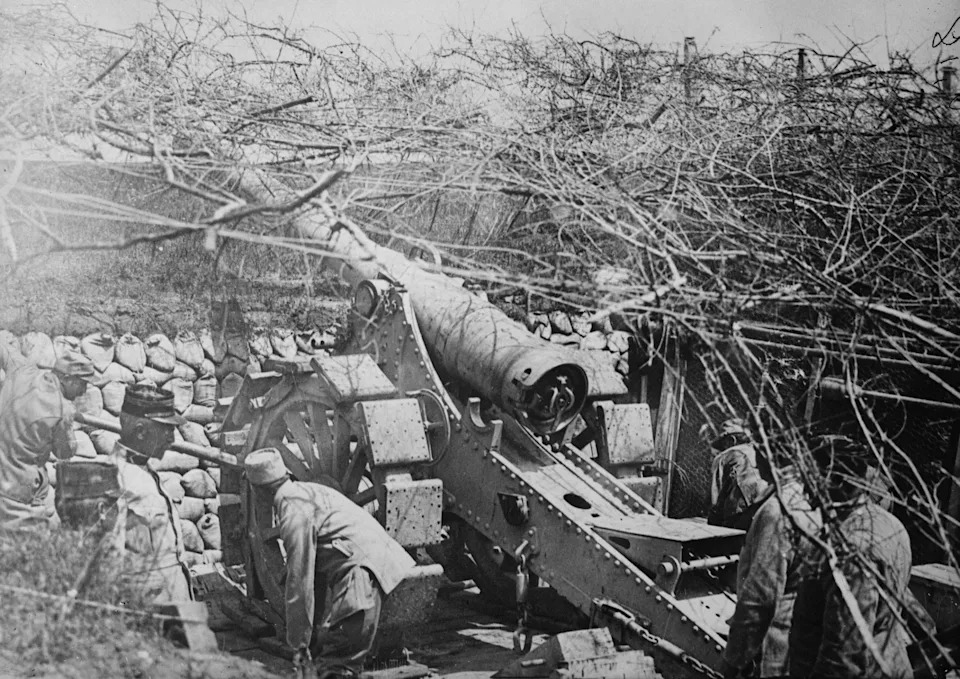
A cannon deployed in Macedonia during the First World War – Heritage Images via Getty Images
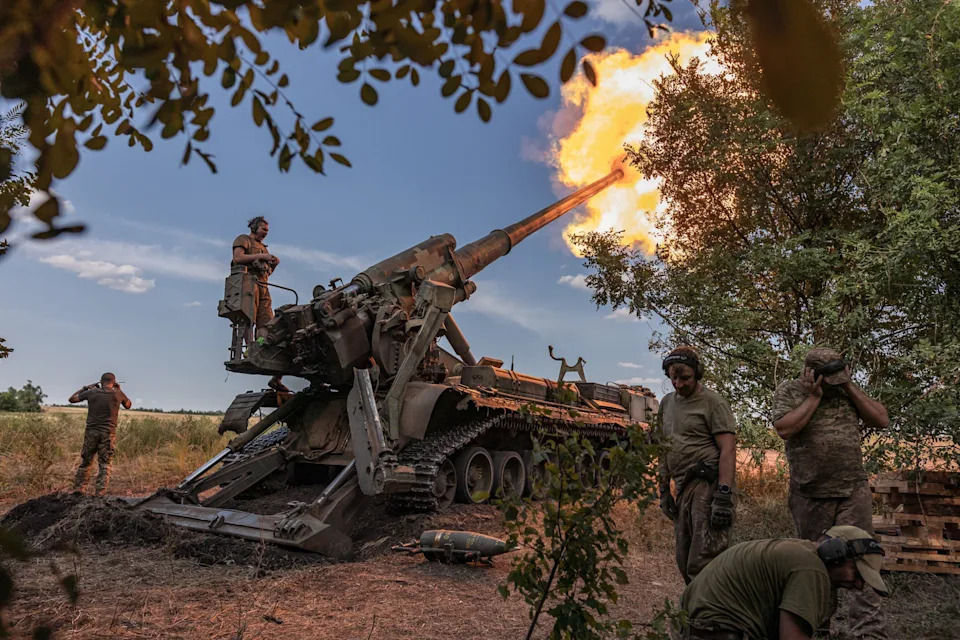
Ukrainian soldiers fire a heavy artillery system from a combat position in Donetsk Oblast – Diego Herrera Carcedo/Anadolu via Getty Images
Ukraine, for now, holds that advantage.
It is producing an estimated four million drones a year, has built the world’s first dedicated Unmanned Systems Forces, and is already sharing its hard-won expertise with allies across Europe and the Middle East.
A century separates the mud of the Somme from the drone-filled skies of the Donbas, but the soldier who finds a way to move and survives long enough to do it is still the one who wins.
“Everything’s changed, but nothing really has,” Mr de Bretton-Gordon concluded. “The side that can manoeuvre is the side that will win, and that has been true since time began.”