
Ms Ammori has contested this characterisation, saying the government’s own papers show that Palestine Action did not advocate for violence.
This brings us to the third of the three big legal challenges that will decide this affair: was the Home Secretary right?
The High Court will consider in the autumn if the ban was a rational and proportionate response to PAG’s activities.
Jonathan Hall KC, the independent watchdog of terrorism laws, has previously told BBC News that the ban is legally workable because the group had moved from protest into what is effectively “blackmail” – suggesting it was exerting pressure to get what it wanted.
But Ms Ammori’s legal team have a range of significant arguments around freedom of protest.
Volker Turk, the United Nations’ human rights chief has got involved too, saying the ban is so wrong it places the UK outside international law.
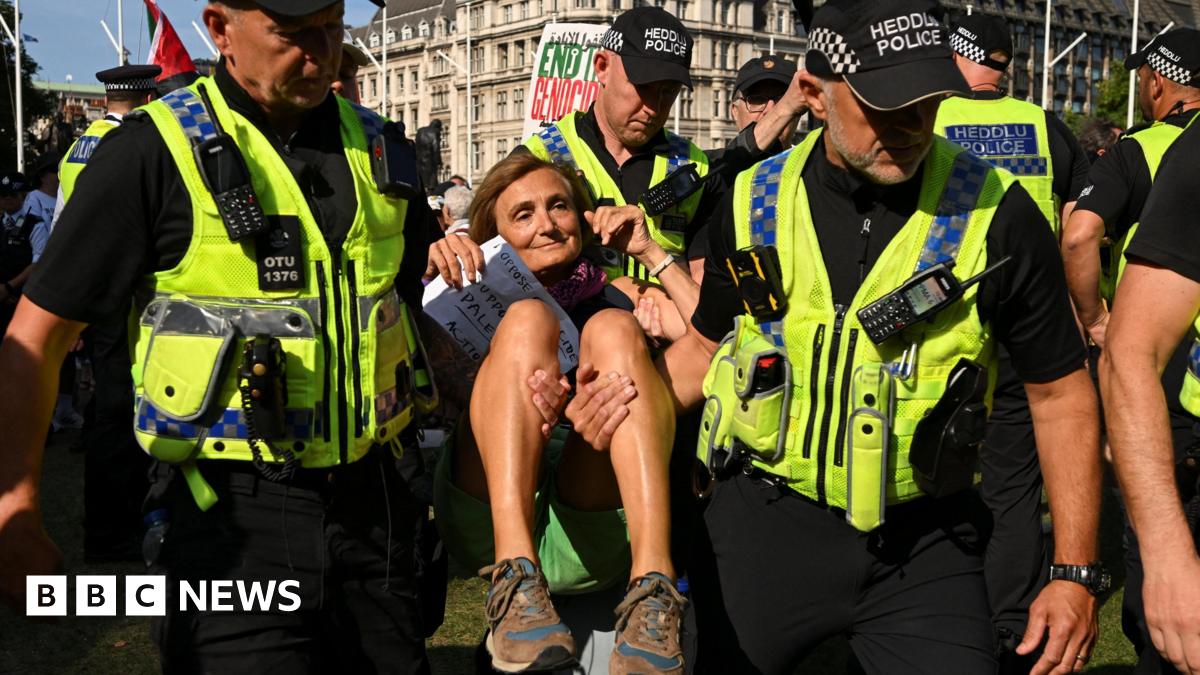
The outcome of that case will define whether Palestine Action remains banned. If the ban falls, then the 700 arrested so far are free – their cases would collapse. As for the group itself, it may feel emboldened – but would know that it could still be banned again if its actions cross the terrorism laws line.
If the ban stands, then the advantage will be with the government – and arrests and charges will continue.
That is the counter-terrorism policing way: slowly but surely, step by step, seek to contain and, ultimately, crush the threat.