
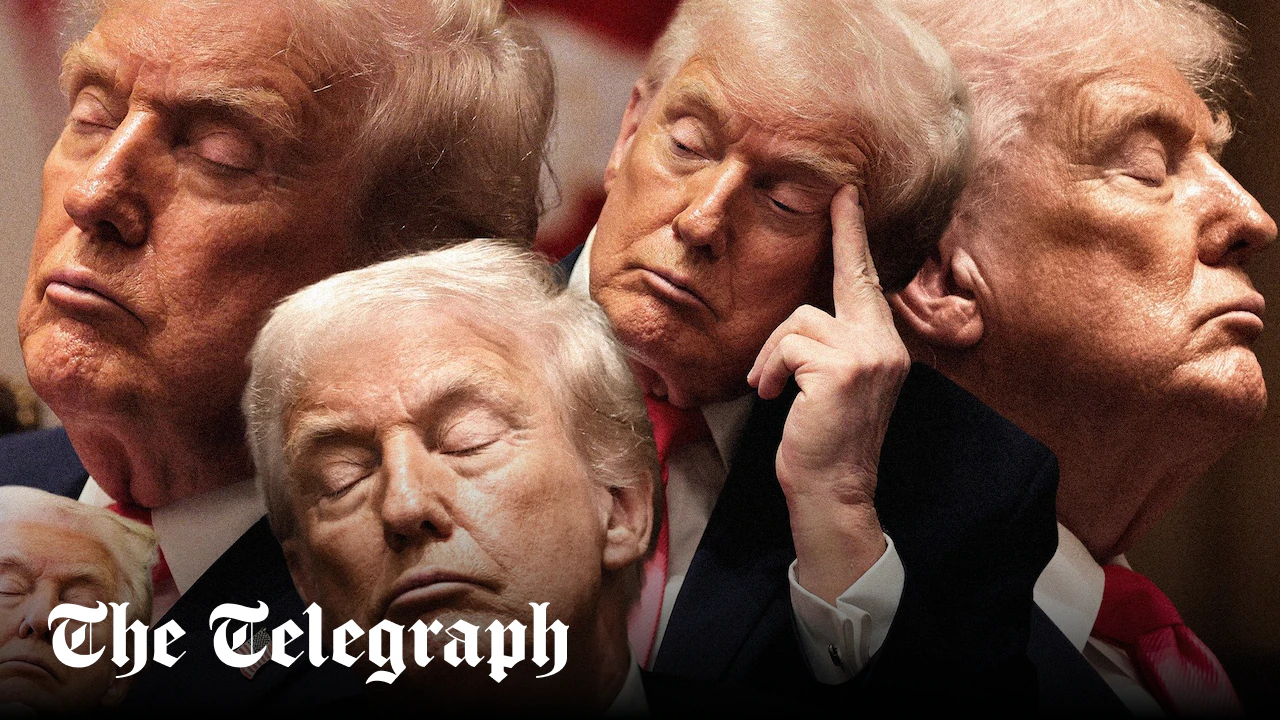
Carolyn Aldwin, an ageing researcher at Oregon State University, said that Mr Trump is increasingly showing signs of “impaired or abnormal ageing”, citing his language degradation and late-night social media binges as evidence of neurological issues and cognitive decline.
Erratic behaviour, language difficulties and sleep issues “are all associated with some types of dementia and Alzheimer’s,” she said.
There is also the obvious stress of being the commander-in-chief. “Trump tries to combat this, he delegates, gets into the office later, is less likely to travel domestically – but if you take the combination of age, stress and sleep impairment that will really take a toll on the body and the brain.”
She argued that so far, Mr Trump’s high intelligence may have protected him from some of the more clear signs of cognitive decline, “but when it gives, I worry that it may decline very rapidly, which could create a constitutional crisis.”
Democrats are already pushing to avoid this. Representative Yassamin Ansari, an Arizona Democrat, has publicly called to invoke the 25th Amendment to remove Mr Trump from office, citing concerns over his state of mind and fitness to lead.
Sean Barbabella, the physician to the president, said Mr Trump achieved a 30/30 score on the Montreal Cognitive Assessment – a screening tool used to detect signs of dementia or cognitive decline.
There are other signs that Mr Trump is slowing down.
A Telegraph analysis of his schedule between March and May this year, compared with the same period in 2025, found that there was a shift towards more closed-door meetings, policy sessions and blocks of time labelled “Executive Time”.
There are fewer major speeches and high-profile diplomatic and ceremonial events. Since launching the Iran war on Feb 28, he has made only a handful of domestic trips, instead largely staying inside the White House and his Mar-a-Lago resort.
It is difficult to conclusively say the president is doing less. The White House added more private meetings to the public schedule after criticism that his calendar appeared lighter. Aides often argue the online diary does not reflect the amount of work happening behind closed doors.
However, the comparisons suggest the presidency has become less publicly visible and less event-driven in 2026.