
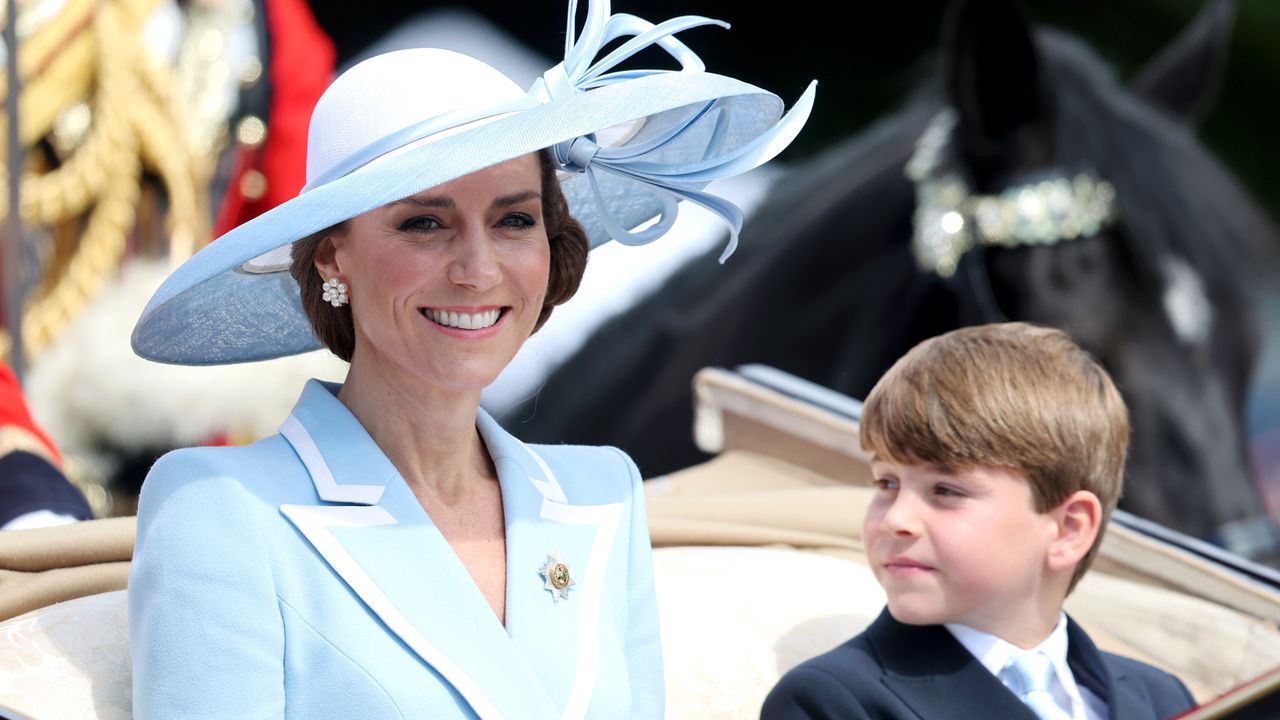
Barouches are a type of carriage first seen in London in the early nineteenth century. There are today two barouches at the Royal Mews, which are distinguished by the lightly elegant shape of the undercarriage of the body. In common with almost all the carriages at the Royal Mews, they bear the dark claret paint which has been synonymous with royal vehicles, both horse drawn and motorised, for the past century.
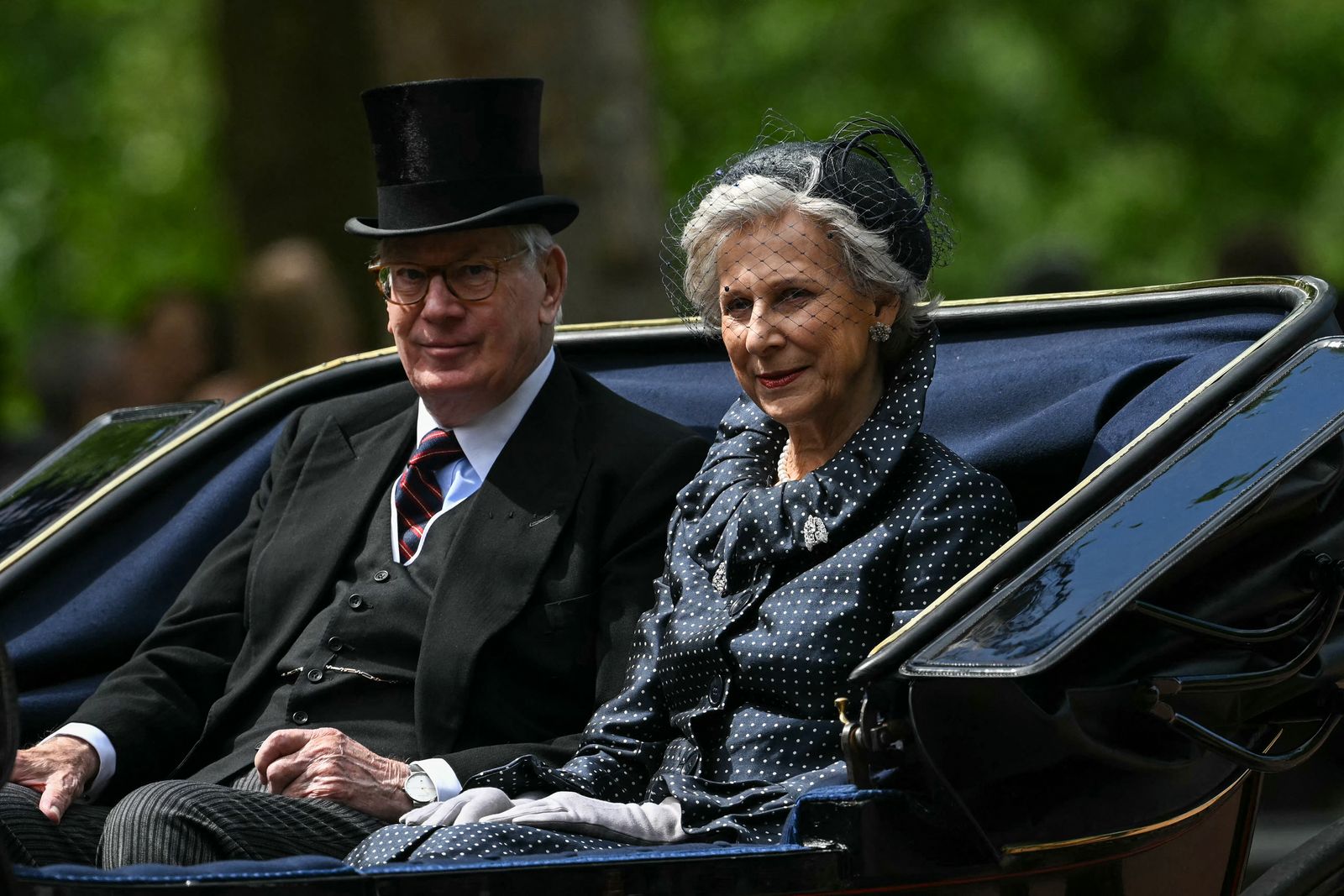
The Duke and Duchess of Gloucester
JUSTIN TALLIS/Getty Images
The barouches display the royal insignia of a lion surmounting a crown, surrounded by the Collar of the Order of the Garter, on the door and rear panels. They are driven by a coachman with a pair of horses, the coachman’s box being lined in blue wool with silk braid with roses (England), thistles (Scotland) and shamrocks (Northern Ireland) woven into the trim. The barouches have been used for Trooping the Colour for over a hundred years.
This year, it was Sophie, Duchess of Edinburgh, who led the royal parade with Princess Anne’s husband, Sir Timothy Laurence, in the No. 1 Barouche, while the No. 2 Barouche was graced by the Duke and Duchess of Gloucester.
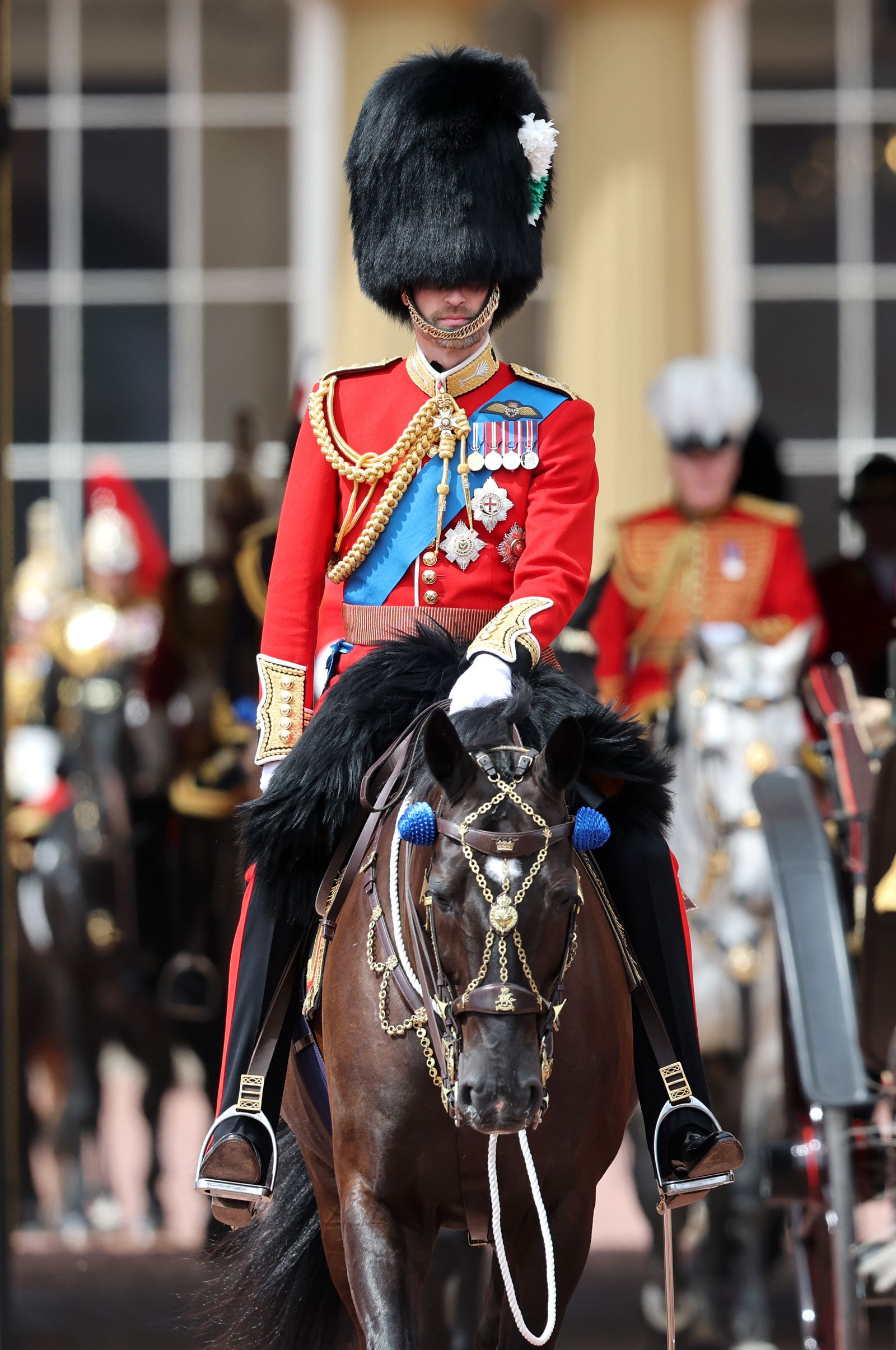
LONDON, ENGLAND – JUNE 13: Prince William, Prince of Wales during Trooping The Colour on June 13, 2026 in London, England. Trooping The Colour is a ceremonial parade celebrating the official birthday of the British Monarch. The event features over 1400 soldiers of the Household Division and King’s Troop Royal Horse Artillery, including over 400 musicians from the Massed Bands. (Photo by Chris Jackson/Getty Images)Chris Jackson/Getty Images