
Your support helps us to tell the story
From reproductive rights to climate change to Big Tech, The Independent is on the ground when the story is developing. Whether it’s investigating the financials of Elon Musk’s pro-Trump PAC or producing our latest documentary, ‘The A Word’, which shines a light on the American women fighting for reproductive rights, we know how important it is to parse out the facts from the messaging.
At such a critical moment in US history, we need reporters on the ground. Your donation allows us to keep sending journalists to speak to both sides of the story.
The Independent is trusted by Americans across the entire political spectrum. And unlike many other quality news outlets, we choose not to lock Americans out of our reporting and analysis with paywalls. We believe quality journalism should be available to everyone, paid for by those who can afford it.
Your support makes all the difference.Read more
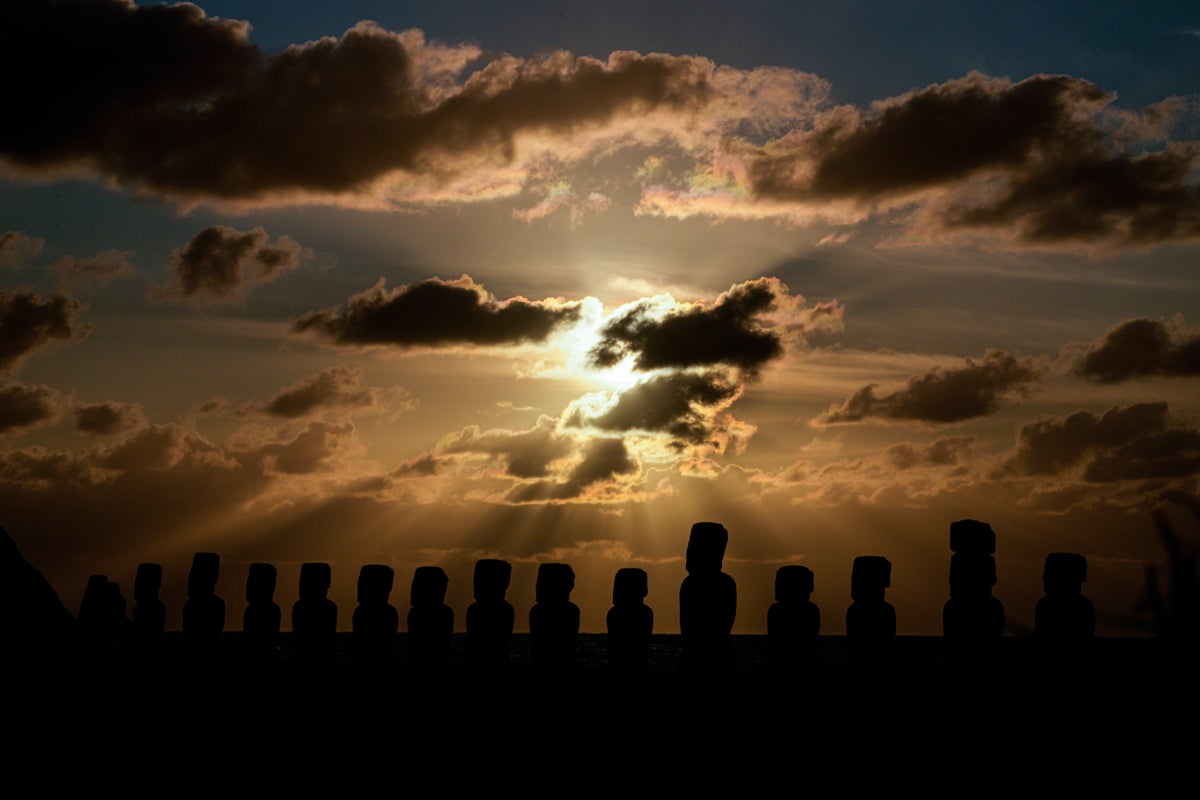
Easter Island’s iconic moai statues face an existential threat from rising sea levels, with powerful seasonal waves predicted to inundate the 15 monumental figures at Ahu Tongariki by the end of the century, according to a new study. The research, published in the Journal of Cultural Heritage, also warns that approximately 50 other cultural sites on the remote Pacific island are at risk of flooding.
“Sea level rise is real,” stated Noah Paoa, lead author of the study and a doctoral student at the University of Hawaii at Manoa’s School of Ocean and Earth Science and Technology. “It’s not a distant threat.” Mr Paoa, of Easter Island (known to its Indigenous people as Rapa Nui), and his team created a high-resolution “digital twin” of the island’s eastern coastline, running computer models to simulate future wave impacts under various sea level rise scenarios.
Their findings indicate that waves could reach Ahu Tongariki, the island’s largest ceremonial platform, as early as 2080. This site, home to the towering moai, attracts tens of thousands of visitors annually and is crucial to the island’s tourism economy. Beyond its economic value, the ahu is deeply intertwined with Rapa Nui’s cultural identity, lying within Rapa Nui National Park, a recognized UNESCO World Heritage site.
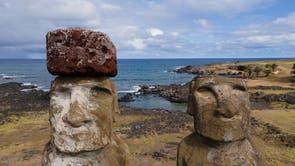
The roughly 900 moai statues across the island were carved by the Rapa Nui people between the 10th and 16th centuries to honor important ancestors and chiefs. The threat is not unprecedented; a magnitude 9.5 earthquake off the coast of Chile in 1960 triggered a tsunami that swept already-toppled moai further inland, damaging some features before the monument was restored in the 1990s.
Rising seas could put Easter Island’s moai at risk by 2080, study warnsShow all 2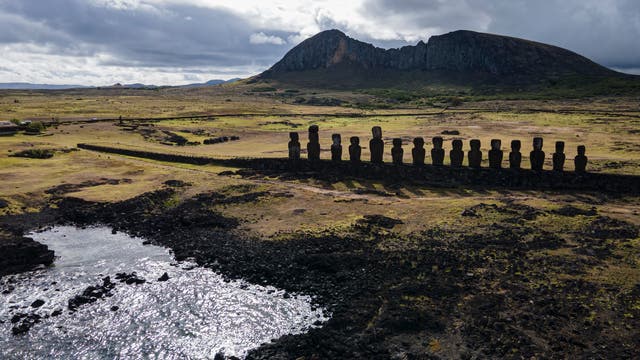
While the study focuses on Rapa Nui, its conclusions underscore a broader global reality: cultural heritage sites worldwide are increasingly imperiled by rising seas. A UNESCO report last month revealed that around 50 World Heritage sites are highly exposed to coastal flooding.
Possible defences for Ahu Tongariki range from armoring the coastline and constructing breakwaters to the drastic measure of relocating the monuments. Mr Paoa hopes his findings will prompt these crucial conversations now, before irreversible damage occurs. “It’s best to look ahead and be proactive instead of reactive to the potential threats,” he urged.
___
The Associated Press receives support from the Walton Family Foundation for coverage of water and environmental policy. The AP is solely responsible for all content. For all of AP’s environmental coverage, visit https://apnews.com/hub/climate-and-environment