
“We don’t live on the Moon,” Gianni Infantino observed. “We live on planet Earth.”
Stroking the microphone in one of his rare appearances before the media on the eve of this World Cup’s opening game in Mexico City, the FIFA president sought to remind his audience how in touch he is with reality.
“Unfortunately, our world is an aggressive world,” he lamented.
Since Operation Epic Fury began at the end of February, Iran’s participation in the biggest, supposedly most inclusive, record-breaking World Cup of all time has been in doubt.
“When people were saying it would be impossible for Iran to come to the World Cup, I told them, and I promised them, that they would come,” Infantino said.
He was even prepared, he said, to go to the most extraordinary lengths to keep his promise. Figurative lengths that did leave you wondering if he had, in fact, been living on the Moon after all. “If I had to go with a bus to Tehran and drive them here, I will do that,” Infantino remarked.
These comments came just a few hours after the man who last year became the first recipient of the new FIFA Peace Prize, U.S. President Donald Trump, warned of fresh attacks against Iran. “If we need to negotiate with bombs, we’ll negotiate with bombs,” Trump said. “And we’re very good at it. Nobody better in the world.”
On June 14, the day before Iran’s opening game against New Zealand, the United States and Iran reached a cease-fire agreement.
In the end, Infantino did not need to drive Iran to the World Cup. They flew here from Antalya in Turkey, where the team held a pre-tournament training camp, landing in the Mexican city of Tijuana.
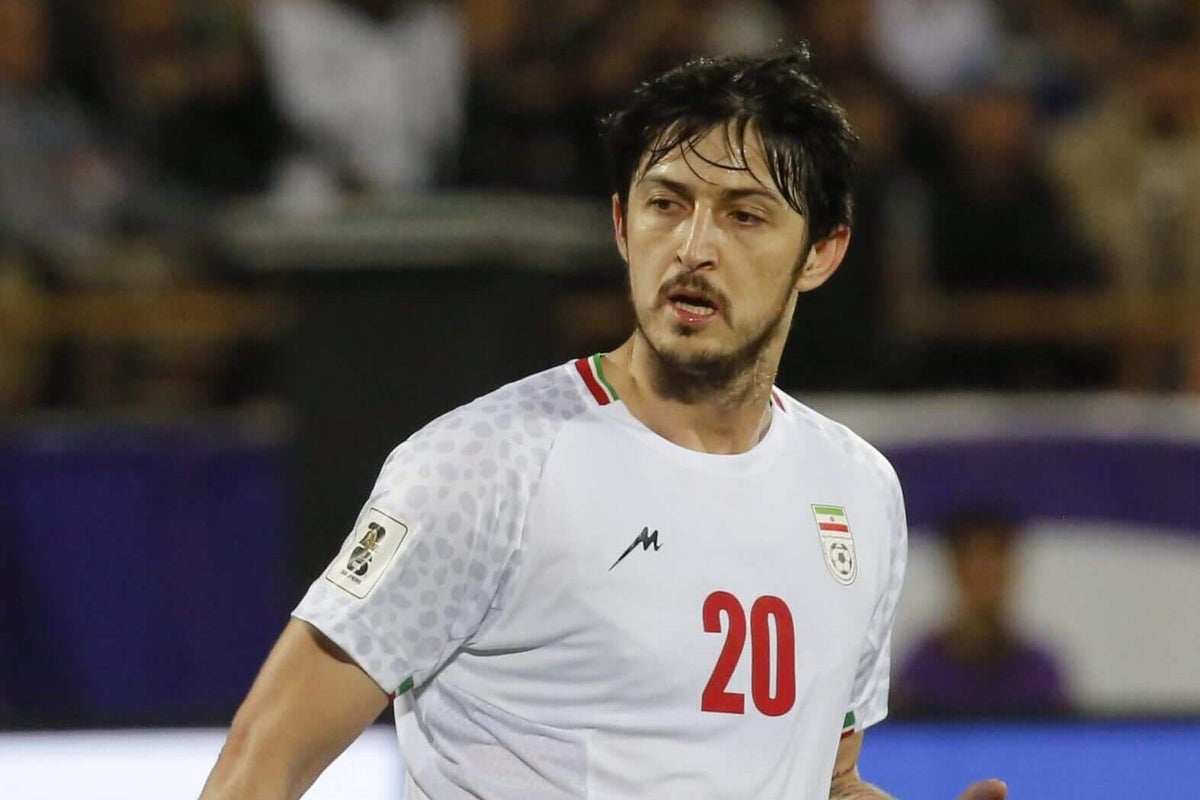
Sardar Azmoun, arguably the country’s most talented footballer, was not on the plane.
An injury had not scuppered his hopes of playing, nor had he been denied the U.S. visa required to play Iran’s group-stage games in Los Angeles (New Zealand and Belgium) and Seattle (Egypt).
“I am very sad,” Azmoun told Iranian sports news outlet Varzesh3.
Now 31, this World Cup in the United States, Canada and Mexico would likely have been his third and final involvement in the tournament every footballer considers the pinnacle of their career.
Azmoun is third on Iran’s all-time goalscoring list behind Ali Daei and Mehdi Taremi. At Zenit, where he helped win the league title four times and was named Russian Premier League Player of the Year in 2021, an air of mystique followed him whenever the Saint Petersburg club competed in the Champions League.
Online, he was even, exaggeratedly, dubbed the Iranian Messi. Think of it as less a direct parallel and more an acknowledgement of his status as his region’s best player.
Azmoun was the most expensive Iranian player until Alireza Jahanbakhsh’s €22.5million move from AZ of the Netherlands to Brighton in 2021, and while he has never played in English football, he did have stints with Bayer Leverkusen of Germany and Italy’s Roma after leaving Zenit four years ago.
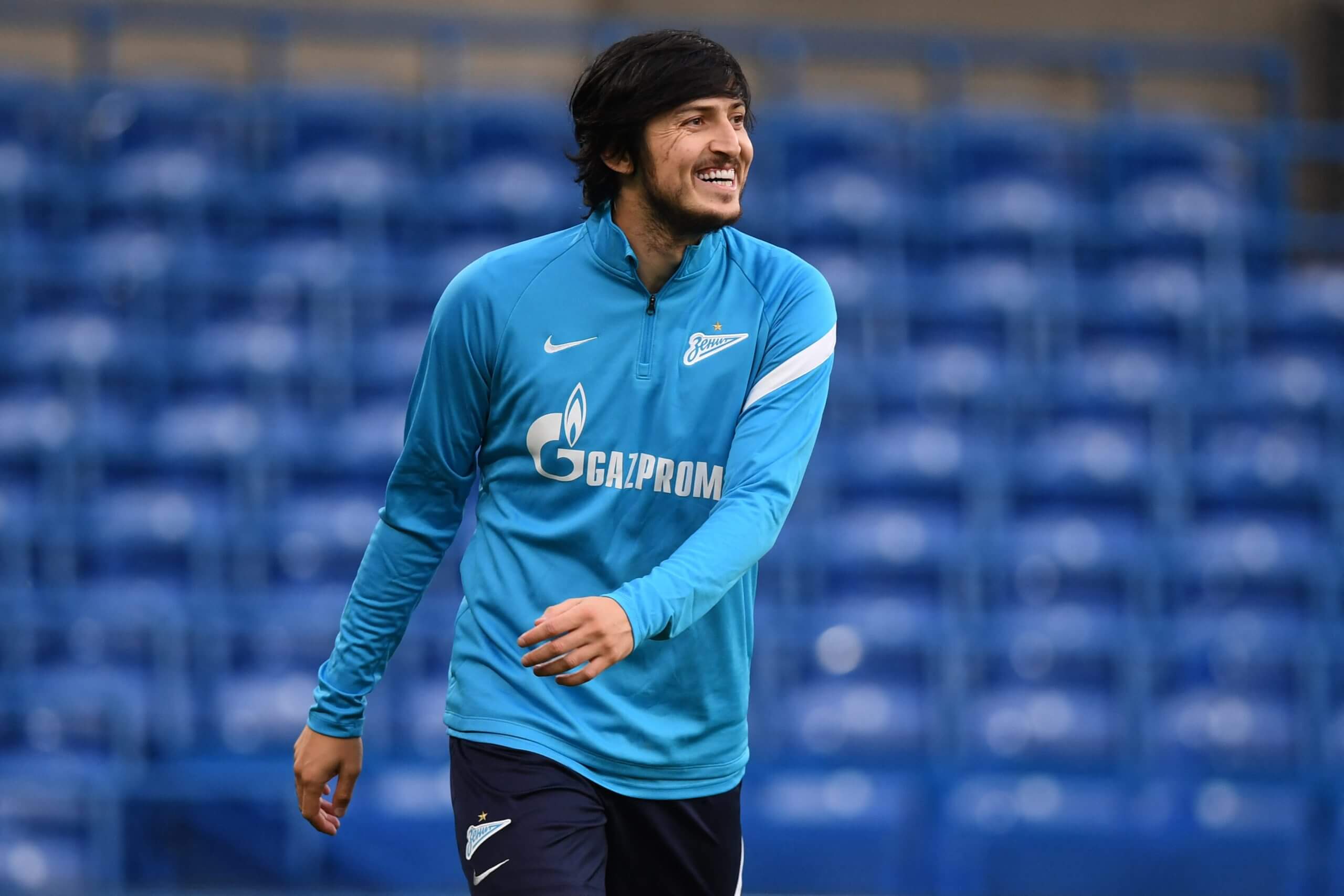
Azmoun was Russian Premier League Player of the Year in 2021 while at Zenit (Daniel Leal/AFP via Getty Images)
In an era of extended primes, Azmoun should still be in his. This is a tournament when loyalties to legends are a theme. It’s enough, on a grander, more illustrious scale, to think of Messi and Cristiano Ronaldo both participating in a record sixth World Cup.
“In my opinion, everyone should know: I am Iranian, my blood is from Iran,” Azmoun said in the Varzesh3 interview. “Even if my club team gave me a one-day break, I would return to Iran quickly just for a day before coming back to train. This is the type of person I am. That’s why I’m mad.”
Azmoun’s need to assert his Iranian identity and commitment should not need further explanation, regardless of his family’s origins in the country’s Turkmen ethnic minority. He has played nearly 100 times for Iran.
His place, curiously, appears to have been taken by Dennis Eckert, or Dennis Dargahi, the given name on his new Iranian passport. Dargahi is uncapped going into the World Cup. He was born in Bonn, Germany, (his father is a German of Iranian descent), and played for the nation of his birth at under-19 level.
At 29, Dargahi is hardly a bright young thing, or the next Azmoun. On the contrary, he’s almost the same age as him and has not achieved the same heights. Playing for Standard Liege in Belgium last season, he scored just five times in 35 league appearances.
“The coach did not include me, and I have lots of things to say, but right now is not the time to say it,” Azmoun added.
Currently at Dubai-based Shabab Al Ahli in the United Arab Emirates, his candidacy for a place in the 26-man squad has not suffered for playing in a league that is inferior to those he played in before. Instead, according to reports in local media, per Reuters, Azmoun’s absence from Iran’s team photo for this World Cup can be explained by his presence in another one.
In January, Azmoun posted a snap of him shaking hands with Dubai’s ruler Sheikh Mohammed bin Rashid Al Maktoum.
In a Telegram post, the Iranian Revolutionary Guard Corps (IRGC) viewed it as “co-operation with Iran’s enemies”. In the same post, the IRGC noted Azmoun kept quiet while the “American and Zionist regime” bombed his homeland.
The Wall Street Journal reported in May that the UAE had secretly carried out attacks on Iran. The UAE was targeted by Iran after Operation Epic Fury began. As the New York Times reported, the national Emirati government claimed Iran had launched 2,265 drones, 551 ballistic missiles and 29 cruise missiles since the beginning of the war, causing 13 deaths and 230 injuries in the UAE.
When a couple of friendlies against Nigeria and Costa Rica were organised in March, Azmoun wasn’t named in the squad for those games, which were played in Antalya.
Then last month, as coach Amir Ghalenoei announced his preliminary squad for the World Cup, he left him out again. A state news agency, IRNA, claimed Azmoun was injured. The tone of his Instagram post in response to the squad announcement again suggested he was hurt not physically but emotionally by accusations of disloyalty in the local media.
“I have always played for my national team with pride,” he wrote. “When we won, I was proud of myself and my team-mates. When we didn’t, I was more upset than anyone else in the world, just like them. I love football, and I love the good and deserving people of my country, Iran.”
Azmoun has spoken up for them, too.
In 2022, he did not stay silent in the wake of the death of Mahsa Amini in police custody, which ignited nationwide and global protests. It spawned the Woman, Life, Freedom movement and led the U.S. House of Representatives to pass the Mahsa Act, a package of sanctions aimed at punishing Iran and its top leaders for human-rights violations and to limit the country’s import and export of military equipment.
When Azmoun posted about Amini’s death, he accepted the risk it might pose to his career.
“At worst, I’ll be dismissed from the national team,” he wrote. “No problem. I’d sacrifice that for one hair on the heads of Iranian women. This story will not be deleted. They can do whatever they want. Shame on you for killing so easily; long live Iranian women.”
In the meantime, Azmoun kept playing and scoring, making his most recent Iran appearance in March last year. What may prove his final international goal, the 57th across 91 caps, came against the UAE.
“I know I could’ve been of help at this time,” Azmoun told Varzesh3. “But Shahriyar Moghanloo, Mehdi Taremi, all the other forwards, including Ali Alipour, they all have great technical ability and hopefully they can fill my role. They’re all great players, and that’s why they’re on Team Melli (as the Iran side are known) and I believe they can help.”
He has told his team, his country, to “go out there and smash it”.
Speaking on the eve of the New Zealand game, Ghalenoei was asked about the absence of Azmoun. He said: “Sardar is an excellent player, he has done a lot for us, he is not with us, we wish he was, but this is football. I will give you an example: Neymar (the Brazil forward), it’s possible he won’t play in some games.”
If it were up to him, Azmoun would be with them now in Tijuana. But the doors of the bus were closed. The flight left without him.
To adapt Infantino’s words, when people were saying it would be impossible for Iran to come to this World Cup, in the end it only proved impossible for Azmoun.