
The United States and Iran have apparently signed a memorandum of understanding – think of it as “a deal to make a deal” – that extends a fragile ceasefire for 60 days while the two sides negotiate the toughest issues dividing them, like Tehran’s nuclear activities.
Washington and Tehran are (predictably) characterizing the arrangement differently. We don’t know whose version is closer to the truth until the two sides release the text of the arrangement, assuming they do and assuming the texts are identical.
Make Your Inbox Smarter
Sign up for these free email newsletters from U.S. News:
Pick Newsletters
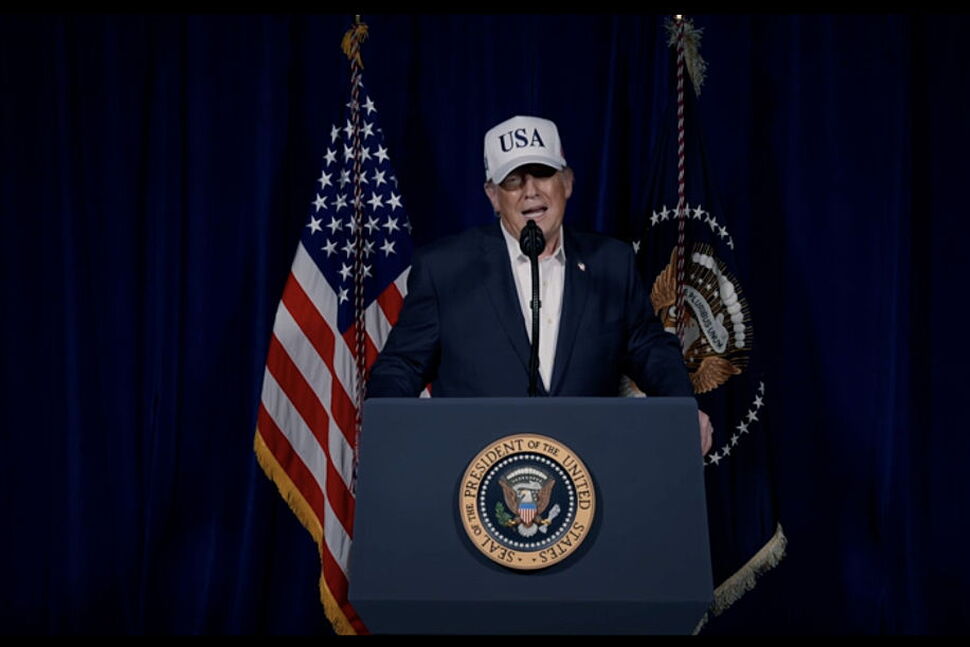
But at this seeming inflection point in the conflict, we thought it would be worth going back to President Donald Trump’s remarks on Feb. 28 when he announced the U.S. had begun “major combat operations in Iran” and outlined his goals for “Operation Epic Fury.”
We’ll see how well this aligns with any future deal.
No Nukes
In his televised remarks, Trump repeatedly said his No. 1 reason for launching the operation was to prevent Iran from developing a nuclear weapon.
“We will ensure that Iran does not obtain a nuclear weapon. It’s a very simple message: They will never have a nuclear weapon,” he said. “This regime will soon learn that no one should challenge the strength and might of the United States Armed Forces.”
Where are we today? Again, we would need to see the text, but it looks like the question of Iran suspending or ending its nuclear program in return for substantial economic relief is punted to the 60-day negotiations.
Missiles, ‘Obliterated’
Three and a half months ago, Trump declared: “We’re going to destroy their missiles and raze their missile industry to the ground. It will be totally, again, obliterated.”
There’s no question the U.S. military has visited enormous destruction on Iran. But about a week ago, Tehran hit Bahrain, Kuwait and Jordan with drone and missile strikes.
In mid-May, Adm. Brad Cooper, the top American military commander in the Middle East, testified to Congress that the war had “significantly degraded” Iran’s missile capabilities, though he acknowledged Tehran retained “a very moderate, if not small” capability to strike.
But The New York Times, citing classified assessments delivered to lawmakers, reported contemporaneously that “Iran still fields about 70 percent of its mobile launchers across the country and has retained roughly 70 percent of its prewar missile stockpile.”
Sink Iran’s Navy
Trump, Feb. 28: “We’re going to annihilate their navy.”
By all accounts – other than Iran’s – Tehran’s conventional navy has, in fact, been annihilated. But Iranian drones and missiles still pose a threat to navigation through the Strait of Hormuz.
End the Proxy Threat
For decades, Iran wielded regional influence through proxy groups like Hamas in Gaza, Hezbollah in Lebanon and the Houthis in Yemen. On Feb. 28, Trump made defanging those fighters a priority of Operation Epic Fury.
“We’re going to ensure that the region’s terrorist proxies can no longer destabilize the region or the world and attack our forces and no longer use their IEDs or roadside bombs, as they are sometimes called, to so gravely wound and kill thousands and thousands of people, including many Americans,” Trump said.
Israel has pounded Hamas and Hezbollah, but it’s unclear how much “Epic Fury” did to weaken those groups. Iran says the newly signed arrangement ends Israeli strikes in Lebanon. Israel says it is not bound by the agreement. Time will tell.
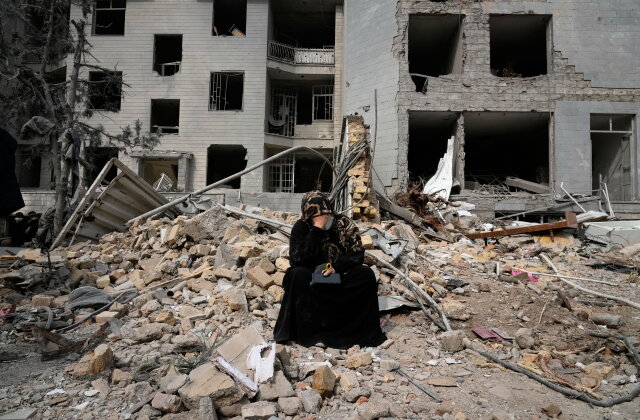
Photos: War in Iran
Regime Change(d)
The opening U.S.-Israeli strikes of the war killed many senior Iranian leaders, including Supreme Leader Ayatollah Ali Khamenei, but critics of the war say the regime’s remnants are more hard-line and that the Iranian system has survived.
That apparent stalemate was not the goal on Feb. 28. Trump called on the Iranian people to rise up and overthrow the regime: “When we are finished, take over your government. It will be yours to take. This will be probably your only chance for generations.”
On Sunday, Trump told The Wall Street Journal: “As far as regime change, I never cared about regime change.”
The Missing Piece
One thing Trump did not originally delineate as a goal was opening the Strait of Hormuz – because it was fully open before the war. Iran’s ability to choke off the strait rattled a global economy dependent on the oil and fertilizer that normally flow through it. Re-opening it on a lasting basis is now a central goal of U.S.-Iran talks. That would be good for consumers, but it’s more fixing a problem the war created than achieving a strategic victory.