
President Trump’s team on Wednesday read the full “memorandum of understanding” between the US and Iran to journalists for the first time, which included a formal acknowledgment that the deal secures toll-free passage through the Strait of Hormuz only for 60 days and doesn’t preclude future fees.
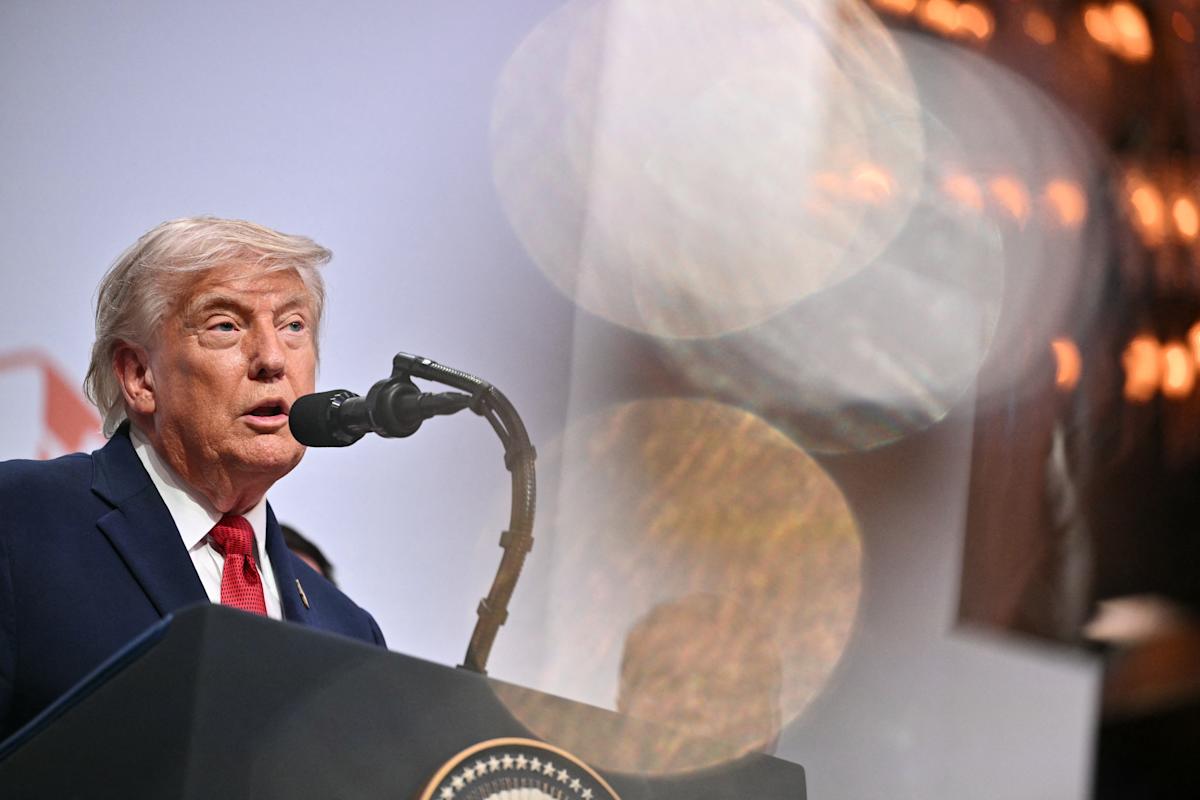
Speaking at a press conference, Trump downplayed the significance, saying that “the thing that’s going to stop them from [eventually charging tolls], because you can’t cover everything in a document, is common sense.”
“They don’t want to get bombed. They don’t want to get hit,” the president added.
But the acknowledgment could further dampen the outlook for a quick return to full traffic in the strait, after trade data firm Kpler projected earlier this week that shipping traffic is likely to reach only about 40% of prewar levels within a month, “held back by unresolved questions.”
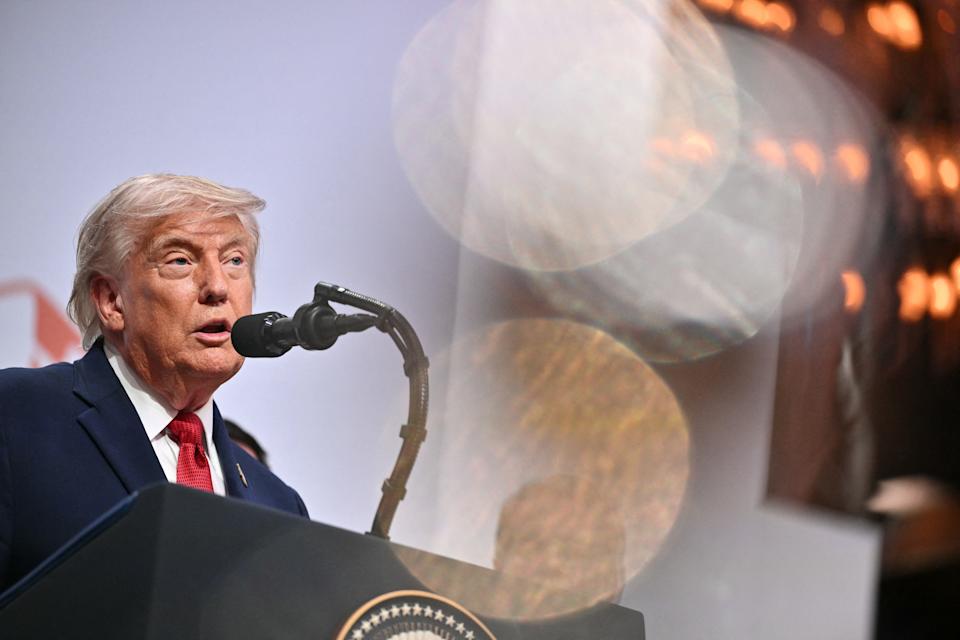 President Trump addresses the media during a closing press conference at the G7 summit in France on June 17. (Mandel Ngan/AFP via Getty Images) · MANDEL NGAN via Getty Images
The acknowledgment was also just the latest in a zigzagging message from the president on the question of shipping tolls.
On Tuesday, during an appearance with the president of the United Arab Emirates, Trump said that “the strait is going to be open toll-free and it’s toll-free beyond the 60 days. Somebody said it’s toll-free for 60 days. No, no. It’s toll-free, period.”
The announcement of the deal has nonetheless buoyed energy markets this week, with crude oil (CL=F, BZ=F) prices falling. Trump described them on Wednesday as “plummeting.”
Iran, for its part, has confirmed that it will not attempt to collect tolls for 60 days, but according to the country’s semiofficial state media Tasnim News Agency, it will “begin charging ships for services after that period.”
Iran, alongside Oman, has been making concrete plans to control shipping traffic in the crucial waterway. The two nations have held at least one call in recent weeks on the topic, and Iran has gone so far as to set up a Persian Gulf Strait Authority.
The release of the memorandum from the White House also reportedly includes a new “minimum” standard for the dilution of highly enriched Iranian uranium, as well as provisions that would ensure the territorial integrity of Lebanon even after Israel’s latest attacks. The document also says the US will move to waive wide-ranging sanctions against Iran once the deal is signed.
Trump also acknowledged that sanctions relief and the unfreezing of assets are on the table, saying, “We’re going to let that go. We’re going to have to.”