
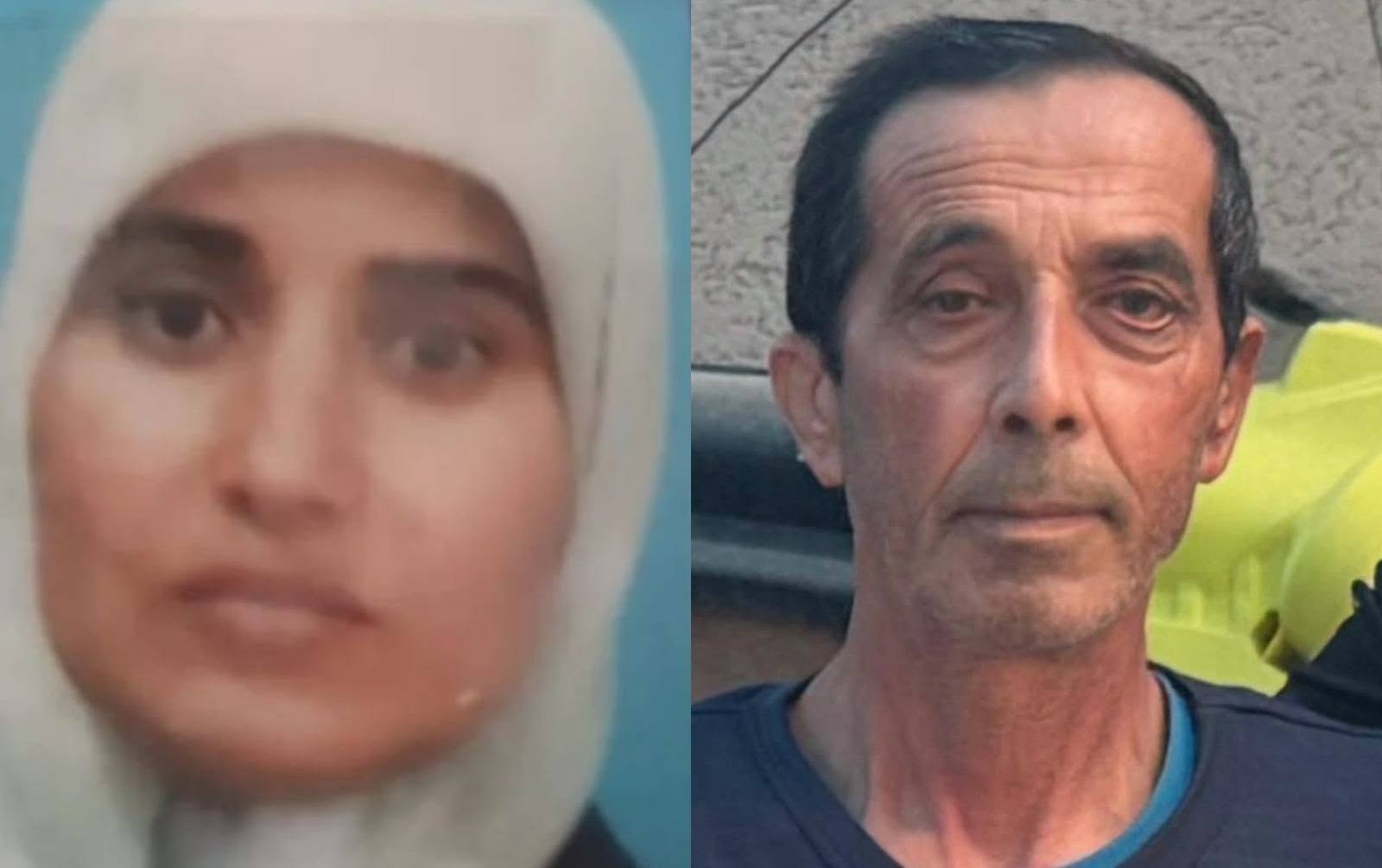
A man and woman were shot and killed early Thursday morning while driving in the central Israel city of Qalansawe, the latest to fall victim to the crisis of violent crime in Arab society.
Khaled and Hanan Jamal, a middle-aged couple, had been commuting to work when an assailant shot at their car. Police were called to the crime scene before sunrise.
Medics pronounced the husband dead at the scene. The wife was taken to Meir Hospital, located in nearby Kfar Saba, where she died of her injuries.
Police announced they launched an investigation into the killing as Border Police officers were seen operating in the area. No suspects were arrested as of midday Thursday.
Law enforcement suspects the shooting is linked to a conflict between two families. The couple was killed shortly after a temporary truce between the two families in conflict expired, according to Nas Radio, a Nazareth-based station.
Get The Times of Israel’s Daily Edition
by email and never miss our top stories
By signing up, you agree to the terms
The Abraham Initiatives group, which tracks violent crime in Arab society, said the apparent double murder hiked this year’s toll of Arab homicide victims to 132.
Last year marked the deadliest year for Arab society on record with 252 Arab citizens killed, as a years-long crisis of violent crime beset the minority. At the current rate, 2026 will surpass that record.
On Wednesday evening, hours before the couple was killed, a Bedouin Israeli man was shot and killed while driving in southern Israel.
The victim, a man in his 40s named Samir Abu Arar, had been traveling in Arara BaNegev, a Bedouin town in the Negev Desert referred to in Arabic as Ararat an-Naqab, when ambushed by unknown assailants who intercepted his car and shot at him.
Medics took him to Beersheba’s Soroka Medical Center, where he was pronounced dead.
We can’t do this work alone.
The war with Iran has been draining for all of us in Israel. But when I heard about a high casualty incident – ballistic missile impacts in Arad and Dimona that left nearly 200 people wounded – I drank a cup of coffee, packed a bag, and headed south.
There, I spoke with Shilgit, the head of an after-school program for underprivileged youth. Standing outside her destroyed center, Shilgit said it was a miracle that no children were hurt and spoke about the community coming together in the hours since.
As a Times of Israel reporter, I’m committed to telling stories of resilience like Shilgit’s. But my colleagues and I can’t do this alone. If you value work like this, please consider joining our reader support group, The Times of Israel Community. Your financial support is essential to keep real human reporting like this going.
— Stav Levaton, military reporter
Already a member? Sign in to stop seeing this
You’re a dedicated reader

That’s why we started the Times of Israel – to provide discerning readers like you with must-read coverage of Israel and the Jewish world.
So now we have a request. Unlike other news outlets, we haven’t put up a paywall. But as the journalism we do is costly, we invite readers for whom The Times of Israel has become important to help support our work by joining The Times of Israel Community.
For as little as $6 a month you can help support our quality journalism while enjoying The Times of Israel AD-FREE, as well as accessing exclusive content available only to Times of Israel Community members.
Thank you,
David Horovitz, Founding Editor of The Times of Israel