
We are closer than ever to ending the Iranian war—on Friday, the United States and Iran may sign the Memorandum of Understanding (MoU) that could bring a lasting ceasefire. The energy market is pleased, and those worried about peace can breathe a sigh of relief. In Jerusalem, the mood was the opposite. Across Israel’s fractured political spectrum, the reaction has ranged from cold scepticism to fury—not over what’s in the deal, but over what’s missing.
The war launched in late February was framed around four goals: stripping Iran’s nuclear capability, degrading its ballistic missile arsenal, dismantling its regional proxy network and weakening the regime’s grip on power. The newly announced agreement’s framework addresses none of this in binding terms. It commits Iran only to up to 60 more days of talks on its nuclear programme, with no clarity on its existing 60 per cent enriched uranium stockpile and reports suggesting Washington may tolerate continued low-level enrichment.
The missile programme isn’t mentioned at all, nor is Iran’s financing of Hezbollah, Hamas, or the Houthis. Hopes for regime change have quietly given way to a deal prioritizing stability and lower oil prices.
That combination unites Israeli officials who agree on little else. Opposition leaders say a single signature erased military gains; Avigdor Liberman argues the deal effectively guarantees Iran becomes a nuclear state. IDF and Mossad leadership are reportedly near-unanimous that it fails to address missiles or proxies, and would have preferred sanctions stay until the regime itself changes.
‘Others blame Benjamin Netanyahu for failing…to represent Israel’s interests in connection with the US–Israel agreement’
Others blame Benjamin Netanyahu for failing, in their view, to represent Israel’s interests in connection with the US–Israel agreement. Opposition leader Yair Lapid said Netanyahu ‘lost the war,’ adding, that ‘there has never, ever, been a more absolute failure than Netanyahu’s diplomatic failure on the Iranian front.’
Room of Manoeuvre Is Narrowing in Lebanon Too
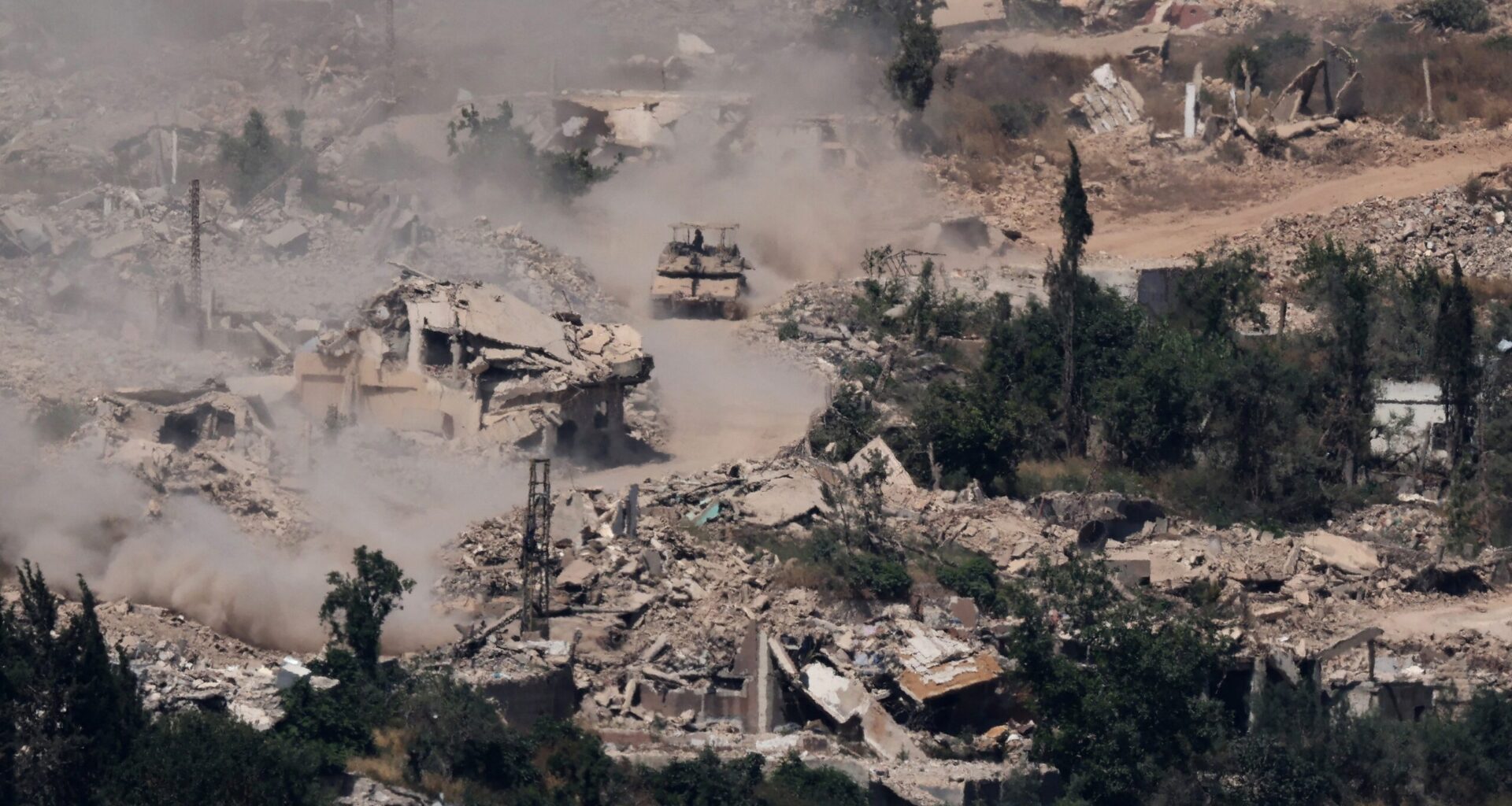
The sharpest problem is Lebanon. Tehran insists the framework also covers the Israel–Hezbollah front, implying Israel’s freedom to strike Hezbollah is now constrained by a deal Israel had no seat at. That this had to be said at all reveals how a Washington–Tehran deal can narrow Israel’s room to manoeuvre simply by becoming the new baseline.
Israeli officials, including Defence Minister Israel Katz, have rejected this—insisting Israel isn’t bound and will keep operating in Lebanon regardless. Far-right members of Netanyahu’s coalition also argued that Israel would not be bound by the terms of the agreement. Finance Minister Bezalel Smotrich said the agreement was ‘bad for Israel and for the entire free world. Period.’
Many in Israel feel outright betrayed. John Bolton said Iran ‘played [Trump] like a violin,’ reading his desperation to end the war before the midterms and his fixation on energy prices over strategic consequences. The regime survived the strikes; there was no uprising, no Kurdish breakthrough, no unified Arab front. Once regime collapse looked unlikely, Washington’s incentives shifted toward declaring victory.
Worse than the JCPOA?
Prime Minister Benjamin Netanyahu also admitted that Israel does not know the terms of the US–Iran nuclear deal. The Israeli PM also indicated, that regardless of the new agreement between Tehran and Washington, Israel still keeps its own red lines regarding Iran’s nuclear ambitions.
‘With or without an agreement, Iran will never have nuclear weapons,’ said Netanyahu. ‘Not today and not tomorrow.’
Some now call this agreement worse than the JCPOA. That 2015 deal at least set explicit enrichment caps and inspections. This framework has no missile clause, no proxy clause, and seemingly no firm enrichment ceiling—while dangling a possible $300 billion reconstruction fund and control over Hormuz access for Iran. For a battered but intact regime, it’s close to the best outcome imaginable. Time, money, and a victory narrative, which Iranian state media is already pushing hard.
‘This framework has no missile clause, no proxy clause, and seemingly no firm enrichment ceiling’
Israel doesn’t see the war as a loss outright—the bomb timeline was likely pushed back regardless. But the gap between the war’s stated aims and the deal that closed it has left even rival Israeli factions agreeing on one thing: they’re on their own from here.
Related articles: