
“There is only one thing worse than fighting with allies, and that is fighting without them,” Winston Churchill once famously lamented. Nothing better captures the realpolitik wisdom of the British leader’s observation than the fraught dynamic in the Philippine-US alliance amid rising tensions in the South China Sea.
Just weeks after Philippine President Ferdinand Marcos Jr. made a seemingly fruitless visit to Washington – where he only managed to slash a single percentage point in new US tariffs without assurance of any new investments or defence deals – the Southeast Asian country is again heavily banking on American support.
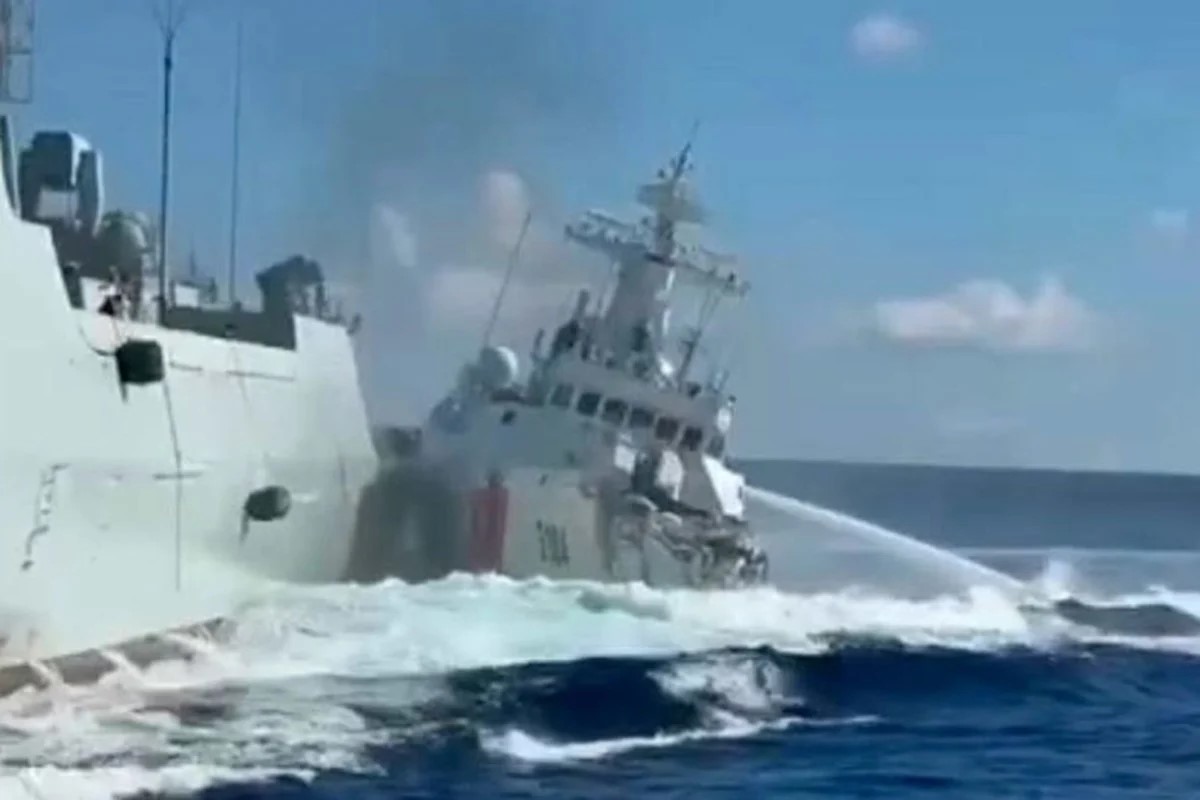
Earlier this week, a People’s Liberation Army Navy warship accidentally rammed into a China Coast Guard vessel, which was, in turn, harassing a Philippine Coast Guard ship patrolling in the area. At least two Chinese coast guard personnel were reportedly killed during the violent accident in the vicinity of the Scarborough Shoal, which is claimed by both Manila and Beijing. The “high-speed” pursuit of Philippine vessel BRP Suluan by two far larger Chinese vessels indicated Beijing’s growing risk appetite and willingness to employ brute force to impose its will.
“China showed it was ready to get very rough with us, this is very worrying,” a senior Philippine official told me during a meeting this week. The disputed shoal is located just over 100 nautical miles off the Philippine province of Zambales and well within the country’s 200 nautical-mile exclusive economic zone. In contrast, China’s most southern island territory of Hainan is almost 500 nautical miles away.
China claims the contested shoal as part of its “nine-dash line” area of claim covering the bulk of the South China Sea. In 2016, an arbitral tribunal formed under the aegis of the United Nations Convention on the Law of the Sea (UNCLOS) rejected China’s expansive claims as contrary to modern international law and, crucially, censured Beijing’s efforts to restrict access by neighbouring states to the “common fishing ground” within the Scarborough Shoal lagoon. Although it has ratified UNCLOS, China has self-servingly rejected the arbitral tribunal award ruling and, accordingly, refused to subject its territorial disputes to international arbitration.
In a clear show of support for its Southeast Asian ally, the US immediately deployed two warships, the USS Higgins and the USS Cincinnati, to the area. After its latest embarrassing and sloppy manoeuvres, China is expected to up the ante to save face. Aside from deploying a fighter jet to harass a Philippine coast guard aircraft, Chinese warships also shadowed American counterparts in the area. Recognising a new dangerous phase in its festering disputes with the Asian superpower, top Philippine officials have indicated more robust countermeasures, including potential joint patrols and resupply missions with the United States should China continue to aggressively harass Filipino fishermen and coast guard vessels in the South China Sea.
After years of carefully hedging between the superpowers, the Philippines has found itself increasingly dependent on American support to keep China’s revanchist ambitions in check.
The Philippines has maintained that the Scarborough Shoal is “a longstanding and integral part of Philippine territory”. Since the Spanish colonial period and way into the Cold War era, the Philippines exercised de facto control over the shoal, which has been a major source of livelihood for Filipino fishermen in neighbouring provinces. Following a naval standoff in 2012 between Filipino and Chinese vessels, Beijing managed to seize control of the shoal.
The episode sparked a diplomatic crisis between Manila and Beijing, but also marked a new low in the Philippine-US alliance, since the Obama administration refused to come to the direct rescue of Manila despite its mutual defence obligations. Nevertheless, the Philippines, in tandem with successive US administrations, has patrolled near the Scarborough Shoal and repeatedly warned China against militarising the disputed feature, which happens to also be close to strategic sites such as Subic Bay and Clark airbase. And since the first Trump administration, Washington has clarified that any attack on Philippine military personnel and public assets in the area would invoke mutual defence response.
Eager to project independence, however, both the Rodrigo Duterte (2016-22) and current Ferdinand Marcos Jr. administrations have refused to openly call for US support. If anything, the Philippine military chief insisted that his country will independently support and sustain its presence in disputed areas even after a near-deadly melee between Philippine Navy and Chinese maritime forces last year close to the Second Thomas Shoal, which hosts a de facto Philippine naval detachment.
Both sides agreed to de-escalate tensions following a mutual notification provisional pact. The latest incident at Scarborough Shoal, however, is particularly worrying since Philippine officials maintain that there was a deliberate attempt to ram the Philippine coast guard vessel, which could have led to significant casualties. The Philippine Department of Foreign Affairs quickly condemned Chinese vessels’ recent “risky manoeuvres” as a clear violation of safety of life at sea conventions.
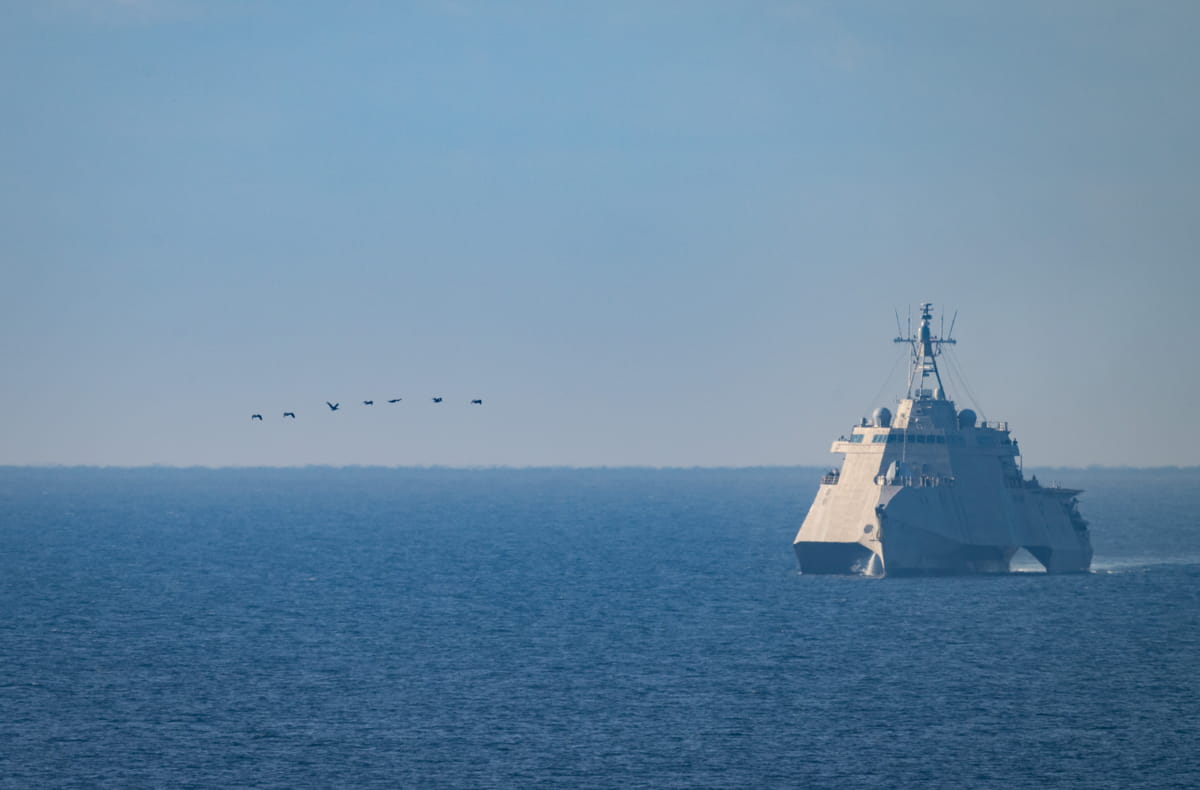
USS Cincinnati, one of two US warships deployed to the area (Eric Parsons/US Navy Photo)
By all indications, China’s increasingly aggressive posture in Philippine waters is likely in response to not only Manila’s “transparency initiative” assertiveness in the South China Sea, but also growing involvement in another thorny dispute, namely Taiwan. After years of maintaining strategic ambiguity, Marcos Jr. recently declared that it was “inevitable” that the Philippines would be involved in any US-led contingency plans should China invade the self-ruling island nation. The Philippines has granted expanded US access to its northernmost military facilities, temporarily deployed advanced missile systems to the area, and conducted multiple wargames with the US near Taiwan’s shores. This has clearly spooked Beijing.
With China emerging as America’s principal rival, the Marcos Jr. administration is betting on expanded US naval patrols as well as defence assistance to deter China. After years of carefully hedging between the superpowers, the Philippines has found itself increasingly dependent on American support to keep China’s revanchist ambitions in check.