

Former Sephardic chief rabbi Yitzhak Yosef, who is also the spiritual leader of the ultra-Orthodox Shas party, said the emerging US-Iran peace deal –which many Israelis see as a betrayal by US President Donald Trump — was a divine punishment for Attorney General Gali Baharav-Miara’s efforts to crack down on Haredi draft evaders.
“Yeshiva students since the time of [Israel’s first prime minister David] Ben-Gurion have been exempted and engaged in Torah study. The Torah protects us,” asserted the former chief rabbi during his weekly Saturday evening lecture. “Why did [Trump] turn against us for no reason? Because of the decrees they issue against the students of Torah; that is why [he] turned against us.”
“Stop the arrests,” he demanded. “This woman, this wicked woman, is garbage.”
The ultra-Orthodox community has significantly ramped up both its actions and its rhetoric against efforts to detain draft evaders in recent weeks, with mass protests shutting down major roads throughout the country on more than one occasion, and lawmakers threatening to cease cooperation with the police.
The escalation was prompted by an Israel Police decision to begin detaining draft evaders they had previously allowed to go free, in line with an order from the High Court of Justice.
Get The Times of Israel’s Daily Edition
by email and never miss our top stories
By signing up, you agree to the terms
The IDF has sent out tens of thousands of enlistment orders to ultra-Orthodox men over the past two years, after the blanket exemptions enjoyed by the community were revoked by the High Court in 2024. Most have ignored the draft notices and are thus classified as draft evaders, subject to arrest or other sanctions.
While the military has made no move to arrest all 80,000 ultra-Orthodox men aged 18-24 believed to be eligible for service, the detainment of even a small fraction has ignited anger.
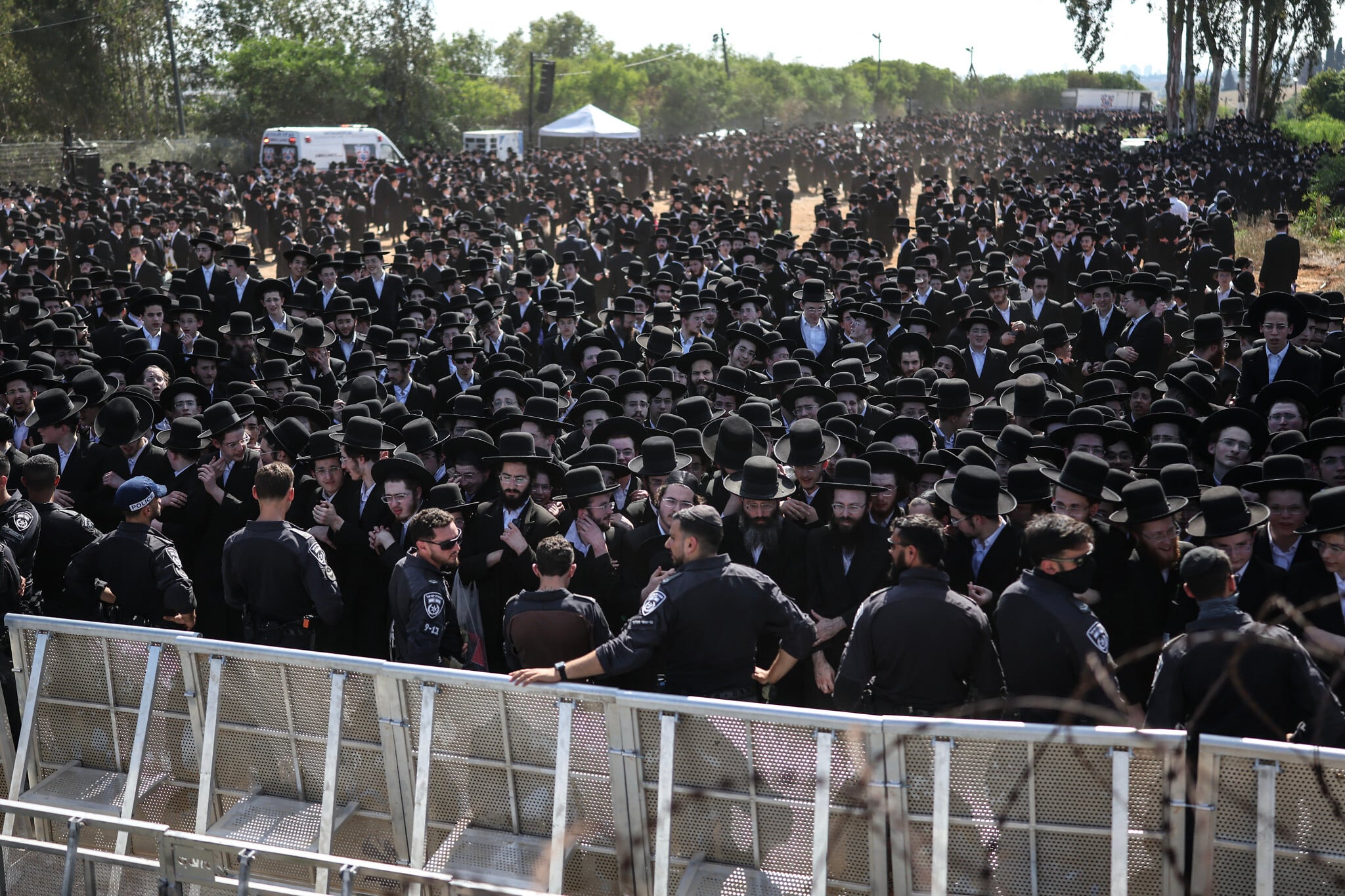
Israeli security forces stand guard as ultra-Orthodox Jews gather to protest against the detention of Haredi draft evaders outside the Bet Lid military prison in Kfar Yona on June 17, 2026. (Ilia Yefimovich/AFP)
As an advocate for these sanctions, the attorney general has become a frequent target of ire from Haredi lawmakers and other public officials.
Earlier this month, United Torah Judaism lawmaker MK Meir Porush declared that if Baharav-Miara “does not stop persecuting Torah scholars,” there would be “no choice,” but to “drive her out with sticks and stones.”
In addition to issuing threats against the attorney general, ultra-Orthodox lawmakers have, in recent weeks, threatened a tax revolt; called on police to disobey orders; demanded local authorities halt cooperation with law enforcement; and announced that they would seek to dissolve the Knesset and trigger early elections.
Their rhetoric has trickled down through the communities they represent, where men, particularly those affiliated with the extremist Jerusalem Faction, have taken to the streets in an effort to block the arrests of military-aged men.
Some of these protests have turned violent, including one outside the central Israel city of Bnei Brak last week, where police used stun grenades and batons to disperse protesters who were blocking traffic.
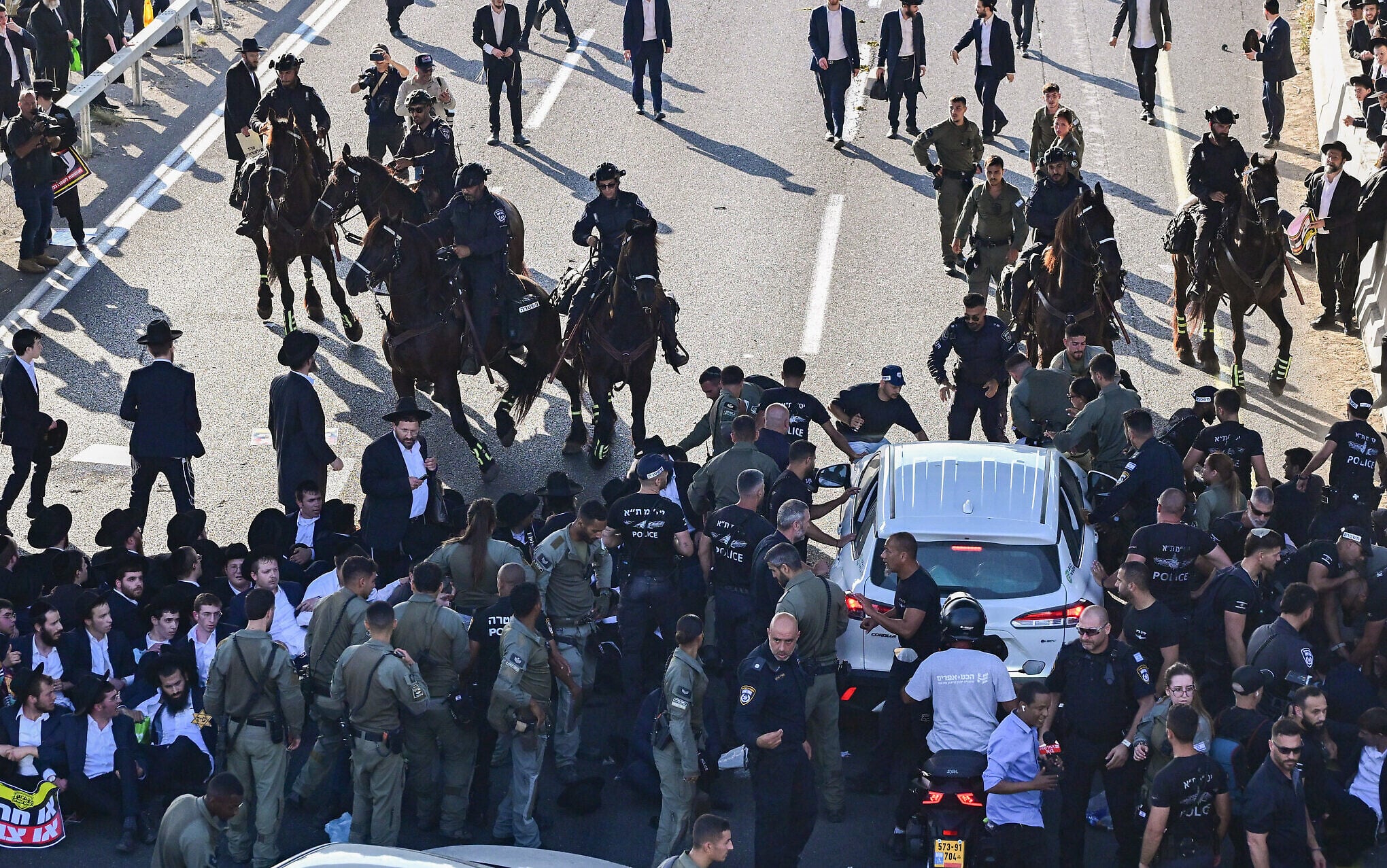
Ultra-Orthodox Jewish men block a road and clash with police during a protest against the jailing of yeshiva students who failed to comply with an army recruitment order, at Ganot Junction near Tel Aviv, June 11, 2026. (Avshalom Sassoni/Flash90)
Protesters have also, in recent weeks, tried to break into the home of Supreme Court Deputy Chief Justice Noam Sohlberg, forced their way into a police compound in Beit Shemesh, and broken into the home of the Military Police chief while his family was inside.
Yosef, the son of influential Sephardic rabbi Ovadia Yosef, has garnered a reputation for controversial remarks on matters of religion and state.
In October 2025, he was heard in a recording calling a fellow rabbi and bereaved father of a slain soldier a “heretic” for supporting measures to enlist Yeshiva students.
And in May of that year, he warned that if the government were to begin arresting yeshiva students for evading draft orders, then the ultra-Orthodox community would be forced to leave Israel.
“If they force us to go to the army, the yeshiva students, if they come to yeshivas and arrest students, [then] we have no right to exist here [and] we will all go abroad, we will not stay here,” Yosef said at the time.
We can’t do this work alone.

The war with Iran has been draining for all of us in Israel. But when I heard about a high casualty incident – ballistic missile impacts in Arad and Dimona that left nearly 200 people wounded – I drank a cup of coffee, packed a bag, and headed south.
There, I spoke with Shilgit, the head of an after-school program for underprivileged youth. Standing outside her destroyed center, Shilgit said it was a miracle that no children were hurt and spoke about the community coming together in the hours since.
As a Times of Israel reporter, I’m committed to telling stories of resilience like Shilgit’s. But my colleagues and I can’t do this alone. If you value work like this, please consider joining our reader support group, The Times of Israel Community. Your financial support is essential to keep real human reporting like this going.
— Stav Levaton, military reporter
Already a member? Sign in to stop seeing this
You’re a dedicated reader

That’s why we started the Times of Israel – to provide discerning readers like you with must-read coverage of Israel and the Jewish world.
So now we have a request. Unlike other news outlets, we haven’t put up a paywall. But as the journalism we do is costly, we invite readers for whom The Times of Israel has become important to help support our work by joining The Times of Israel Community.
For as little as $6 a month you can help support our quality journalism while enjoying The Times of Israel AD-FREE, as well as accessing exclusive content available only to Times of Israel Community members.
Thank you,
David Horovitz, Founding Editor of The Times of Israel