
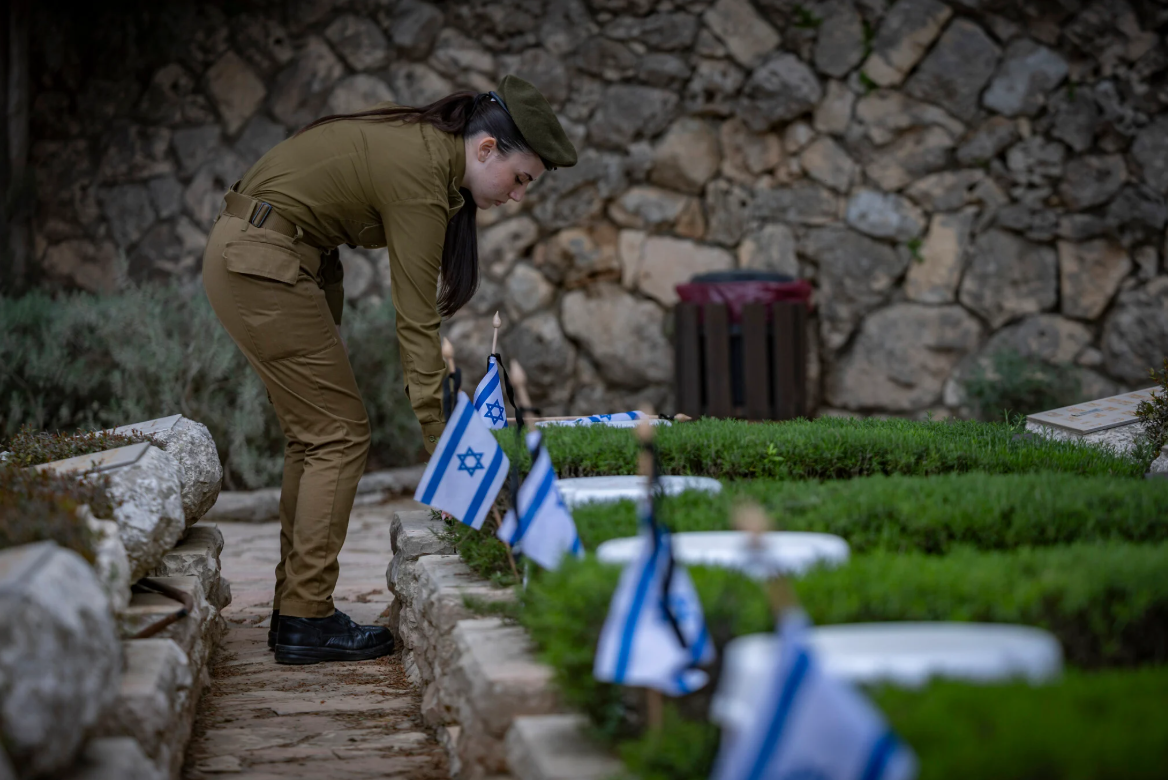
This Father’s Day, millions of dads will receive a phone call.
Some will be handed a homemade card over breakfast. Some will get a text message from a grown child they wish they saw more often. Some will spend the day surrounded by family. Others will insist they do not need any fuss, while quietly enjoying every minute of it.
Most will not think very much about these moments. That is what makes them so valuable. For most families, these moments arrive so regularly that they become almost invisible.
Until they stop.
On days like these, I find myself thinking about the children and families I work with through Israel’s IDF Widows and Orphans Organization. Many of them would give anything for one more moment with their father. Not one more heroic moment. Just one more ordinary one.
After years of working with widows and orphans of Israel’s fallen, I have come to believe that we often misunderstand what bereaved children need from remembrance.
When we remember fallen soldiers and others we have lost, we tend to remember them through a single moment: how they died. We remember the battle, the sacrifice, the courage displayed in their final hours. We dedicate memorials, name buildings, hold ceremonies, and tell the story of their last day.
Those acts of remembrance matter deeply. They should. But the children left behind need something more. They need to know not just how their fathers died, but how their fathers lived.
For a nation, remembrance is about memory. For a child, remembrance is about identity. A nation can remember a hero. A child needs to remember a father.
One of the questions I hear most often from bereaved children is also one of the simplest: “What was my father like?”
Not how did he die. Not where did he serve. Not what rank did he hold. But what was he really like.
Last week, our organization hosted a discussion, along with other Israeli memorial groups, called My Father Was… about remembrance and loss. What struck me was how quickly the conversation moved beyond heroism and toward something more personal.
Michal Zmora, widow of Arnon Zmora who was killed during the operation to rescue Israeli hostages hostages from Gaza, did not begin with the operation or her husband’s service. Rather, she recalled the simple Saturday mornings in their home.
Unless he had returned late from an operation the night before, Arnon would wake up with the children and quietly close the bedroom door so she could sleep for another hour or two.
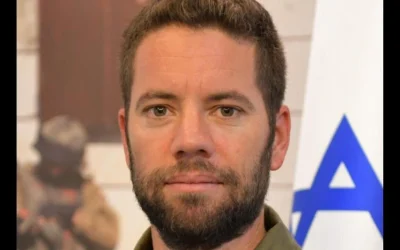
Chief Inspector Arnon Zmora, who was killed in a mission to rescue hostages held in the Gaza Strip, June 8, 2024. (Israel Police)
That was the memory that came first. A father entertaining young children on a Saturday morning while his wife caught up on sleep.
Another participant, Alon Wald, lost his father in the Six-Day War when he was ten months old.
For much of his life, everyone around him could tell him the story of how his father died. They could tell him about the battle. They could tell him about his courage. They could tell him why he was a hero.
What they could not tell him was what he most wanted to know. Was he funny? Was he stubborn? What kind of stories did he tell? What kind of father would he have been? He had to piece memories together from the stories he heard.
Listening to Alon, I was struck by something he said without quite saying it directly: when a child loses a parent young enough, they are often left trying to construct that person from fragments.
A photograph. A story told by a relative. A memory shared by a friend.
And yet those fragments matter enormously. Because children are not simply trying to understand who their father was. They are trying to understand whether they are like him.
That is why multidimensional remembrance is important. The father who was funny. Or stubborn. The father who worried too much. The father who lost his temper. The father who loved music, football, fishing, or terrible jokes.
Because children do not need perfect fathers; they need real ones.
Perhaps that is why Jewish tradition speaks so often about the orphan. Again and again, we are reminded of our responsibility toward children who have lost a parent. Not as an act of charity, but as a measure of who we are as a society.
This Father’s Day, as many of us celebrate the fathers who are present in our lives, we should also remember the children who cannot.
Not only by honoring their fathers’ sacrifice, but by helping preserve the fathers themselves: their stories, their personalities, their flaws, their values, and the countless small details that make a person, and a father, who they are.
Shlomi Nahumson is the CEO of the IDF Widows and Orphans Organization (IDFWO), the primary organization in Israel providing long-term emotional, social, and financial support to the widows and orphans of fallen IDF soldiers and security personnel. A veteran of the IDF with more than 18 years of nonprofit leadership experience, he has served as CEO since 2021 and has played a central role in shaping the organization’s strategic direction, expanding its reach, and strengthening its ability to support bereaved families across Israel. During his 15 years at IDFWO, he previously served as Youth Director, where he founded and led the flagship Otzma initiative, supporting orphaned children through year-round programs focused on resilience, healing, and community. In recognition of his leadership and impact, he was ranked among Maariv’s “100 Most Influential People in Israel” in 2024. He previously served as Vice Principal at Aleh Raziel Boarding School and as an emissary to Wisconsin through The Jewish Agency for Israel, working with the Madison Jewish Federation and the University of Wisconsin Hillel.