
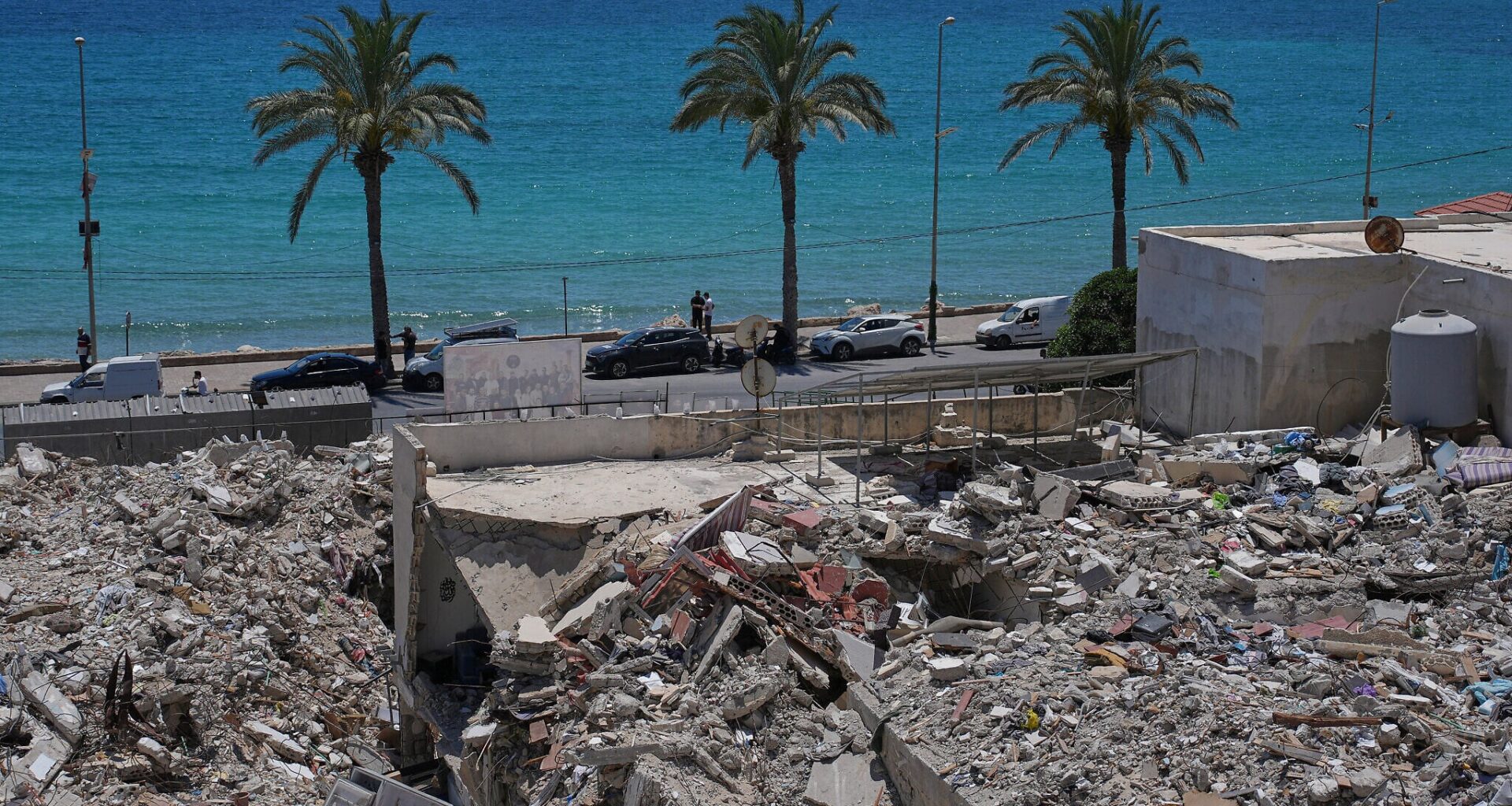
TYRE, Lebanon — The dust has barely settled in Tyre after weeks of Israeli airstrikes on the ancient city along Lebanon’s Mediterranean coast.
Despite the relative calm, life remains largely at a standstill.
A new ceasefire between Israel and the Iranian-backed Hezbollah terror group is in effect. But previous ceasefires have broken down. Uncertainty and fear linger, even as the US and Iran meet for talks in Switzerland that Lebanese residents hope will bring calm to their troubled country.
The Lebanese health ministry, which does not distinguish between combatants and civilians, has reported over 4,000 people killed by Israel in Lebanon since Hezbollah started firing at Israel on March 2, dragging Lebanon into the wider regional war with Iran.
The group has also clashed with Israeli troops making their deepest incursion into southern Lebanon in over a quarter century. Israel says troops need to remain in a security zone in southern Lebanon to protect communities in northern Israel from constant Hezbollah fire. Israel says it has killed over 2,500 Hezbollah operatives since March 2.
Get The Times of Israel’s Daily Edition
by email and never miss our top stories
By signing up, you agree to the terms
The fighting has displaced hundreds of thousands of people in southern Lebanon, where large swaths, including Tyre, have been left in ruins.
‘Where is this truce?’
During the summer, Lebanon’s fourth largest city is usually filled with tourists lounging on its beaches, walking through its Roman ruins, eating freshly caught seafood at picturesque restaurants or taking boat tours.
Now, tables at the few restaurants that haven’t closed are empty. Parking lots that are usually packed with beachgoers’ vehicles are filled with displaced people living in tents. Fishermen and mariners say they can’t sail far from port for fear of being targeted.
“Every day they tell us there’s a truce or ceasefire. Where is this truce? We can’t see it,” said Ali Bazzi, 31, who lives alone on a tour boat that belongs to family friends. His home in Toura, several kilometers away, was destroyed by an Israeli strike.
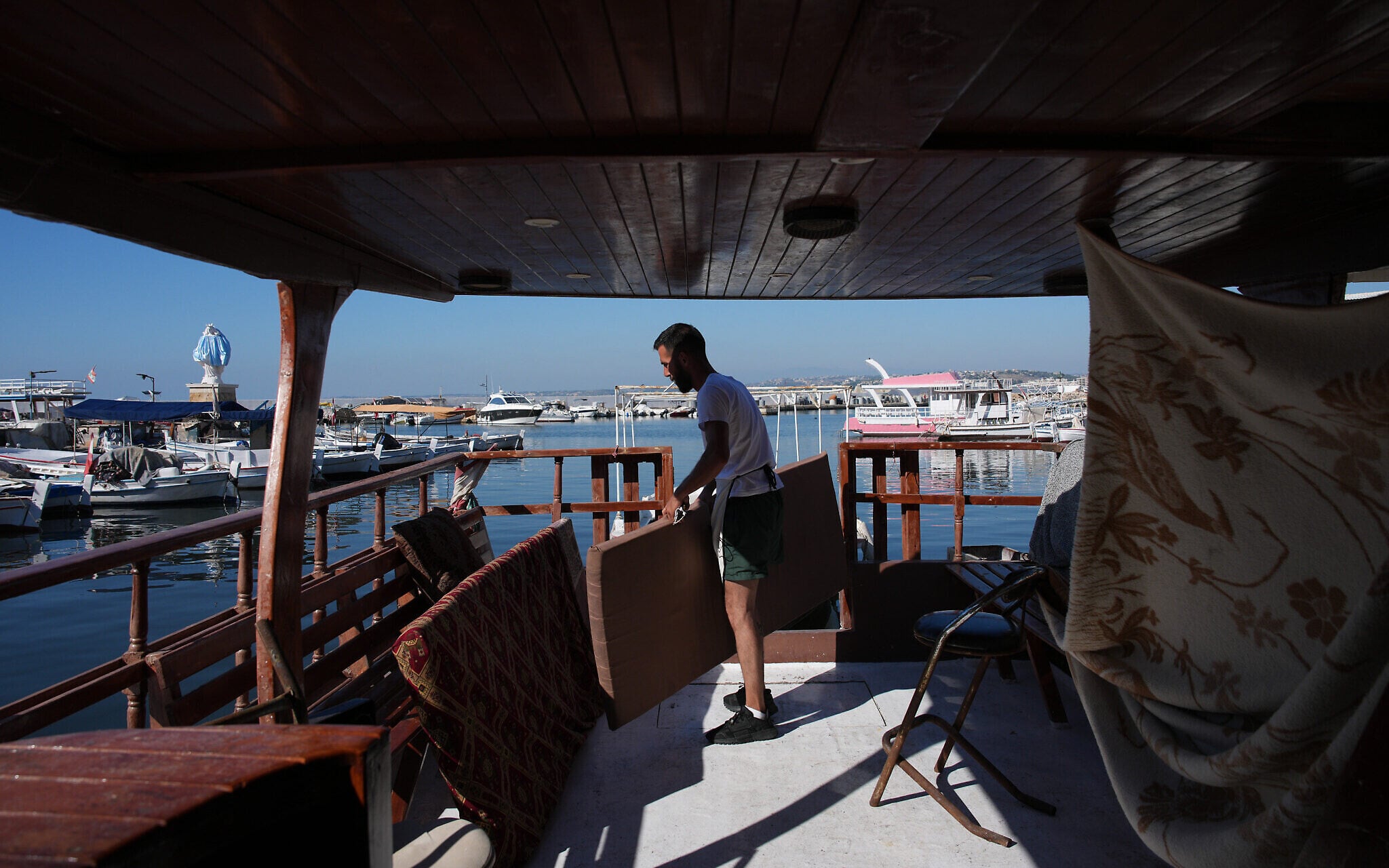
With the statue of Our Lady of the Seas visible in the background, Ali Bazzi, 31, who was displaced from his home in the village of Toura during the war between Israel and Hezbollah, arranges cushions aboard a small boat where he has been living in the southern port city of Tyre, Lebanon, on June 20, 2026. (AP Photo/Hassan Ammar)
Like many who have fled to Tyre from surrounding areas, he doesn’t dare return until he sees long-term calm.
For months, Bazzi has been sleeping on a mattress on the deck and selling sandwiches at a small stand a few steps away to earn money.
Israel in early June warned the entirety of Tyre to leave before it launched intense airstrikes across the city, saying it was targeting Hezbollah.
But Bazzi stayed. He recalled the emptied, ghostly city and the cries of women and children as Israeli strikes began. And he said he woke one night to the sound of a drone hovering over the port and worried it had come for him.
Even as the new ceasefire appeared to be largely holding, Tyre residents still pause anxiously when they hear Israeli jets overhead.
Ancient heritage and environment were threatened
It seems at least one building has been reduced to rubble on every street. Others remain standing with several floors blown off.
Pictures of those killed, including paramedics, families, and Hezbollah operatives, are posted as memorials on the ruins of buildings and dashboards of parked cars.
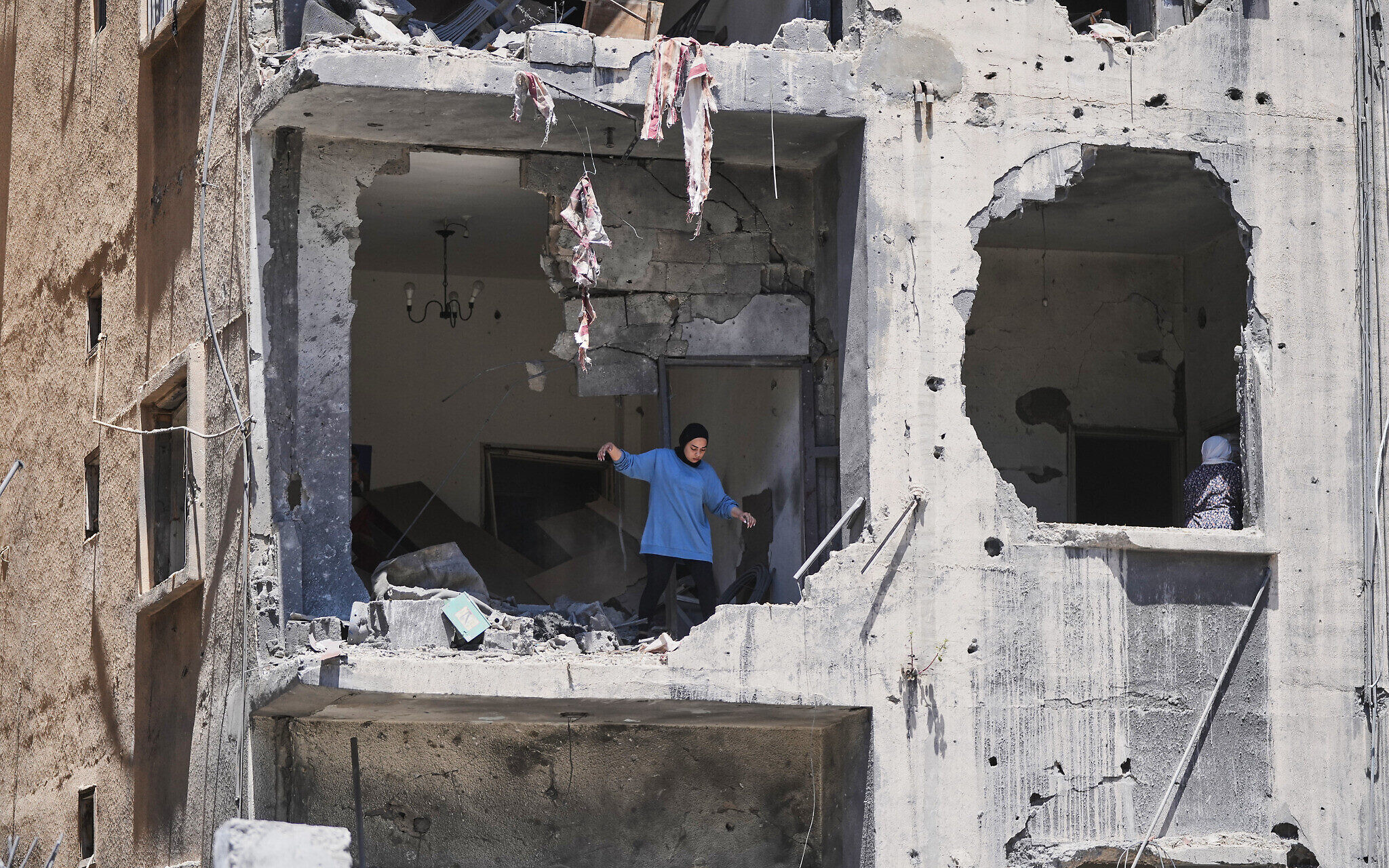
A woman walks through her apartment damaged in Israeli strikes in the southern port city of Tyre, Lebanon, June 18, 2026. (AP Photo/Hassan Ammar)
The city’s iconic heritage sites are not unscathed.
Several buildings next to the remains of a 2nd-century citadel were struck. Debris knocked the crowns off some Roman columns and damaged stones on the Roman road that have existed for thousands of years.
Employees hope the damage to the UNESCO World Heritage site can be repaired.
“We’re waiting for a committee to come and inspect it,” said Adnan Istanbuli, an employee at the Lebanese Directorate General of Antiquities. “The city of Tyre is 5,000 years old, and what happened to it is huge.”
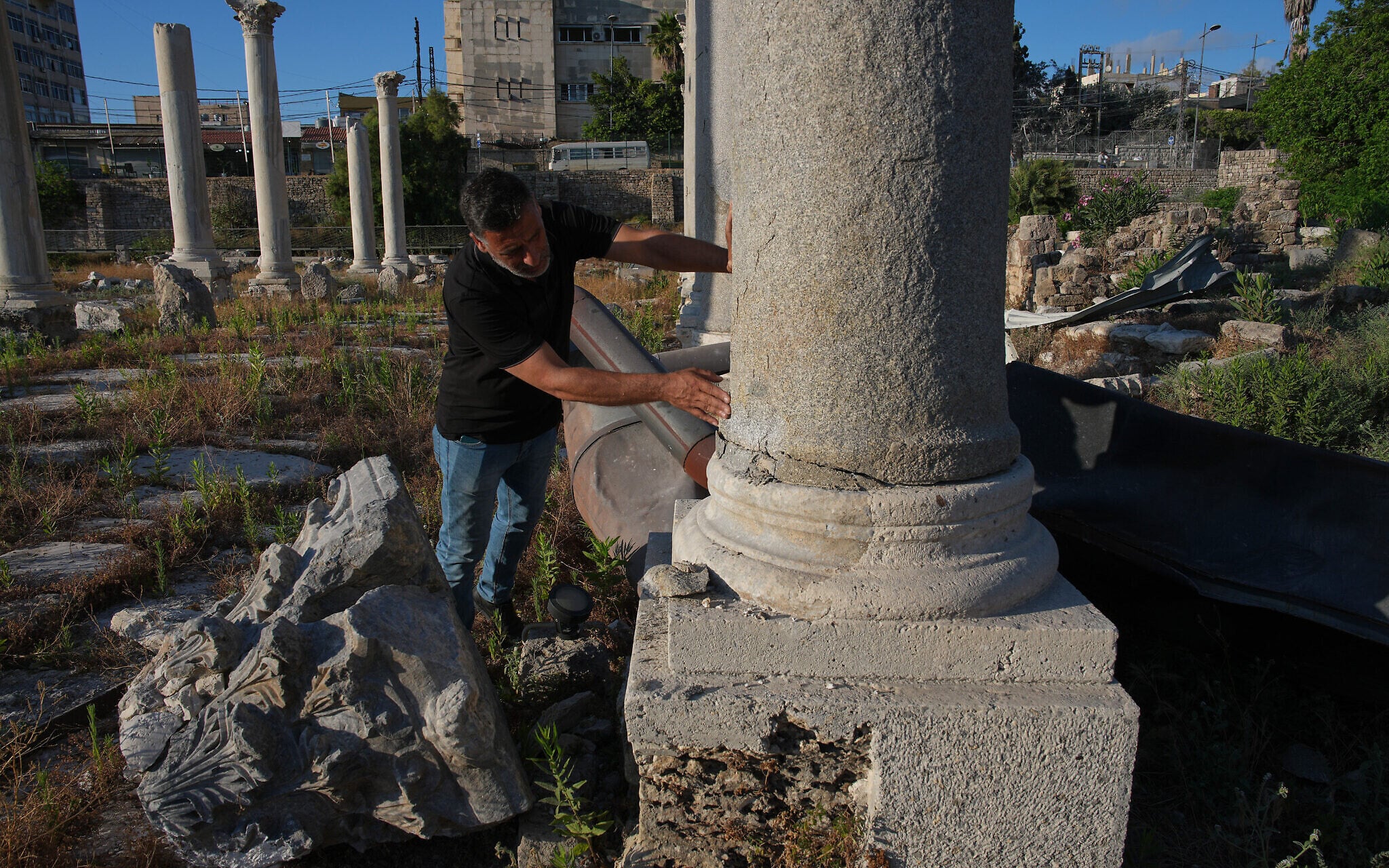
Adnan Istanbuli, an employee at the Directorate General of Antiquities, inspects a Roman-era column after part of its capital was knocked off and fell to the ground at an archaeological site lightly damaged in an Israeli strike, in the southern port city of Tyre, Lebanon, June 18, 2026. (AP Photo/Hassan Ammar)
Just south of the city, the shoreline in Mansouri, a well-known wildlife preserve for sea turtles and other animals, is now inaccessible after Israeli strikes.
Mona Khalil, a well-known environmentalist who lived along that shore, died Friday from her wounds, weeks after a strike hit her home.
Hospital workers say they no longer feel safe
One of Tyre’s largest hospitals is repairing some of its units that were destroyed when an Israeli airstrike struck a building across the street.
Doctors at the Jabal Amel Hospital have lived through multiple wars over the past few decades but said this one is different. In the past, they felt relatively safe as long as they were in the hospital. This time, the Israeli strikes occurred nearby and without warning.
Doors and windows were blown off. Staff rushed to treat wounded patients and colleagues. Thick smoke filled the hospital.
“We used to be scared, but we’re a lot more scared now,” said intensive care unit nurse Khadeeja Yousef, whose unit overlooks the hospital parking lot, now reduced to rubble and charred cars.
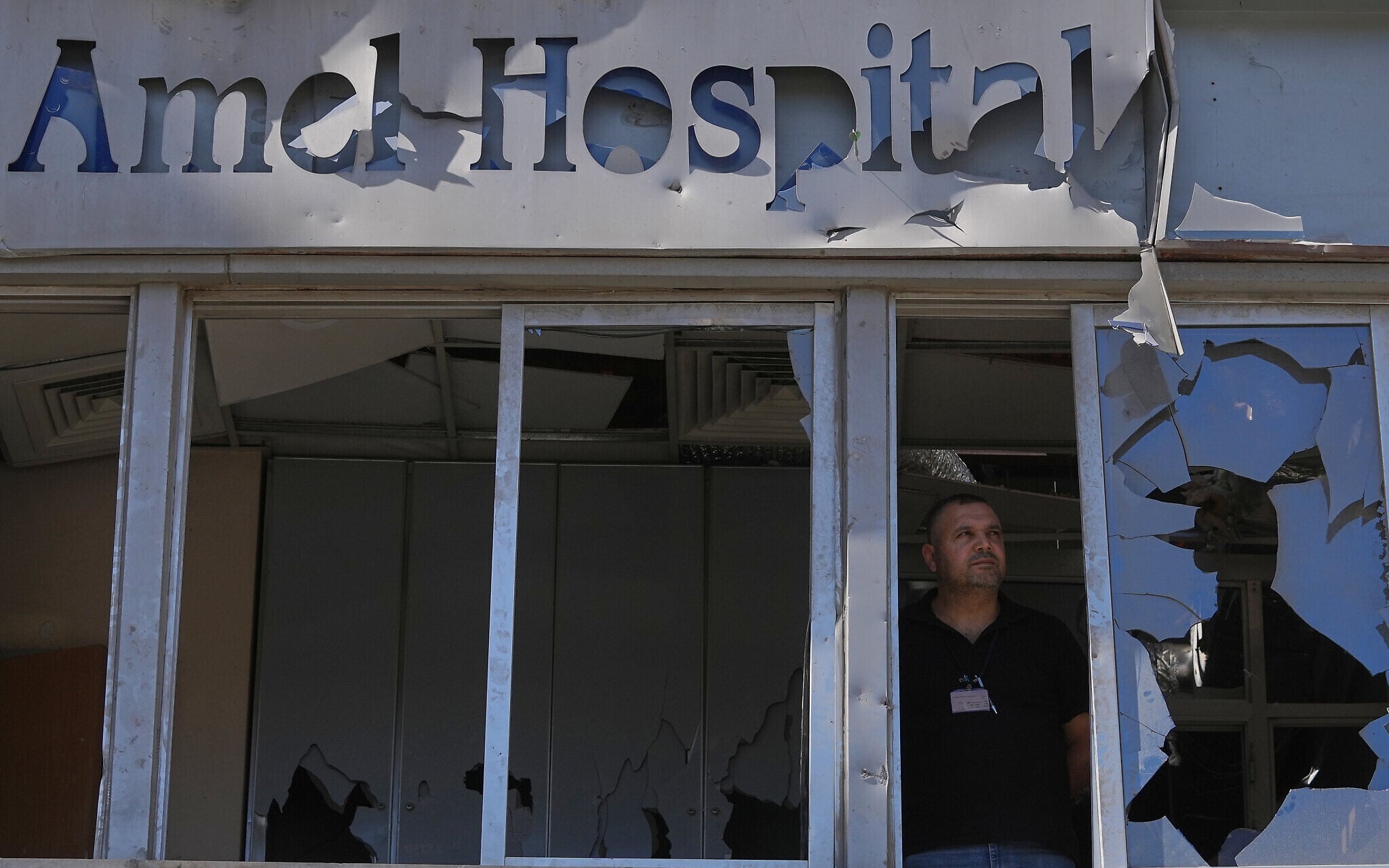
A man stands behind shattered windows at Jabal Amel Hospital, which was heavily damaged in Israeli strikes that hit nearby buildings, in the southern port city of Tyre, Lebanon, June 18, 2026. (AP Photo/Hassan Ammar)
Cardiologist Mohammad Nassar’s private clinic across the street was hit. Now he rummages through the debris, looking for hundreds of books he had collected for over three decades.
“I don’t care about any heart monitoring machines or anything else, but the books are dear to my heart,” he said.
People in Tyre are constantly reminded that prospects for long-term stability are unclear as negotiations continue between Israel and Lebanon in Washington, with Hezbollah playing no role and resisting efforts to disarm it.
Large swaths of land just south of the city are under Israeli control, stretching to the United Nations-mandated Blue Line that separates the countries. In recent days, smoke from distant Israeli artillery fire was visible from Tyre’s shoreline.
And on a distant hilltop, an Israeli flag could be seen.
We can’t do this work alone.

The war with Iran has been draining for all of us in Israel. But when I heard about a high casualty incident – ballistic missile impacts in Arad and Dimona that left nearly 200 people wounded – I drank a cup of coffee, packed a bag, and headed south.
There, I spoke with Shilgit, the head of an after-school program for underprivileged youth. Standing outside her destroyed center, Shilgit said it was a miracle that no children were hurt and spoke about the community coming together in the hours since.
As a Times of Israel reporter, I’m committed to telling stories of resilience like Shilgit’s. But my colleagues and I can’t do this alone. If you value work like this, please consider joining our reader support group, The Times of Israel Community. Your financial support is essential to keep real human reporting like this going.
— Stav Levaton, military reporter
Already a member? Sign in to stop seeing this
You’re a dedicated reader

That’s why we started the Times of Israel – to provide discerning readers like you with must-read coverage of Israel and the Jewish world.
So now we have a request. Unlike other news outlets, we haven’t put up a paywall. But as the journalism we do is costly, we invite readers for whom The Times of Israel has become important to help support our work by joining The Times of Israel Community.
For as little as $6 a month you can help support our quality journalism while enjoying The Times of Israel AD-FREE, as well as accessing exclusive content available only to Times of Israel Community members.
Thank you,
David Horovitz, Founding Editor of The Times of Israel