
Vice President JD Vance announced progress after hours of talks with Iranian officials. Vance said the discussions “laid a successful foundation” to build on future meetings, despite heated threats made between President Donald Trump and Iranian officials earlier.Vance highlighted four accomplishments:Developing a communication strategy to keep the Strait of Hormuz openForming a group to address the conflict between Israel and Iranian-backed militants in LebanonSecuring Iran’s agreement to allow international nuclear inspectors back into the country.Setting up next steps for future discussionsFirst Round of Talks ConcludesVance, who’s leading the U.S. diplomatic effort alongside Middle East Special Envoy Steve Witkoff and Trump’s son-in-law Jared Kushner, traveled to Switzerland for the meetings. Vance is set to return to the U.S. on Monday.Delegations from the U.S. and Iran began negotiations on Sunday, and the talks stretched into Monday morning. U.S. officials sat face-to-face with their Iranian counterparts as well as officials from Pakistan and Qatar, which are facilitating the negotiations.According to a joint statement from Pakistan and Qatar, the first session of high-level talks was “positive and constructive.” The two sides designated lower-ranking representatives to advance the talks further.A spokesperson for Iran’s Foreign Ministry said early Monday that Iran’s delegation had left Switzerland to return to Iran.The focus of their first meeting was stopping Israel’s war with the Iranian-backed militant group Hezbollah in Lebanon. Renewed fighting in the conflict has complicated peace efforts several times, most recently over the weekend. The ceasefire agreed to by the U.S. and Iran requires the fighting in Lebanon to stop.Israel and the U.S., which launched the war on Iran together, have been increasingly at odds over Israel continuing the war in Lebanon. On Sunday, Prime Minister Benjamin Netanyahu said he will not withdraw Israeli troops from southern Lebanon, insisting the forces will remain there “as long as we need to protect our people.” Hezbollah’s Chief Naim Qassem responded, saying, “Any violation , we will confront… we will fight… we will deal with as we see fit.”In future meetings, negotiators plan to address Iran’s nuclear program, its frozen assets, and the establishment of a permanent communication line to keep the Strait of Hormuz open. The ceasefire sets a 60-day timeline to negotiate a final peace deal, although it allows for that period to be extended.Threats Complicate TalksIran’s military said on Saturday it closed the Strait of Hormuz due to continued fighting in Lebanon. That set off a series of tit-for-tat threats between the U.S. and Iran.On Sunday, Trump threatened in a social media post to “hit Iran very hard again” if it did not stop funding militants in Lebanon.Then, in a profanity-laced phone call with Fox News, he reportedly warned of “total destruction” if Iran closed the Strait of Hormuz.”You close it, and you won’t have a country,” Trump reportedly said. “You won’t even make it back to your f—— country.”Iranian Parliament Speaker Mohammad Bagher Ghalibaf had earlier promised Iran would have “no hesitation in delivering a crushing response” to any examples of bad faith, breach of contract, or excessive demands. In remarks on Monday, Vance downplayed the exchanges.”When they make threats that aren’t rooted in reality, they have to accept that the president of the United States is actually going to set the record straight,” Vance said. “So yes, there was a little bit of threatening. There was a little bit of whining, but at the end of the day, the talks continued, and we made great progress.” Watch the latest coverage on the U.S.-Iran peace talks:
WASHINGTON —
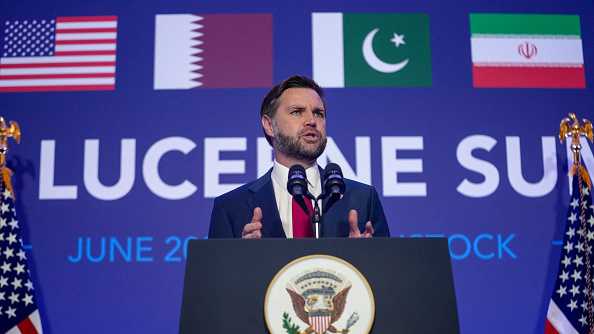
Vice President JD Vance announced progress after hours of talks with Iranian officials. Vance said the discussions “laid a successful foundation” to build on future meetings, despite heated threats made between President Donald Trump and Iranian officials earlier.
Vance highlighted four accomplishments:
Developing a communication strategy to keep the Strait of Hormuz openForming a group to address the conflict between Israel and Iranian-backed militants in LebanonSecuring Iran’s agreement to allow international nuclear inspectors back into the country.Setting up next steps for future discussionsFirst Round of Talks Concludes
Vance, who’s leading the U.S. diplomatic effort alongside Middle East Special Envoy Steve Witkoff and Trump’s son-in-law Jared Kushner, traveled to Switzerland for the meetings. Vance is set to return to the U.S. on Monday.
Delegations from the U.S. and Iran began negotiations on Sunday, and the talks stretched into Monday morning. U.S. officials sat face-to-face with their Iranian counterparts as well as officials from Pakistan and Qatar, which are facilitating the negotiations.
According to a joint statement from Pakistan and Qatar, the first session of high-level talks was “positive and constructive.” The two sides designated lower-ranking representatives to advance the talks further.
A spokesperson for Iran’s Foreign Ministry said early Monday that Iran’s delegation had left Switzerland to return to Iran.
The focus of their first meeting was stopping Israel’s war with the Iranian-backed militant group Hezbollah in Lebanon. Renewed fighting in the conflict has complicated peace efforts several times, most recently over the weekend. The ceasefire agreed to by the U.S. and Iran requires the fighting in Lebanon to stop.
Israel and the U.S., which launched the war on Iran together, have been increasingly at odds over Israel continuing the war in Lebanon. On Sunday, Prime Minister Benjamin Netanyahu said he will not withdraw Israeli troops from southern Lebanon, insisting the forces will remain there “as long as we need to protect our people.” Hezbollah’s Chief Naim Qassem responded, saying, “Any violation [of the ceasefire], we will confront… we will fight… we will deal with as we see fit.”
In future meetings, negotiators plan to address Iran’s nuclear program, its frozen assets, and the establishment of a permanent communication line to keep the Strait of Hormuz open. The ceasefire sets a 60-day timeline to negotiate a final peace deal, although it allows for that period to be extended.
Threats Complicate Talks
Iran’s military said on Saturday it closed the Strait of Hormuz due to continued fighting in Lebanon. That set off a series of tit-for-tat threats between the U.S. and Iran.
On Sunday, Trump threatened in a social media post to “hit Iran very hard again” if it did not stop funding militants in Lebanon.
Then, in a profanity-laced phone call with Fox News, he reportedly warned of “total destruction” if Iran closed the Strait of Hormuz.
“You close it, and you won’t have a country,” Trump reportedly said. “You won’t even make it back to your f—— country.”
Iranian Parliament Speaker Mohammad Bagher Ghalibaf had earlier promised Iran would have “no hesitation in delivering a crushing response” to any examples of bad faith, breach of contract, or excessive demands.
In remarks on Monday, Vance downplayed the exchanges.
“When they make threats that aren’t rooted in reality, they have to accept that the president of the United States is actually going to set the record straight,” Vance said. “So yes, there was a little bit of threatening. There was a little bit of whining, but at the end of the day, the talks continued, and we made great progress.”
Watch the latest coverage on the U.S.-Iran peace talks: