
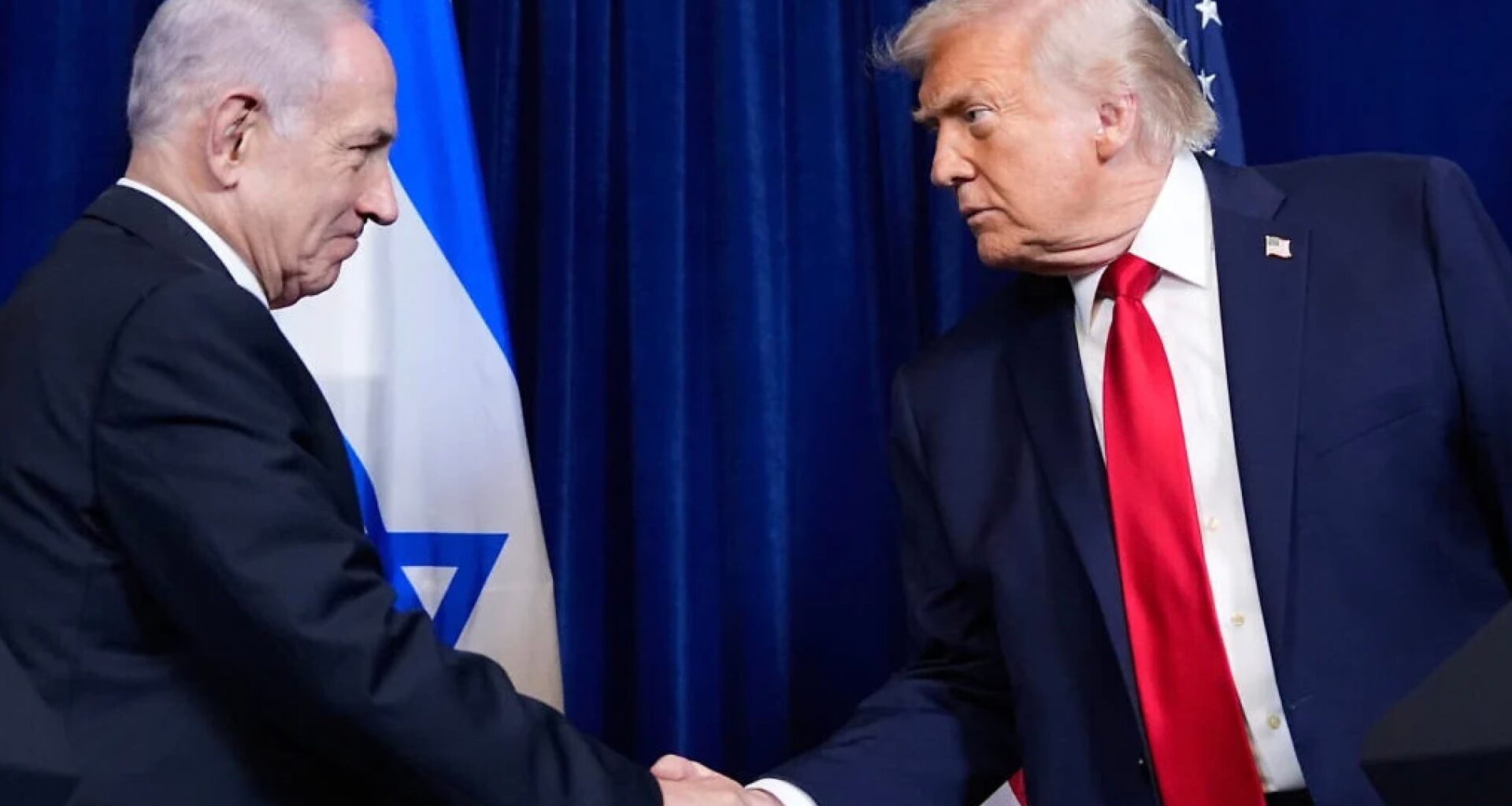
The way America has treated Israel in the current U.S.-Iran negotiations has been troubling.
Rather than treating Israel as a sovereign regional — and growing international — power with its own strategic interests, the United States has often seemed to frame it as a “very” junior partner, almost as if Israel were merely an American proxy force in the Middle East.
That framing diminishes Israel’s actual position. Israel is not a small, dependent actor on the same level as Hezbollah. It is a major regional power, militarily and politically, and it should be treated as such. Yet in the way these negotiations have been presented, especially under Trump, Israel sometimes appears to be placed in the same category as the very proxy groups it is fighting.
The result is a distorted picture. Israel and Hezbollah are treated as two smaller forces battling each other, while Iran and the United States are cast as the real powers negotiating over the region’s future.
That effectively reduces Israel’s role while elevating Iran’s. It suggests that the “big brothers” in the neighborhood are Washington and Tehran, and that Israel is simply one of the local actors to be managed.
That is not only inaccurate; it is strategically damaging. Israel is vastly more powerful economically, technologically, culturally, and militarily than Iran.
Israel should be approached as a serious regional power in its own right, not as an appendage of American policy and not as the equivalent of Iranian-backed militias.
Any serious negotiation in the region should reflect that reality. To do otherwise is to play directly into Iranian hands. Tehran wants Israel to be seen as nothing more than an American proxy force. Washington should not help reinforce that fiction.
Perception is itself a strategic asset in the Middle East. Israel’s deterrence depends not only on military capability, but also on whether enemies, allies, and regional actors believe Israel is willing and able to act independently. If Washington makes Israel look like an American subcontractor, it helps Iranian propaganda and weakens Israel’s deterrent image.
Any “deconfliction” mechanism or diplomatic arrangement that excludes the country actually absorbing Hezbollah’s fire, risks creating rules Israel never accepted and may not be able to live with. Israel is the country whose civilians live under Hezbollah’s rockets, whose soldiers operate on the border, and whose deterrence is directly at stake. Any agreement that touches that arena without Israel’s direct role is diplomacy detached from reality — and bound to fail.
Trump’s Doha deal with the Taliban showed the danger of negotiating over an ally’s future while leaving that ally outside the room.
The Afghan government was sidelined in talks that set the terms for America’s withdrawal, gave the Taliban legitimacy, undermined the Afghan government by making it look like nothing more than a U.S. proxy, and left Kabul to deal with consequences it had no real part in shaping. We saw how that ended, with the collapse of the Afghan state and a catastrophe for millions of Afghans.
Today, Trump risks repeating that same mistake in his Iran diplomacy over Lebanon. Washington is trying to manage Israel’s security environment through talks with Tehran and regional mediators while Israel is not at the table.
Israel and the United States are close allies. America may be the larger global power, but alliance should not mean subordination when the security of the Israeli state is at risk.
Afghanistan should be the warning to Israel. When the United States cuts deals that determine an ally’s security without that ally’s direct participation, the result can be a paper agreement that looks like diplomacy in Washington but produces abandonment, instability, and danger on the ground.
This is deeply troubling and could affect Israel’s standing in the region and the world for many years to come.
Ari Ingel is attorney and the Executive Director of Creative Community for Peace and an Attorney. Follow him on X at http://twitter.com/ogaride