
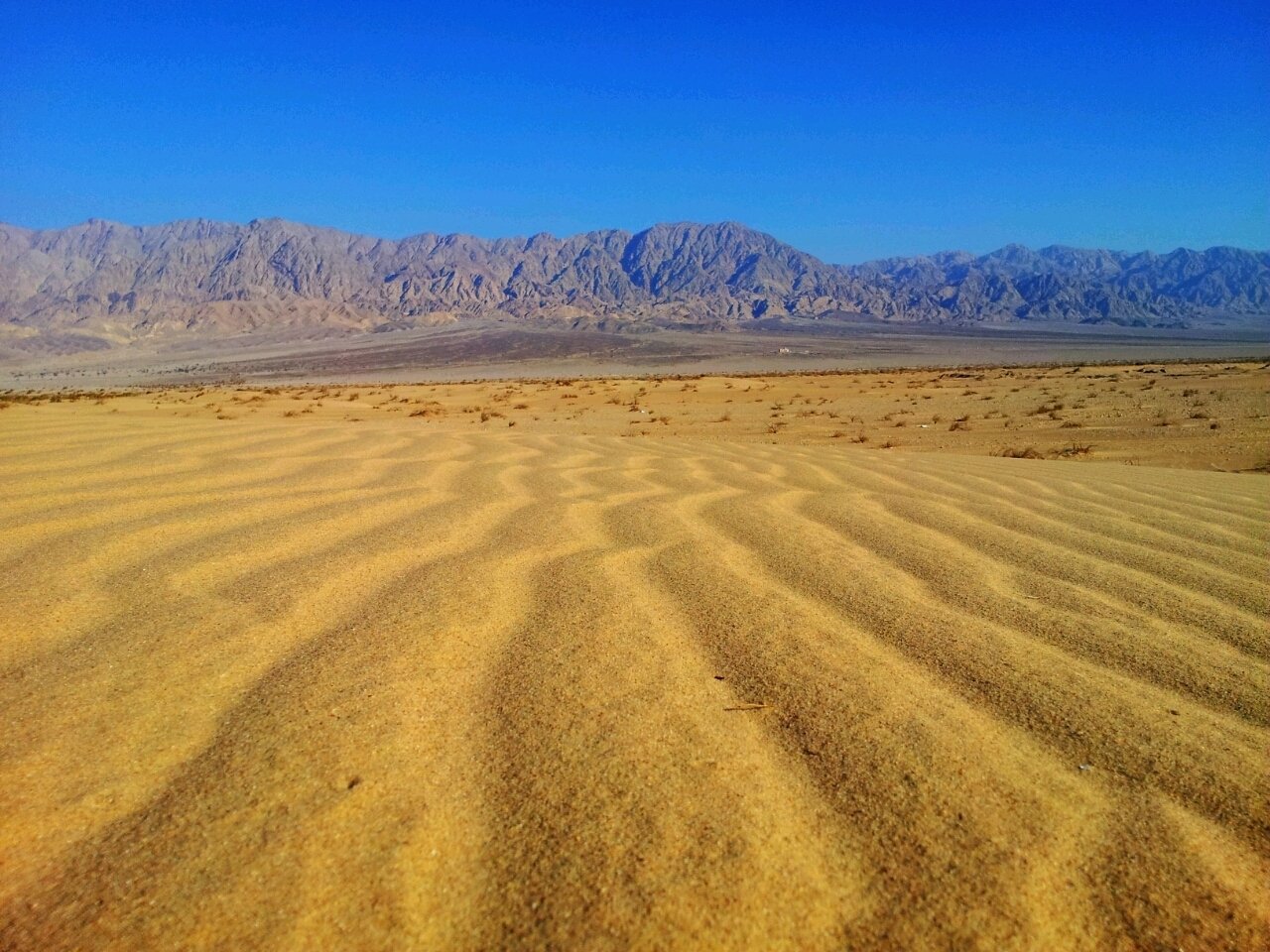
Initial plans for a controversial rail link from Dimona in southern Israel to Eilat on the Red Sea will be presented at an online meeting open to the general public on Thursday.
The idea of a railway from Eilat has been touted in the past, approved in multiple government decisions and planned before being cancelled due to its huge expense. The latest iteration follows a 2023 government decision to link the whole of Israel, from north to south, by fast trains traveling up to 250 kilometers (155 miles) per hour.
The plan is being developed not by Israel Railways, but by the state company for transportation infrastructure, Netivei Israel.
Prime Minister Benjamin Netanyahu has personally pushed for such a project for years.
Running 180 kilometers (112 miles), the proposed lines will cut through the Negev and Arava deserts, including the so-called Land of Craters, recognized by a government resolution in 1992 as an area that “contains unique natural values, on a national and international scale.”
Get The Times of Israel’s Daily Edition
by email and never miss our top stories
By signing up, you agree to the terms
The Israel Lands Authority is also planning a solar field twice the size of Tel Aviv in the Land of Craters.
The rail project will include passenger and freight lines, passenger stations, a freight terminal, operating stations and additional structures.
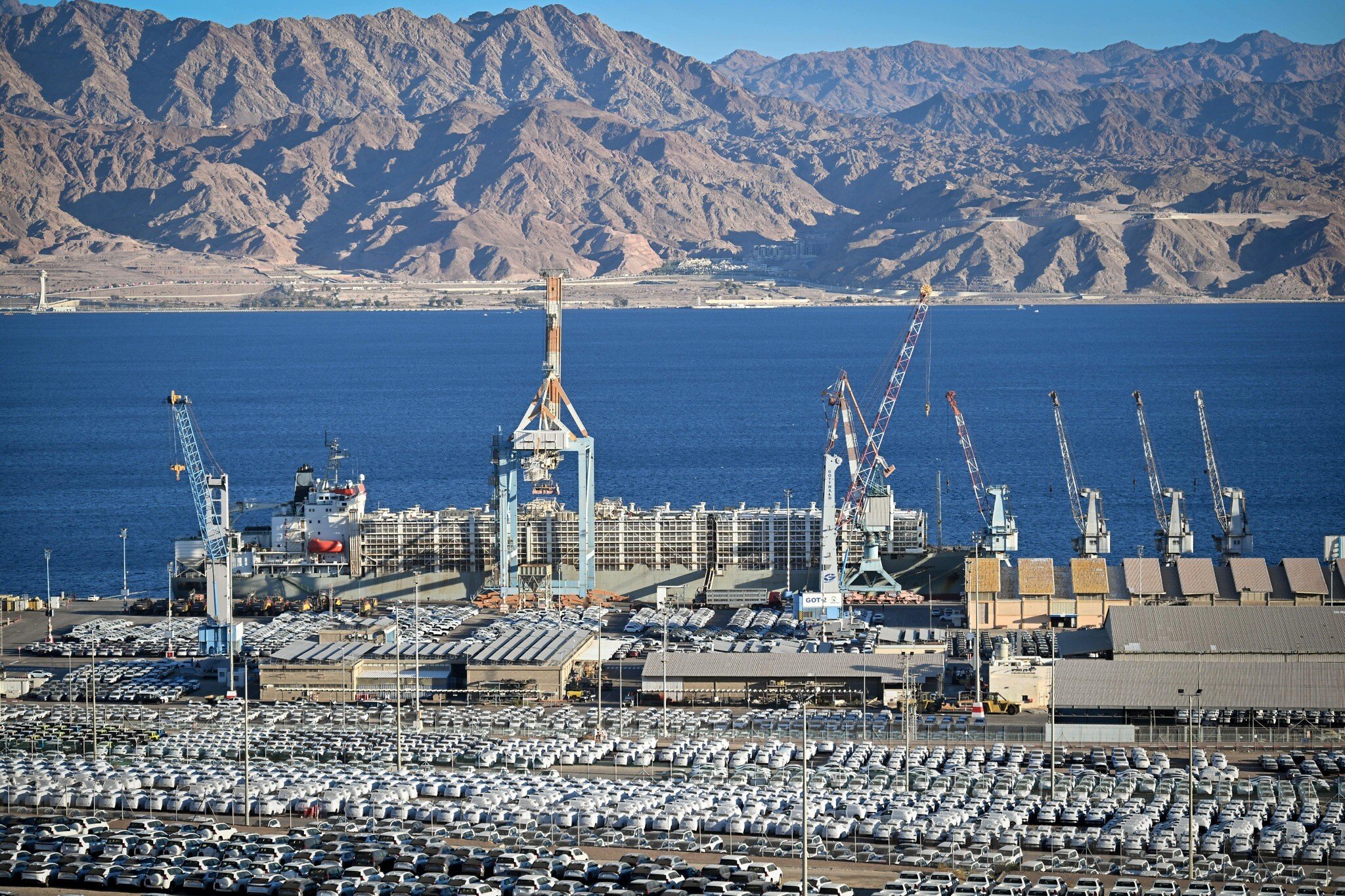
New imported cars are seen at a parking lot in the Eilat port, Israel, on January 3, 2024. (Yehuda Ben Itach/Flash90)
In a presentation on the project, Netivei Israel says it will shorten travel times from the center of the country to Eilat, link Eilat’s port to ports in southern Ashdod and northern Haifa and reduce heavy vehicular traffic on Route 90, Israel’s main north-to-south highway.
The new rail line will also help increase cargo transport to and from Eilat, boost the southern city’s Ramon Airport and create jobs, while increasing demand for housing in the relatively sparsely populated Arava.
Controversially, from an environmental point of view, both the passenger and freight lines envisioned in the plan would run through and along the boundaries of several nature reserves, with multiple bridges constructed over streams, such as the Zin stream. Passenger trains, for example, would cross some 11 kilometers (6.8 miles) through the Makhteshim and Ein Yahav Nature Reserve.
The presentation goes into a lengthy analysis of the environmental challenges, including the presence of numerous nature reserves, the need to preserve vegetation and restore habitats after construction and the importance of ecological corridors, which allow wildlife to move around and plants to spread. It notes the landscape values of many locations along the lines and the presence of numerous IDF firing ranges.
The Netivei Israel presentation does not include any financial data.
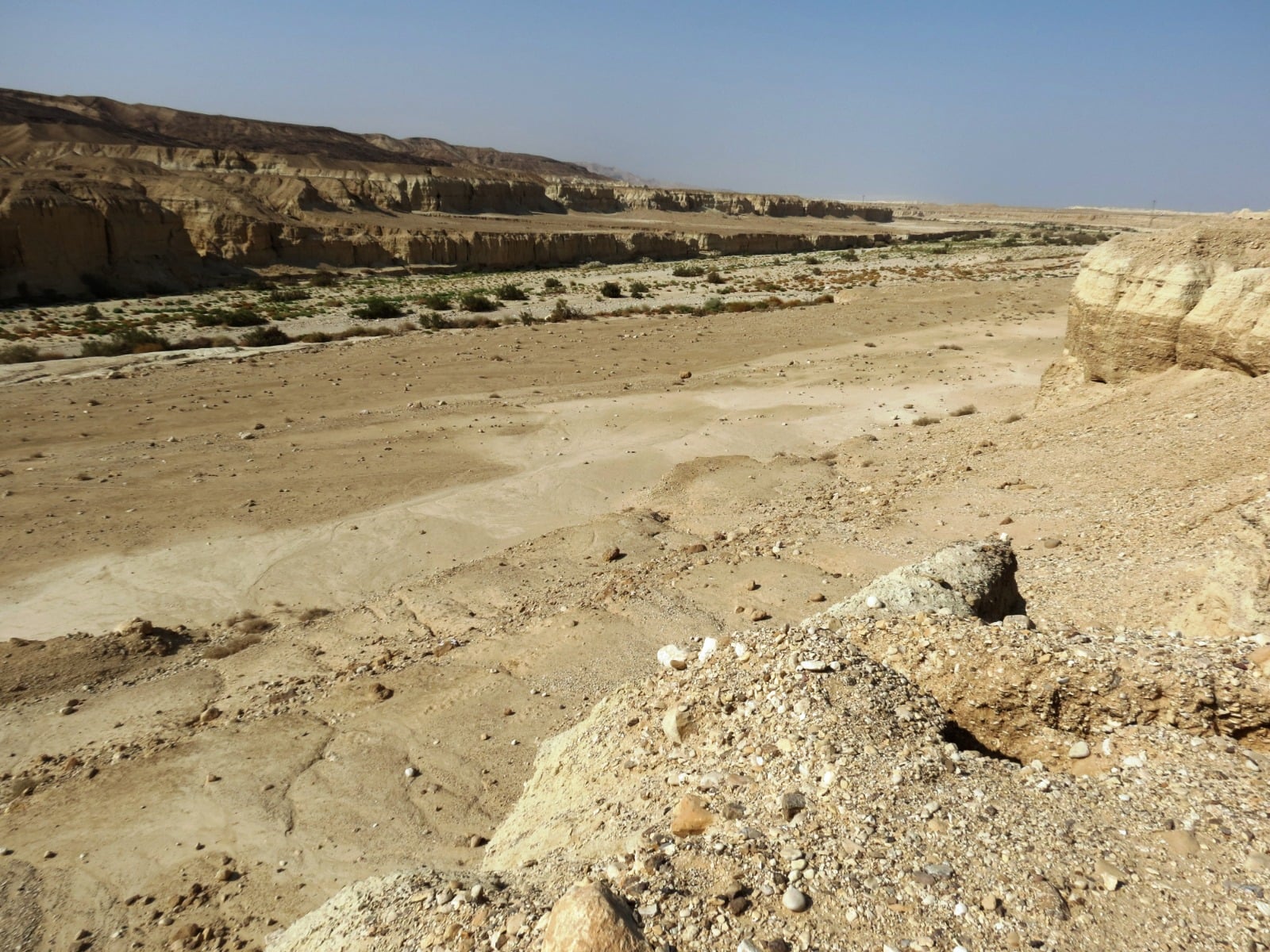
The Zin Valley in southern Israel, which would be crossed by a proposed railway line and bridge. (Dov Greenblat, Society for the Protection of Nature in Israel)
The Society for the Protection of Nature in Israel (SPNI) this week dubbed the project “one of the most destructive to nature and landscape in recent years,” adding that it will likely cost tens of billions of shekels.
In a position paper, it charges that the lines will cause severe environmental damage, while bringing limited benefits to the State of Israel, the south of the country, and Eilat.
Reacting to Netivei Israel’s estimate that the Dimona to Eilat line will provide 8.2 million trips a year by 2040, the environmental group says that the only transportation project more expensive than this is the Tel Aviv metro. The latter will eventually comprise three lines totaling 150 kilometers (93 miles) and 100 passenger stations, and will allow for two million trips every day.
An SPNI spokesman told the Times of Israel, “Some of the sites the trains are expected to pass are located deep in the Negev and the Arava, in areas that people rarely reach and are therefore the cleanest, wildest, most natural and beautiful places, rich in wildlife.”
The public is invited to register for Thursday’s meeting by Zoom.
Is The Times of Israel important to you?
If so, we have a request.
Every day, even during war, our journalists keep you abreast of the most important developments that merit your attention. Millions of people rely on ToI for fast, fair and free coverage of Israel and the Jewish world.
We care about Israel – and we know you do too. So today, we have an ask: show your appreciation for our work by joining The Times of Israel Community, an exclusive group for readers like you who appreciate and financially support our work.
Already a member? Sign in to stop seeing this
You appreciate our journalism

You clearly find our careful reporting valuable, in a time when facts are often distorted and news coverage often lacks context.
Your support is essential to continue our work. We want to continue delivering the professional journalism you value, even as the demands on our newsroom have grown dramatically since October 7.
So today, please consider joining our reader support group, The Times of Israel Community. For as little as $6 a month you’ll become our partners while enjoying The Times of Israel AD-FREE, as well as accessing exclusive content available only to Times of Israel Community members.
Thank you,
David Horovitz, Founding Editor of The Times of Israel