
Bloomberg News said Oman, which lies on the opposite side of the strait from Iran, had told allies ships going through Hormuz may have to pay. Reuters could not immediately confirm the report.
The foreign minister of fellow Gulf state the United Arab Emirates held his first announced phone call with his Iranian counterpart since the start of the conflict, UAE state news agency WAM said, underlining efforts to overcome tensions.
It said Sheikh Abdullah bin Zayed underlined the need to ensure freedom of navigation through the strait, where shipping had picked up pace before a new slowdown after the ship attack.
Iranian state TV said three foreign tankers attempting what it called an “unauthorized passage” of the strait were turned back after a warning from the Islamic Revolutionary Guard Corps. It gave no further details.
Asked about the matter, a U.S. official said: “We are aware of these reports and looking into them. President Trump has been clear that Iran cannot subvert the free flow of traffic in the strait.”
Oil prices dropped by about 3% Friday, on course for steep weekly losses despite the conflicting interpretations of last week’s interim deal between Iran and the U.S. and renewed questions over the strait, through which a fifth of global oil and liquefied natural gas supplies typically passes.

Shi’ite mourners hold placards with pictures of Iran’s new Supreme Leader Mojtaba Khamenei, the late leader of the Islamic Revolution, Ayatollah Ruhollah Khomeini, late Hezbollah leader Hassan Nasrallah, assassinated Hezbollah military leader Imad Mughniyeh, assassinated Hezbollah leaders Sayyed Abbas al-Musawi and Hashem Safieddine, as they mark Ashura, the holiest day on the Shi’ite Muslim calendar, on Friday in the southern suburbs of Beirut, Lebanon.
Mohamed Azakir, REUTERS
Details of deal not provided
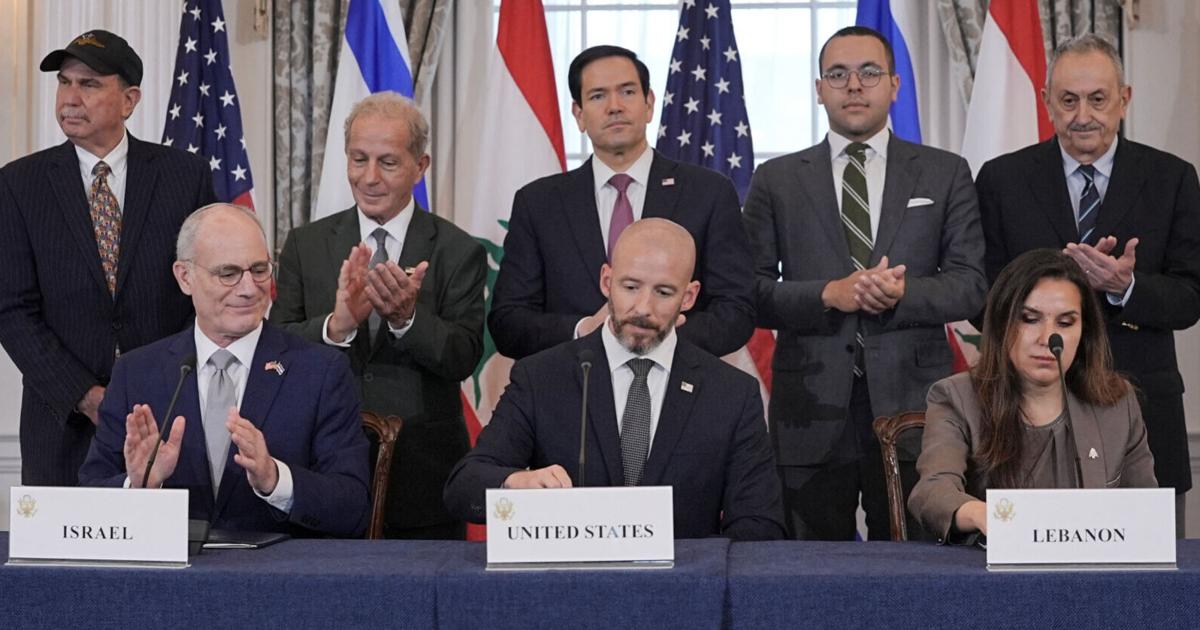
The officials did not provide details of Friday’s framework deal and did not say how its terms would differ from those in an April 16 ceasefire deal that preceded several rounds of U.S.-brokered Israel-Lebanon talks.
“The trilateral framework we signed today is a first step on the road to restoring Lebanese sovereignty and territorial integrity, securing a permanent and final cessation of hostilities, enabling our people to go back to their land, and allowing all Lebanese to live in peace, security, and prosperity,” Moawad said.