
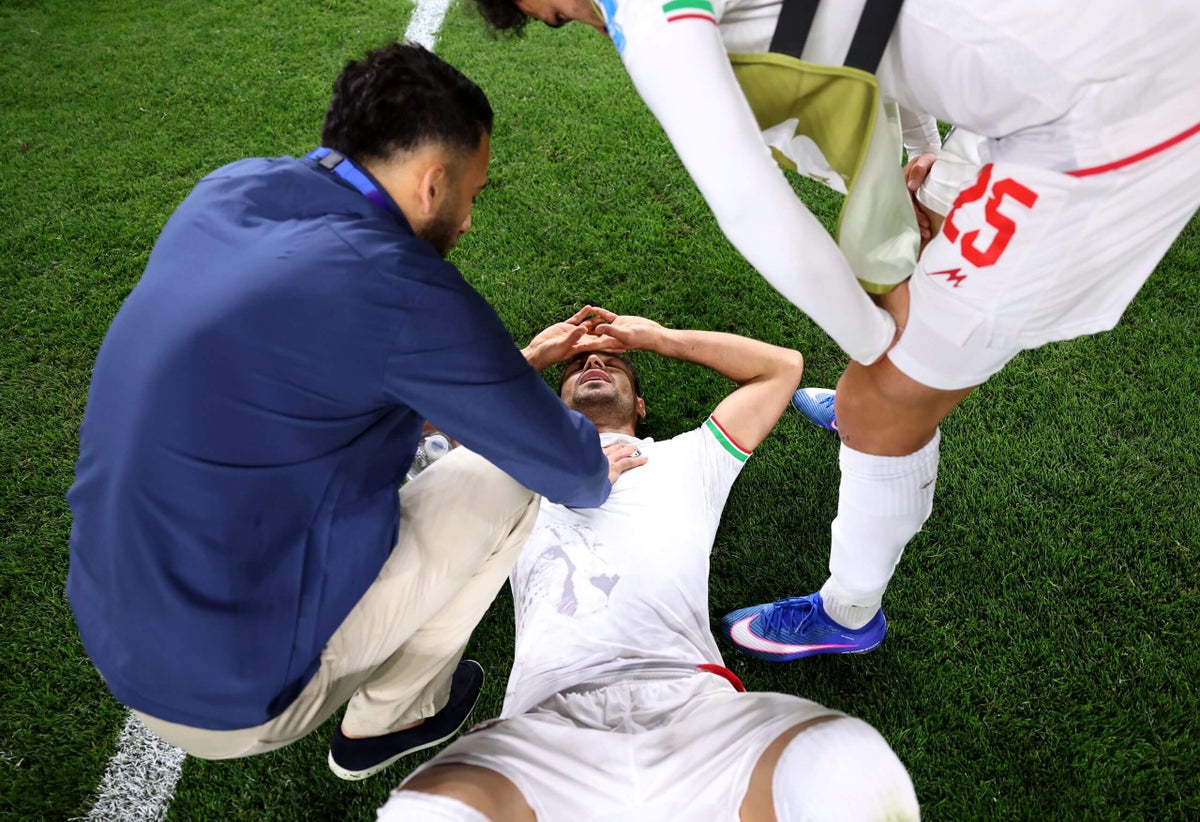
Egypt will play Australia in Dallas on July 3 after securing second place in Group G in a hugely dramatic 1-1 draw with Iran on Friday night.
An entertaining first half burst into life after just five minutes, when Mahmoud Saber’s shot went through Iran goalkeeper Alireza Beiranvand’s legs and in off a defender.
Iran reacted and four minutes later won a penalty. Mehdi Taremi signposted his finish and saw it saved, but Ramin Rezaeian equalized in the 15th minute, reacting fastest to a Milad Mohammadi saved shot and steering home a 0.07 xG chance from a tight angle.
With Belgium 2-0 up early in the second half of the other game in Group G, this match was finely poised. A third goal — from Kevin De Bruyne — dropped Egypt to second and put Belgium top, so there was a definite motive for Hossam Hassan’s side to retake the lead.
New Zealand pulling one back against Belgium briefly put Egypt back on top of the group, but Romelu Lukaku restored the three-goal advantage, before that match eventually finished 5-1 to Roberto Martinez’s side.
Then, there was huge drama in stoppage time as Iran thought Shoja Khalilzadeh had given them a dramatic win, only for the VAR to cruelly rule it out for offside.
Iran still managed to force two more golden opportunities, but Egypt hung on — just — to claim the point that sends them through to the knockouts as group runners-up. They will next face Australia.
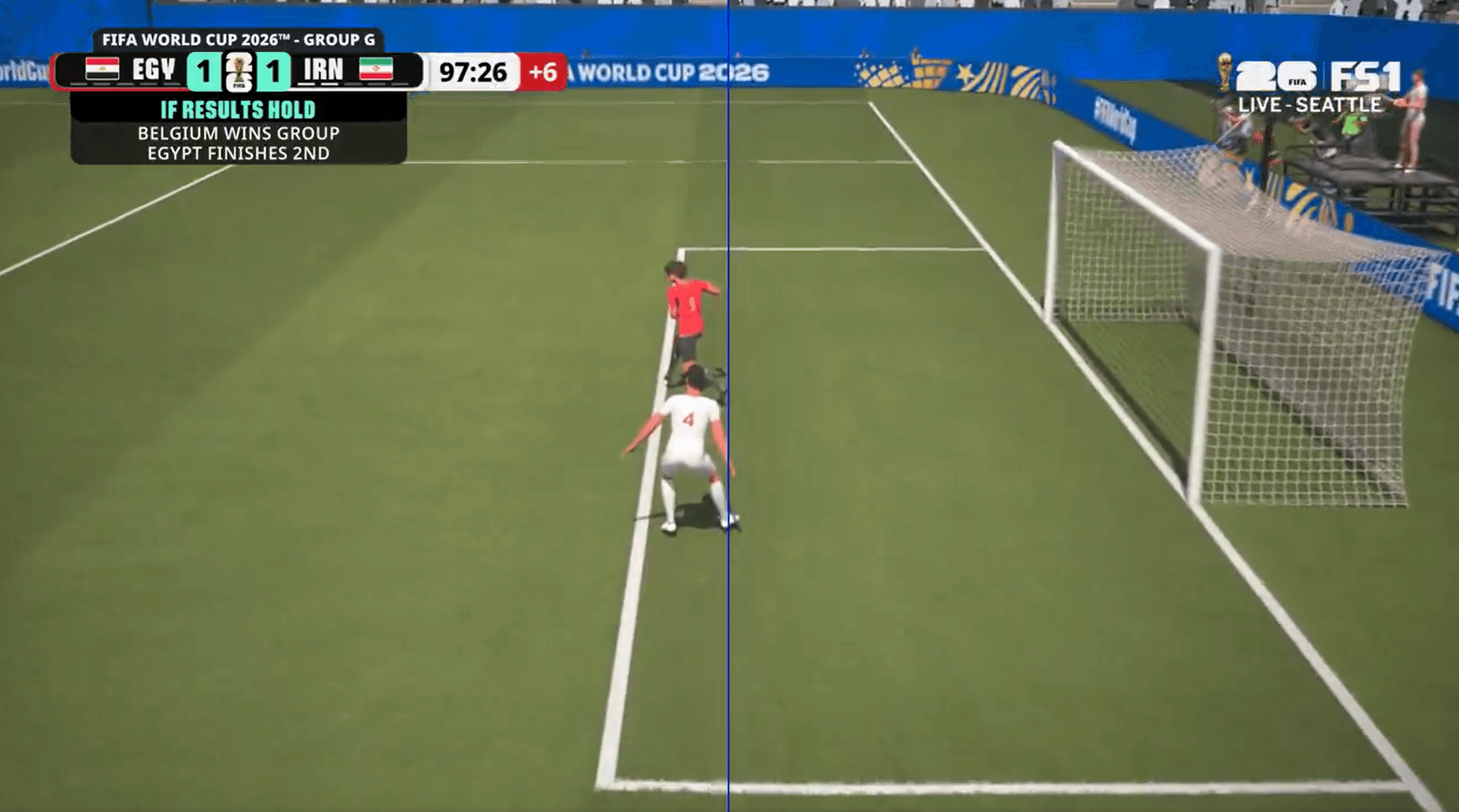
The 1-1 scoreline means Iran finish third — but they are not yet confirmed as one of the group stage’s best eight third-placed sides. They will need results to go their way on Saturday’s final round of group games.
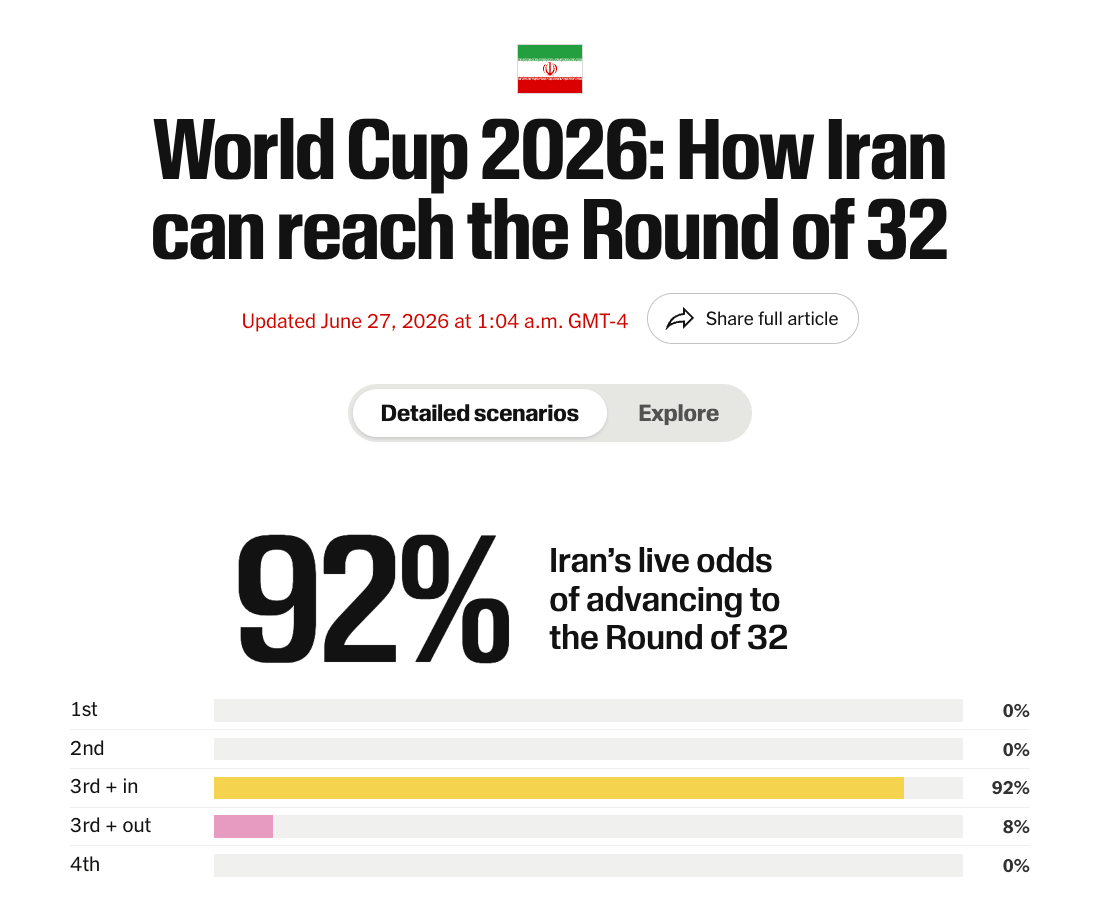
If Algeria and Austria draw in Group J, sending both through, DR Congo beat Uzbekistan and Croatia get at least a point against Ghana, then Iran are out. The Athletic’s live predictor tool gives Iran a 92 per cent chance of reaching the round of 32. You can examine the possibilities here.
Simon Hughes and Laurie Whitwell analyse the game.
Why was Iran’s winner disallowed?
When you first see Khalilzadeh crashing in Iran’s ‘winning’ goal, it might be hard to understand why it was ultimately ruled out for offside. Add in that the strike would have guaranteed a World Cup knockout spot and it becomes a decision of immense significance.
To be onside there must be two opposition players between an attacker and the goal when the ball is played to them. In most cases that is the goalkeeper, plus one defending outfield player.
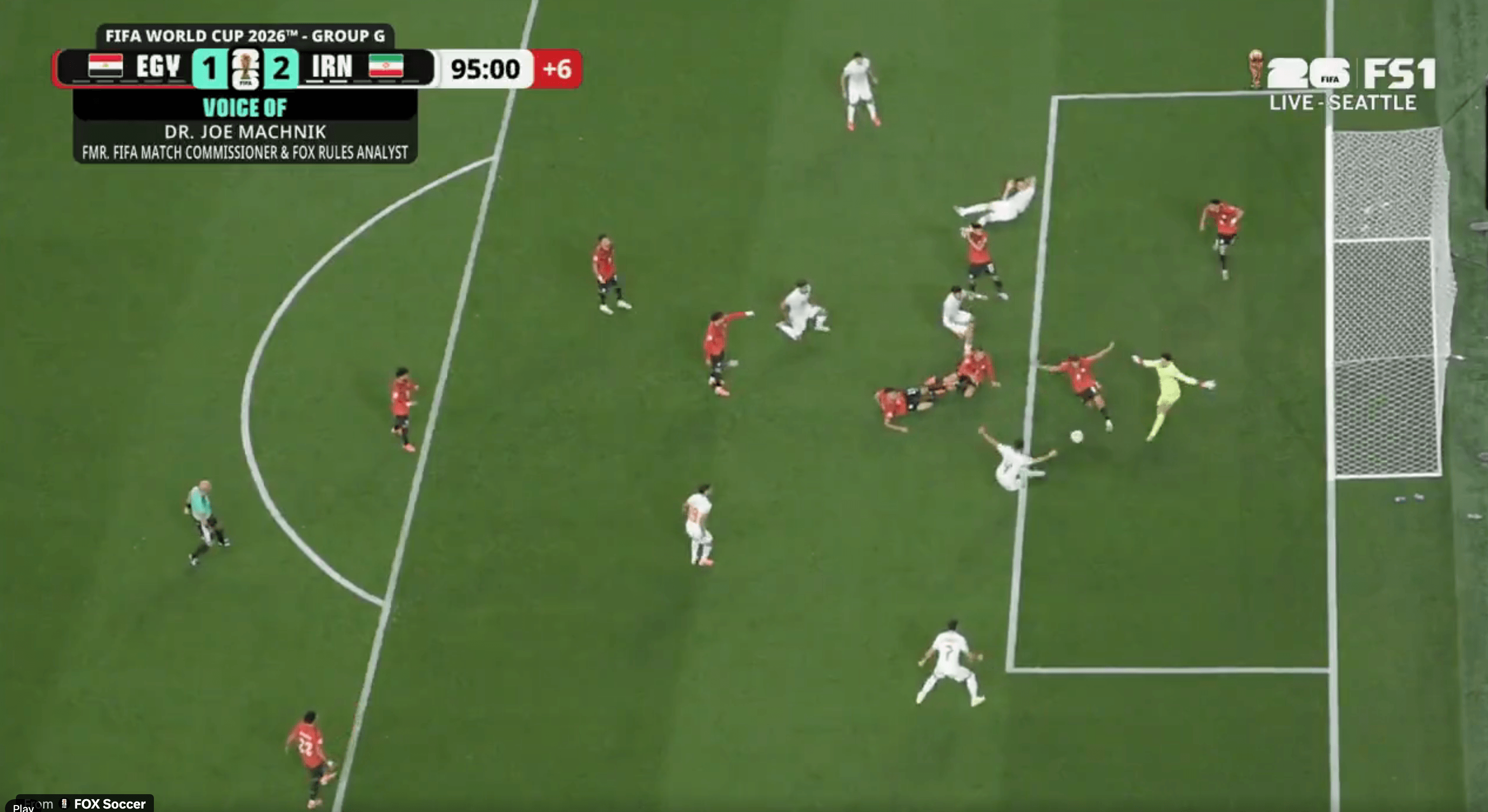
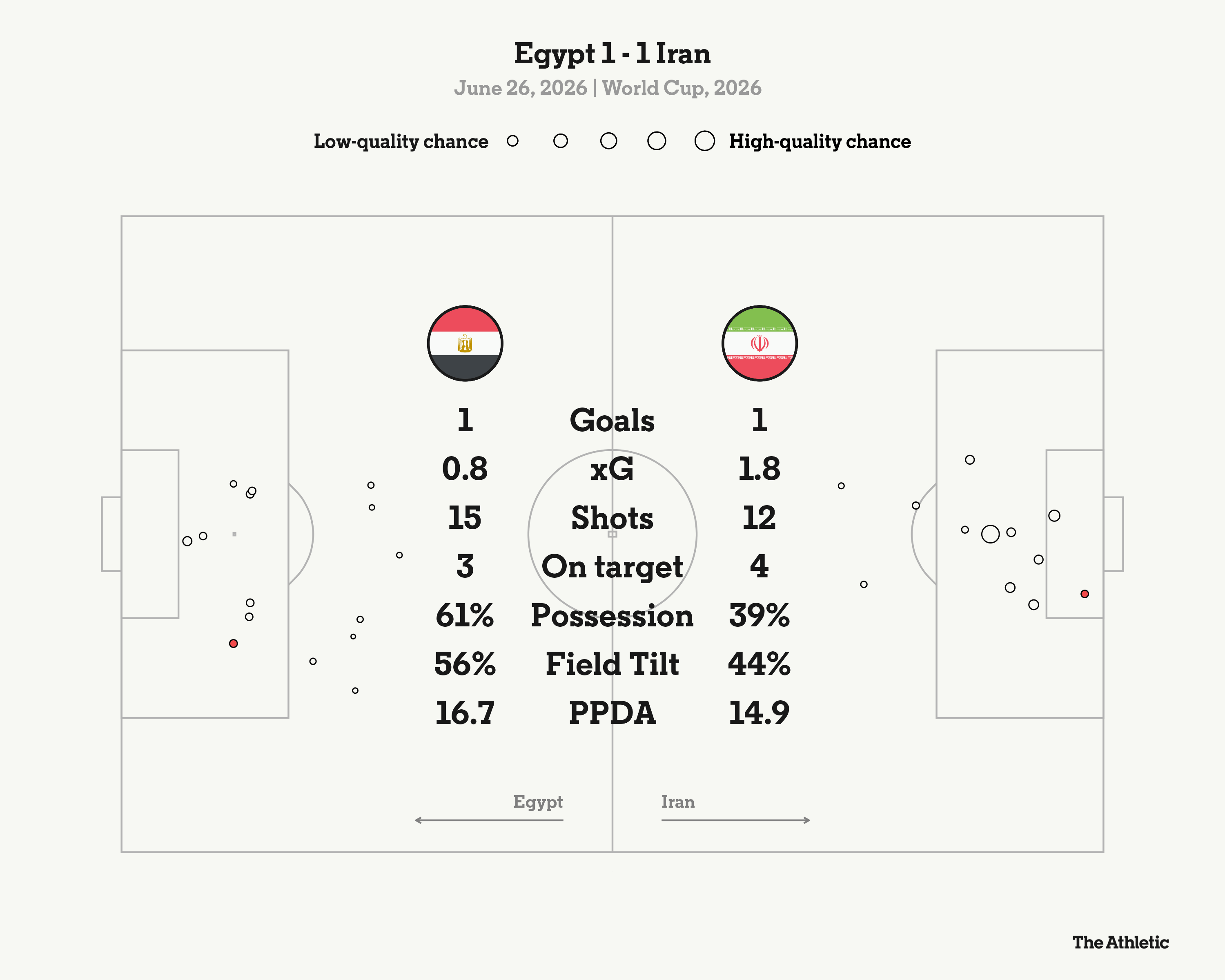
By that law, Khalilzadeh looks onside in the image above. However, that is not the moment the ball has been played to him. It is the moment he shoots on goal. Khalilzadeh receives the ball after his team-mate Mohammad Ghorbani’s effort has rebounded off the Egypt goalkeeper.
For the goal to have counted, Khalilzadeh (No 4) needed to be in an onside position when Ghorbani shot on goal. As you can see in the image below, at that moment there was only one opposition player between Khalilzadeh and the goalline.
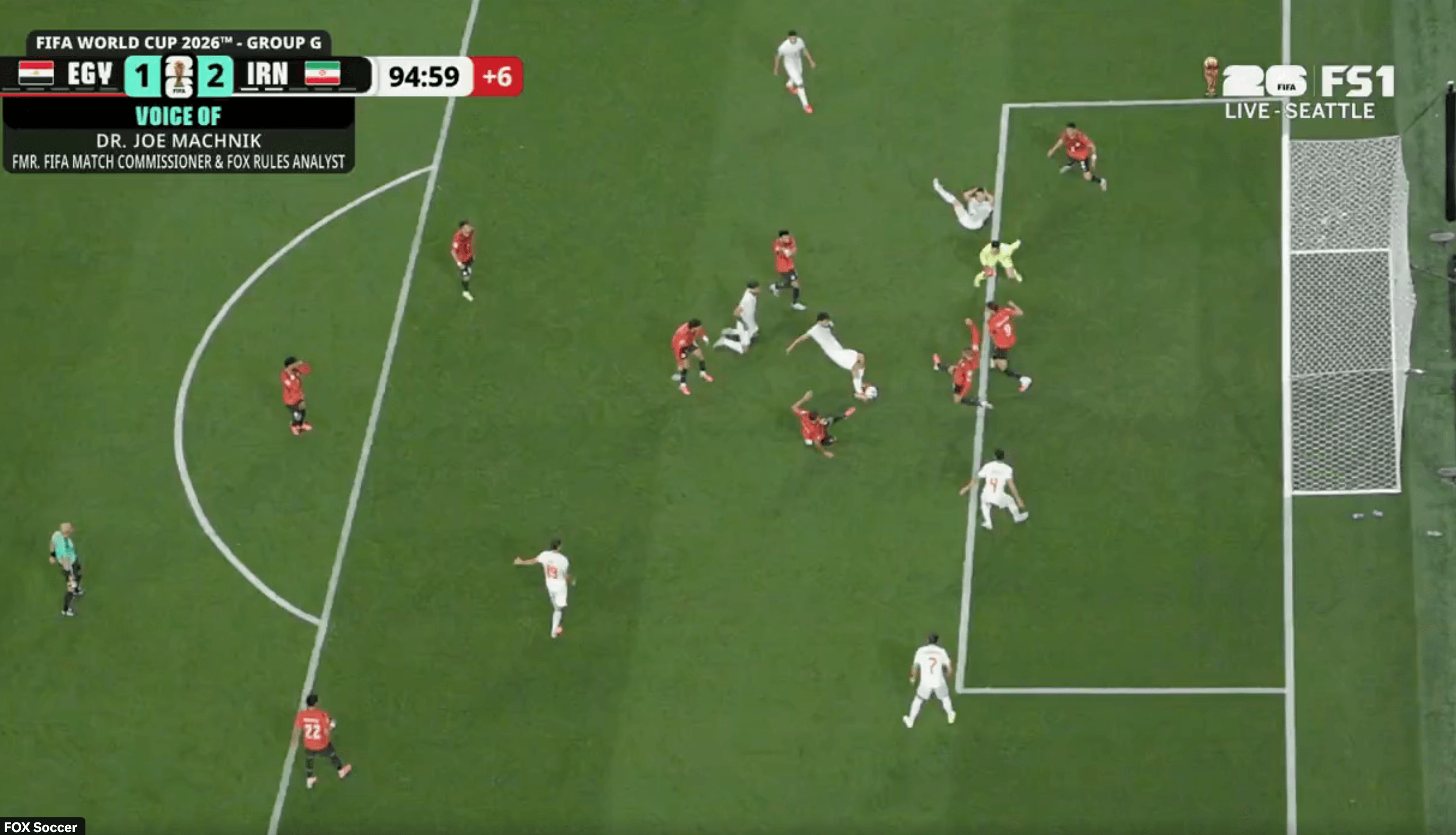
The unusual thing here is that the goalkeeper has advanced beyond the attacker and, while it is very tight, the VAR image below shows that Khalilzadeh is indeed ahead of all but one Egypt player, and therefore offside.
How far can Egypt go in the knockouts?
In the space of 15 minutes in Seattle, the emotions of this match shook violently, especially for Egypt.
When, in the 57th minute, Mohamed Salah was removed by manager Hassan as he chased the goal that would take him level with his coach as the all-time top scorer for his country, he promptly applied heavy strapping to his left leg.
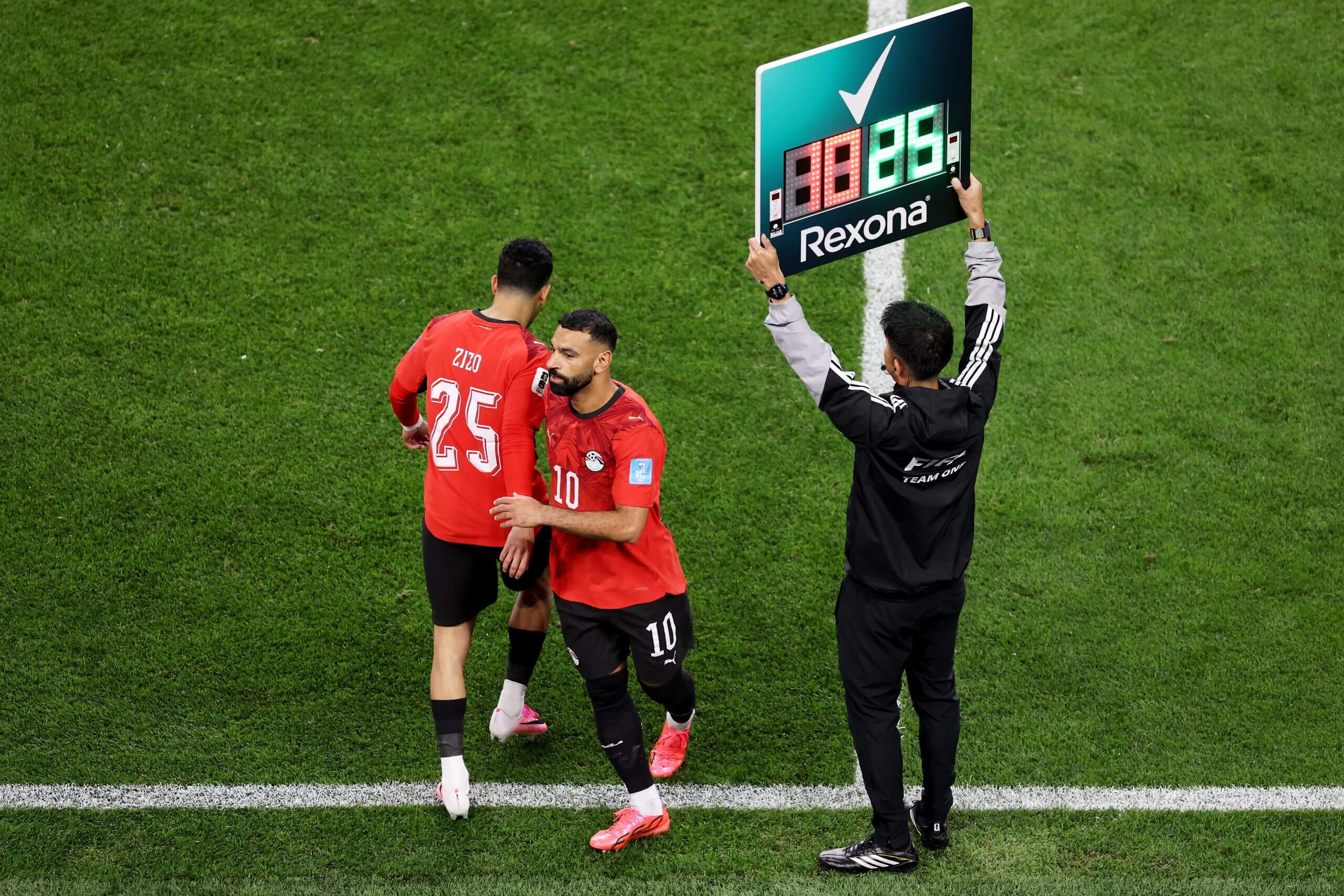
Salah had to come off injured in the second half (Stu Forster/Getty Images)
Soon, news that Belgium had extended their lead over New Zealand was met with a huge groan.
Drawing against Iran, Egypt were pushed into second place. On cold reflection, it was difficult to tell whether this might actually a good thing, because at that point, as potential group winners they were most likely to face South Korea at this stadium before potentially moving onto a date with the United States.
The balance suddenly meant that, instead, they would have to travel to Dallas to play Australia. After that, potentially Lionel Messi featuring Argentina (perhaps this great nation should be billed that way these days).
Judging by the crowd’s reaction, winning the group got the popular vote. When New Zealand scored to move Egypt top again there was a huge roar. Moments later, when Belgium scored again, there was another groan.
Then came the drama of stoppage time. A goal for Iran. But VAR disallows it. Iran then hit the crossbar. And finally, Dallas beckons for Egypt after all.
Ultimately, both potential round-of-32 opponents gave Egypt a chance of progression. Egypt are a decent side, Salah is playing well and he now has the support of other attacking players.
They’ll need Salah to be available, though.
Simon Hughes
A night of contrasting emotions for Iran
Iran made a strong comeback after conceding early, equalising nine minutes later, even after Taremi missed a penalty, but into the second half they appeared content at 1-1.
They sat back with five defenders, four in midfield, and Taremi the lone striker, confident in their ability to repel Egypt but not really offering any threat up front.
Clearly, Iran felt a draw would be sufficient to qualify for the knockout phase, leaving them on three points and zero goal difference. They knew for sure that would be better than the records of South Korea, Scotland and Uruguay, meaning they only need one more result to go their way in the final round of group stage games.
Croatia, Algeria, DR Congo are the teams who could overtake Iran, condemning them to one of the bottom four spots in the third-place table and elimination. For that to happen, Croatia need to draw against Ghana, Algeria must get a point versus Austria, and DR Congo have to beat Uzbekistan.
That sequence of results doesn’t seem too outlandish but it has such a low probability that The Athletic’s projection model puts Iran’s chances of progress at 92 per cent. How that will be affected by a draw suiting Algeria and Austria remains to be seen.
Still, Iran’s strategy led to tension in the closing stages, with their defenders needing to make a series of blocks and tactical fouls.
Saeid Ezatolahi was booked for bringing down Omar Marmoush at an Egypt counter.
It was a tightrope walk that, with one wrong step, would have seen their chances of the last-32 plunge to zero in defeat. But at the same time, Egypt settled into accepting a draw that would send them through in second, and that invited Iran to attack — and the game finished in dramatic style.
In the 93rd minute, Iran celebrated a goal that would have guaranteed their qualification as runners-up.
After a scramble at a free-kick, Khalilzadeh struck the ball in, prompting joyous scenes of immense emotion, as the whole Iran squad gathered in a huddle. Khalilzadeh brought out a pair of sunglasses to mark the moment. But VAR intervened, ruling Khalilzadeh offside by a toe.
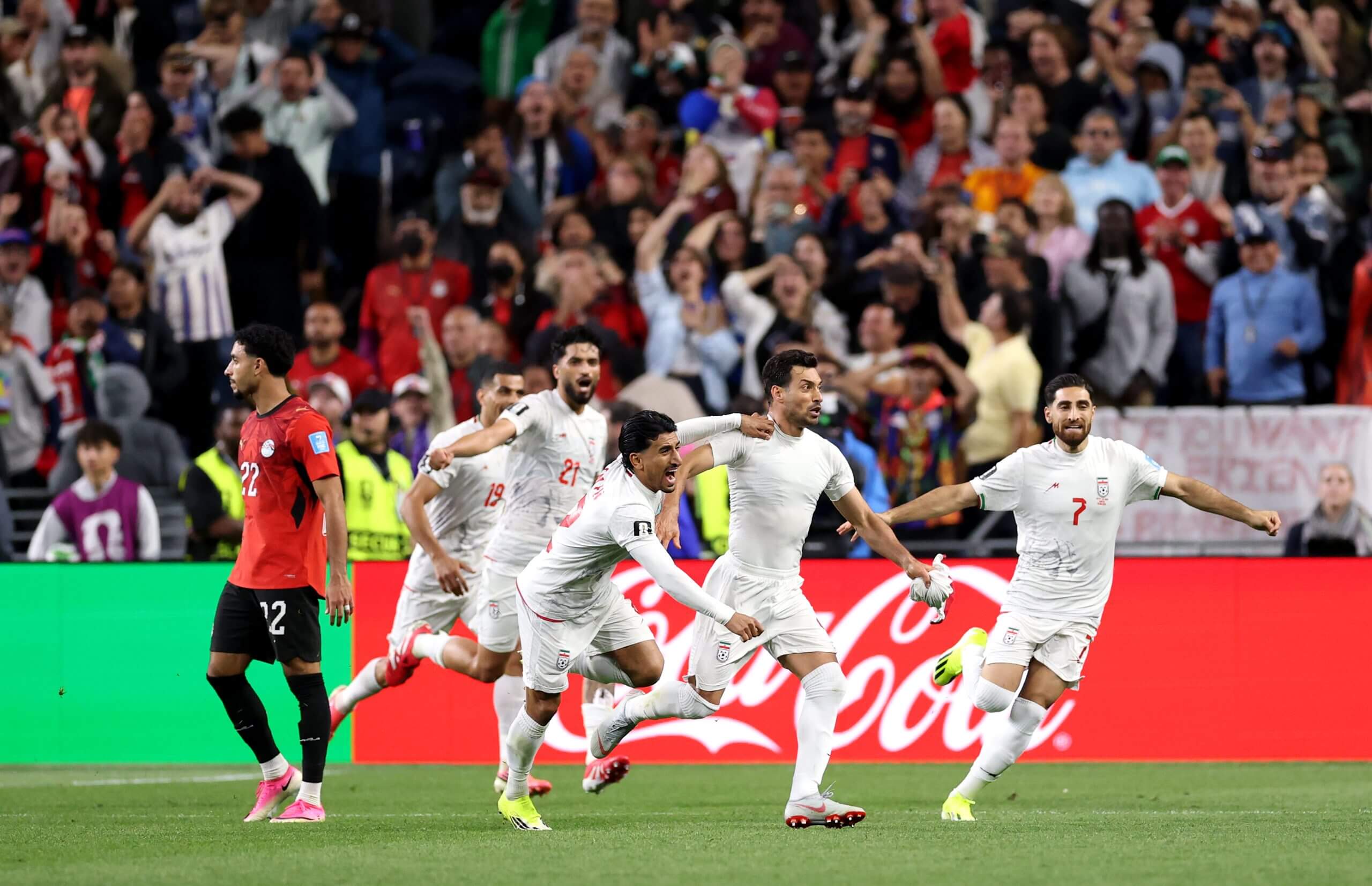
Iran celebrate the goal that never was (Richard Heathcote/Getty Images)
It was a cruel intervention, after Taremi had a winning goal against Belgium struck off in a similarly tight offside call via VAR. Iran nearly got another winner against Egypt, with Ezatolahi hitting the bar, but now they face something of an anxious wait.
Laurie Whitwell
A physical, entertaining first half
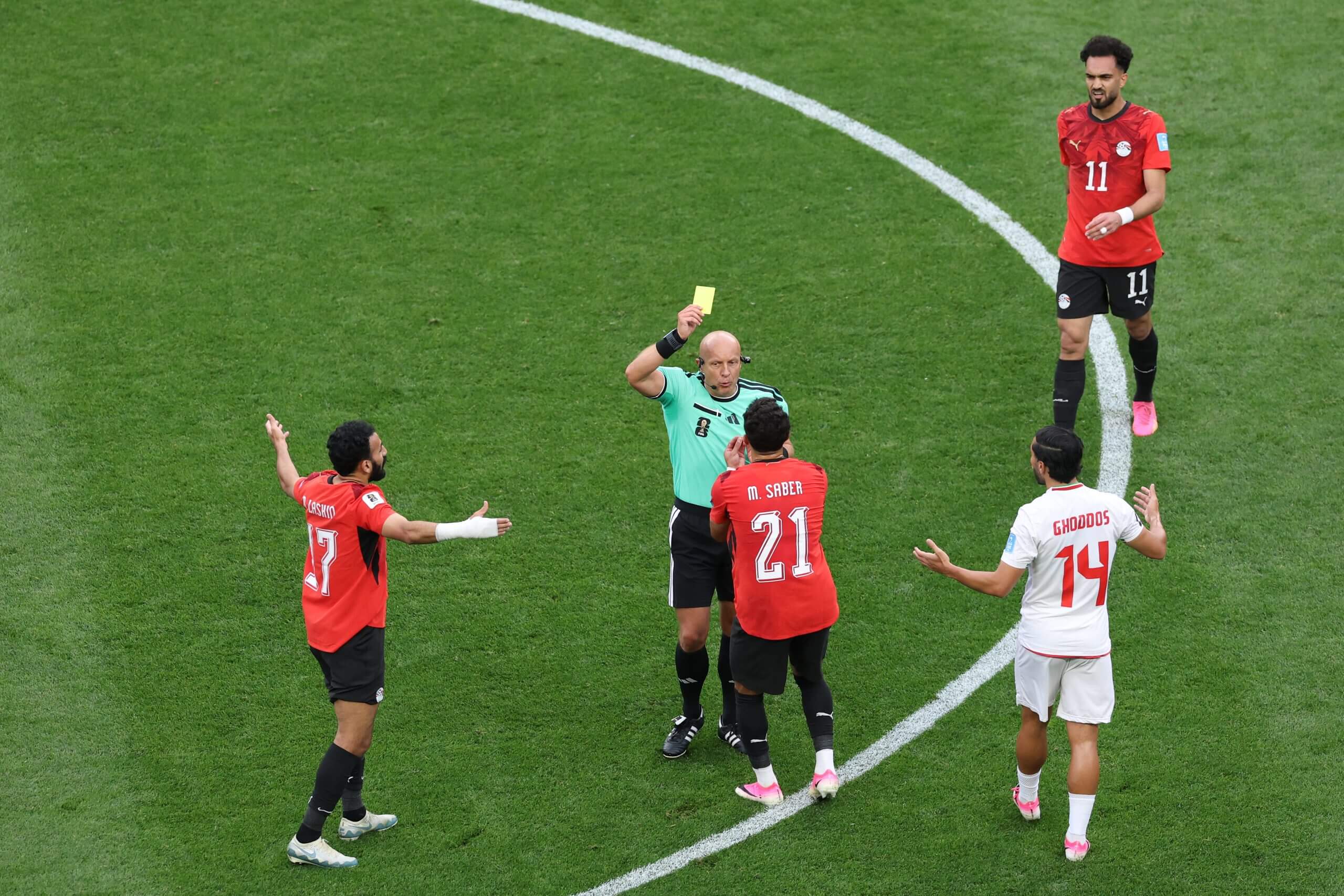
When there are four bookings in the first half for bad tackles, you know there has been a game.
Fair play to both Egypt and Iran for having a right go at each other in Seattle.
This was a fiesta of nervous energy, late tackles, forceful shoulder barges and a decent amount of quick, entertaining football.
(Stu Forster/Getty Images)
There was more on the line for Iran, of course, but Egypt suddenly look like a team that wants to leave a mark, rather than try and defend its way through a tournament and hope a bit of magic in attack makes the difference.
Their manager, Hassan, deserves credit for bringing this layer of interest. He has picked the same four attacking players in each group game but has moved them around and Egypt are less predictable as a consequence.
Iran, meanwhile, have been fearless in each of their matches. After Egypt scored early, backed by many more Egyptians in Seattle, it threatened to be very difficult for Iran, but had it not been for the goalkeeping brilliance of Mostafa Shobeir, they’d have taken control.
Simon Hughes