
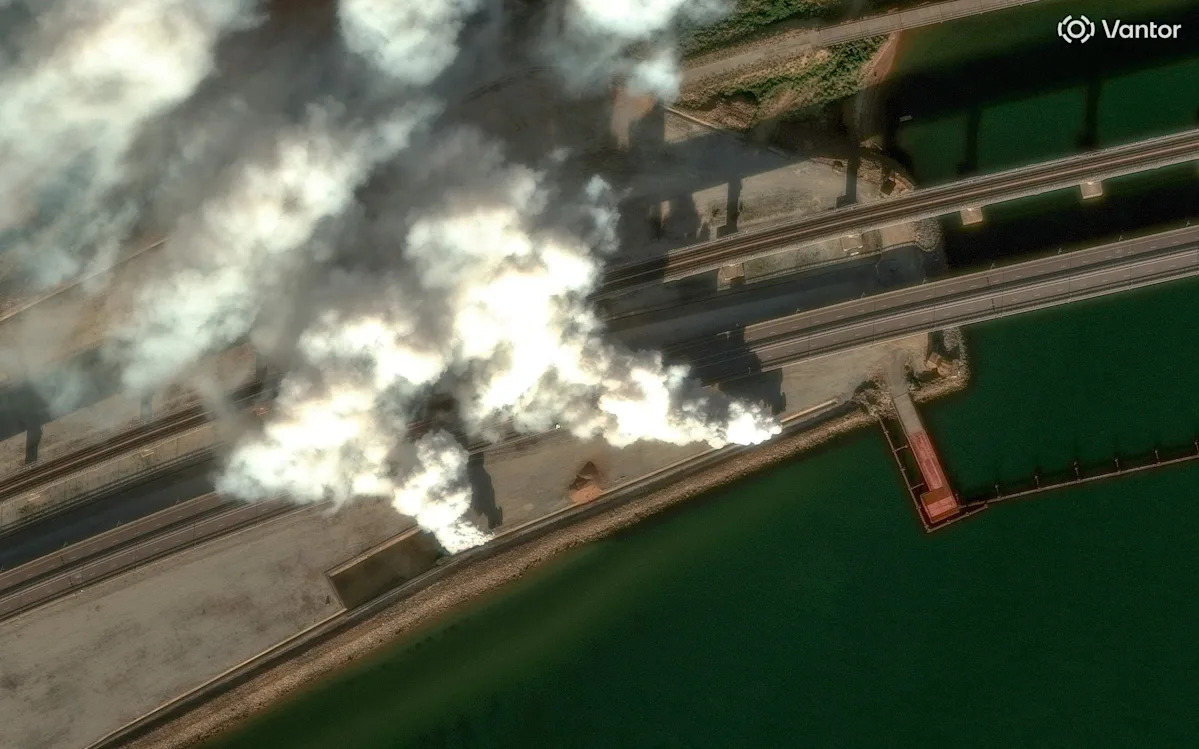
Crimea has long been the jewel in Putin’s crown and the most visible symbol of his ambition to restore Russian power after the collapse of the Soviet Union. The loss of influence over former Soviet territories and in many cases their alignment with the West has remained a persistent grievance for the former KGB officer.
Yet the campaign he launched to reverse that trend now appears increasingly unsustainable. Putin’s position looks more vulnerable than at any point since the invasion began, and the signs of decline are becoming impossible to ignore.
The pressure is no longer confined to the battlefield. In Moscow, Ukrainian drones and missiles are demonstrating an ability to strike deep inside Russia with increasing regularity, exposing weaknesses in the Kremlin’s air defences. In Crimea, meanwhile, a once thriving Black Sea holiday destination is now full of residents and tourists seeking to leave. What was presented as Russia’s greatest strategic prize is beginning to resemble a liability.
The declaration of a state of emergency in Crimea today was a significant political and military setback for Putin. For the first time, Russian authorities have publicly acknowledged the severity of the situation on the peninsula. Measures that amount to a form of martial law underline the scale of the challenge facing the Kremlin there.
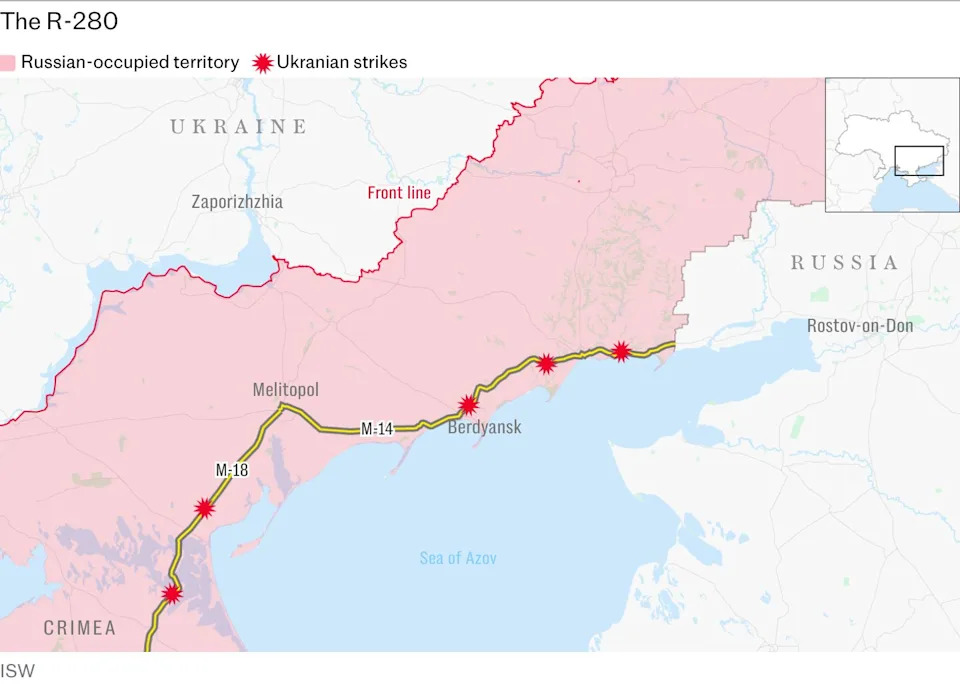
Reports of fuel shortages, power disruptions, and growing civilian concern paint a picture of a region under strain. Sevastopol, once the proud home of Russia’s Black Sea Fleet, has seen that fleet withdraw following repeated Ukrainian strikes. Long queues on routes out of Crimea suggest that many residents no longer view the peninsula as a safe place to remain. Supplies of basics such as vehicle fuel are now intermittent, due to Ukrainian drone strikes on the “land bridge” through Donetsk and Luhansk.
Crimea was once portrayed by the Kremlin as the great success story of Putin’s strategic vision. Today it risks becoming the clearest indication yet that his so-called Special Military Operation is failing. When Russia illegally annexed Crimea in 2014, Western governments responded with limited resolve. Many European nations continued reducing their military capabilities while enjoying the benefits of the post-Cold War peace dividend.
Putin was further emboldened when the UK, thanks in part to Ed Miliband, stymied UK and US plans to destroy President Assad’s chemical arsenal after he murdered 1,500 of his own people with the deadly nerve agent Sarin. Putin concluded that the West lacked both the will and the means to challenge his ambitions.
That perception was reinforced by a series of geopolitical crises in which Western deterrence appeared weak or inconsistent. By the time Russia launched its full-scale invasion of Ukraine in February 2022, Putin seemingly expected another muted response. Instead, Ukraine resisted with extraordinary determination, supported by Western military assistance that has fundamentally altered the course of the conflict.
From a military perspective, Crimea remains critical. Russian forces have relied heavily on the peninsula as a logistical hub for supplying troops operating in southern Ukraine, and the western anchor for the line of conflict.
As Ukrainian strikes have disrupted routes through occupied territory, Crimea and the Kerch bridge have become even more important as a way to supply Russia’s forces on the Dnipro. If Ukraine can continue to degrade Russia’s ability to use the peninsula as a secure base, the consequences for Russian military operations could be profound.
The strategic picture for Putin is therefore deteriorating. He appears unable to protect either Moscow or Crimea fully, two locations of immense political and symbolic importance. Western security officials have suggested that his position may now be more fragile than at any time since the Wagner mutiny. Whether that vulnerability translates into meaningful political change remains uncertain, but it undoubtedly increases pressure on the Kremlin to seek a way out of an increasingly costly conflict.
For Europe and its allies, this may represent a rare strategic opportunity. Ukraine has demonstrated remarkable innovation on the modern battlefield, combining technology, adaptability, and determination to offset Russia’s numerical advantages. The lesson for Western militaries is clear: Ukraine is not merely defending itself; it is reshaping contemporary warfare in real time.
Those concerned about who might eventually succeed Putin should remember that it is difficult to imagine a leader more committed to this war than the man who launched it. Russia has suffered staggering losses in personnel and equipment. Any future leadership will inherit a weakened military, a strained economy, and a population increasingly affected by the consequences of prolonged conflict.
The strategic environment confronting Putin’s successor is therefore likely to be very different from the one he inherited.
Crimea was once the symbol of Putin’s rise. It may yet become the symbol of his decline.