
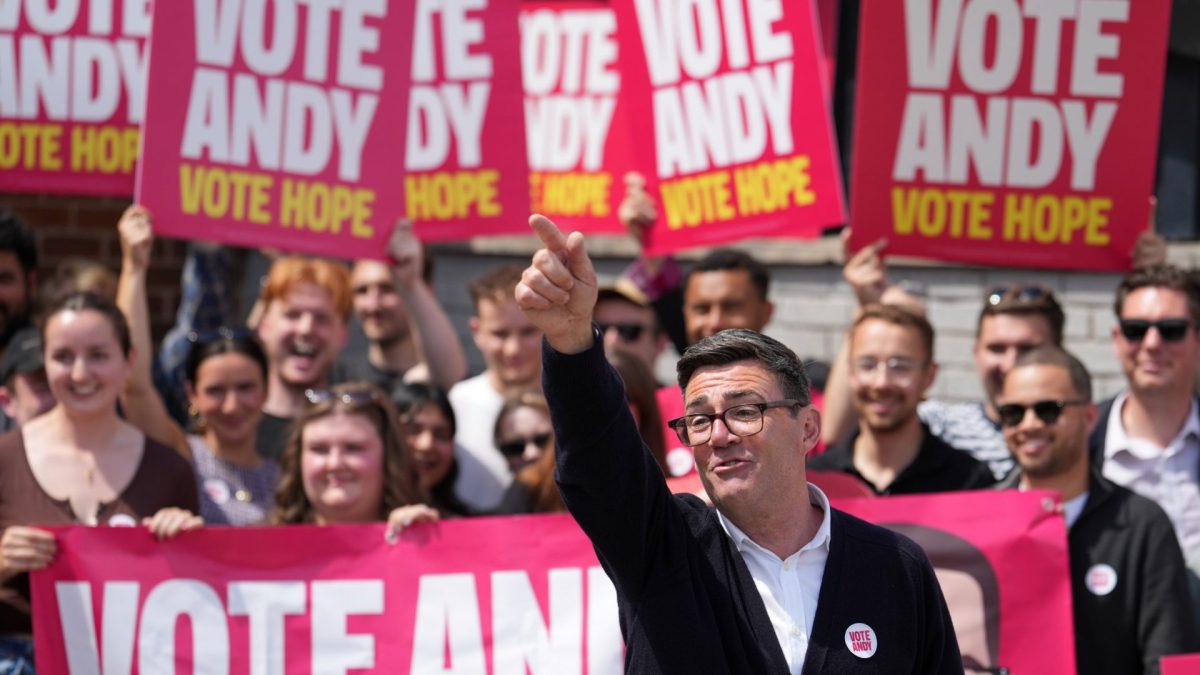
Andy Burnham is set to outline proposals to hand significant powers and money to mayors to get people back into work as a key plank of his drive to cut the ballooning benefits bill.
The likely next prime minister will deliver a major speech on the economy on Monday which will focus on transferring power out of Westminster to help “rewire” the British economy.
It will include a plan to devolve power to English regions to help tackle rising spending on welfare, two sources with knowledge of the preparations told The i Paper.
This is likely to include giving mayors the responsibility for tackling benefits dependence and helping people back into work, with regions potentially receiving central government cash based on how successful they are at delivering the plan.
Burnham presided over a similar model as Greater Manchester mayor, with the Working Well scheme helping at least 25,000 people back into work. It was built up into a comprehensive programme after an initial pilot proved successful.
The former mayor is likely to argue that the plan, while involving upfront costs, will save money quickly by reducing the amount of benefits paid out.
Burnham is likely next month to become the first prime minister to represent both Labour and its sister Co-operative Party in decades. His plan to devolve powers to tackle welfare dependency will follow calls from Co-operative councils to devolve the Government’s Work Programme to get people into employment.
The Makerfield MP is also believed to be planning to hand powers over post-16 education to mayors to boost skills and help more people into work.
Burnham’s focus on welfare comes after outgoing Prime Minister Sir Keir Starmer was forced to largely abandon plans to cut disability benefits to save money after a major rebellion by Labour MPs. This U-turn became a major angle of attack against the Government for Conservative leader Kemi Badenoch.
The total spend on working age adults claiming disability or health-related benefits is predicted to rise to £81.5bn by the early 2030s, the Office for Budget Responsibility said in March, with overall spending on welfare set to rise by £74bn over the next five years to £407bn.
The devolution plans will build on former prime minister Gordon Brown’s Commission on the future of the UK, which was produced for Starmer in 2022 and argued for a massive transfer of power away from Westminster and Whitehall to England’s regions.
The policies are also said to have been heavily influenced by Burnham’s economic advisers, former Treasury minister Lord Jim O’Neill and former Bank of England economist Andy Haldane.
As revealed by The i Paper last week, Burnham is also drawing up plans to give regional mayors the power to raise and retain their own taxes in what would be the most significant transfer of fiscal control away from Westminster in decades.
Local Government Secretary Steve Reed, who has been a staunch ally of outgoing PM Starmer, said in broadcast interviews on Sunday that Burnham planned to put “rocket boosters” under Labour’s devolution ambitions.
Henri Murison, chief executive of the Northern Powerhouse Partnership, said: “Having worked with Andy for many years I have confidence that with a strong group of economic advisors and wider No 10 operation in part based in Manchester, that he can through devolution and the deployment of public and private investment deliver ongoing reductions in the cost of out of work benefits and ill health linked to poverty.
“This will reduce the annual revenue subsidy needed from those in London and the Greater South East to pay for the costs of historic underinvestment in the North.”
Burnham’s speech is being seen as a key moment as he looks to establish credibility with voters and financial markets and comes amid fevered speculation about who he could appoint as his chancellor.
Labour deputy leader Lucy Powell, a key ally of Burnham, on Sunday said Ed Miliband would make a good chancellor, despite an unlikely alliance of some trade unionists and city traders urging against his appointment.
Elsewhere, allies of Burnham made clear that weekend calls from Louise Haigh to hike capital gains tax and rewrite the Government’s fiscal rules restricting spending were not made on behalf of the likely next PM.