
Minister for Education Jason Clare said the action was not about closing centres, but about lifting standards.
“This action puts those centres on notice that they need to put the safety of our children first,” Clare said in a statement.
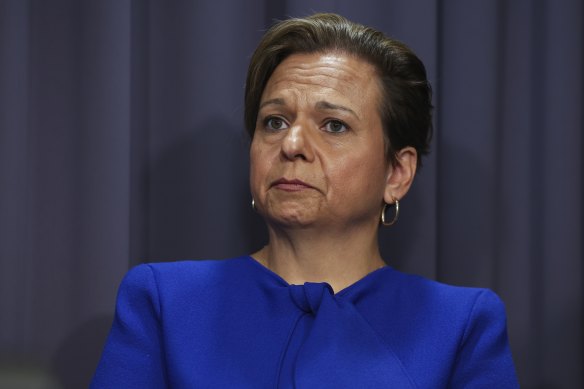
Attorney-General Michelle Rowland.Credit: Alex Ellinghausen
Separately, the attorneys-general agreed on Friday to create a “banned in one, banned in all” system to stop people who had harmed children from moving between jurisdictions to keep accessing vulnerable people.
Attorney-General Michelle Rowland led the meeting of the nation’s top law officers – the first session since the election – and said they had agreed to create a system to allow regulators and employers to check workers’ status in near-real time, if the states “plug in” to it.
“We are not looking at a scheme to make every single state exactly the same,” she said. “We are not looking to redo individual state systems, we are looking for consistency.”
The Australian Criminal Intelligence Commission was already working on a pilot, Rowland said, and different levels of government would work out costs and IT requirements to implement a full version.
Shadow attorney-general Julian Leeser was supportive of the changes, but said the discussion needed to continue, including whether being convicted of a crime was too low a bar for a check to be rejected.
“All of this is the start of the reform that needs to occur, not the end,” he said.
Opposition education spokesperson Jonathon Duniam also said the government needed to go further and establish both a national Working With Children Check alongside a register of childcare workers. Otherwise, Duniam said, “people will slip through the cracks”.
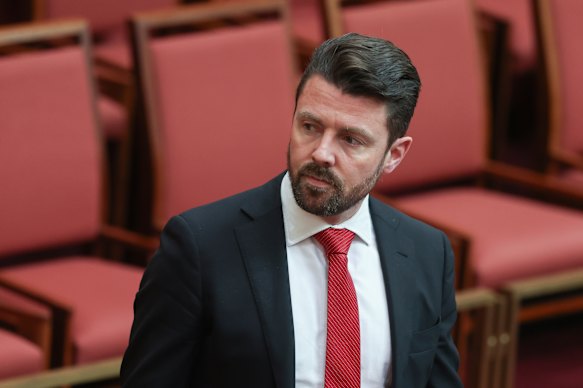
Jonathon Duniam said the Coalition would stand with Labor to deliver stronger reform.Credit: Alex Ellinghausen
The Greens said in a statement on Friday that the party would move to establish a Senate inquiry into the childcare regulatory system when parliament returned at the end of the month.
Education ministers will meet next Friday to discuss further measures to strengthen safety in child care, including accelerating work on a national register of workers, the role of CCTV and mandatory child safety training.
The 2015 Royal Commission into Institutional Responses to Child Sexual Abuse recommended a national system for people working with children, but successive governments have failed to act.
Cases of sustained sexual abuse have repeatedly been exposed while reform has stalled, and Rowland conceded that more work needed to be done because greater communication between systems would not necessarily have prevented some of the most serious recent cases.
Brown was fired from multiple centres before his arrest, while David James, a Sydney childcare worker accused of abusing 10 children, continued to work after his behaviour was reported to police and the regulator last year.
Rowland said the attorneys-general had also agreed to stronger information sharing to capture and share criminal histories in near-real time, to strengthen criteria when assessing who can get a Working With Children Check, and that no jurisdiction would need to lower its safety standards to meet other parts of the country.
“These are complex reforms, and they won’t be delivered overnight, but they do demonstrate the commitment of the Albanese government and our state and territory counterparts to keep our children safe.”
Cut through the noise of federal politics with news, views and expert analysis. Subscribers can sign up to our weekly Inside Politics newsletter.