
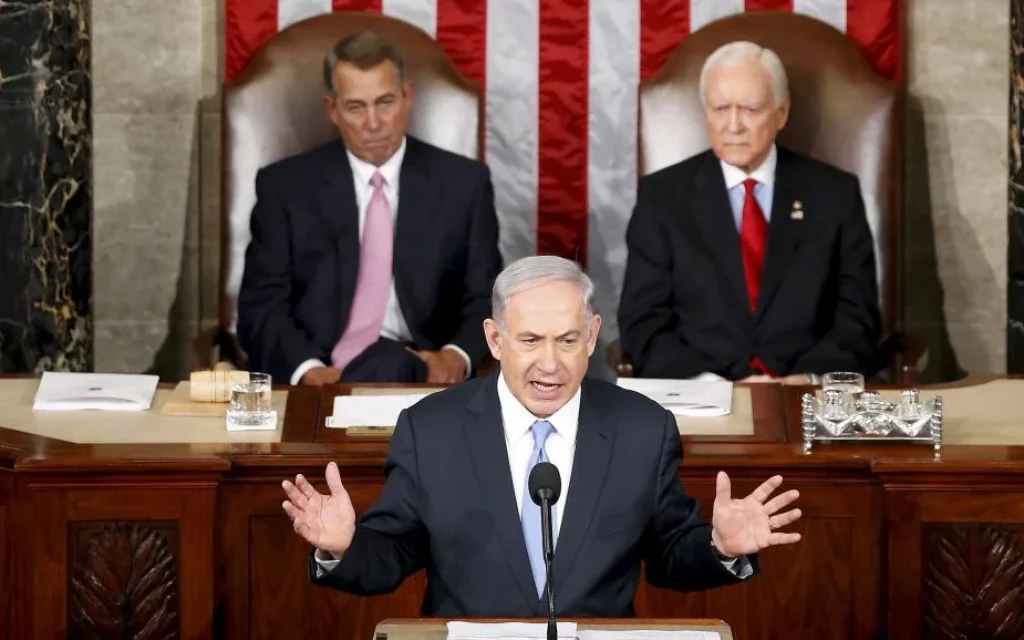
For years, the conventional wisdom within the halls of power in Jerusalem has been that the traditional bipartisan support for Israel in Washington was a relic of the past, unnecessary in an era where evangelical support and a singular focus on Republican patronage could guarantee American backing. Under Benjamin Netanyahu’s long tenure, this strategy—which essentially transformed Israel into a wedge issue in American domestic politics—was marketed as a masterstroke of geopolitical positioning.
Today, we are witnessing the catastrophic collapse of that gamble.
The recent Memorandum of Understanding (MOU) regarding Iran serves as a brutal indictment of a policy that substituted long-term strategic depth for short-term political convenience. By tethering Israel’s national security to the whims of a single, mercurial leader and ignoring the sensibilities of the Democratic Party, Netanyahu has not only alienated Israel’s traditional allies but has also left the country structurally vulnerable at the very moment it faces existential threats.
The Failure of the “Single-Leader” Doctrine
Netanyahu’s strategy reached its zenith—and its inevitable breaking point—during his reliance on Donald Trump. The transactional nature of this relationship created the illusion of strength. The relocation of the embassy to Jerusalem and the Abraham Accords were touted as evidence that Israel could bypass the need for broad-based consensus in Washington.
However, the reality of the post-Trump landscape is far more sober. The new Iran MOU is a strategic disaster that exposes the profound limitations of this “Trump-first” approach. It ignores Iran’s ballistic missile program, provides a windfall of sanctions relief, and, perhaps most damningly, creates a formal linkage that limits Israel’s freedom of action against Hezbollah in Lebanon. We have been sidelined in the very negotiations that define our regional security architecture. The irony is inescapable: by chasing the patronage of an unpredictable Republican executive, we have left ourselves without a seat at the table when the most critical security deals of the decade are being struck.
The Alienation of the Democratic Mainstream
The damage to our relationship with the Democratic Party goes deeper than mere policy disagreements. It is rooted in a fundamental disconnect between the current Israeli government’s trajectory and the core values of mainstream American liberalism.
When a government explicitly repudiates the two-state solution, ignores the humanitarian crisis in the Palestinian territories, and refuses to outline a credible political horizon, it inevitably alienates the very coalition that historically served as a critical pillar of support for Israel. This is not about the fringe left or the “Squad”; this is about losing the heart of the American Democratic establishment—the moderate, centrist wing that has, for decades, been the bedrock of the US-Israel alliance.
By turning Israel into a polarizing figure in American political discourse, we have fueled the very trends that are now making it difficult for friends of Israel to defend us on Capitol Hill. We are rapidly losing the ability to speak the language of human rights, democracy, and diplomatic pragmatism—concepts that resonate deeply with the American public.
A New Strategic Imperative: The Path Forward
The path to restoring Israel’s strategic standing is clear, albeit politically painful. We must reject the short-sighted comfort of partisan silos and return to a policy of robust bipartisanship. This requires a paradigm shift that only a new government can deliver.
To rebuild our alliances, Israel must offer a credible, forward-looking diplomatic vision. We can no longer afford to “kick the can down the road” while the settler movement steers the state toward a permanent, corrosive occupation. A commitment to the two-state solution—or at least an alternative that preserves Israel as a democratic and Jewish state—is no longer merely a diplomatic preference; it is a fundamental security imperative.
Without this vision, we remain locked in a cycle of international isolation that limits our sovereign ability to defend our borders. The settler-driven trajectory, which currently defines our policy, is effectively a surrender of our strategic autonomy.
The upcoming elections in Israel are not merely a contest for domestic policy; they are a referendum on our international survival. The next prime minister must treat the restoration of the US-Israel alliance as a top-tier national security priority. This will require the courage to face down internal political pressures and the wisdom to understand that Israel’s greatest strength has always been its alignment with the democratic values of the West.
We are at a crossroads. We can continue down the path of partisan isolation, tied to the fleeting whims of single-party politics, and watch as our strategic environment becomes increasingly hostile. Or, we can choose to re-engage with our partners, articulate a vision for a secure, democratic future, and rebuild the bipartisan consensus that has, for generations, been the primary guarantor of our security. The time for the latter is not tomorrow; it is now.
Investigative journalist specializing in global antisemitism and Jewish world affairs. My work focuses on the intersection of Israeli domestic policy, international diplomacy, and the safety of Diaspora communities.