
Israel and the Meaning of Apartheid
The word apartheid is often used in political debate, but it is important to understand what it actually means before applying it to any country. Apartheid does not come from Dutch as a synonym for unique or special. It comes from Afrikaans and means separation or apartness. Historically, it refers to the system of institutionalized racial segregation and discrimination that existed in South Africa, where laws were designed to privilege one racial group over another in almost every area of life.
Because of this strong historical meaning, using the word apartheid in other contexts should be done with great care and precision. If the term is used loosely, it risks losing its meaning and creating more confusion than understanding.
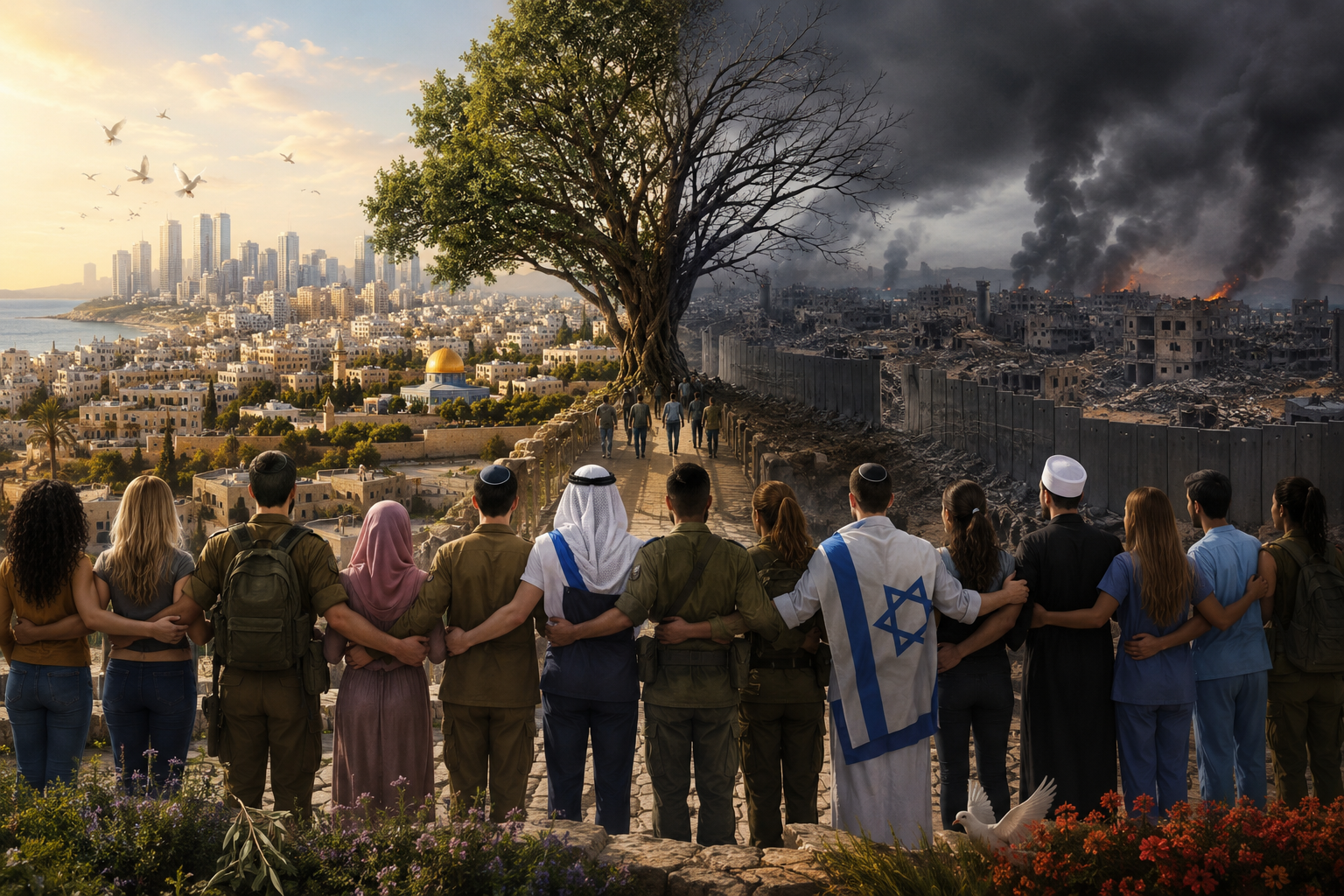
Israel is a complex country with many layers of society, culture, religion, and politics. It is indeed a place of diversity. People from different cultural backgrounds live there, including Jewish communities from Europe, the Middle East, Africa, and Asia, as well as Arab citizens, Christians, Druze, and others. This diversity is visible in daily life, in food, music, languages, and public spaces. It is not unusual to hear Hebrew and Arabic in the same street, and English is widely used as well. This multilingual environment reflects a society that is globally connected and internally diverse.
Israeli society also includes a wide range of religious practice. Judaism, Islam, Christianity, and other faiths are present and practiced in different forms. In cities like Haifa, coexistence between communities is often highlighted as a model of shared living, even if tensions do exist in other areas. The workforce also reflects this diversity, with citizens from different backgrounds working together in hospitals, shops, technology companies, and public services.
Women in Israel participate broadly in public life, including compulsory military service for many Jewish women, which is relatively uncommon globally. In politics, education, and business, women hold positions of influence. These aspects contribute to the perception of Israel as a highly modern and socially diverse society.
However, acknowledging diversity does not automatically resolve the political and human rights debates surrounding the Israeli Palestinian conflict. The term apartheid is used by some critics to describe certain policies related to the occupied territories and the differing legal systems that apply in different areas. Supporters of this view argue that separate systems of law, movement restrictions, and unequal access to resources create conditions similar to separation based on group identity. Others strongly reject this comparison, arguing that the situation is rooted in security concerns, ongoing conflict, and complex historical developments rather than a formal system of racial classification like South Africa once had.
It is also important to separate symbolism from legal definitions. International law defines apartheid as inhumane acts committed in the context of an institutionalized regime of systematic oppression and domination by one racial group over another. Whether or not a situation meets this definition is a matter of intense legal and political debate among scholars, governments, and international organizations.
At the same time, it is incorrect to assume that criticism of policies affecting Palestinians automatically means that the international community views Jewish life as less valuable. The United Nations, human rights organizations, and governments often apply scrutiny to many conflict zones around the world, not only Israel. These discussions are frequently controversial, but they are part of broader global debates about human rights, occupation, security, and state responsibility.
There are also separate discussions about international aid structures, refugee definitions, and long standing political frameworks, including organizations that operate in Palestinian territories. These systems are often debated, reformed, or criticized from multiple sides, reflecting the complexity of managing long term humanitarian situations in conflict regions.
What becomes clear is that the situation cannot be reduced to a single word without losing important context. Israel is not only a state in conflict, but also a diverse society with internal complexity, cultural richness, and democratic institutions. At the same time, there are real political disputes and lived experiences of inequality and tension that deserve serious attention and cannot be dismissed.
Meaningful discussion requires precision in language and willingness to recognize complexity on all sides. Labels that carry heavy historical meaning should be used carefully, and arguments should be grounded in accurate definitions rather than symbolic comparisons alone.
In the end, understanding this issue requires moving beyond slogans and toward a deeper examination of history, law, and human experience. Only then can the conversation become constructive rather than divisive, and only then can real progress toward peace and dignity for all people be meaningfully discussed.
CEO of Time to Stand Up for Israel, a nonprofit organization with a powerful mission: to support Israel and amplify its voice around the world. With over 200,000 followers across various social media platforms, our community is united by a shared love for Israel and a deep commitment to her future.
My journey as an advocate for Israel began early. When I was 11 years old, my father was deployed to the Middle East through his work with UNTSO. I had the unique experience of living in both Syria and Israel, and from a young age, I witnessed firsthand the contrast in cultures and realities. That experience shaped me profoundly.
Returning to the Netherlands, I quickly became aware of the growing wave of anti-Israel sentiment — and I knew I had to speak out. Ever since, I’ve been a fierce and unapologetic supporter of Israel. I’m not religious, but my belief is clear and unwavering: Israel has the right to exist, and Israel has the duty to defend herself.
My passion is rooted in truth, love, and justice. I’m a true Zionist at heart.
From my first breath to my last, I will stand up for Israel.