
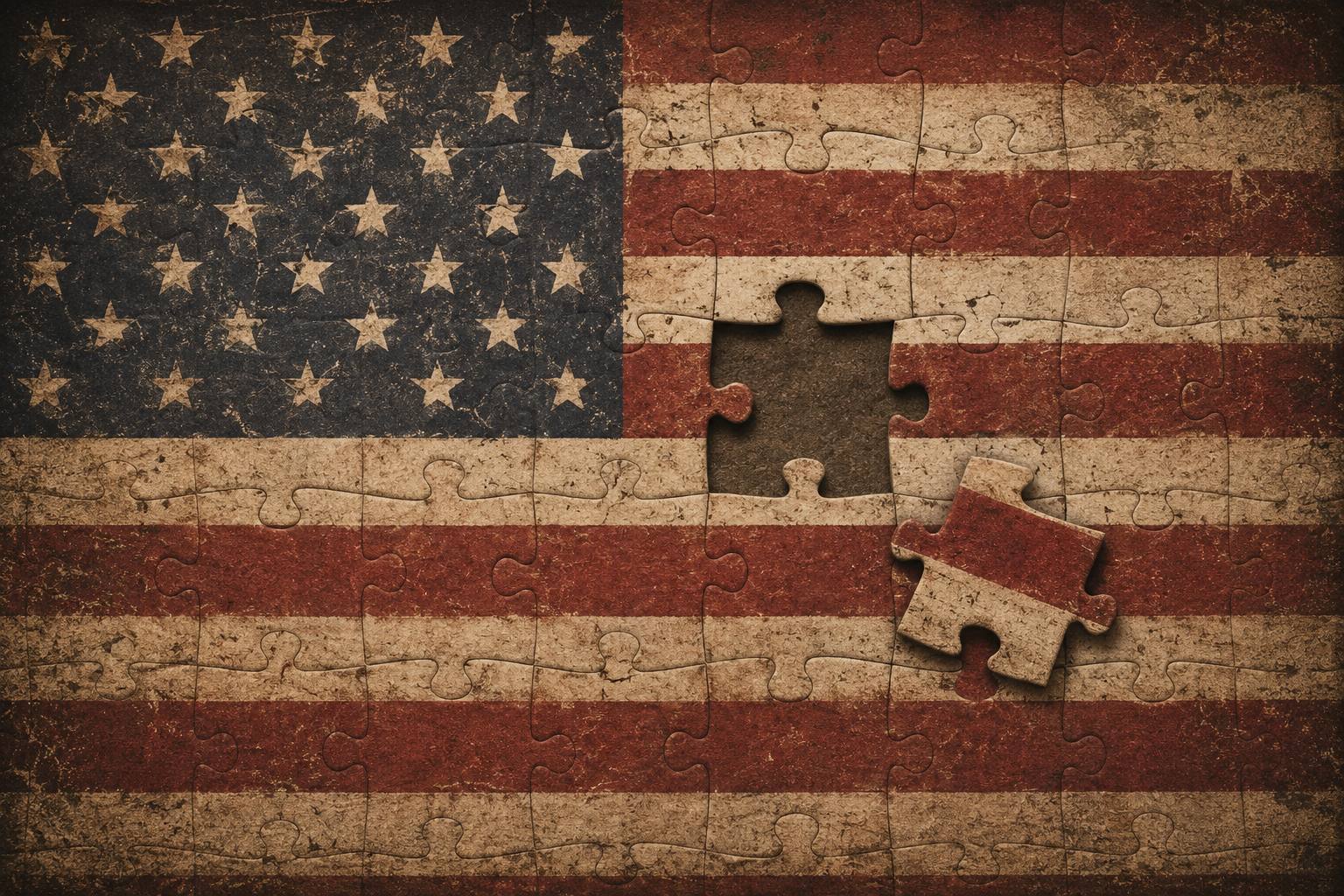
On the eve of America’s 250th birthday, patriotism is on my mind – thinking how to observe this milestone for our country while also examining my expression of national pride.
As a political liberal I frequently analyze the most common patriotic displays as potentially dangerously simplistic. At sporting events or the rare political rallies I attend, I often find myself in tension between support for my team or the cause at hand and discomfort with mob mentality and mass formation – aware of how the latter is a critical component down the slippery slope toward totalitarianism. It may sound extreme or overblown, but my thought progression remains. It is also not lost on me how my Jewish identity and our history informs this acuity.
Simply put, the basic demonstrations of national pride have never felt satisfactory. Flag waving and the like leaves too much space for interpretation. What does my doing so symbolize? What am I signaling that I support? Does it hint at certain complicities?
My patriotism is too complex to fit on a protest placard and too aspirational to be reduced to only a flag. Only when such expressions are simultaneously balanced with honest, constructive critique have I felt I could stomach them.
With such an approach, it is understandable – but not justified – why I and my fellow liberals are accused of hating America. Or why my organization J Street, a group that prides itself on nuance, is tagged on the far-right as not pro-Israel. In both applications the conduct can be similarly misperceived.
But when faced with such falsehoods, I’m reminded of a few sources of wisdom.
American abolitionist Frederick Douglass in an 1846 letter wrote:
“[T]he best friend of a nation is he who the most faithfully rebukes her for her sins—and he her worst enemy who, under the specious and popular garb of patriotism seeks to excuse, palliate, and defend them.”
Yes, I have high expectations for America that are unlikely to be met in my lifetime. Is that unfair? Maybe. But a nation does not need to be coddled. It can endure tough love and will ultimately be fortified by it. A citizenry with no appetite to deliver or receive self-criticism, as bitter as it may taste at times, will eventually find its country hollowed out and brittle.
Famed Israeli author Amos Oz, z”l, when receiving an award in 2015 for outstanding contributions to Israeli society, was quoted as saying: “I love Israel even at moments when I cannot stand it.”
This feels like a relatable sentiment for many about their own countries when they are displeased by the directions being taken. Indeed it would often be easier to walk away in abandon over disagreement. Like any connection, it takes a deep, mature love to stay in relationship and try to fix it.
When it comes to Israel specifically, there is vibrant political debate within the country. For Diaspora Jews, we have been told by communal leadership and Israeli thought leaders that we have a stake in the country’s well-being. And yet the organized Jewish community has applied a very narrow definition of acceptable involvement and critique from those outside Israel’s borders. Perhaps those like J Street receive harsher rebuke because our critiques are not toothless. We don’t file it and sit on our hands. We ask ourselves what our role is as American Jews and what we can do about it.
And then there is David Grossman, an award-winning Israeli writer who, in a 2016 interview with Moment Magazine, said:
“I am loyal to the idea of Israel. I am loyal to the way of life in Israel. . . . I am loyal to the miracle that enabled us to have a state three years after the Shoah. I am not going to prove this, though, and I do not have to prove it.”
Grossman’s dedication and defiance are admirable. We do not need litmus tests to determine which patriotic expressions are legitimate, nor should we rely on self-appointed arbiters to validate our love of country.
In the United States and Israel, both countries’ founding leaders left office acknowledging that their nations were works in progress and far from perfect.
In his farewell address, George Washington referred to America as “the experiment,” frequently acknowledged the likelihood of mistakes made, and reinforced the process of responsible constitutional amendments.
David Ben-Gurion, in his last remarks before the Knesset, admitted “We cannot boast that the people in Israel now is an exceptional people. . . . [O]ur structure of government is still far from enlightened and requires many improvements.”
It is impossible to proffer that either man was not critical or that they did not love their countries. Such approaches remain strong among many today. So let us not disparage those whose patriotism informs them that the long-term success of their country is not a foregone conclusion and to lead with critique. For we are still patriots.
With that said, Happy 250th, America.
Sam Berkman is the Senior National Director of Communal Relations at J Street. He joined J Street in 2011, serving most recently as Midwest Regional Director and previously as Assistant Director of Government Affairs. Prior to J Street, Sam gained experience with both the Assistant Majority Leader of the US Senate and the Senate Committee on Appropriations. He also served as a Team Leader in the AmeriCorps National Civilian Community Corps in 2010. Sam holds a Master of Public Administration degree from The George Washington University and a bachelor’s degree in writing and sociology from Northland College.