
One year ago, the Toronto Maple Leafs made three minor transactions on the first day of free agency.
On July 1, 2025, the Leafs signed Michael Pezzetta and Bo Groulx and acquired Nicolas Roy in the Mitch Marner sign-and-trade. That was it for then-GM Brad Treliving’s front office.
John Chayka, needless to say, has gone about things a bit differently. His first Canada Day as Leafs GM was all fireworks — one after another in a light show that radically remade the roster.
Who are the top five NHL players to hit free agency?
All that on top of other seismic to moderately seismic activity, including the acquisitions of Darren Raddysh and Gavin McKenna, trades of Joseph Woll, Brandon Carlo, Simon Benoit and Nick Robertson, and the cutting of ties with Matias Maccelli.
Never mind the hiring of Jim Hiller as head coach.
Leafs’ roster changes
InOut
Emil Andrae
Simon Benoit
Teddy Blueger
Brandon Carlo
Sergei Bobrovsky
Dennis Hildeby
Brandon Duhaime
Calle Järnkrok
Zack MacEwen
Matias Maccelli
Gavin McKenna
Nick Robertson
Nick Paul
Joseph Woll
Darren Raddysh
Jack Roslovic
Colton Sissons
These aren’t the same Leafs. But are they better?
Forward
The change here is significant.
Chayka added five new players to the mix — four free agents and one trade acquisition — in Nick Paul, Jack Roslovic, Colton Sissons, Teddy Blueger and Brandon Duhaime. (Plus one likely depth fill-in in Zack MacEwen.)
And then of course, there’s McKenna, the first pick at the draft.
The Leafs needed more speed, tenacity and defensive know-how, as well as an infusion of skill, and they’ve got it in this group to some degree.
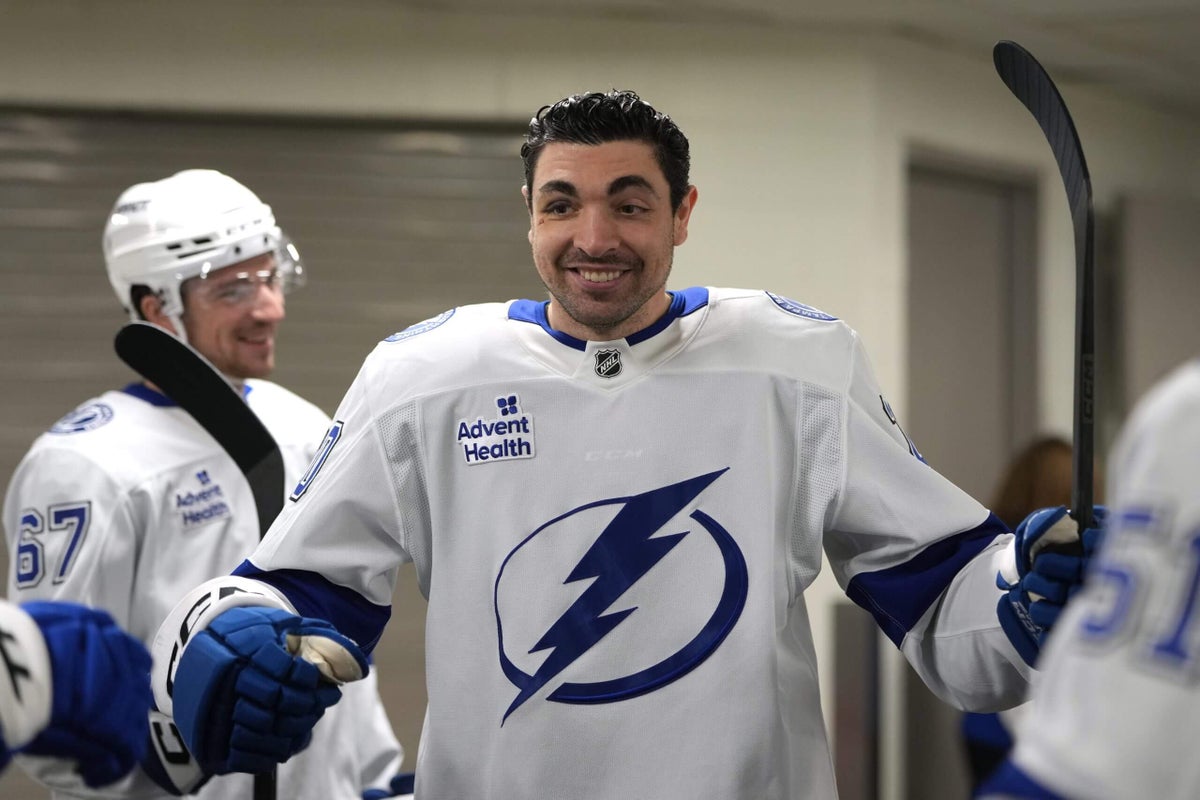
Maybe the most interesting name in the bunch (not including McKenna) is Paul, a longtime big (6-foot-4, 234 pounds) and useful role player for the Lightning, including on the team that lost in the Stanley Cup final in 2022. He struggled this past season, though, bouncing around Tampa’s lineup while registering only seven goals and 15 points in 51 games following surgery in September for an undisclosed injury that kept him out until late November.
Paul played less for Jon Cooper — dropping from 16-17 minutes a night to 13 and change last season. His opportunity fell even further in the playoffs. Logging only 11 minutes a game, he failed to record a point. All this after consecutive seasons of more than 20 goals and 40 points.
The Leafs are obviously betting on a bounce-back from the 31-year-old. If they get it, Paul will deliver real value (plus some edge and experience) on a contract that comes with a cap hit of only $3.15 million for this season and two more after it.
Paul played a lot of left wing for the Lightning. But interestingly, according to Chayka, the Leafs view him as at least one answer, among the many they looked at, to their in-need-of-repairs centre depth.
“It’s one of those positions where you never want to be caught in a position where you don’t have enough,” Chayka said. “Nick was a guy that, candidly, we weren’t sure was available.”
Like Auston Matthews and John Tavares, Paul is excellent in the faceoff circle. And while it’s always a little worrisome trading with a sharp team like the Lightning, exchanging a No. 3 goalie for a middle-six forward of some kind, on a solid contract, feels like a good exchange for the Leafs.
It was evident from the flurry moves that Chayka and his team were hungry to add as many centres as possible — or viable options at centre, anyhow. Blueger should fill one such hole in addition, potentially, to Paul, who also figures to see some time in the top six.
The 31-year-old Blueger isn’t big, but he plays with pace and tenacity and he’s the kind of centre Hiller can bury in the defensive zone and reasonably hope to come out alive. Hiller could even pair him with Dakota Joshua, who played his best hockey in the NHL next to Blueger in Vancouver.

Colton Sissons brings a worker-bee quality to the Leafs’ bottom six. (Stephen R. Sylvanie / Imagn Images)
Sissons is another option for Hiller in the middle, and another worker bee for the bottom six. He’s just the kind of right-handed ace in the faceoff circle (almost 57 percent last season) the Leafs have lacked since Jason Spezza retired.
That’ll be helpful on the penalty kill where he and Blueger, as well as Duhaime, figure to play prominent roles.
As with just about every bottom-sixer signed on July 1, Sissons got a good chunk of change on his two-year deal. His $4.25 million cap hit is fifth-highest among Leafs forwards next season.
“They’ve taken some hard minutes, some hard matchup minutes, and done pretty well in those,” Chayka said of Blueger and Sissons. “As much as it’s about them, and it is, it’s also about the top of our lineup where we can get them deployed in a way that allows them to be at their best as well.”
In other words, having the two of them, and Paul too, means the Leafs no longer have to count on Matthews and Tavares for quite so many defensive-zone faceoffs against top competition. That should, in theory, open up more feast-worthy offensive situations for both. With that said, is a 3-4 of Paul and Blueger, or Blueger and Sissons, that much of an improvement on Scott Laughton and Roy, who were dealt at the deadline?
The Leafs were unable, as of yet anyway, to procure an upgrade on Tavares in the second-line centre spot, with one potential trade option in Vincent Trocheck being dealt to the Utah Mammoth on Wednesday.
What that means, potentially, is another season of demanding work in the middle for Tavares at age 36. Unless, of course, the Leafs want to try others in that spot and push Tavares over to the wing.
Chayka did note that Roslovic, whom he described as a “Swiss Army knife,” has “actually performed quite well there” at centre, “especially as his game has matured over the years.”
Second-line centre, though, feels like a stretch.
Roslovic was a linemate of Matthews — along with Matthew Tkachuk — with the U.S. National Development Team Program way back when. He could be an option for Matthews’ right wing once again with the Leafs. Would he be a real upgrade on what the Leafs had there last season, from Maccelli to Max Domi to Bobby McMann? Not exactly. Maccelli, with 31 points, even outscored Roslovic (28) at five-on-five in about 100 fewer minutes.
A theoretical line of McKenna, Matthews and Roslovic is probably untenable defensively, even with Matthews’ defensive superpowers. Domi-like defensive limitations could make a lasting gig next to Matthews, who will draw opposing top lines regardless of deployment, less than likely for the 29-year-old. Teaming him up with Tavares could pose similar problems.
That said, Roslovic has scored 20-plus goals in each of the last two seasons. He should make up for all the goals that disappeared when McMann was shipped to Seattle at the deadline.
Roslovic’s lacklustre playoff resume (three goals in 51 games) is somewhat concerning. And he scored only a little less money (two years, $8 million) than what a superior player, Viktor Arvidsson, drew from Detroit (two years, $10 million).
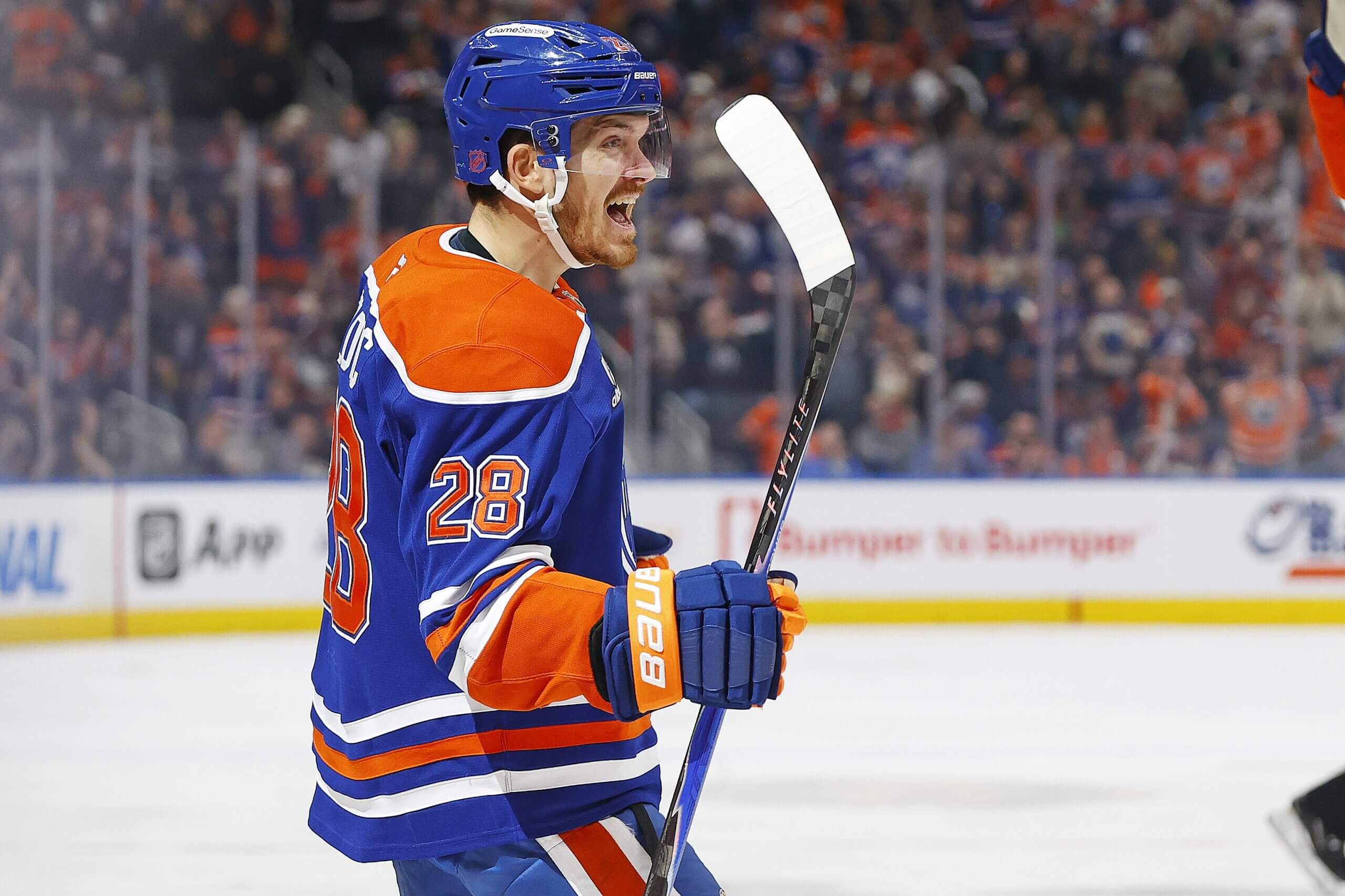
Jack Roslovic brings some scoring punch to the Leafs. (Perry Nelson / Imagn Images)
It’s notable that the Leafs sought another right shot for their offence, an element that disappeared on Matthews’ flank when Marner went to Vegas last summer. Matthews played almost exclusively with fellow lefties last season save for the odd run with Nylander.
“We really felt like the over-index to lefties was a problem,” Chayka said.
With the exception of Roslovic, the Leafs spent most of their forward money on speedy, tenacious defensive play, including a three-year deal ($2.6 million cap hit) for the uber-physical Duhaime. The worst defensive team in the league last season needed better defenders in its forward ranks.
The group as a whole feels more versatile, too, but still heavily dependent on Matthews and Nylander to create offence. One more significant forward add would have helped that. The Leafs will need continued growth from Matthew Knies, assuming he’s sticking around now, and Easton Cowan. And then there’s obviously McKenna, who might just be a game-breaker right away at 18 — or, at the very least, the occasional game-breaker.
Defence
Losing out on the opportunity to land Zach Werenski, now definitively(?) off the trade market, is obviously a blow. Nonetheless, this looks to be a better, more modern bunch than the Leafs had last season, with Chayka swapping the size Treliving favoured in the name of more mobility and puck-moving prowess.
The addition of Raddysh is a significant part in that. He should bring more oomph to the Leafs’ attack, a huge shot and an ability, according to Chayka, to hold his own defensively against dangerous competition. There will be a ton of pressure on him, though, and it remains to be seen how he acquits himself outside the Tampa bubble. Being a hometown talent can help or hurt.
What happens now with Morgan Rielly? He hasn’t been traded (yet) and it’s looking possible he ends up returning after all next season. Do the Leafs give him another go with Chris Tanev?
Tanev has almost been forgotten after last season’s injury nightmare, which makes him almost like an addition to next year’s team. A critical addition, potentially, if he can a) stay healthy, and b) rediscover even some of the form that made him so effective two seasons ago.

Emil Andrae will join the Leafs’ blue line next season. (Bruce Bennett / Getty Images)
Emil Andrae, who still needs a new contract as an RFA, is an intriguing piece. That he has experience playing the right side as a lefty means more optionality for Hiller. Does the Leafs coach play Rielly with Andrae opposite lighter fare on the third pair and use Oliver Ekman-Larsson next to Tanev instead? Or, does Tanev reconnect with Jake McCabe?
Re-signing Troy Stecher, meanwhile, pushes Philippe Myers down the depth chart and maybe out of the NHL.
Chayka could still choose to pursue another upgrade, but that would almost certainly require someone else going out. One thing to keep in mind: This is still an old and potentially creaky bunch. Everyone but Andrae is 30 or older.
Goalie
Whether the Leafs are better in goal depends entirely on whether Chayka’s significant bet on Sergei Bobrovsky pays off.
It’s not hard to see how it goes right. It’s also not hard to see how it goes wrong.
Chayka was effusive in his praise of the Leafs’ new No. 1.
“Sergei’s a real game-changer for us in terms of the stability, the consistency, the durability,” the Leafs GM said. “Obviously the resume speaks for itself.”
Chayka went even further, boldly suggesting Bobrovsky could end up “being the best in that position of all time.”
That’s definitely not happening. (See: Dominik Hasek, Patrick Roy, Martin Brodeur, Ken Dryden, Terry Sawchuk, Jacques Plante, etc.) Bobrovsky has, on the other hand, been among the top goalies of his generation. Can he still be that guy?
Chayka called him “the right player at the right time” for a “team that’s looking to break through” and pointed to Bobrovsky’s lengthy track record, work habits and fitness as reasons he believed in the goaltender’s ability to bounce back at age 38 from the worst season of his career.
He also, again boldly, said that if the Leafs were going into a Game 7, “is there another goalie in the world that we’d want in net for us? And the answer would be no, we’d prefer to have Sergei Bobrovsky, and that was a big part of it.”
With the Leafs’ track record in Game 7, fair enough.
In the end, the Leafs swapped out Woll and Dennis Hildeby for Bobrovsky. They will pair him with incumbent and now-former starter Anthony Stolarz, who begins the four-year extension he signed last fall next season.
Like his new (and old) creasemate, Stolarz is looking for a bounce-back of his own after a troublesome, injury-plagued year.
So, is this team actually better than it was?
I think the answer is probably, though not definitively, yes. The answer mostly depends on whether McKenna, Raddysh and Bobrovsky will be major difference-makers, whether Matthews can regain his Hart Trophy form, whether an aging defence holds up and whether Hiller really can turn things around from behind the bench.
The Leafs are quicker, more tenacious and malleable, and better defensively up front, but moving from Maccelli, Roy, Laughton, McMann and Robertson to Paul, Roslovic, Sissons, Blueger and Duhaime doesn’t scream huge upgrade.
It’s worth noting that Chayka’s additions have all been relatively short-term commitments (with the exception of Raddysh), so the Leafs are positioned to pivot if need be in the not-so-distant future.
Still, this is a lot of change to make at once — all of it on top of that major change behind the bench.
A new era begins now.
—Stats and research courtesy of Natural Stat Trick, Hockey Reference, Puck Pedia, and Evolving Hockey