
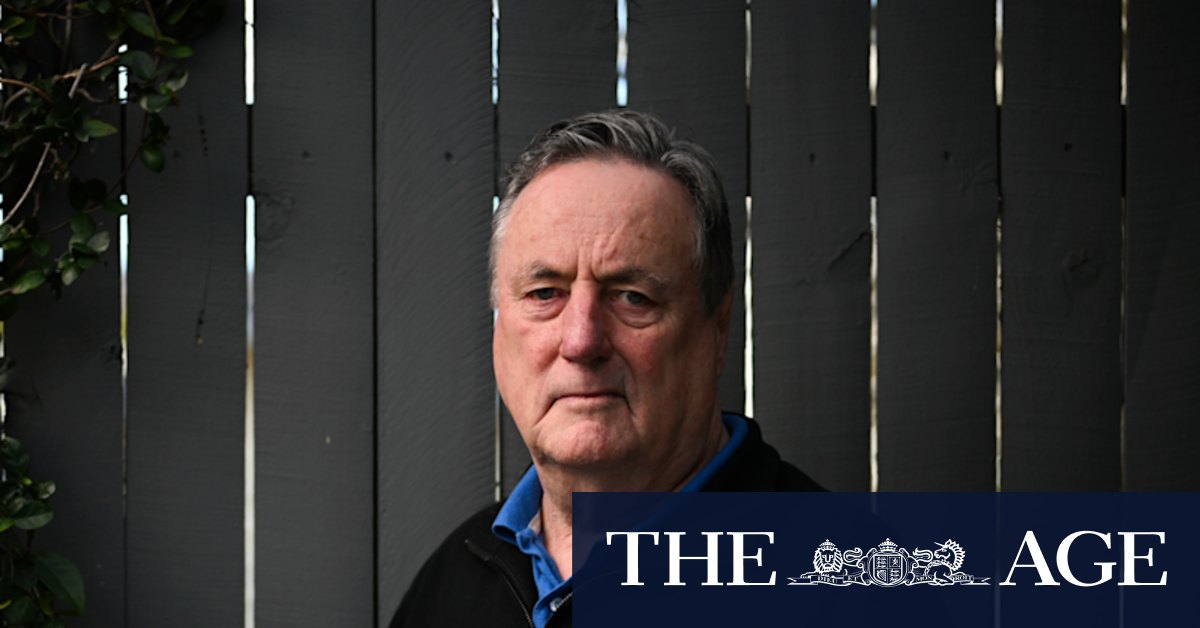
Jabbour, who later faced and was cleared of criminal charges linked to the saga, told this masthead the internal investigation that the AFP wants to keep secret, and a companion investigation by the former police anti-corruption commission, had been a “perfect storm” for his career.
Both Keelty and Jabbour have rejected recent attempts by AFP lawyers to conscript them to the police side of the argument.
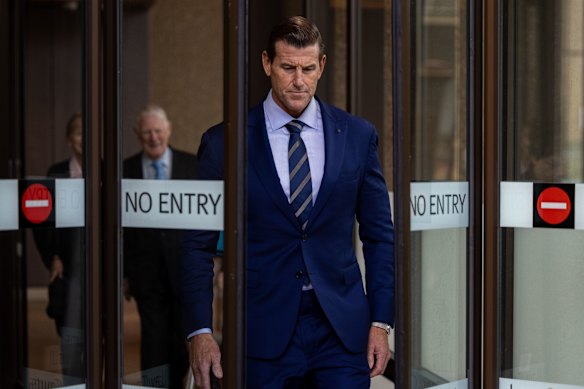
Ben Roberts-Smith outside the Federal Court.Credit: Sam Mooy
At the heart of the dispute are two meetings Keelty had with Roberts-Smith in June and July 2018.
They took place after this masthead had begun reporting the former SAS soldier’s war crimes in Afghanistan, but before Roberts-Smith had been publicly identified, and before he knew he was a police target.
Prior to the meetings, the federal police had on May 31 2018 received a highly classified request from the military to investigate Roberts-Smith.
Neither Roberts-Smith nor Keelty were meant to know this, not least because of the potential it could compromise police efforts to covertly target the ex-soldier.
Evidence in Roberts-Smith’s defamation case found the decorated soldier had started using encrypted apps on burner phones in mid-2018 to avoid phone interception.
In an interview this week, Keelty said he had initiated his dealings with Roberts-Smith in 2018 at the request of consulting firm Accenture, which had wanted Roberts-Smith to work with them. He said the firm had also been concerned that Roberts-Smith was “in a world of hurt” as a result of the media’s scrutiny of war crimes allegations.
Keelty, who had retired as AFP commissioner in 2009 but still had mentoring roles with senior members of the AFP, said he had not wanted to interfere with any ongoing police operation, so called his serving contacts to check if any such probe existed.
Keelty said he called then-commissioner Andrew Colvin a few days before his first meeting. Keelty recalls Colvin told him, “there was ‘a lot of talk’ about BRS” and “nothing had been referred but it may be imminent”.
By then, though, the AFP had received the May 31 war crimes referral from the then-chief of defence, Mark Binskin. Keelty says Colvin could have warned him to avoid meeting Roberts-Smith, and he would have complied.
Colvin declined to comment.
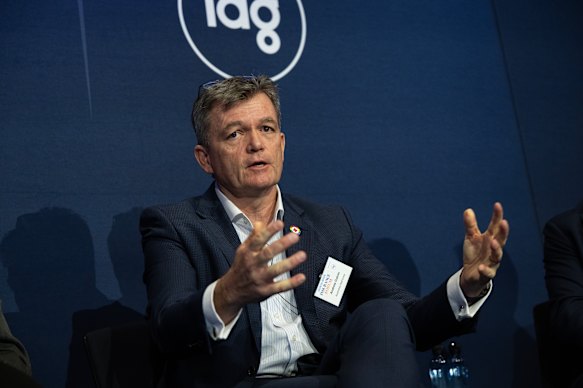
Andrew Colvin in his new job with the Australian Red Cross last month.Credit: Louise Kennerley
Keelty said that, in the car on the way to the meeting on June 15, 2018, he had also called Jabbour. Jabbour told Keelty he knew nothing about a referral for war crimes, according to Keelty. They had spoken for about 25 minutes on various topics, Keelty said.
Jabbour told this masthead that he had known nothing about Roberts-Smith because the information had been “compartmentalised” within the AFP, and he had not been briefed.
However, Keelty has previously said Jabbour later texted him, as he was meeting Roberts-Smith, saying “something was on its way” in relation to the former soldier but that a formal investigation had not commenced.
Jabbour said he had no memory of the text, but that whatever information he had conveyed had come from his fellow deputy commissioner, Neil Gaughan, who had operational oversight of the Roberts-Smith investigation. Neither Jabbour nor Keelty have kept the text message.
Keelty said that at his meeting with Roberts-Smith, which had lasted about 45 minutes, he had been at pains to point out to the former soldier the difference between a referral to the police from an external agency, which triggers only an active investigation after an assessment process, and an active investigation. He also told Roberts-Smith he thought any war crimes investigation would go nowhere because it would be too difficult to complete.
Keelty said he had not deliberately tipped Roberts-Smith off. Asked if he might have inadvertently led the former soldier to believe he was under investigation, Keelty said: “I’m not going to argue that. I think that’s very possible. What he did, I think, is he conflated a number of things.”
This masthead can now reveal that, immediately after that meeting, Roberts-Smith called a confidant. The call was tapped as part of the criminal investigation. Keelty said Roberts-Smith had told his confidant about his meeting with Keelty, but misidentified him as having a current AFP role.
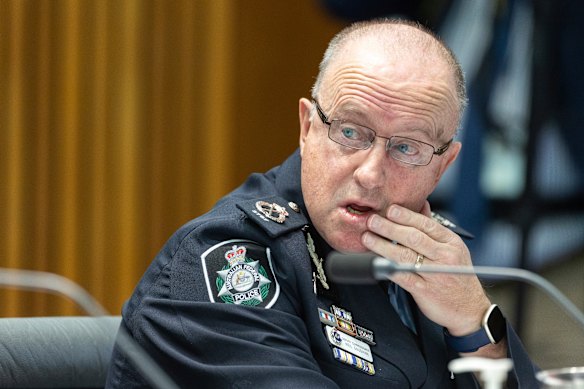
Former AFP deputy commissioner Neil Gaughan.Credit: Alex Ellinghausen
“And then [Roberts-Smith] says it seems like there are some things that might be coming” – referring to an imminent AFP investigation.
Keelty said Roberts-Smith’s confidant responded by stating that an AFP investigation was “almost a fait accompli”.
Keelty now says: “[Roberts-Smith] certainly didn’t get that I was there as an extension of the invitation to join Accenture” and not a serving policeman.
Describing Roberts-Smith as “not all that bright”, Keelty added that Roberts-Smith “didn’t understand the nuance between a referral and an investigation. He jumped straight into the case, yeah, the AFP is onto the case, or the AFP is investigating”.
Asked by this masthead if he had been naive or ill-advised to speak to Roberts-Smith, Keelty replied: “Only Ben knows what he walked away with in his mind from that meeting. And did I intend that to be the outcome? No, I didn’t. Did I want to stuff up the AFP operation? No, I didn’t. But if they’d told me what they were doing, maybe I wouldn’t have stuffed it up.
“If the AFP had said, ‘I wouldn’t go there’, I wouldn’t have gone there.”
Five days after that meeting, Keelty called deputy commissioner Gaughan in preparation for his second meeting with Roberts-Smith.
Gaughan called in the head of internal investigations, Nigel Ryan, who took hand-written notes of the call without Keelty’s knowledge.
This masthead has obtained a copy of that note, which records Keelty saying he intended to tell Roberts-Smith to co-operate if the AFP approached him.
Loading
The note says in part: “Keelty stated out of concern he called Ramzi Jabbour and asked if the AFP was involved or not as he was concerned about AFP interests as they need to be protected. Keelty stated that Ramzi didn’t provide any information on the matter.
“DCO Gaughan had stated he had no knowledge of the matters apart from 3 letters investigation (sic) that was already publically (sic) known.”
Keelty said that was the first time he had heard of “three letters” – likely to be the referrals for investigation into Roberts-Smith on two potential war crimes and a domestic violence incident.
Gaughan ordered that call, which he described as a “contact report” – a term normally reserved for a contact between a criminal source and a police officer – be referred to police internal investigators.
That referral opened “Operation Geranium”, which targeted Jabbour for alleged “unlawful disclosure of prescribed information to an unauthorised person”.
At the time, Gaughan and Jabbour were both deputy commissioners and, Keelty said in his affidavit, Jabbour was “one of the leading contenders to become the AFP commissioner”.
Keelty said the two internal affairs officers assigned to conduct the investigation were men who Jabbour had previously disciplined and moved out of the professional standards division. “They brought in his worst enemies to do the investigation.”
Gaughan did not respond to requests for comment. The AFP has also declined to comment on behalf of Ryan, who is still serving, and the newly appointed commissioner, Krissy Barrett.
On July 10, Keelty met Roberts-Smith for the second time. He said he had advised him to co-operate with police. They had no further contact.
But Operation Geranium went for years. Jabbour’s phone was tapped and, in March the following year, Colvin stood him down, telling staff in an all-AFP email that he was “on leave while a conduct-based investigation is under way”. The removal was to ensure “there can be no inference made around the integrity of the investigation”. Jabbour later resigned from the force.
Jabbour was never charged with any unauthorised disclosure, but he was charged with diverting the resources of an AFP legal officer to help a relative with his law homework, and over minor firearms offences. An ACT magistrate found in 2021 he had no case to answer on either charge.
In 2023, the former police anti-corruption body, ACLEI, wrote to Jabbour confirming it had finalised a two-year investigation into the unauthorised disclosure “with no adverse findings against you”.
Keelty said the police internal affairs investigation had also found no case to answer.
Jabbour said he had known nothing about the Roberts-Smith investigation at the time of Keelty’s meetings with him.
“I was a bit perplexed by the whole thing as to how people could suggest that I had leaked … because it was compartmentalised, it was locked down – they all knew I didn’t know about it,” Jabbour said.
“And to be wrongly accused, to have your integrity questioned after 30 years’ always doing the right thing, it’s been an incredibly difficult experience, both professionally and personally.”
Keelty lost “the best job I’ve ever had” as inspector-general of the Murray-Darling Basin Commission when this masthead reported his meeting with Roberts-Smith in 2020. He also relinquished his Order of Australia.
He said he had now “jumped to the other side” to help this masthead’s freedom of information battle because “I can see there is something wrong with this”.
More than four years ago, this masthead sought the statements of Colvin, Gaughan and Ryan, and the final internal affairs report under freedom of information legislation.
Loading
The request was knocked back in full, and has been rejected by police four subsequent times, even though the full bench of the Federal Court ruled against the AFP’s blanket refusal in February.
The AFP’s most recent argument is that the release would deter police from reporting other officers for corruption, and that it would have “a devastating impact” on the internal investigations function of police. That would “have a devastating impact on [the AFP’s] ability to function effectively”.
Keelty said these were “false affidavits, gilding the lily”, and he described the police effort to keep the documents secret as a “cover-up”.
“I think it deserves scrutiny by the Senate as to the amount of money spent by the AFP both in the investigation … and now to be continuing to fight this,” Keelty said.
“I am looking for honesty and I am looking for the truth to come out.”
At a directions hearing in the freedom of information case on Friday, the Administrative Review Tribunal member hearing the case, Justice Emilios Kyrou, urged the police to use “common sense” in its arguments during the substantive case.
He said the police had taken an approach that denied even him access to documents that would be crucial in making his decision about whether they should be released.
The AFP war crimes investigation into Roberts-Smith ultimately collapsed for unrelated reasons, and the criminal investigation is being pursued by a new body, the Office of the Special Investigator.
Loading
The Morning Edition newsletter is our guide to the day’s most important and interesting stories, analysis and insights. Sign up here.