
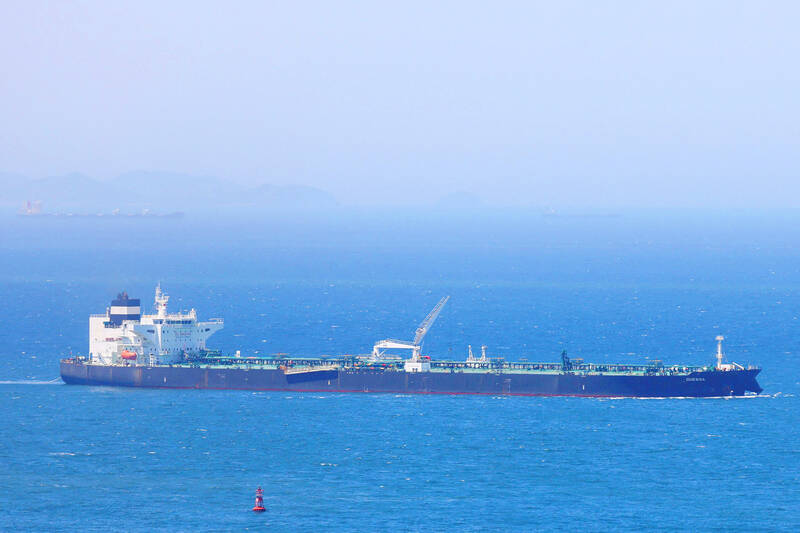
Instability in the Persian Gulf has opened the world’s eyes to supply chain weaknesses — especially in Asia
By Yongchang Chin
and Kanoko Matsuyama /
Bloomberg
There is still no lasting peace deal in the Persian Gulf, but energy-hungry Asia is already drawing energy lessons from four months of war: It needs bigger buffers, a greater diversity of fossil-fuel suppliers, and a better mix of power sources overall.
Flows of oil and natural gas have been returning to normal and prices have tumbled since an interim US-Iran accord was signed last month that pried open the Strait of Hormuz, relieving the immediate sense of crisis.
However, the consequences of the historic shock still stand to be far-reaching. Policymakers are recalibrating their energy priorities — and nowhere more so than Asia, a key consuming region for Middle Eastern oil and gas.
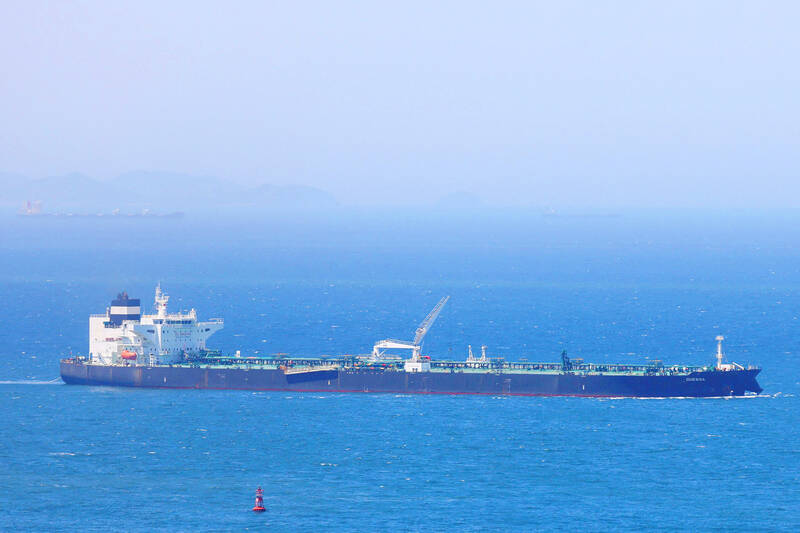
Photo: Reuters
India has said it plans to build strategic reserves of crude, liquefied petroleum and natural gas, while Indonesia and Malaysia are looking to raise the amount of palm oil blended into diesel — a move to bolster energy security and cut back consumption. Japan might upgrade refineries so that they can process crude from a greater range of suppliers. Almost everywhere, a push toward renewable energy has gained urgency.
“The Iran war has been a stark reminder that energy security remains one of Asia’s biggest vulnerabilities,” ING Groep NV head of commodities strategy Warren Patterson said. “Governments should, and are likely to, focus on diversifying energy supplies, building strategic reserves and accelerating the energy transition. Resilience comes from a more diversified energy system.”
While the impact of the war has rippled across the globe, Asia was impacted almost immediately by the disruption in energy flows that followed the first US and Israeli strikes on Iran. Its relative proximity to gulf suppliers of oil and gas, combined with its dependence on imports, left the region exposed by the closure of Hormuz.
The crisis triggered energy shortages from India and Pakistan to Australia as pumps ran dry, followed by a frantic search for alternative short-term supplies to bridge the gaps. China fared better, aided by substantial stockpiles and a more extensive network of alternative-energy sources — but was still not immune. Beijing eventually curbed fuel exports.
Among the wealthier nations in Asia, the war “underscored just how heavily Japan relies on the Middle East,” said Jun Saito, a senior research fellow at Japan Center for Economic Research and former director-general for economic and fiscal management at the country’s cabinet office.
“Japan bought itself time by drawing down its strategic petroleum reserves, while coordinating with other countries,” Saito said. “That combination appears to have worked reasonably well. But the underlying structural risk has not changed.”
Before the war, Japan imported about 90 percent of its oil from the Persian Gulf region, the bulk requiring passage through Hormuz. To pave the way for a more sustainable model, the country is mulling a government-funded scheme that would upgrade refinery units to better handle crudes from other regions, a Nikkei report said.
Elsewhere, Singapore and Thailand — both regular importers of Middle Eastern LNG — are eyeing long-term supply from the US, suggesting an effort to rebalance shipments. Others such as Pakistan and Vietnam, are considering ways to reduce dependence on the super-chilled fuel altogether by tapping domestic gas supplies or accelerating the deployment of renewables.
In Southeast Asia, Indonesia responded to the crisis by fast-tracking the roll-out of a diesel blend comprised 50 percent of biofuels from its vast palm plantations.
“The idea is not just to reduce dependence on fossil-fuel imports but on fossil fuels themselves,” said Fabby Tumiwa, chief executive officer at the Institute for Essential Services Reform, a non-governmental organization in Jakarta.
“That’s what actually boosts energy security,” Tumiwa said. “The lesson that Indonesia should be learning is that we can’t rely on commodities that are highly dependent on geopolitics and relations.”
Beyond energy, the crisis also had consequences that would roll out more slowly — including the impact on food markets, another headache for Asian governments. The conflict curbed supply of fertilizer and lifted costs.
As much of Asia looks to frame its response, China — the world’s second-largest economy — might have some of the answers. During the crisis, the nation slashed oil imports, tapped some of its commercial petroleum reserves, and lent on renewables after a years-long build-out of capacity.
For now, flows through Hormuz continue to pick back up, reinforcing the downward pressure on energy prices and handing governments some welcome breathing room as they assess their options. However, ING’s Patterson cautioned against failing to act.
“Future disruptions in the Persian Gulf can’t be ruled out, so reverting to business as usual would be a mistake,” he said.