
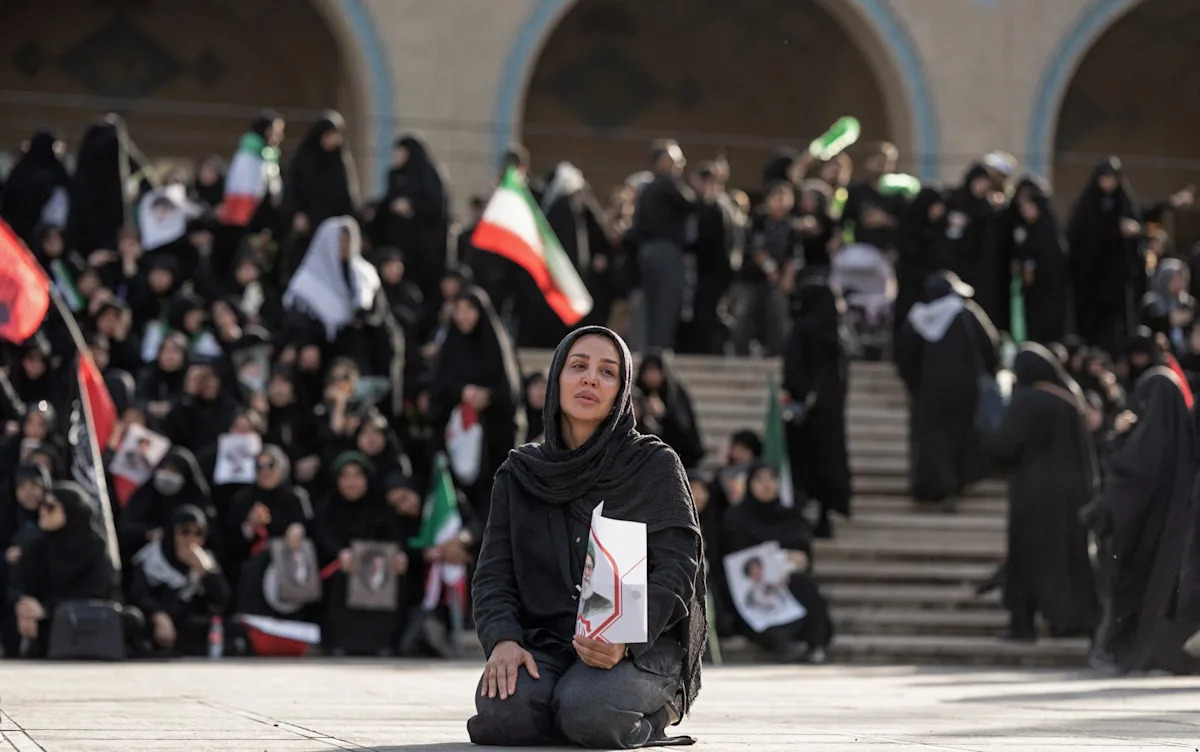
The faithful came in their hundreds of thousands, shedding tears for a man who had been dead for four months.
Dressed mostly in black – chador-clad women outnumbering the men – they thronged the vast courtyards of Tehran’s Grand Mosalla, the high citadel of the regime that Ayatollah Ali Khamenei embodied for so long.
It was from here that the supreme leader, rifle in hand, would rail against the West, denouncing the “Great Satan” of the United States, the “Little Satan” of Israel and all their European lackeys.
And in deference to the man who maintained that drumbeat of defiance for 36 years, the crowds came not just to mourn but to swear retribution. Above their heads they waved not just the national colours of Iran but also the red flag of vengeance, hoisted by Shia at times of tribulation ever since the martyrdom of Imam Hussein, the prophet Mohammed’s grandson, in the seventh century.
Over the next six days, 15 million people – perhaps more – will pay homage to the man who was the centrifuge around which everything that troubled the West most about modern Iran spun. A state funeral rivalling the largest in Iran’s history will allow the Islamic regime to project a sense of unity, a carefully choreographed display of a nation unbowed after surviving a sustained aerial assault by the most powerful military force in history.
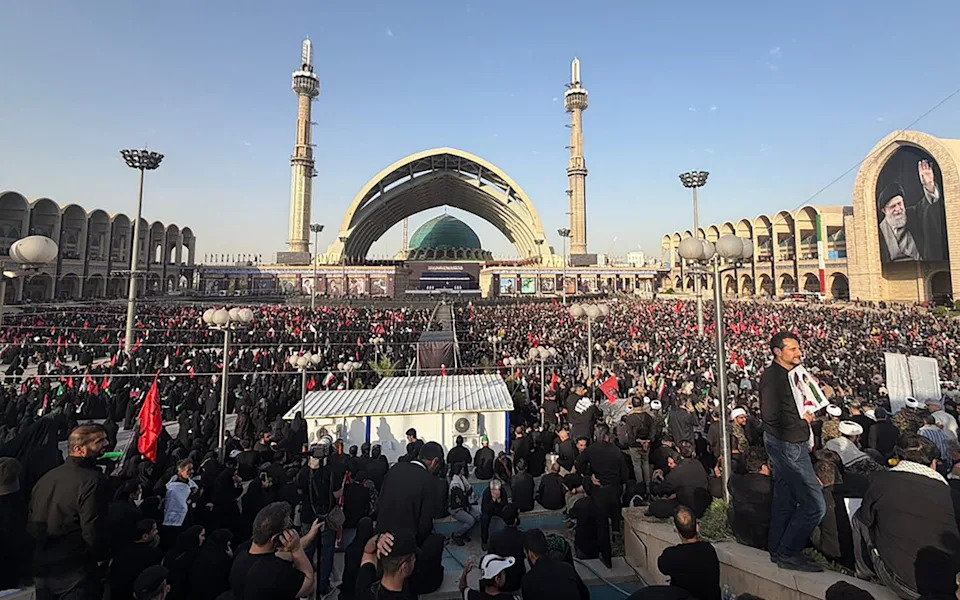
Mourners gather at the Grand Mosalla to pay their final respects to Ayatollah Ali Khamenei – Atta KENARE/AFP via Getty Images
Yet even the most devoted of the black-clad figures trooping past the body of their late leader must be wondering what comes next, a question to which there is no easy answer. Churchill’s dictum that observing Kremlin political intrigue was like watching bulldogs fighting under a rug applies in spades in Iran: outsiders hear the growling, but only when the bones fly out will it become clear whether it is the compromise-tolerant pragmatists or the die-hard ideologues who emerge ascendant.
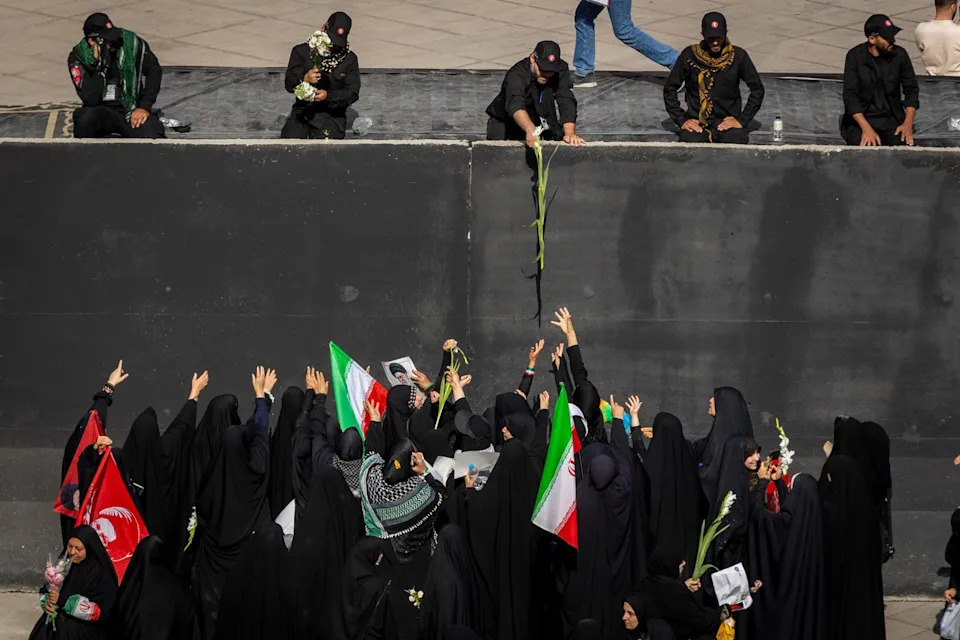
Iranians gather to pay their respects during a funeral ceremony in Tehran – Maryam Rahmanian/Shutterstock
For the next few days, though, rivalries will be set aside. Accompanied by a smattering of foreign leaders, the luminaries of the regime stood shoulder to shoulder, heads bowed in grief, on Friday in the Grand Mosalla’s Great Hall. Masoud Pezeshkian, Iran’s reformist president, shed a tear; others covered their faces with handkerchiefs. Top military commanders who spent months in hiding emerged blinking into the sunlight, among them Ahmad Vahidi, the head of Iran’s Islamic Revolutionary Guard Corps (IRGC) and the shadowy power broker on whom the country’s future could hinge.
They gathered in front of five coffins, a conscious attempt to remind the world that the US-Israeli strike that killed Khamenei on Feb 28 punished the innocent, too. In a tiny casket at the front of the dais lay the body of Zahra, the ayatollah’s young granddaughter, killed alongside her mother – Khamenei’s daughter – and father.
The fifth contained the remains of Zahra Hadad-Adel, the wife of Mojtaba Khamenei, the late leader’s son and successor. But of Mojtaba himself there has still been no public sign. Badly injured in the same strike, he has not been seen since, with all communication confined to written statements and not even a photograph emerging as proof of life.
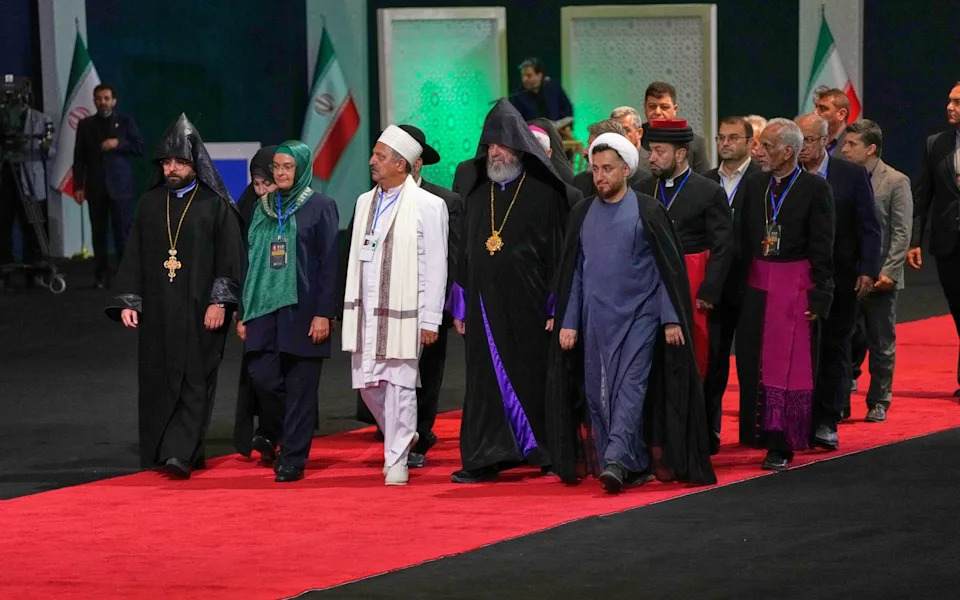
Iranian religious leaders and other mourners walk past the coffins during a viewing ceremony on Friday – AP Photo/Vahid Salemi
Why Mojtaba remains out of sight is the subject of intense conjecture. Perhaps his injuries remain too serious. He also remains a target. Israel Katz, the Israeli defence minister, warned this week that Mojtaba had been “marked for death”. Some speculate that he could appear in person at his father’s burial in the city of Mashhad next Thursday.
Whatever the explanation, Iranians will appreciate the irony. As supreme leader, Mojtaba is the representative of the Hidden Imam, whom Shia believe was miraculously concealed from human sight in the ninth century and will remain in occultation until the apocalypse.
His absence may add to Mojtaba’s mystique, but it will do little to quell the speculation over how power is wielded in post-Khamenei Iran.
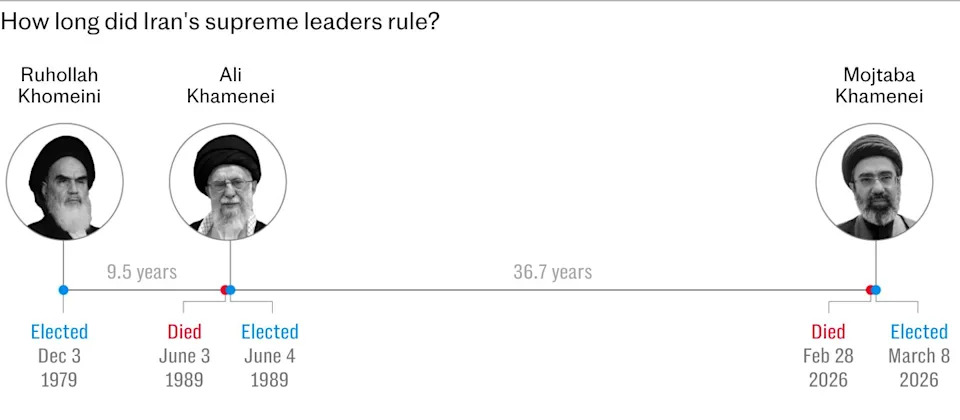
He came to office only out of wartime necessity, analysts said. His father, aware that a dynastic succession would undermine the anti-monarchical foundations of the 1979 revolution, reportedly gave close advisers three names as potential successors; Mojtaba was not one of them. But with bombs falling, the future of the theocracy at stake and an undignified scramble for power beckoning, he was the obvious compromise, a turban-wearing symbol of continuity behind whom hardliners could rally.
Yet Mojtaba, unquestionably hawkish by instinct, does not command the unconditional obedience his father did.
“He is chairman of the board, but he is not executive chairman,” says one Middle Eastern diplomat who watches Iran closely. “He can suggest and he holds some sway, but he cannot order in the same way.”
Because Mojtaba is unable to consolidate power while confined to his sickbed – or at least out of public view – there will be no one who can arbitrate among the rival factions. For there is no question that, for all the show of unity, Iran’s regime remains as fractured as Iranian society – fractures that are only likely to grow now that the war that knit the factions together seems to be over.
It is clear that the Iranian elite is divided over how to respond to Donald Trump’s extraordinary pivot. The US president tried to resolve the Iran problem the Netanyahu way, concluded it had failed and is now adopting a strategy of transactional deal-making much more suited to his style.
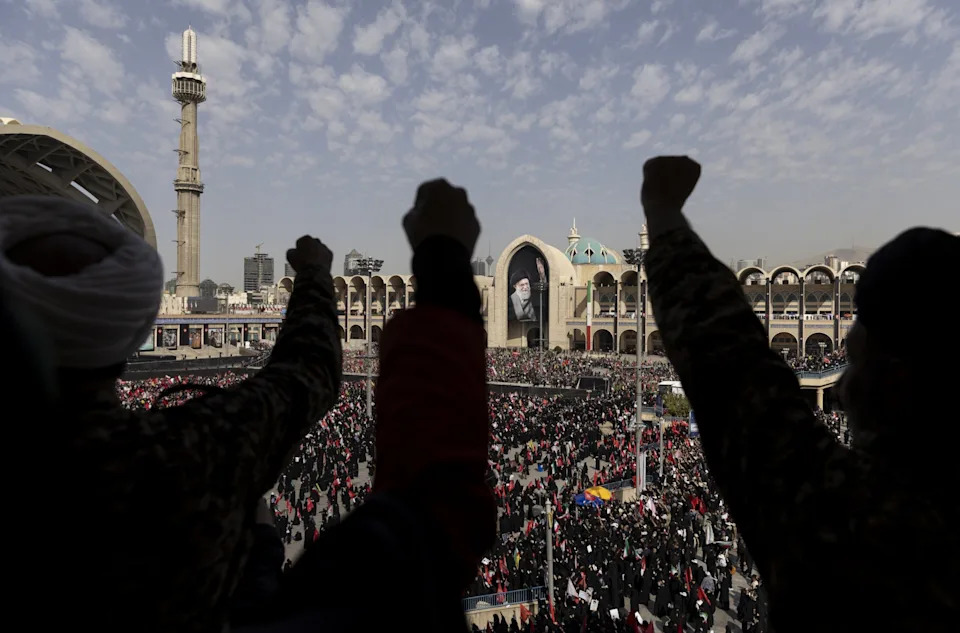
Over the next six days, as many as 15 million people are expected to pay homage to the slain supreme leader – Majid Saeedi/Getty Images
Bombs brought the regime together, but the tantalising offer of a windfall worth hundreds of billions of dollars has divided it into two camps: the pragmatists willing to take the cash and fix a shattered economy and the purists who fear a Faustian pact that will shatter revolutionary ideals forever.
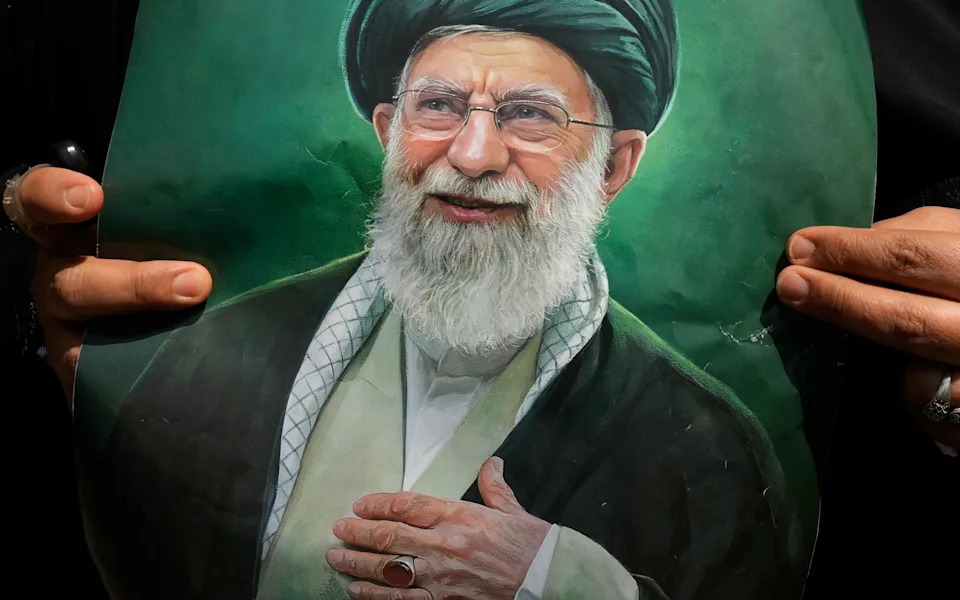
A poster of the late Ayatollah Ali Khamenei at the funeral ceremonies for him and his family at the Imam Khomeini Mosalla Grand Mosque – AP Photo/Vahid Salemi
The leading pragmatist is the chameleon of Iranian politics. Mohammad Bagher Ghalibaf, the parliamentary speaker who led negotiations with the United States, was once a regime ultra, boasting of how he would beat student protesters with a wooden club from the back of a motorcycle. But now a pragmatic conservative and an ally of Iran’s oligarchs, he is reportedly minded to take the cash – a position supported by more moderate figures in the regime, among them senior IRGC generals, Mohammad Bagher Zolghadr, head of the supreme national security council, and politicians such as Mr Pezeshkian and Abbas Araghchi, the foreign minister.
The pragmatists sense an opportunity to relax conservative social norms and transform Iran in the mould of Saudi Arabia under Mohammed bin Salman, the Crown Prince of Saudi Arabia. Iran is already changing. Seeking to defuse the domestic discontent that fuelled January’s protests, a movement so widespread it came close to toppling the regime, Iran’s generals effectively sidelined the country’s clerics. In affluent parts of Tehran, women walk around in tank tops rather than veils.
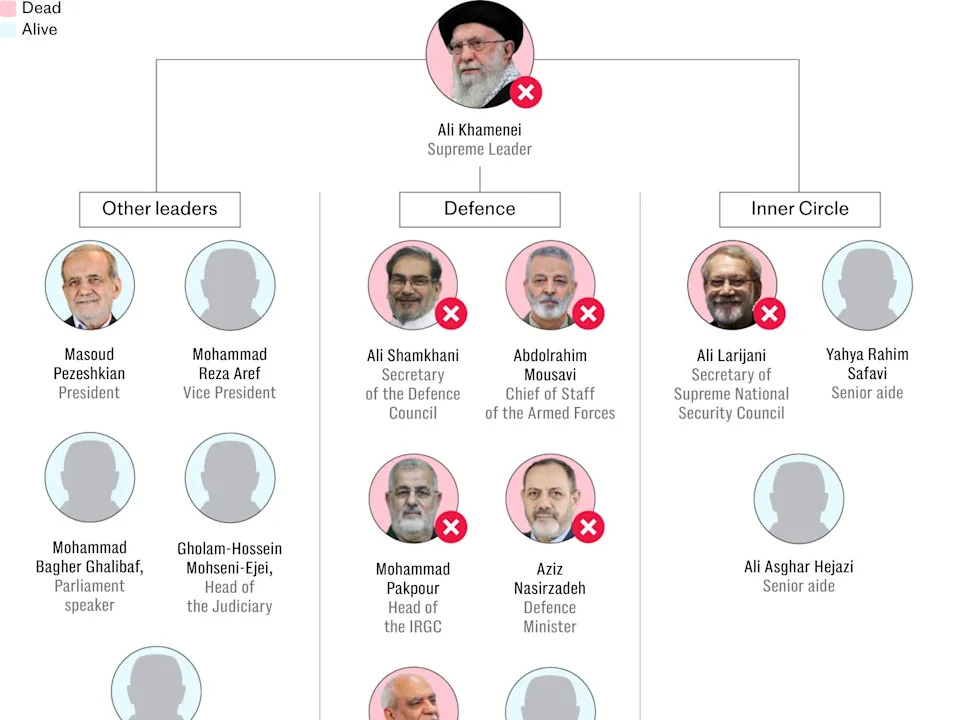
0203 Iran family tree
Yet those who reject the idea of any compromise with the Americans as abhorrent remain far from beaten, even if they are believed to be a minority.
“I spit on this era where they kill our leader and then we speak of peace with the United States,” Hassan Rahimpour-Azghadi, a prominent hardline strategist, told a rally in Tehran.
The hardliners have powerful tools to aid their cause, from rallies dominated by chants of “death to the appeasers” to state media, which is largely controlled by their allies and frequently airs attacks on the team negotiating with the Trump administration. Last week, Mr Ghalibaf was abruptly taken off the air during a live broadcast he was using to explain the ceasefire deal with the US.
Iran’s regime is dangerously polarised. Those who fear the wrangling could tear the country apart are therefore pinning their hopes on Mojtaba Khamenei. He might not be as supreme as his title suggests, but he is perhaps the only man who could persuade the competing factions to set aside their differences.
So far, he has tried to hedge his bets. Perhaps seeking to appease both camps, he gave his qualified backing to the ceasefire deal, saying he had allowed it to go through despite his own reservations.
Yet such carefully worded statements have only fanned the flames, showing up the limitations of attempting to rule in absentia. Until he emerges from the shadows, Iran risks remaining directionless, leaving the country’s future uncertain and the prospects of peace with the US teetering. Iran can make do with a hidden imam. With a hidden supreme leader, not so much.