
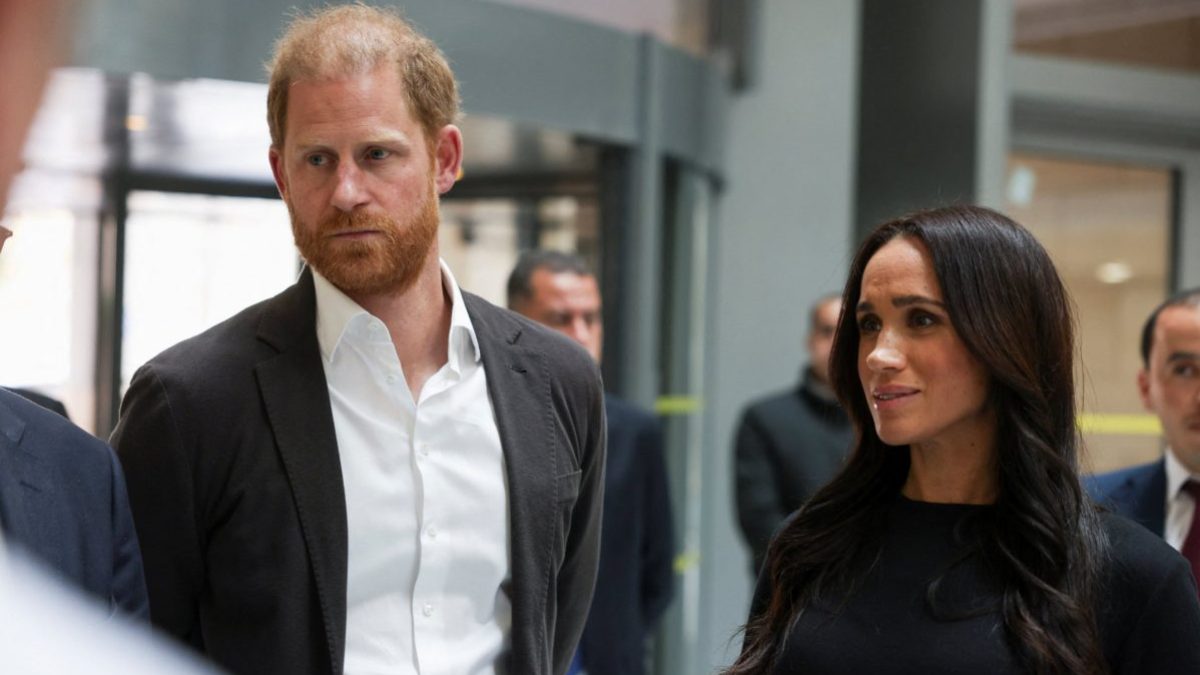
Failure to provide Prince Harry and his family with wraparound police protection while in the UK could leave them exposed to threats, security experts have warned.
Plans for a reunion between the King and the children of the Duke and Duchess of Sussex are in jeopardy following reports that Harry will not be joined by Archie and Lilibet or his wife when he visits London next week.
It is understood the Prince reached the decision after the Government rejected his request for police protection beyond royal residences.
One former Metropolitan Police firearms officer has claimed there will be questions to answer over why such a high-profile figure is not being provided with security.
“Protection is a sizable commitment from the taxpayer and it’s right that who benefits from it is considered carefully. But Harry is a high-profile figure and the brother of the future king,” the former senior officer, who has guarded members of the Royal Family, told The i Paper.
“If anything were to happen and there was no security provision for it would be damaging for public confidence in policing and to the image of the UK. People would ask why we don’t protect someone as senior as that. On those grounds alone I would expect security to be provided.”
Harry is set to arrive in Britain next week for events to mark the one-year countdown to the Invictus Games, which will be held in Birmingham.
He had planned to travel with Meghan and their seven-year-old son, Archie, and five-year-old daughter, Lilibet, with the couple understood to have accepted an invitation to stay in a royal residence.
But concerns about the family’s safety, when travelling outside of royal grounds in the capital, has prompted a change of plans.
Last week it was revealed that a report commissioned by the US private security firm that protects Harry found he is the focus of six terrorist plots, five of which originated in the UK.
It outlines dozens of threats facing the Duke and Duchess of Sussex, and includes an al-Qaeda document which called for Harry’s assassination, ITV News reported.
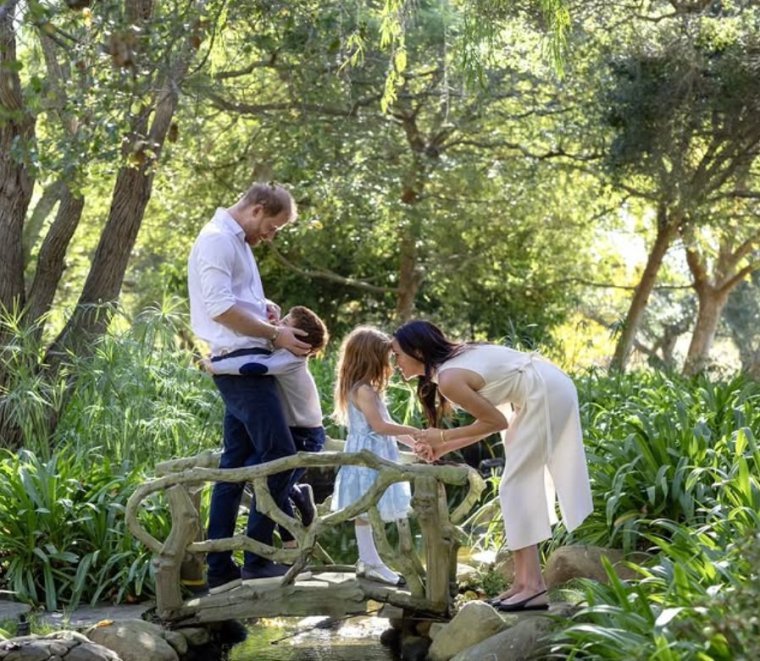 The Sussex family at Christmas (Photo: Meghan, Duchess of Sussex/Instagram)
The findings were shared with Ravec, the security committee responsible for deciding if high-profile figures are eligible for taxpayer-funded police protection in the UK.
But Ravec – whose membership includes representatives from the Royal Household, Home Office and Met Police, as well as Sir Clive Alderton, private secretary to the King – denied Harry’s appeal for such security measures.
It is understood that Harry’s military experience in Afghanistan, and any threat posed to him by Islamist groups, would have been some of the factors considered by Ravec, which is said to make decisions informed by expert risk assessments and in line with Government policy.
Richard Aitch, a former member of the Royal Military Police’s close protection unit, suggested it was precisely the intelligence-led provision and enhanced security measures that Harry lacked access to which left him exposed to potential threats.
Aitch highlighted the Met’s access to intelligence afforded by GCHQ, Mi5 and the Fixated Threat Assessment Centre to inform its response, which could include proactive counter-terrorism arrests.
“Crucial requirements in Met provision also include the ability and capability to have exemption from impeding laws in the delivery of protection,” he said. “In other words, having that capability to dominate the roads, control traffic flow, excess speed if required, and… at any venue, to control movement and presence of members of the public, to create that much needed sterile environment,.”
Aitch has worked in the sector for 30 years and acted as a personal bodyguard for high-profile figures. He said that if Harry was joined by Meghan and his children and provided with police protection, he would expect a minimum of four security vehicles to accompany them, with the number of personnel dependent on the activity and the location.
A rotating team of officers working shifts throughout a 24-hour period, plus a close protection officer for each of the principals (Harry, Meghan, Archie and Lilibet) would be needed, the former Met officer said.
The cost of a single royal protection officer could be as much as £178,000 per year, he added.
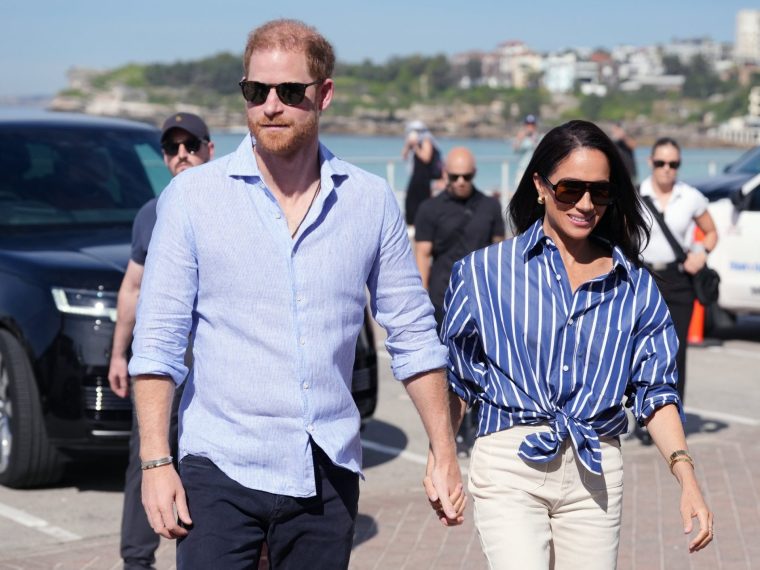 Harry and Meghan have not travelled back to the UK as a couple since 2022 (Photo: Jonathan Brady-Pool/Getty Images)
Matthew Beer, founder and CEO of King Safety and Security Group (KSS), said: “The involvement of children materially changes the tolerance for residual risk, because children cannot meaningfully consent to that risk and are less able to respond to a fast-moving situation.”
While he stressed private security was not second best and could provide high-quality protection, he added: “The question is whether the reported threat picture requires an armed state capability alongside the private protective measures. Where terrorism is a credible part of the assessment, that becomes a very significant consideration.
“Good protection is preventative: intelligence, advance work, route-planning, venue assessment, low-profile movement and keeping the principal away from avoidable exposure in the first place.”
Last year, Harry lost an appeal over his security provision, with a court finding there had been nothing unlawful over how the decision to revoke protection had been reached. His security provision was revoked in 2020 when he stepped back from his role as a senior royal in 2020.
Harry and Meghan have not travelled together to the UK since 2022, when they attended the funeral of Queen Elizabeth II.
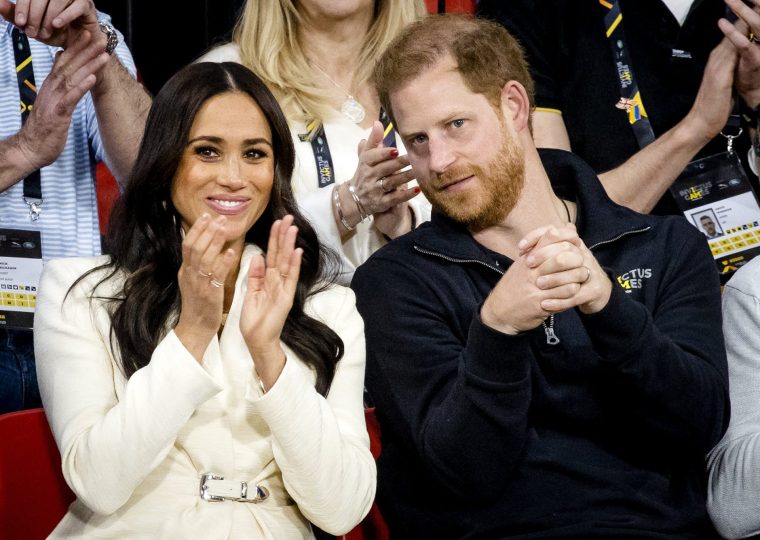 The Duke and Duchess of Sussex at the Invictus Games in The Hague in 2022 (Photo: Sem van der Wal/ANP/AFP)
Prior to his retirement in 2022, Neil Basu, the former head of counter terrorism policing and Ravec member, confirmed Scotland Yard had investigated numerous credible threats against Meghan’s life.
Harry has also been the subject of threats, particularly from National Action, a proscribed neo-Nazi group, because he was viewed as a “race traitor” for marrying Meghan. The organisation also threatened others, including MPs and journalists.
However, numerous security experts believe the “fixated threat” from stalkers is more of a risk to Harry’s safety than terrorism.
In January, it was revealed that a stalker sat metres from the Duke of Sussex on two occasions at the High Court when Harry was present for the start of his privacy trial against ANL, the publisher of the Daily Mail.
Despite the reported threats, the Prince lost a legal battle with the Home Office over his UK security arrangements, which were scaled back when he stopped being a working royal in 2020.
A Government spokesperson said: “The UK Government’s protective security system is rigorous and proportionate. It is our long-standing policy not to provide detailed information on those arrangements, as doing so could compromise their integrity and affect individuals’ security.”
The i Paper is part of Harmsworth Media, a publishing division owned by ANL’s parent company DMGT – and has complete editorial independence.