
I just spent a week in Jerusalem at the Shalom Hartman Institute’s Community Leadership Program, sitting with ancient and modern texts, wrestling with identity alongside extraordinary scholars. It was spectacular. Any learning worth taking seriously has the good manners not to insult you with easy answers, and Hartman offered none. Instead, it provided depth, argument, and the humbling reminder that Jewish tradition still has an astonishing amount to teach us about living in an increasingly complicated world.
Throughout the week, I listened to rabbis, educators, and lay leaders from a broad spectrum of political and religious thought. Yet every conversation was held with real respect—the kind that allows disagreement to surface without requiring people to perform outrage and permits discomfort without treating it as a failure.
That alone felt like a gift. But standing at Ben Gurion Airport waiting for my flight home, I found something more urgent: a sharper focus on one of the few crises we actually have the power to influence.
Like anyone invested in Jewish life, I have spent the past few years exhausted by a cascading list of worries: surging antisemitism, the wars facing Israel, the trauma of October 7, the hostages, and the fragility of democracy both in Israel and the United States. Much of this feels entirely outside our control. We cannot single-handedly dictate the decisions of the Israeli government or reverse online hate.
But I believe we can shape the relationship between the two largest Jewish communities in the world — Israel and North America.
Right now, we simply do not know or understand each other well enough, and the gulf is growing. Too many American Jews look at Israel and see only its current government, flattening a living, breathing, grieving society into a social media headline. But you cannot fully understand Israel post-October 7 from a distance. Israelis are not just debating policy; they are trying to parent, mourn, and breathe inside a level of vulnerability most Americans have never experienced.
Conversely, too many Israeli Jews dismiss the depth of Diaspora life. Hearing about American antisemitism, they often say, “So come home,” as if North America is merely a temporary waiting room for aliyah. This misses something profound: we have built one of the most creative, vital Jewish communities in history through our schools, camps, and institutions. And when Israelis minimize American anxiety, they fail to see how deeply destabilizing this moment has been as friendships fracture and both progressive and far right coalitions make clear that Jewish pain is conditional.
The tragedy is that each community interprets the other through its own fears. Israelis hear criticism and suspect abandonment; Americans hear Israeli confidence and suspect indifference.
Sovereignty changes a people, but so does minority status. Israel has had to defend Jewish life in the language of statehood, while North American Jews have had to sustain identity entirely without state coercion. These are not competing experiences; they are complementary ones. It would be a catastrophe if these two great experiments became strangers to one another at the exact moment we need each other most.
Repairing this requires a shift from abstract handwringing to a concrete, tactical checklist. If we want to fix this relationship, here is what we must do:
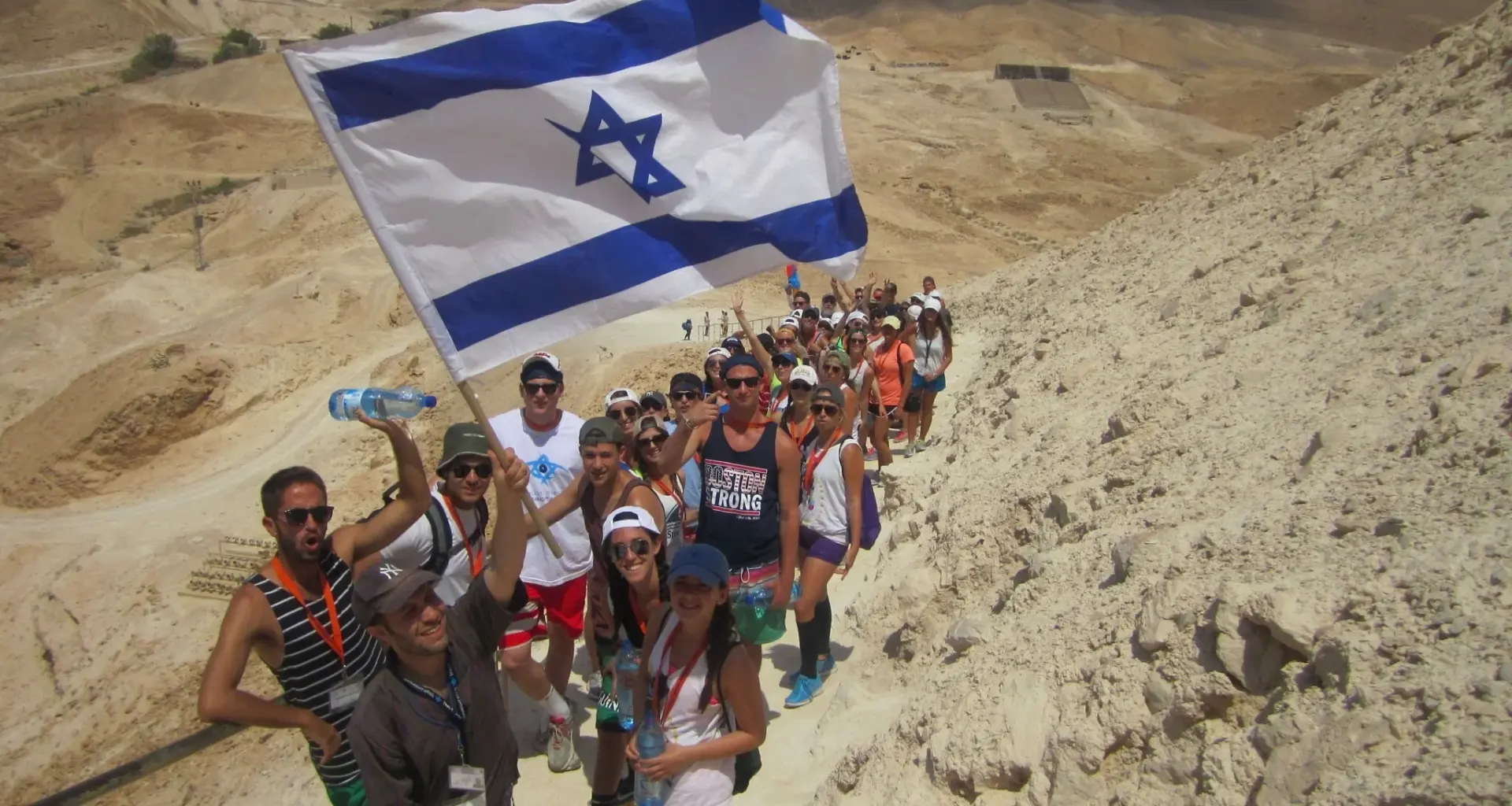
1. Fund trips to Israel and the “Reverse Birthright”: We already know what works. There is a reason 900,000 Birthright Israel alumni feel connected to Israelis, and why the nearly 100,000 Israelis who joined them feel connected to Americans. They spent 10 days breathing the same air and breaking the same bread. We need to massively scale immersive, cohort-based travel in both directions — a key strategy called for in the new framework, Reimagining Israel Education. If we want young Israelis to understand the richness of the Diaspora, we must fund initiatives that enable Israeli educators and young leaders to spend significant time inside North America. Programs like shinshinim at schools and congregations, and those that bring Israelis to work at summer camps, already show positive outcomes for all participants. They need to be scaled significantly, and we need new ones.
2. Rebuild the Muscle of Mutual Aid: We must teach our children — both Israeli and American — that Jewish peoplehood is a visceral obligation, not a vague sentiment. If I wrote right now that I had just returned from Odessa and met elderly Jews who needed money for a hot meal, my Venmo would be flooded with thousands of dollars before I finished this sentence. That is peoplehood. Yet I worry Americans and Israelis are losing that baseline instinct for one another. We need direct, community-to-community partnerships that go beyond standard philanthropy — not just partner cities that help during an emergency, but real ongoing connection between tens of thousands of people, structured so that a crisis or opportunity in Cincinnati feels like a crisis or opportunity in Tel Aviv, and vice versa.
3. Invest in People and One-on-One Interactions: Trust is built through shared meals and hard conversations, the slow work of realizing that the person you were ready to caricature is, annoyingly, deeply thoughtful. We need sustained, multi-year leadership networks that bring together rising leaders from both worlds — rabbis, tech founders, journalists, activists — for long-term, repeated study and argument. ENTER: The Jewish Peoplehood Alliance is a strong model, already connecting thousands of teens digitally.
4. Practice Intellectual Humility: This is the internal work that drives the external action. American Jews must recognize we do not carry the physical burdens or the moral complexities of sovereignty. Israeli Jews must accept that Diaspora life is a significant, authentic expression of Judaism, not a lesser, temporary version of it.
We need to stop treating the Israel-Diaspora relationship as an abstract communal issue. It is personal, familial, and urgent. We know how to fund, how to build, and how to convene. Heaven knows we know how to argue. The only question is whether we still know how to argue as one people. My week in Jerusalem reminded me that we can — if we are simply willing to stay in the room.