
Your support helps us to tell the story
From reproductive rights to climate change to Big Tech, The Independent is on the ground when the story is developing. Whether it’s investigating the financials of Elon Musk’s pro-Trump PAC or producing our latest documentary, ‘The A Word’, which shines a light on the American women fighting for reproductive rights, we know how important it is to parse out the facts from the messaging.
At such a critical moment in US history, we need reporters on the ground. Your donation allows us to keep sending journalists to speak to both sides of the story.
The Independent is trusted by Americans across the entire political spectrum. And unlike many other quality news outlets, we choose not to lock Americans out of our reporting and analysis with paywalls. We believe quality journalism should be available to everyone, paid for by those who can afford it.
Your support makes all the difference.Read more
Prime minister Narendra Modi marked India‘s 78 years of Independence on Friday by urging the nation to move towards more self-reliance amid the looming threat of additional US tariffs.
Addressing the country from New Delhi’s 17th-century, Mughal-era Red Fort, he said everything from fertilisers to jet engines and EV batteries should be manufactured in India.
“Farmers, fishermen, cattle rearers are our top priorities,” Mr Modi said in his customary annual address. “Modi will stand like a wall against any policy that threatens their interests. India will never compromise when it comes to protecting the interests of our farmers,” he said.
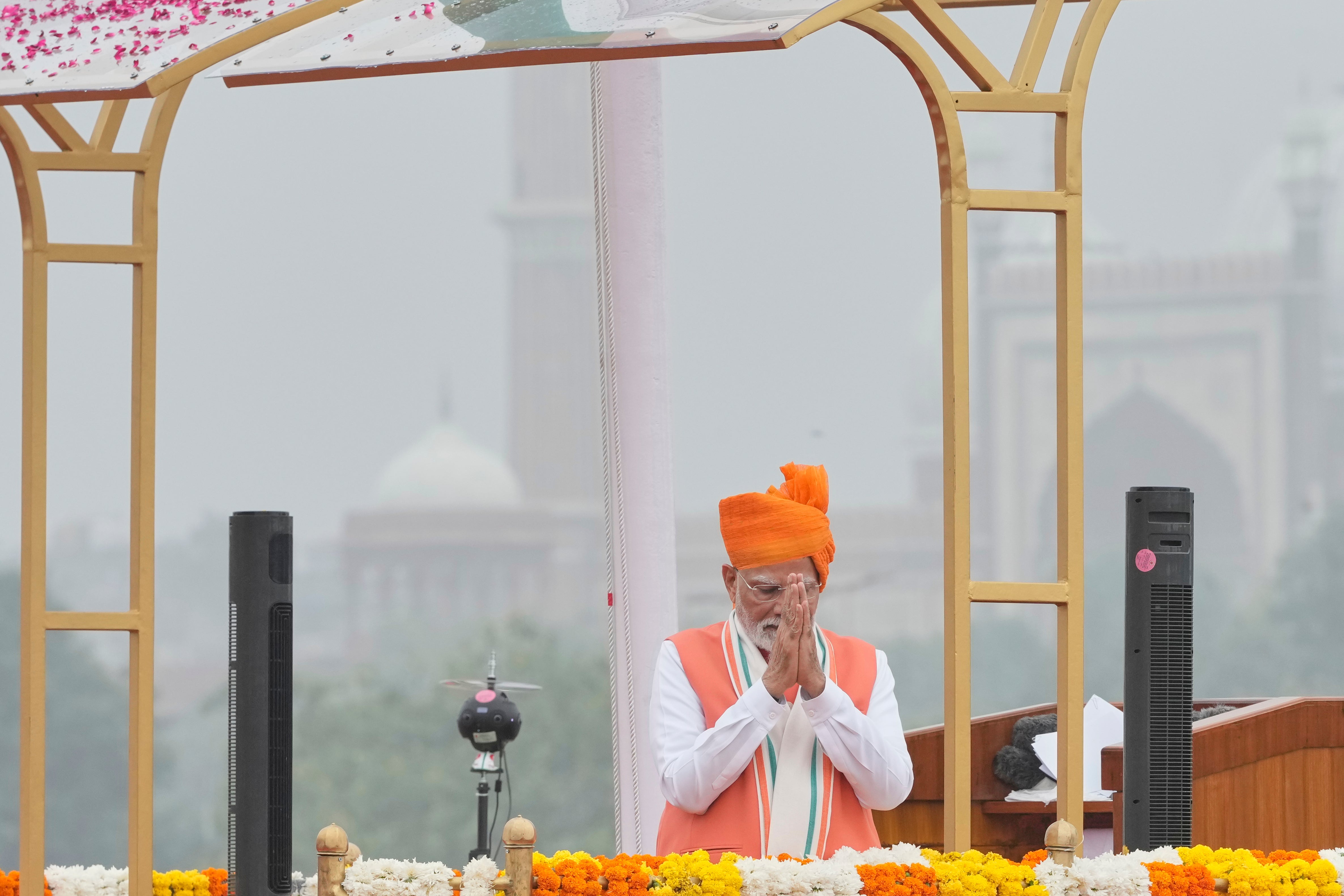
open image in gallery
Indian Prime Minister Narendra Modi greets the invitees after addressing the nation from the rampart of the 17th-century Mughal-era Red Fort monument during the country’s Independence Day celebrations in New Delhi (AP)
Mr Modi did not mention the tariffs or the US in his speech that lasted nearly two hours. Last week, US president Donald Trump imposed an additional 25 per cent tariff on Indian goods, citing New Delhi’s continued imports of Russian oil in a move that sharply escalated tensions between the two nations.
Although local manufacturing and self-reliance have been Mr Modi’s key focus areas for years now, the push is seen to have gained urgency amid ongoing global trade tensions and supply chain disruptions.
“The need of the hour is to take a resolve for building a strong India … I want our traders, shopkeepers to display boards for Swadeshi [Made in India] products,” he said.
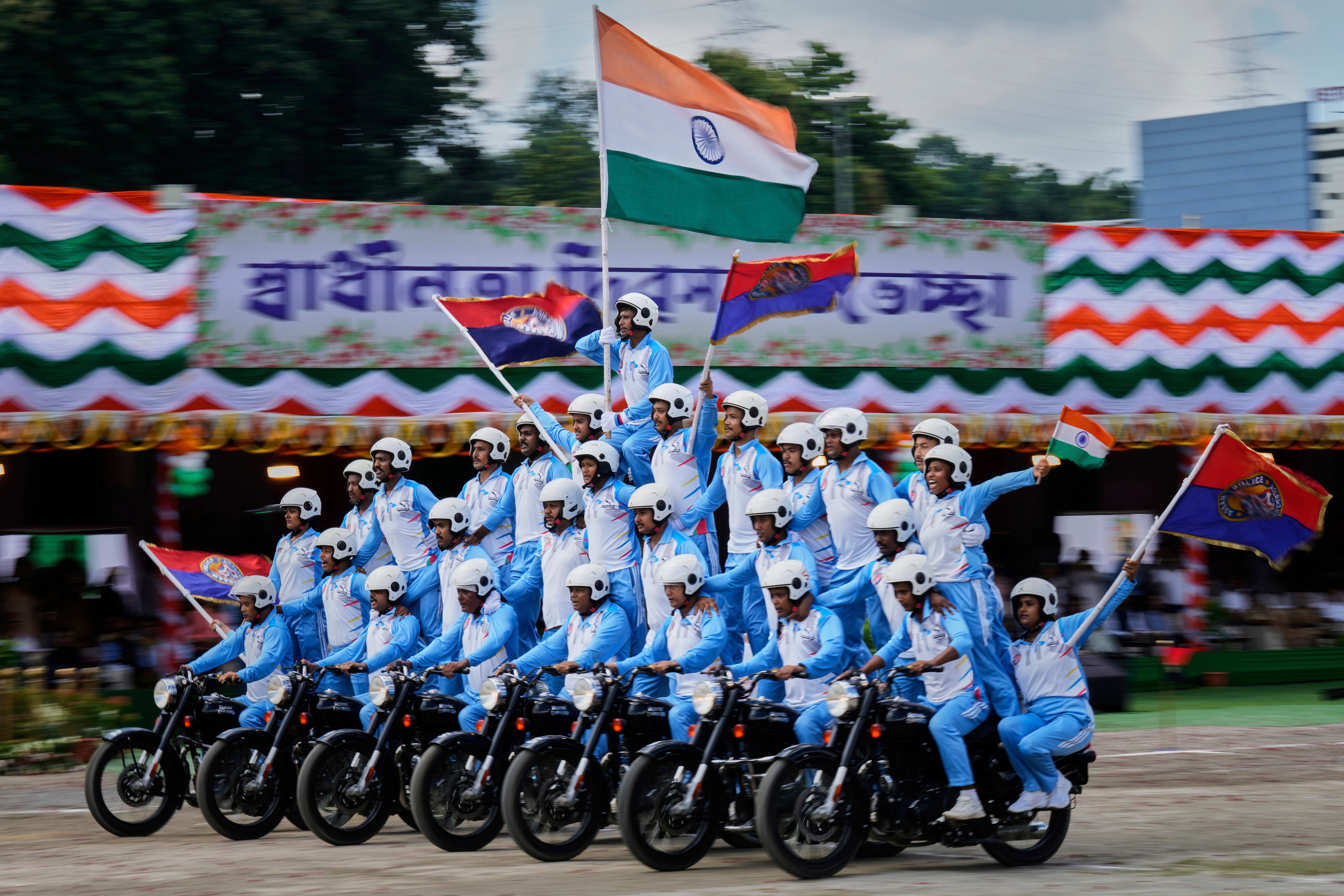
open image in gallery
Assam Police commandos riders take part in a parade during the country’s Independence Day celebrations in Guwahati, India (AP)
He said made-in-India semiconductor chips would hit the market by the end of this year and that India was pushing for self-reliance in producing critical minerals with exploration underway at more than 1,200 locations. Mr Trump’s tariffs threaten to disrupt India’s access to its largest export market, where shipments totalled nearly $87bn (£ bn) in 2024, hitting sectors like textiles, footwear, shrimp, gems and jewellery.
Trade talks between New Delhi and Washington collapsed after five rounds of negotiations over disagreement on opening India’s vast farm and dairy sectors and stopping Russian oil purchases.
The prime minister announced India would set up a new defence system called ‘Sudarshan Chakra’ in the aftermath of India’s four-day military conflict with Pakistan in May.
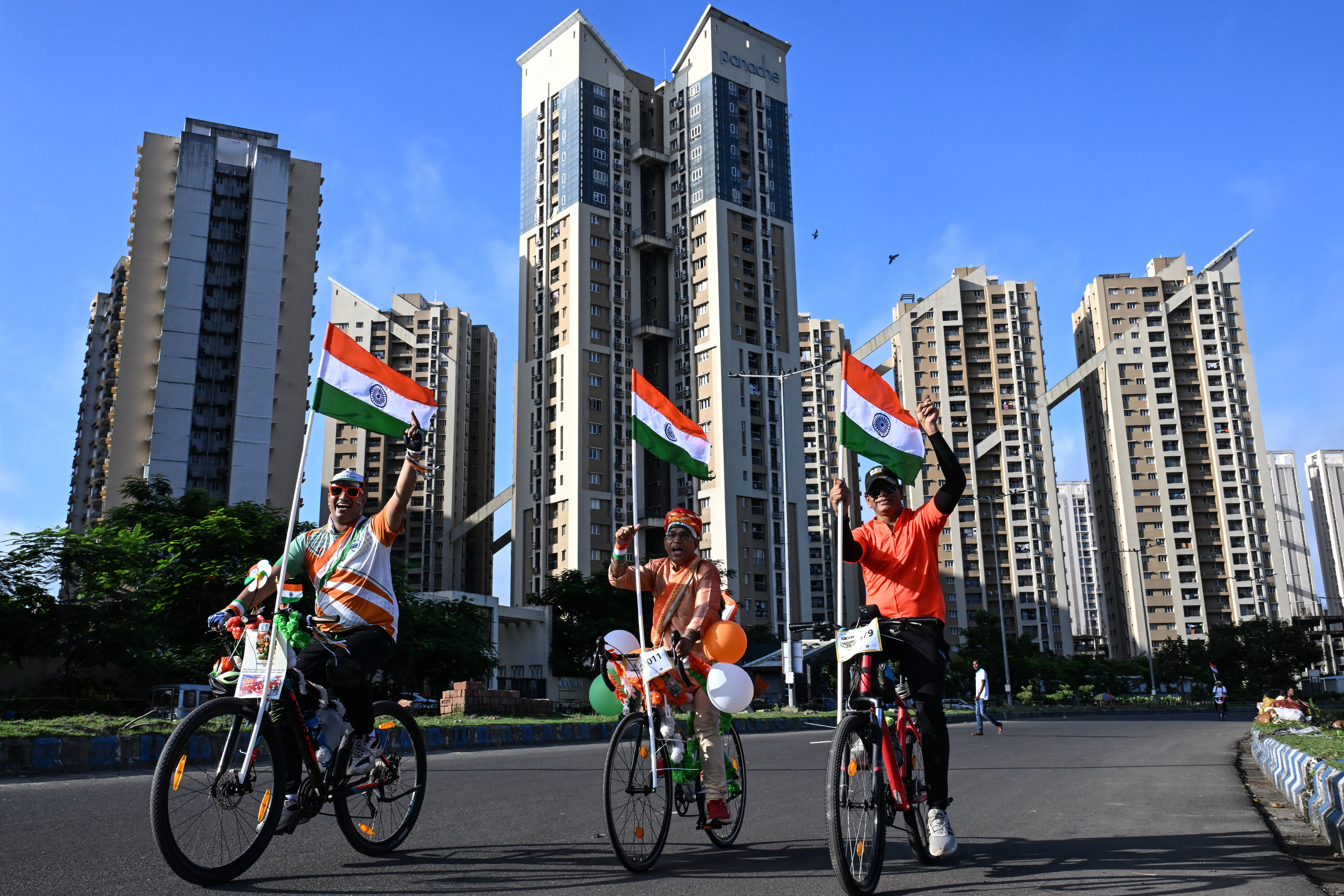
open image in gallery
Cyclists carrying Indian national flags participate in a rally during the country’s Independence Day celebrations in Kolkata (AFP/Getty)
“India has decided that it will not tolerate nuclear threats. For a long time, nuclear blackmail had been going on but this blackmail will not be tolerated now,” Mr Modi said.
Pakistani prime Minister Shehbaz Sharif on Thursday announced the creation of a new “Army Rocket Force Command” to bolster the country’s defense capabilities. Sharif made this announcement during a speech marking Independence Day celebrations, but gave no further details.
India celebrates its Independence Day one day after Pakistan. The two states came into existence as a result of the bloody partition of British India in 1947. The process sparked some of the worst communal violence the world has seen and left hundreds of thousands dead. It triggered one of the largest human migrations in history and some 12 million people fled their homes.